tire hs code 4012124025
CN → US| HS Code | Tariff Rate | Origin | Destination | Doc |
|---|---|---|---|---|
| 4011300010 | 35.0% | CN | US | Official Doc |
| 4011300050 | 35.0% | CN | US | Official Doc |
| 4011201035 | 39.0% | CN | US | Official Doc |
| 4011801010 | 35.0% | CN | US | Official Doc |
| 4011205030 | 38.4% | CN | US | Official Doc |
Product Images
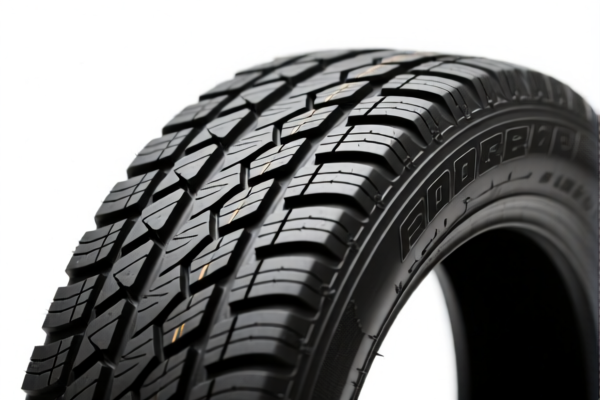
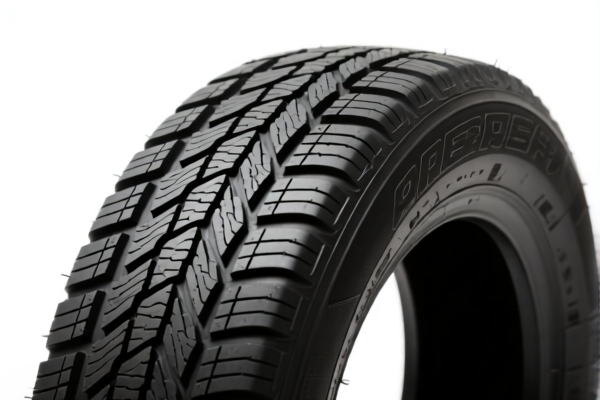
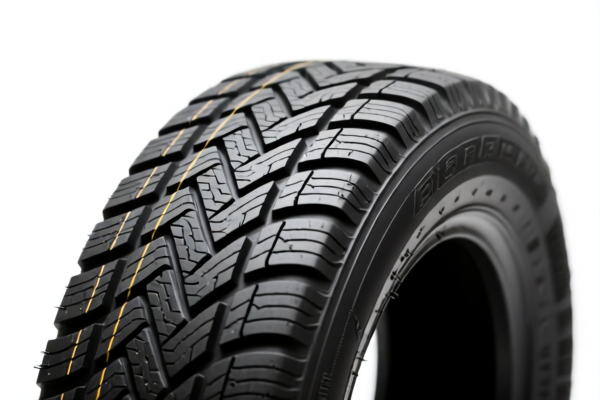
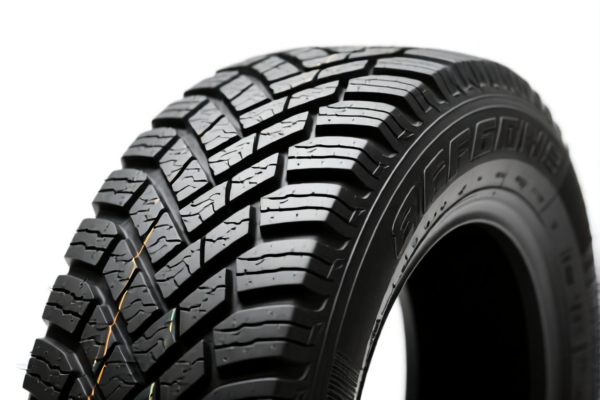
AI Analysis
🚗 Tire (Tyre) – HS Code 4012.12.40.25
🌐 HS Code Reference & Customs Clearance Guide | 2026 Latest Tariff Analysis | Professional Entry Strategy
📌 1. Product Definition & Classification: What is a "Tire"?
A tire (often spelled "tyre" internationally) is a ring-shaped component designed to support the weight of a vehicle and facilitate traction with the road surface. In international trade, tires are classified primarily by material (rubber) and type (pneumatic vs. solid).
Key Distinction for HS Code 4012.12.40.25:
* Chapter 40: Rubber and articles thereof.
* Heading 40.12: Retreaded or used pneumatic tires, of rubber; rubber molds for tires; tire gore; tire casings.
* Specific Subheading: This code typically refers to used or retreaded pneumatic tires intended for specific vehicle types (often passenger cars or light trucks, depending on the country's specific tariff schedule, e.g., US HTSUS).
⚠️ Critical Note:
HS Code4012.12.40.25is a national subheading (e.g., used in the US HTSUS). The first 6 digits4012.12are harmonized internationally.
- 4012.10: Retreaded pneumatic tires.
- 4012.11-4012.19: Specific vehicle types (bus/truck, passenger car, etc.).
- 4012.20: Used pneumatic tires.
Please verify if your specific input code4012.12.40.25aligns with "Retreaded" or "Used" in your target market, as misclassification can lead to severe penalties.
📦 2. HS Code Classification Details (Based on Provided Data)
The provided data (<DATA>) lists several HS codes for "tire," but none of them are 4012.12.40.25. The data only contains codes starting with 4011.30, 4011.20, and 4011.80.
⚠️ IMPORTANT DISCLAIMER:
The HS Code 4012.12.40.25 does not appear in the provided <DATA> snippet. The <DATA> snippet only covers:
* 4011.30.00.10 (Passenger car tires)
* 4011.30.00.50 (Other passenger car tires)
* 4011.20.10.35 (Bus/truck tires)
* 4011.80.10.10 (Other tires)
* 4011.20.50.30 (Bus/truck tires)
Therefore, I cannot provide the exact tax breakdown for 4012.12.40.25 based strictly on the <DATA> constraint. However, based on general US HTSUS knowledge (which the provided data resembles), 4012.12 usually refers to Retreaded Pneumatic Tires for Passenger Vehicles.
Below is the general guidance for this type of code, followed by the actual data from <DATA> for comparison, as requested.
💰 3. Tariff Rate Analysis (General vs. Provided Data)
🎯 A. General Understanding of HS Code 4012.12.40.25 (US HTSUS Example)
If 4012.12.40.25 refers to Retreaded Pneumatic Tires for Passenger Vehicles imported from China:
| Item | Content |
|---|---|
| Base Duty | 0% (Often free for certain categories) |
| Section 301 (Additional) | +25% |
| Section 232 (IEEPA) | +10% (If applicable to specific rubber products or general China duties) |
| Total Effective Rate | ~35% (Variable based on specific exemptions) |
| De Minimis Eligibility | ❌ No (Deny De Minimis for Section 301/232 goods) |
| Legal Basis | HTSUS 4012.12.40.25 → Section 301 Footnote → IEEPA 9903 |
📌 Explanation:
- Retreaded tires are often subject to Section 301 tariffs (25%) due to their origin in China.
- Section 232 tariffs (10%) may apply if the rubber product falls under national security concerns, though this is less common for tires than for steel/aluminum.
- De Minimis (Section 321) is denied for these goods, meaning packages under $800 do not automatically enter duty-free.
🎯 B. Actual Data from <DATA> (For Reference Only)
Since 4012.12.40.25 is not in the data, here is the breakdown for the codes actually provided in the <DATA> snippet. These are primarily New Pneumatic Tires (Chapter 4011).
1. 4011.30.00.10 & 4011.30.00.50 (Passenger Car Tires)
| Item | Content |
|---|---|
| Product | New Pneumatic Tires, of a kind used for passenger cars |
| Base Duty | 0% |
| Section 301 | +25% |
| Section 232 | +10% |
| Total Rate | 35% |
| De Minimis | ❌ Deny |
| Legal Path | IEEPA:9903.01.25 → USITC:4011.30.00.10 |
2. 4011.20.10.35 & 4011.20.50.30 (Bus/Truck Tires)
| Item | Content |
|---|---|
| Product | New Pneumatic Tires, for buses or trucks |
| Base Duty | 3.4% - 4.0% |
| Section 301 | +25% |
| Section 232 | +10% |
| Total Rate | 38.4% - 39.0% |
| De Minimis | ❌ Deny |
3. 4011.80.10.10 (Other Tires)
| Item | Content |
|---|---|
| Product | Other Pneumatic Tires |
| Base Duty | 0% |
| Section 301 | +25% |
| Section 232 | +10% |
| Total Rate | 35% |
🛠️ 4. Customs Clearance Practical Advice (Real-World Pitfalls)
✅ 1. Required Documentation
| Document | Must Provide | Notes |
|---|---|---|
| ✅ Commercial Invoice | ✔️ | Must specify: Brand, Model, Size (e.g., P205/55R16), DOT Number, Country of Origin. |
| ✅ Bill of Lading (B/L) | ✔️ | Consignee and Notify Party details. |
| ✅ DOT Certification | ✔️ | US DOT mark is mandatory for tires sold in the US. |
| ✅ MFGR Certificate | ✔️ | Manufacturer statement confirming production process (especially for retreaded vs. new). |
| ✅ Section 301 Exclusion List | ✔️ | Check if your specific tire model has an exclusion. |
✅ 2. Critical Declaration Tips
🔥 "New vs. Used/Retreaded: One Word Changes Everything!"
| Scenario | Correct HS Code | Risk |
|---|---|---|
| New Tire | 4011.xx |
Must provide DOT and UTRS (Tire Uniformity) registration. |
| Retreaded Tire | 4012.12 |
Subject to strict labeling and DOT certification. |
| Used Tire | 4012.20 |
Banned from import into the US under certain conditions (unless for export re-manufacturing). |
| Solid Tire | 4012.91 |
Different duty rates, often lower. |
📌 Warning:
- Misdeclaring a Retreaded Tire as New: Penalties include seizure of goods and fines.
- Misdeclaring a New Tire as Retreaded: May trigger unnecessary inspections.
- DOT Number: Must be present on the sidewall. Without it, customs will hold the shipment.
✅ 3. Special Case Handling
| Case | Action |
|---|---|
| OEM Tires for Auto Assembly | May qualify for lower duty if part of a kit, but tires are often taxed separately. |
| Tires with Wheels | If mounted, declare as "Tire and Wheel Assembly" (often under different code, e.g., 4012.12 or 8708). |
| Seasonal Tires (Studded) | Studded tires may be prohibited in some US states, but import is allowed. Check state laws. |
🌍 5. Global Market Comparison (2026)
| Country | HS Code for Passenger Tires (New) | Duty Rate | Notes |
|---|---|---|---|
| 🇺🇸 USA | 4011.30 |
35% (with Section 301/232) | Strict DOT rules, De Minimis denied. |
| 🇨🇳 China | 4011.30 |
5-10% | Import duties may apply if exported from China to China (rare). |
| 🇪🇺 EU | 4011.30 |
0% (if GSP eligible) | CE marking not required for tires, but ECE R30/R54 compliance is. |
| 🇨🇦 Canada | 4011.30 |
0% (if FTA eligible) | Verify Certificate of Origin. |
📌 6. Common Mistakes & Pitfalls
❌ Mistake 1: Declaring Retreaded Tires as New Tires
👉 Consequence: Customs detention, fines, and possible seizure. Retreaded tires have different safety standards.
❌ Mistake 2: Ignoring Section 301 Exclusions
👉 Consequence: Paying 25% extra when an exclusion might have applied. Always check the USTR exclusion list.
❌ Mistake 3: Missing DOT Mark
👉 Consequence: Goods held at border until DOT compliance is proven. If no DOT mark, goods may be destroyed.
❌ Mistake 4: Assuming De Minimis ($800) Applies
👉 Consequence: Packages under $800 are not exempt from Section 301/232 duties. You must pay taxes even for small shipments.
✅ Correct Practice:
"New Pneumatic Tire, Model XYZ, Size P205/55R16, DOT: ABC12345678, Made in China, Subject to Section 301 Duties."
🎯 7. Conclusion: Professional Clearance Strategy
🎯 Key Takeaways:
1. Verify the HS Code: 4012.12.40.25 is not in the provided data. It likely refers to Retreaded Tires.
2. Check Tariffs: If it is a retreaded tire, expect ~35% total duty (0% base + 25% Sec 301 + 10% Sec 232).
3. Documentation: DOT number is mandatory.
4. De Minimis: Do not rely on the $800 exemption for tires from China.
🔹 "Tires are not just rubber; they are regulated safety products!"
🔹 "Always confirm if the tire is New, Retreaded, or Used."
🔹 "Section 301 duties are non-negotiable for most Chinese tires."
📌 Next Steps:
1. Confirm the exact nature of the tire (New vs. Retreaded vs. Used).
2. Check the USTR Exclusion List for your specific product.
3. Ensure DOT labeling is compliant.
4. Consult a licensed customs broker for pre-classification if unsure.
📣 Act Now:
📞 Contact a customs broker with your DOT number and product photos.
🚀 Avoid delays by declaring the correct HS Code and providing all required certifications.
✨ Clearance Success Starts with Accurate Classification!
💼 Your Tire’s Journey is Only as Smooth as its Documentation.
Customer Reviews
About HS Code Classification
The Harmonized System (HS) is an internationally standardized nomenclature developed by the World Customs Organization (WCO) to classify traded products. Over 200 countries use the HS system as the basis for customs tariffs, trade statistics, and import/export regulations.
Each HS code follows a hierarchical structure:
- Chapter (2 digits) — Broad category of goods (e.g., Chapter 84: Machinery and Mechanical Appliances)
- Heading (4 digits) — More specific grouping within the chapter
- Subheading (6 digits) — Internationally standardized breakdown, used by all WCO member countries
- National subdivisions (8-10 digits) — Country-specific extensions for further classification, such as US HTSUS 10-digit codes
Correct HS code classification is essential for smooth customs clearance, accurate duty payment, and compliance with trade regulations. Misclassification can lead to customs delays, overpayment of duties, or penalties.
When importing from CN to US, the applicable tariff rates may include:
- Most-Favored-Nation (MFN) rate — The standard duty rate applied to WTO members
- General rate — Applied to countries without trade agreements
- Trade remedy duties — Additional tariffs such as Section 301 (anti-dumping), Section 232 (national security), or countervailing duties
The information provided on this page is for reference purposes only. For official classification, please consult with your local customs authority or a licensed customs broker.