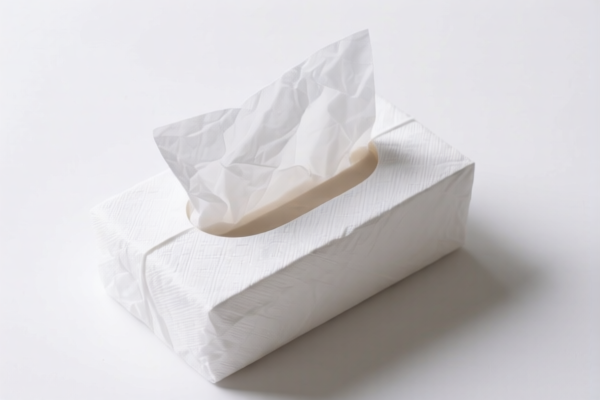
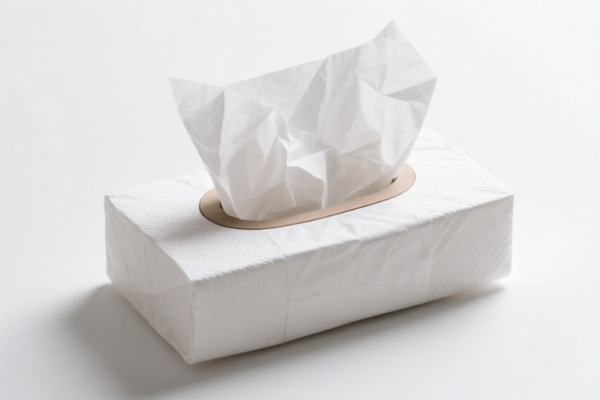
tissue paper for gift
CN → US| HS Code | Tariff Rate | Origin | Destination | Doc |
|---|---|---|---|---|
| 4819200040 | 35.0% | CN | US | Official Doc |
| 4202995000 | 42.8% | CN | US | Official Doc |
| 4202999000 | 55.0% | CN | US | Official Doc |
| 3923210095 | 38.0% | CN | US | Official Doc |
| 3923290000 | 38.0% | CN | US | Official Doc |
| 4819504060 | 35.0% | CN | US | Official Doc |
Product Images


AI Analysis
🎁 Tissue Paper for Gift (Gift Wrapping & Packaging)
🌐 HS Code Reference & Customs Clearance Guide | 2026 Latest Tariff Analysis | Professional Strategy for Low-Value Imports
📌 I. Product Definition & Classification: What Exactly is "Tissue Paper for Gift"?
"Tissue Paper for Gift" in international trade is not a single, monolithic item. It is a broad category encompassing various packaging materials used to wrap or contain gifts. The key to accurate classification lies in the material composition and structural form:
1. Paper-Based Wrapping:
Non-Wrinkled Paper/Paperboard: Plain or colored sheets used for wrapping.
* Paper Containers:* Folded paper bags, boxes, or pouches.
2. Plastic-Based Wrapping:
Plastic Bags/Sheets:* Thin polyethylene or polypropylene films used for wrapping or as inner liners.
3. Mixed/Material-Specific Containers:
Paper-Coated Containers: Containers primarily covered by paper.
* Mixed Material Bags:* Containers made of paper, plastic, and textile fibers combined.
⚠️ Critical Distinction Point:
- If the item is loose sheets of paper → Look at Chapter 48.
- If the item is a finished bag/container → Look at Chapter 42 or 39.
- If it is plastic film/bags → Look at Chapter 39.
- Misclassification Risk: Declaring a plastic gift bag as "tissue paper" to avoid higher taxes will result in customs delays, fines, or forced reclassification.
📦 II. HS Code Classification Details (2026 Latest Tariff Matrix)
Below are the specific HS Codes derived from the provided dataset, categorized by material and structure.
| HS Code | Product Description | Application Scenario | Material Focus |
|---|---|---|---|
4819.20.00.40 |
Non-wrinkled Paper/Paperboard Containers | Paper wrapping sheets, non-rigid paper gift boxes, plain paper wraps. | Paper/Paperboard |
4202.99.50.00 |
Containers Covered Primarily by Paper | Gift bags where the structural body is paper but may have paper coating/finish; paper-based gift packaging. | Paper-Primary |
4202.99.90.00 |
Other Containers/Packaging (Mixed Materials) | Gift boxes/bags made of cardboard, plastic laminates, or textile-paper blends. | Mixed (Cardboard/Plastic/Textile) |
3923.21.00.95 |
Plastic Bags/Packaging (Polyethylene) | Thin plastic gift bags, cellophane wraps, PE film rolls. | Plastic (PE) |
3923.29.00.00 |
Other Plastic Bags/Sacks | Other plastic pouches, ziplock gift bags, non-PE plastic wraps. | Plastic (Other) |
4819.50.40.60 |
Other Paper/Cardboard Containers | General paper packaging, cardboard boxes,兜底 (catch-all) for paper packaging not elsewhere specified. | Paper/Cardboard |
🔍 Key Insight:
-4819.20.00.40and4819.50.40.60are for pure paper items.
-4202.99.50.00and4202.99.90.00are for constructed containers (bags/boxes) where paper is dominant or part of a mixed material structure.
-3923.21.00.95and3923.29.00.00are exclusively for plastic packaging.
💰 III. 2026 Latest Tariff Rate Breakdown (China Origin → USA)
✅ Applicable Country: United States (US)
✅ Origin: China (CN)
✅ Effective Date: Post-2025 (Includes Section 301 & IEEPA Surcharges)
🎯 1. Paper-Based Items (4819.20.00.40, 4819.50.40.60)
These items benefit from lower base duties but still face significant US surcharges.
| Item | Detail |
|---|---|
| Base Tariff | 0.0% (Ad Valorem) |
| Section 301 Surcharge | +25.0% |
| Section 122/IEEPA Surcharge | +10.0% |
| Total Effective Rate | 35.0% |
| Tax Calculation | CIF Value × 35% |
| De Minimis Exemption | ❌ NOT Eligible (Deny De Minimis) |
| Legal Basis | USITC:4819.xxxx → Sec301: 25% + IEEPA: 10% |
📌 Explanation:
- Base duty is 0% because paper packaging often falls under free-entry categories for certain papers.
- However, the 25% Section 301 tariff applies to Chinese goods.
- The 10% IEEPA/Section 122 tariff applies specifically to Chinese-origin goods.
- Total: 35%. This is a high cost for low-margin paper gifts.
🎯 2. Paper-Primary Containers (4202.99.50.00)
A middle-ground category for constructed paper gift bags/boxes.
| Item | Detail |
|---|---|
| Base Tariff | 7.8% (Ad Valorem) |
| Section 301 Surcharge | +25.0% |
| Section 122/IEEPA Surcharge | +10.0% |
| Total Effective Rate | 42.8% |
| Tax Calculation | CIF Value × 42.8% |
| De Minimis Exemption | ❌ NOT Eligible (Deny De Minimis) |
| Legal Basis | USITC:4202.99.50.00 → Sec301: 25% + IEEPA: 10% |
📌 Explanation:
- Higher base duty (7.8%) because it is classified as a "container" (Chapter 42) rather than raw paper.
- Surcharges remain the same (25% + 10%).
- Total: 42.8%.
🎯 3. Mixed Material Containers (4202.99.90.00)
This is the most expensive category for paper-based structures due to the "Other" classification.
| Item | Detail |
|---|---|
| Base Tariff | 20.0% (Ad Valorem) |
| Section 301 Surcharge | +25.0% |
| Section 122/IEEPA Surcharge | +10.0% |
| Total Effective Rate | 55.0% |
| Tax Calculation | CIF Value × 55.0% |
| De Minimis Exemption | ❌ NOT Eligible (Deny De Minimis) |
| Legal Basis | USITC:4202.99.90.00 → Sec301: 25% + IEEPA: 10% |
📌 Explanation:
- Base duty is high (20%) for "Other" containers in Chapter 42.
- Total: 55%. This is prohibitively expensive for most gift packaging unless it is a luxury item with high margins.
🎯 4. Plastic-Based Items (3923.21.00.95, 3923.29.00.00)
Plastic gift bags and wraps.
| Item | Detail |
|---|---|
| Base Tariff | 3.0% (Ad Valorem) |
| Section 301 Surcharge | +25.0% |
| Section 122/IEEPA Surcharge | +10.0% |
| Total Effective Rate | 38.0% |
| Tax Calculation | CIF Value × 38.0% |
| De Minimis Exemption | ❌ NOT Eligible (Deny De Minimis) |
| Legal Basis | USITC:3923.2x → Sec301: 25% + IEEPA: 10% |
📌 Explanation:
- Base duty is low (3.0%) for general plastic bags.
- Surcharges apply identically.
- Total: 38%.
🛠️ IV. Customs Clearance Practical Advice (Avoiding Pitfalls)
✅ 1. Documentation Checklist (Mandatory)
| Document | Required? | Notes |
|---|---|---|
| Product Specification Sheet | ✅ Yes | Must specify: Material (Paper/Plastic), Weight, Dimensions, Usage (Gift Wrap/Bag). |
| Commercial Invoice | ✅ Yes | Must clearly state: "Tissue Paper for Gift," "Plastic Gift Bags," or "Paper Gift Boxes." Do not use vague terms like "Stationery." |
| Packing List | ✅ Yes | Detail quantity and weight. |
| Material Composition Proof | ✅ Yes | If claiming 4819 (Paper), prove it contains >90% paper content. If 3923, prove plastic content. |
| Third-Party Lab Report | Optional | Recommended for disputed classifications (e.g., Paper-Coated Plastic). |
✅ 2. Declaration Strategy (Key Rules)
🔥 "Material Dictates Code, Structure Dictates Chapter, Honesty Saves Money!"
| Scenario | Correct Declaration | Incorrect Declaration | Consequence |
|---|---|---|---|
| Loose Tissue Paper Sheets | HS 4819.20.00.40 (35%) |
Misdeclare as 4819.50 (35%) or 4202 (42.8%) |
No saving, but risk of penalty if mislabeled as "bag." |
| Paper Gift Bags | HS 4202.99.50.00 (42.8%) |
Misdeclare as 4819 (Paper Sheets) |
Customs Rejection. If it has handles/structure, it's Chapter 42. |
| Plastic Cellophane Wrap | HS 3923.21.00.95 (38%) |
Misdeclare as 4819 (Paper) |
Severe Penalty. Plastic is distinct from paper. |
| Cardboard Gift Box | HS 4202.99.90.00 (55%) |
Misdeclare as 4819 |
High Risk. Rigid boxes often fall under "Containers." |
✅ 3. Special Considerations
| Situation | Advice |
|---|---|
| Mixed Material Bags (e.g., Paper exterior, Plastic lining) | Declare under 4202.99.90.00 (55%) if the plastic lining is structural. Do not try to split the line item unless permitted by customs broker. |
| De Minimis (Section 321) | DO NOT USE. All HS codes listed above are subject to 301/IEEPA surcharges, which block the $800 de minimis exemption for Chinese goods. Every single item is taxed. |
| Luxury Gift Packaging | If the packaging is high-value (e.g., velvet-lined, metal accents), it may not be "Tissue Paper" at all but "General Goods" or "Household Items," which could have different rates. Consult a broker. |
🌍 V. Global Market Comparison (2026)
| Market | Recommended HS Code | Base Duty | US Surcharges | Total (China Origin) | Note |
|---|---|---|---|---|---|
| 🇺🇸 USA | 4819.20.00.40 / 3923.21.00.95 |
0% - 3% | +35% (25+10) | 35% - 38% | Highest effective cost. |
| 🇨🇳 China | 4819.20.00.40 |
7% - 12% | None | 7% - 12% | Low cost for import into China. |
| 🇪🇺 EU | 4819.20.00 |
6.5% - 8% | None | ~6.5% - 8% | No 301/IEEPA tariffs. |
| 🇬🇧 UK | 4819.20.00 |
6.5% | None | ~6.5% | Post-Brexit tariffs. |
📌 Conclusion:
- The US market is exceptionally expensive for Chinese-origin gift packaging due to the 35%+ effective tariff.
- For the US, consider sourcing from Vietnam, Mexico, or EU to avoid Section 301/IEEPA surcharges (if eligible).
- For domestic US consumption, consider recycled paper options which may have different environmental certification benefits but same tariff base.
📌 VI. Common Errors & Pitfalls (Blood Lessons)
❌ Error 1: Declaring Plastic Gift Bags as "Tissue Paper"
👉 Result: Customs flags discrepancy. Re-classification to 3923 (38%) + Penalties.
❌ Error 2: Assuming De Minimis ($800 exemption) applies
👉 Result: FAIL. All Chinese gift packaging HS codes listed here are subject to Section 301/IEEPA, which overrides de minimis. Every dollar is taxed.
❌ Error 3: Mixing Paper Sheets and Plastic Bags in one shipment
👉 Result: Must declare separately. If mixed, customs may audit the entire shipment or assign the highest duty rate to all items.
✅ Correct Approach:
"Tissue Paper, Non-Wrinkled, for Gift Wrapping, 100% Wood Pulp, White, 500 Sheets" →
4819.20.00.40
"Plastic Gift Bags, Polyethylene, Clear, 10x12 inches" →3923.21.00.95
🎯 VII. Conclusion: Professional Clearance, Cost Optimization!
🎯 Remember the Mantra:
🔹 "Paper is 35%, Plastic is 38%, Mixed Bags are 55%. No De Minimis!"
🔹 "Structure matters: Sheets vs. Bags. Material matters: Paper vs. Plastic."
🔹 "Chinese Origin = Surcharge. Plan for 35%+ tax in the US."
📌 Pro Tip:
If you are importing large volumes of gift packaging to the US, negotiate FOB prices with suppliers to offset the 35-55% tariff cost, or explore third-country manufacturing (e.g., Vietnam, Thailand) to bypass Section 301 tariffs.
📣 Immediate Action:
📞 Contact a Licensed Customs Broker: Provide product photos and material specs.
🚀 Apply for Advance Ruling: Confirm HS Code classification before shipping to avoid clearance delays.
💼 Calculate Landed Cost: Include 35%+ tax in your pricing model. Do not underestimate!
✨ Professional Clearance Starts with Accurate Classification!
💼 Your Every Dollar, Accurately Calculated!
Customer Reviews
About HS Code Classification
The Harmonized System (HS) is an internationally standardized nomenclature developed by the World Customs Organization (WCO) to classify traded products. Over 200 countries use the HS system as the basis for customs tariffs, trade statistics, and import/export regulations.
Each HS code follows a hierarchical structure:
- Chapter (2 digits) — Broad category of goods (e.g., Chapter 84: Machinery and Mechanical Appliances)
- Heading (4 digits) — More specific grouping within the chapter
- Subheading (6 digits) — Internationally standardized breakdown, used by all WCO member countries
- National subdivisions (8-10 digits) — Country-specific extensions for further classification, such as US HTSUS 10-digit codes
Correct HS code classification is essential for smooth customs clearance, accurate duty payment, and compliance with trade regulations. Misclassification can lead to customs delays, overpayment of duties, or penalties.
When importing from CN to US, the applicable tariff rates may include:
- Most-Favored-Nation (MFN) rate — The standard duty rate applied to WTO members
- General rate — Applied to countries without trade agreements
- Trade remedy duties — Additional tariffs such as Section 301 (anti-dumping), Section 232 (national security), or countervailing duties
The information provided on this page is for reference purposes only. For official classification, please consult with your local customs authority or a licensed customs broker.