titanium tungsten catalyst
CN → US| HS Code | Tariff Rate | Origin | Destination | Doc |
|---|---|---|---|---|
| 3815901000 | 41.5% | CN | US | Official Doc |
| 3815905000 | 40.0% | CN | US | Official Doc |
| 2841800050 | 40.5% | CN | US | Official Doc |
| 2825903000 | 40.5% | CN | US | Official Doc |
| 2825909000 | 38.7% | CN | US | Official Doc |
Product Images
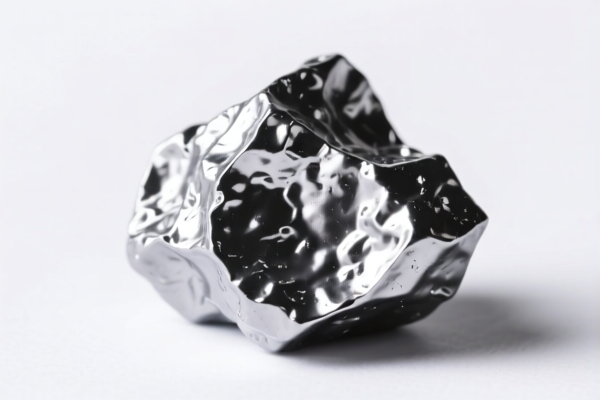
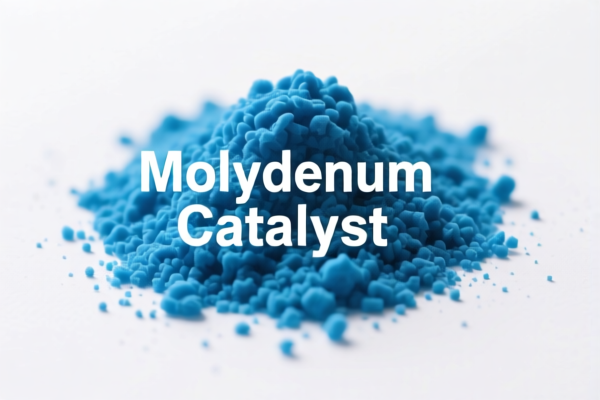
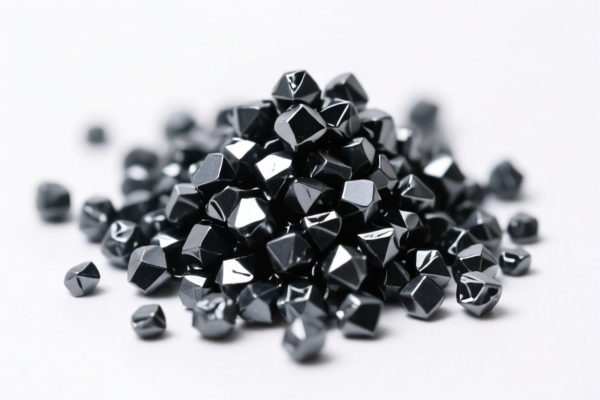

AI Analysis
🧪 Titanium Tungsten Catalyst (钨酸钛催化剂)
🌐 HS Code Reference & Customs Clearance Guide | 2026 Latest Tariff Analysis | Professional Entry Strategy
📌 I. Product Definition & Classification: What Exactly is "Titanium Tungsten Catalyst"?
Titanium Tungstate Catalyst is a specialized chemical agent used primarily in industrial catalysis. In international trade, its classification hinges on whether it is viewed as a specific chemical compound (inorganic salt/oxide) or a preparatory catalyst (finished chemical formulation).
⚠️ Key Distinction Point:
- If treated as a specific inorganic chemical substance (Titanium Tungstate/Tungstotitanate) → Classified under Chapter 28 (Inorganic Chemicals). - If treated as a catalytic preparation/formulation (mixed with other carriers or activators for specific use) → Classified under Chapter 38 (Miscellaneous Chemical Products).
📦 II. HS Code Classification Details (2026 Latest Tariff Authority Comparison)
Based on the provided data, here are the five possible HS Codes with their logical justifications:
| HS Code | Product Description | Classification Logic | Tax Rate (Total) |
|---|---|---|---|
2841.80.00.50 |
Titanium Tungstate Catalyst (Inorganic Salt) | "Tungstate" fits the material requirement of Tungsten Salts. Classified as "Other" inorganic substances. | 40.5% |
2825.90.30.00 |
Titanium Tungsten Catalyst (Inorganic Oxide) | Material is a tungsten compound. Fits the category of "Inorganic Metal Oxides." | 40.5% |
2825.90.90.00 |
Titanium Tungsten Catalyst (Metal Oxide) | Fits the material attribute of "Metal Oxides (Titanium Oxide)." No material conflict. | 38.7% |
3815.90.10.00 |
Titanium Tungsten Catalyst (Catalyst Formulation) | "Tungsten" matches key material component; "Catalyst" matches usage description. | 41.5% |
3815.90.50.00 |
Titanium Tungsten Catalyst (Reaction Initiator) | Belongs to "Other Reaction Initiators/Catalysts" in Chemical Preparations. No material conflict. | 40.0% |
🔍 Critical Reminder:
- Chapter 28 Codes (2841...,2825...) are generally preferred if the product is a pure, defined chemical compound (Titanium Tungstate).
- Chapter 38 Codes (3815...) are used if the product is a mixture, preparation, or specifically marketed as a finished "catalytic agent" rather than a pure chemical substance.
- Do not split shipments: If the product is a single homogeneous catalyst, do not try to split it into "raw material" vs. "finished good" to lower taxes; customs will consolidate based on the primary function.
💰 III. 2026 Latest Tariff Rate Breakdown (Including Surtaxes & Policy Add-ons)
✅ Applicable Country: United States (US)
✅ Country of Origin: China (CN)
✅ Effective Date: From November 10, 2025 onwards (including subsequent imports)
🎯 1. 2841.80.00.50 —— Titanium Tungstate (Inorganic Salt)
| Item | Content |
|---|---|
| Base Tariff | 5.5% (ad valorem) |
| Section 301 Surtax | +25.0% |
| Section 122 Tariff | +10.0% |
| Total Tariff | 40.5% |
| Tax Calculation | CIF Value × 40.5% |
| De Minimis Exemption | ❌ Not Eligible (deny_de_minimis) |
| Legal Basis Path | Base: 5.5% → 301: 25% → 122: 10% → Total: 40.5% |
📌 Explanation:
- The base rate is moderate (5.5%), but the surcharges are steep.
- The 25% Section 301 tax applies to most Chinese chemical imports.
- The 10% Section 122 tariff is an additional levy on Chinese goods.
- Total Cost Impact: High. Ensure your pricing model accounts for >40% duty.
🎯 2. 2825.90.30.00 —— Titanium Tungsten Catalyst (Inorganic Oxide)
| Item | Content |
|---|---|
| Base Tariff | 5.5% (ad valorem) |
| Section 301 Surtax | +25.0% |
| Section 122 Tariff | +10.0% |
| Total Tariff | 40.5% |
| Tax Calculation | CIF Value × 40.5% |
| De Minimis Exemption | ❌ Not Eligible (deny_de_minimis) |
| Legal Basis Path | Base: 5.5% → 301: 25% → 122: 10% → Total: 40.5% |
📌 Note:
- Same tariff structure as2841.80.00.50.
- Applicable if customs classifies the material strictly as a "Tungsten Oxide" or "Metal Oxide" rather than a salt.
🎯 3. 2825.90.90.00 —— Titanium Tungsten Catalyst (Metal Oxide)
| Item | Content |
|---|---|
| Base Tariff | 3.7% (ad valorem) |
| Section 301 Surtax | +25.0% |
| Section 122 Tariff | +10.0% |
| Total Tariff | 38.7% |
| Tax Calculation | CIF Value × 38.7% |
| De Minimis Exemption | ❌ Not Eligible (deny_de_minimis) |
| Legal Basis Path | Base: 3.7% → 301: 25% → 122: 10% → Total: 38.7% |
📌 Key Insight:
- This is the lowest total tariff rate among all options (38.7%).
- Strategy: If the chemical nature of your product allows it to be classified under "Other Metal Oxides" (2825.90.90), this is the most cost-effective HS Code. Ensure your MSDS and technical data sheets support this classification.
🎯 4. 3815.90.10.00 —— Titanium Tungsten Catalyst (Catalyst Formulation)
| Item | Content |
|---|---|
| Base Tariff | 6.5% (ad valorem) |
| Section 301 Surtax | +25.0% |
| Section 122 Tariff | +10.0% |
| Total Tariff | 41.5% |
| Tax Calculation | CIF Value × 41.5% |
| De Minimis Exemption | ❌ Not Eligible (deny_de_minimis) |
| Legal Basis Path | Base: 6.5% → 301: 25% → 122: 10% → Total: 41.5% |
📌 Explanation:
- Highest total tax rate (41.5%).
- Used when the product is explicitly described as a "Catalyst" and the "Tungsten" content is the key identifying material.
- Higher base rate (6.5%) makes this less attractive than Chapter 28 options unless the product cannot be defined as a pure inorganic compound.
🎯 5. 3815.90.50.00 —— Titanium Tungsten Catalyst (Reaction Initiator)
| Item | Content |
|---|---|
| Base Tariff | 5.0% (ad valorem) |
| Section 301 Surtax | +25.0% |
| Section 122 Tariff | +10.0% |
| Total Tariff | 40.0% |
| Tax Calculation | CIF Value × 40.0% |
| De Minimis Exemption | ❌ Not Eligible (deny_de_minimis) |
| Legal Basis Path | Base: 5.0% → 301: 25% → 122: 10% → Total: 40.0% |
📌 Note:
- Middle-ground tax rate (40.0%).
- Classified under "Other Reaction Initiators/Catalysts."
- Suitable if the product is a mixture or preparation that doesn't fit the strict definition of a pure salt or oxide in Chapter 28.
🛠️ IV. Customs Clearance Practical Advice (Battle-Tested Pitfall Avoidance)
✅ 1. Documentation Checklist (Non-Negotiable)
| Document | Required | Explanation |
|---|---|---|
| ✅ MSDS / SDS | ✔️ | Must clearly state chemical composition (e.g., TiWO4, TiO2, WO3) to support Chapter 28 vs. 38 classification. |
| ✅ Technical Data Sheet | ✔️ | Specifies purity, form (powder/liquid), and intended catalytic use. |
| ✅ Product Photo (Label/Packaging) | ✔️ | Clear view of brand, model, and chemical name. |
| ✅ Commercial Invoice | ✔️ | Must accurately describe the item as "Titanium Tungsten Catalyst" or "Inorganic Tungsten Compound." Avoid vague terms like "Chemical Mix." |
| ✅ Packing List | ✔️ | Detailed weight and quantity. |
| ✅ Certificate of Origin (CO) | ✔️ | Required for origin determination (CN) to apply surtaxes. |
✅ 2. Declaration Strategy (Key Mnemonics)
🔥 "Pure Compound to Ch. 28, Mixture to Ch. 38. Check Base Rate, Lowest Tax Wins!"
| Scenario | Correct Declaration | Common Mistake |
|---|---|---|
| High Purity Ti-W Compound | 2825.90.90.00 (38.7%) |
Misclassified as 3815.90.10.00 (41.5%) → Overpay 2.8% |
| Catalyst Mixture/Formulation | 3815.90.50.00 (40.0%) |
Misclassified as 2825.90.30.00 (40.5%) → Overpay 0.5% |
| Mixed with Carriers/Binders | 3815.90.10.00 or 3815.90.50.00 |
Declared as pure chemical → Seizure/Refusal |
| Unclear Composition | Request HS Code Pre-Ruling | Guessing → Audits & Penalties |
✅ 3. Special Handling
| Situation | Handling Advice |
|---|---|
| OEM/Private Label Catalyst | Provide contract/license from the chemical manufacturer to prove composition. |
| Small Sample Shipments | No De Minimis Exemption. Even small samples incur the full ~40% tax. Do not use "gift" or "sample" declarations to avoid tax; it will be rejected. |
| Mixed Container (Chemicals + Non-Chemicals) | Declare separately. Chemicals get ~40% tax; non-chemicals may have different rates. Mixing can trigger full container inspection. |
| Origin Shifting (Non-CN) | If manufactured in Vietnam/Thailand, provide proof of substantial transformation to avoid Section 301/122 taxes. |
🌍 V. Global Market Clearance Comparison (2026 Latest)
| Country/Region | Recommended HS Code | Tariff (CN Origin) | Certification/Remarks |
|---|---|---|---|
| 🇺🇸 USA | 2825.90.90.00 |
38.7% (Best) | Heavy surtaxes. Requires strict chemical labeling. |
| 🇺🇸 USA | 3815.90.10.00 |
41.5% (Worst) | Avoid unless product is clearly a "preparation." |
| 🇨🇳 China | 2841.80.00.50 |
5% (Import Duty) | No Section 301/122. Lower entry barrier. |
| 🇪🇺 EU | 2825.90.00 |
0-6.5% (Varies) | REACH Registration required. No Section 301. |
| 🇦🇺 Australia | 2825.90.00 |
5% | No Section 301. Check ANZS/NAFTA status. |
| 🇯🇵 Japan | 2825.90.00 |
0-5% | No Section 301. EPA/JLEPA benefits may apply. |
📌 Conclusion:
- USA is the highest cost market due to aggressive tariff stacking (Base + 301 + 122).
- Optimization Goal: Try to classify under2825.90.90.00(38.7%) instead of Chapter 38 codes if the product chemistry allows.
- Non-US Markets: Significantly cheaper (5-6.5% vs 40%). Consider routing through or selling to markets with lower tariff barriers if logistics allow.
📌 VI. Common Errors & Pitfall Guide (Lessons from the Field)
❌ Mistake 1: Declaring "Catalyst" generically without chemical specification
👉 Result: Customs assigns highest duty (3815.90.10.00 @ 41.5%) or demands reclassification.
✅ Fix: Use specific chemical name (e.g., "Titanium Tungstate, CAS No. XXX-XX-X").
❌ Mistake 2: Assuming "Chemical Sample" escapes tax
👉 Result: Denial of De Minimis. All shipments from CN to US incur full tax.
✅ Fix: Budget for full tax even on samples.
❌ Mistake 3: Confusing "Oxide" with "Salt"
👉 Result: Misclassification leads to audits. 2825 (Oxides) vs 2841 (Salts) have different base rates (3.7-5.5%).
✅ Fix: Use MSDS to confirm chemical structure (ionic bond vs covalent oxide).
❌ Mistake 4: Ignoring Section 122 Tariff
👉 Result: Underestimating costs by 10%.
✅ Fix: Always calculate Base + 25% + 10%. Total is never just Base + 25%.
🎯 VII. Conclusion: Precision Declaration, Cost Control!
🎯 Remember the Golden Rule:
🔹 "Pure Chemical = Ch. 28 (Lower Base); Mixture = Ch. 38 (Higher Base)."
🔹 "USA Tax = Base + 35%. Aim for 38.7% (2825.90.90) over 41.5% (3815.90.10)."
🔹 "No De Minimis for China. Every gram is taxed."
📌 Pro Tip:
If your Titanium Tungsten Catalyst is used in a highly specific industrial process, consider applying for an HS Code Pre-Ruling with US Customs and Border Protection (CBP). This provides legal certainty and prevents unexpected 41.5% liabilities.
📣 Immediate Action Required:
📞 Engage a Licensed Customs Broker
📄 Submit MSDS & Technical Data
🚀 Optimize for2825.90.90.00(38.7%) if possible
✨ Professional clearance starts with precise classification!
💼 Every percentage point saved is pure profit!
Customer Reviews
About HS Code Classification
The Harmonized System (HS) is an internationally standardized nomenclature developed by the World Customs Organization (WCO) to classify traded products. Over 200 countries use the HS system as the basis for customs tariffs, trade statistics, and import/export regulations.
Each HS code follows a hierarchical structure:
- Chapter (2 digits) — Broad category of goods (e.g., Chapter 84: Machinery and Mechanical Appliances)
- Heading (4 digits) — More specific grouping within the chapter
- Subheading (6 digits) — Internationally standardized breakdown, used by all WCO member countries
- National subdivisions (8-10 digits) — Country-specific extensions for further classification, such as US HTSUS 10-digit codes
Correct HS code classification is essential for smooth customs clearance, accurate duty payment, and compliance with trade regulations. Misclassification can lead to customs delays, overpayment of duties, or penalties.
When importing from CN to US, the applicable tariff rates may include:
- Most-Favored-Nation (MFN) rate — The standard duty rate applied to WTO members
- General rate — Applied to countries without trade agreements
- Trade remedy duties — Additional tariffs such as Section 301 (anti-dumping), Section 232 (national security), or countervailing duties
The information provided on this page is for reference purposes only. For official classification, please consult with your local customs authority or a licensed customs broker.