tote bag
CN → USProduct Images
AI Analysis
👜 Tote Bag (Shoulder Bags)
🌐 HS Code Reference & Clearance Guide | 2026 Latest Tariff Analysis | Professional Customs Strategy
📌 Part 1: Product Definition & Classification: Do You Really Know "Tote Bags"?
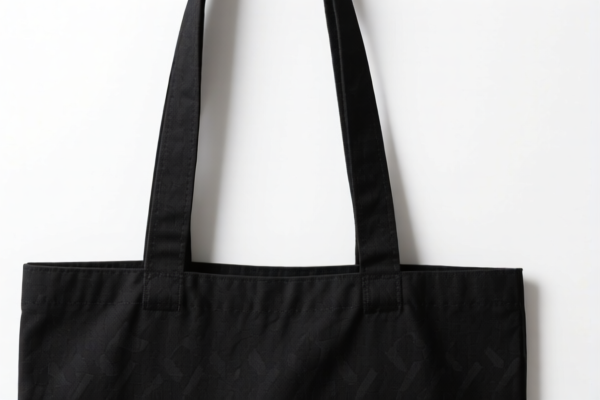
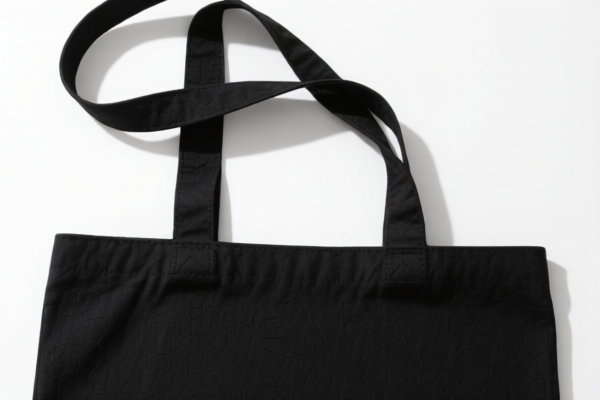
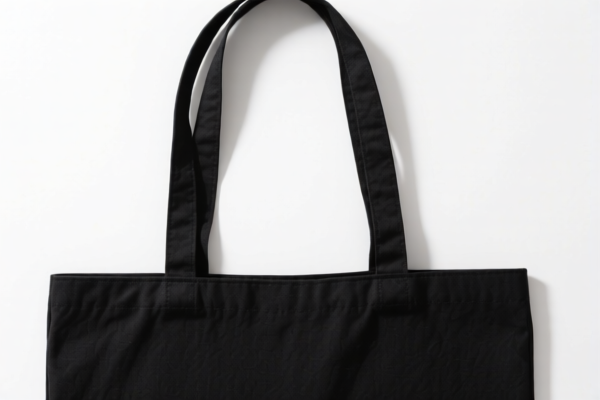
A Tote Bag is a large, open-top shoulder bag, typically made of fabric, leather, or synthetic materials, used for carrying daily essentials, groceries, or beach items. In international trade, classification depends heavily on material composition, intended use, and structural features.
Key Classification Scenarios: * Synthetic Fiber Tote Bags: Most common (e.g., canvas, polyester, nylon) → 5609 or 6305 (depending on specific construction). * Leather Tote Bags: Made from genuine or composite leather → 4202 (Luggage, Handbags). * Plastic/Sheet Tote Bags: Made of plastic sheets (e.g., reusable shopping bags) → 3923 or 3926. * Textile Tote Bags: Woven cotton/linen without specific lining → 6305 (Sacks & Bags).
⚠️ Critical Distinction:
- If the bag is woven textile (cotton/polyester) and used for general carrying → Often 6305.11 or 6305.19.
- If the bag has leather/leather composite panels making up the main surface → 4202.21 or 4202.22.
- If the bag is plastic sheet (reusable shopping bag) → 3923.29 or 3926.90.
📦 Part 2: HS Code Classification Details (2026 Customs Tariff Authority)
| HS Code | Product Description | Application Scenario | Material Dominance |
|---|---|---|---|
4202.21.00.00 |
Handbags with outer surface of leather, leather composition, or patent leather | Luxury leather totes, designer bags | ✅ Leather (Main Surface) |
4202.22.00.00 |
Handbags with outer surface of sheeting of plastics | Plastic sheet tote bags, vinyl bags | ✅ Plastic (Main Surface) |
4202.29.00.00 |
Handbags with outer surface of other materials (textiles, rubber, paper) | Fabric, canvas, paper, or mixed-material totes | ✅ Textile/Other |
6305.11.00.00 |
Sacks and bags of jute or other textile bast fibers | Traditional jute shopping bags | ✅ Jute/Bast Fiber |
6305.19.00.00 |
Sacks and bags of other textile materials | Cotton, hemp, or other natural fiber sacks | ✅ Natural Fiber (Other) |
6305.32.00.00 |
Sacks and bags of polyethylene or polypropylene | Reusable plastic shopping totes | ✅ Polypropylene/Polyethylene |
6305.39.00.00 |
Sacks and bags of other synthetic fibers | Non-woven fabric totes, polyester bags | ✅ Synthetic Fiber (Other) |
6305.90.00.00 |
Sacks and bags of other materials (paper, paperboard, etc.) | Paper tote bags | ✅ Paper |
🔍 Key Reminder:
- Leather Content: If the outer surface is >50% leather, it falls under 4202. If leather is merely trim/lining, it may fall under 6305.
- Textile vs. Plastic: "Sacks and bags" (6305) are distinct from "Handbags" (4202). If it looks like a fashion handbag, use 4202. If it looks like a utility sack/shopping bag, use 6305.
- Reusability: While "reusable bags" are often plastic/synthetic, they are classified by material, not function.
💰 Part 3: 2026 Latest Tariff Rate Breakdown (Including Additional Duties)
✅ Applicable Country: United States (US)
✅ Origin: China (CN)
✅ Effective Date: November 10, 2025 (including subsequent imports)
🎯 1. 4202.21.00.00 —— Leather/Leather-Composition Tote Bags
| Item | Content |
|---|---|
| Base Tariff | 6.5% (ad valorem) |
| Section 301 (USITC) | +25% (Footnote 9903.88.01) |
| IEEPA Additional | +10% (China/HK specific, from Nov 10, 2025) |
| Total Rate | 41.5% |
| Tax Calculation | CIF Value × 41.5% |
| De Minimis Exemption | ❌ NO (Deny De Minimis) |
| Legal Path | IEEPA:9903.01.25 → IEEPA:9903.01.24 → USITC:4202.21.00 → FOOTNOTE:9903.88.01 |
📌 Explanation:
- Leather goods are not exempt from Section 301 tariffs.
- The combination of base tariff + 301 tariff + IEEPA surcharge results in a heavy duty burden.
🎯 2. 6305.32.00.00 & 6305.39.00.00 —— Synthetic/Plastic Reusable Tote Bags
| Item | Content |
|---|---|
| Base Tariff | 4.7% (ad valorem) |
| Section 301 (USITC) | +25% |
| IEEPA Additional | +10% |
| Total Rate | 39.7% |
| Tax Calculation | CIF Value × 39.7% |
| De Minimis Exemption | ❌ NO |
| Legal Path | IEEPA:9901.25 → IEEPA:9903.01.24 → USITC:6305.32.00 → FOOTNOTE:9903.88.01 |
📌 Note:
- Even "reusable" shopping bags made of non-woven polyester or plastic sheets are subject to the same high tariffs.
- The 40%+ total rate makes direct shipping from China extremely cost-prohibitive.
🛠️ Part 4: Clearance Practical Advice (Avoiding Pitfalls)
✅ 1. Documentation Checklist (Must Have)
| Document | Required? | Description |
|---|---|---|
| ✅ Material Composition Report | ✔️ | Must specify % of leather, cotton, polyester, etc. |
| ✅ Product Photos | ✔️ | Clear shots of exterior material, handles, and interior lining. |
| ✅ Bill of Materials (BOM) | ✔️ | List of zippers, handles, and linings (to prove leather content). |
| ✅ FCC/CE Certs | ⚠️ | Only if bag has electronic components (e.g., heated lining). |
| ✅ Commercial Invoice | ✔️ | Must state "Tote Bag" or "Handbag" clearly, not "Textile". |
| ✅ Certificate of Origin | ✔️ | Crucial for determining if IEEPA 10% applies. |
| ✅ Packaging List | ✔️ | Confirm if bags are sold individually or in bulk rolls. |
✅ 2. Declaration Strategy (Key Mnemonics)
🔥 "Material First, Function Second: Leather=4202, Textile=6305, Plastic=3923"
| Scenario | Correct Declaration | Wrong Approach |
|---|---|---|
| Cotton Canvas Tote | 6305.19.00 (Sacks/Bags) |
4202.29 (Handbag) → Risk of misclassification |
| Leather Crossbody Tote | 4202.21.00 (Handbag) |
6305.90 → Underpaying duty by 20%+ |
| Non-Woven PP Bag | 6305.39.00 |
3926.90 → Potential penalty for wrong chapter |
| Leather Trim + Fabric | 6305.39.00 (if fabric >50%) |
4202.29 → Over-classifying as leather |
✅ 3. Special Situation Handling
| Situation | Handling Advice |
|---|---|
| OEM Customized Totes | Provide client design files + material specs. Avoid generic descriptions like "Gift Bag". |
| Bags with Logo Printing | Printing does not change HS Code. Still classified by material. |
| Eco-Friendly "Biodegradable" Bags | If made of PLA (polylactic acid), still treated as Plastic (3923/3926) for customs. |
| Bags for Medical Use | If sterile/medical grade, may require FDA clearance in addition to tariffs. |
🌍 Part 5: Global Market Comparison (2026)
| Country/Region | Recommended HS Code | Tariff | Certification | Note |
|---|---|---|---|---|
| 🇺🇸 USA | 4202.21.00 / 6305.39.00 |
39.7% - 41.5% | N/A | Very High due to Section 301 + IEEPA |
| 🇨🇳 China | Same as Above | 5% - 10% | CCC | No additional tariffs |
| 🇪🇺 EU | 4202.21 / 6305 |
4% - 6% | REACH + Eco-design | No Section 301; Lower risk |
| 🇦🇺 Australia | 4202.21 / 6305 |
5% | RCM | Moderate duty |
| 🇯🇵 Japan | 4202.21 / 6305 |
4% - 6% | PSE | Low duty, strict labeling |
📌 Conclusion:
- USA is the most expensive market for Chinese-origin tote bags due to dual surcharges (301 + IEEPA).
- EU and Asia offer significantly lower duty rates, making them safer markets for direct exports.
- Supply Chain Strategy: Consider moving assembly to Vietnam, Mexico, or Thailand to avoid IEEPA 10% surcharge (if US rules of origin are met).
📌 Part 6: Common Errors & Pitfalls (Lessons Learned)
❌ Error 1: Classifying a Leather Tote as a Textile Bag (6305) to avoid 301 duties.
👉 Consequence: Audit trigger, 41.5% duty + 20% penalty + seizure.
❌ Error 2: Labeling a Plastic Bag as a Textile Bag.
👉 Consequence: Wrong HS Code, Customs Delay + Potential De Minimis misuse (if <800 USD, but still flagged).
❌ Error 3: Failing to declare Material Composition in the BOM.
👉 Consequence: Customs cannot verify leather vs. fabric → Refusal of Entry.
❌ Error 4: Calling all "Totes" as "Handbags".
👉 Consequence: If it's a utility sack, 4202 rates might differ from 6305. Misclassification leads to Underpayment.
✅ Best Practice:
"100% Cotton Canvas Tote Bag, 20x15 inches, reinforced handles, no leather content, for retail use. Model: XYZ."
🎯 Part 7: Conclusion: Precision Classification Saves Money!
🎯 Remember the Mnemonic:
🔹 "Leather=4202 (41.5%), Cotton=6305 (39.7%), Plastic=3923 (39.7%)!"
🔹 "Misclassify by 1%, pay 40% more!"
📌 Pro Tip:
If your tote bags are shipped via courier (De Minimis < $800), they MAY still be subject to Section 301 if the carrier is flagged. Do not rely on De Minimis for high-volume batches.
Recommendation: Apply for Pre-Ruling from CBP or shift manufacturing to non-China origins for US-bound goods.
📣 Take Action Now:
📞 Consult a Customs Broker + Provide Material Test Reports + Apply for HS Code Pre-Ruling
🚀 Ensure your tote bags clear customs smoothly, minimize costs, and maximize profit!
✨ Professional Clearance Starts with Accurate Classification!
💼 Every dollar saved starts with the right HS Code!
Customer Reviews
About HS Code Classification
The Harmonized System (HS) is an internationally standardized nomenclature developed by the World Customs Organization (WCO) to classify traded products. Over 200 countries use the HS system as the basis for customs tariffs, trade statistics, and import/export regulations.
Each HS code follows a hierarchical structure:
- Chapter (2 digits) — Broad category of goods (e.g., Chapter 84: Machinery and Mechanical Appliances)
- Heading (4 digits) — More specific grouping within the chapter
- Subheading (6 digits) — Internationally standardized breakdown, used by all WCO member countries
- National subdivisions (8-10 digits) — Country-specific extensions for further classification, such as US HTSUS 10-digit codes
Correct HS code classification is essential for smooth customs clearance, accurate duty payment, and compliance with trade regulations. Misclassification can lead to customs delays, overpayment of duties, or penalties.
When importing from CN to US, the applicable tariff rates may include:
- Most-Favored-Nation (MFN) rate — The standard duty rate applied to WTO members
- General rate — Applied to countries without trade agreements
- Trade remedy duties — Additional tariffs such as Section 301 (anti-dumping), Section 232 (national security), or countervailing duties
The information provided on this page is for reference purposes only. For official classification, please consult with your local customs authority or a licensed customs broker.