towing ropes and chains
CN → US| HS Code | Tariff Rate | Origin | Destination | Doc |
|---|---|---|---|---|
| 5607493000 | 38.6% | CN | US | Official Doc |
| 5607909000 | 41.3% | CN | US | Official Doc |
| 7312106060 | 85.0% | CN | US | Official Doc |
| 7312109090 | 85.0% | CN | US | Official Doc |
Product Images
AI Analysis
🚗 Tow Ropes & Chains: High-Value Cargo Guide | 2026 Tariff & Customs Clearance Strategy
🌐 HS Code Classification & Tariff Breakdown | Iron/Steel & Polypropylene Products | US Import Compliance
📌 I. Product Definition & Critical Distinction: Metal vs. Synthetic
"Towing Ropes and Chains" are general terms that span two entirely different material categories in international trade: Heavy-Duty Metal Products and High-Performance Synthetic Fibers. Misclassifying these is the most common cause of customs delays and massive tariff penalties.
1. Steel Wire Ropes & Cables (7312) * Definition: Ropes made of twisted steel wires, strands, or cords. Often used for heavy machinery, maritime mooring, or industrial lifting. * Key Feature: Metallic, rigid yet flexible, high tensile strength, not electrically insulated. * Sub-categories: Stainless steel wire ropes vs. other steel wire ropes/cables.
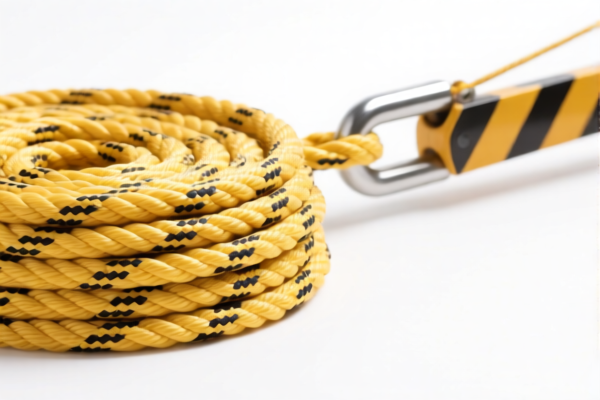
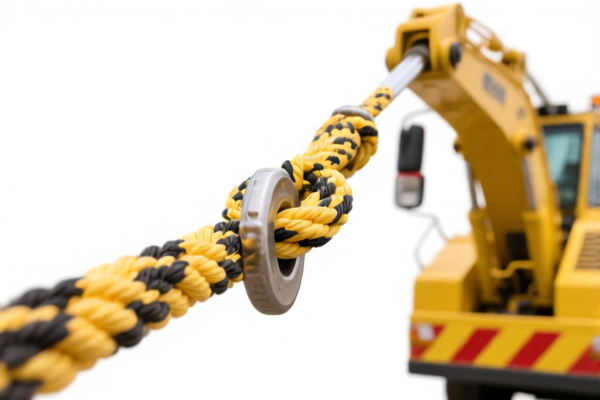
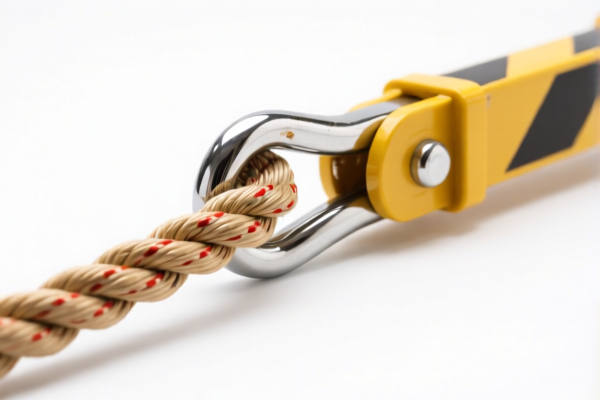
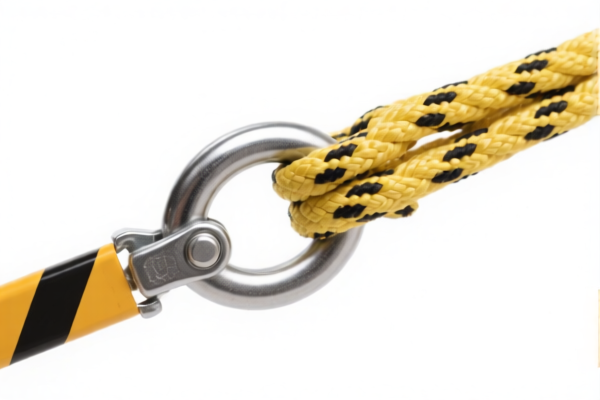
2. Synthetic Twine, Cordage, Ropes, and Cables (5607) * Definition: Ropes made from polymers like Polyethylene (PE) or Polypropylene (PP). Often used for automotive recovery, sailing, or light-duty towing. * Key Feature: Non-metallic, often braided or plaited, may be impregnated/coated with rubber or plastic for durability. * Sub-categories: Polyethylene/Polypropylene ropes vs. other synthetic ropes.
⚠️ Critical Distinction:
- If the rope is steel/metal → It belongs to Chapter 73 (Iron/Steel Articles).
- If the rope is nylon/polyester/polypropylene → It belongs to Chapter 56 (Textile Products).
- Do not mix these! The tax rates are polar opposites (75% vs. 0%).
📦 II. HS Code Classification Matrix (2026 Latest Tariff Schedule)
Based on the provided data, here is the precise breakdown for US imports:
🔩 Category A: Steel Wire Ropes & Cables (Not Electrically Insulated)
| HS Code | Product Description | Material | Typical Use Case |
|---|---|---|---|
| 7312.10.60.60 | Stranded wire, ropes, cables... of stainless steel. Other. | Stainless Steel | Marine towing, corrosive environments, food-grade industrial use. |
| 7312.10.90.90 | Stranded wire, ropes, cables... other than stranded wire. Other. | Carbon/Other Steel | Heavy-duty construction, mining, general industrial towing (non-stainless). |
🧵 Category B: Synthetic Ropes (Polymer-Based)
| HS Code | Product Description | Material | Typical Use Case |
|---|---|---|---|
| 5607.49.30.00 | Twine, cordage, ropes... of polyethylene or polypropylene. Other. | PE / PP | Automotive recovery straps, sailing lines, light-duty tow ropes. |
| 5607.90.90.00 | Twine, cordage, ropes... other. (Includes Nylon, Polyester, etc.) | Other Synthetics | High-strength synthetic ropes (e.g., Nylon winch lines, Polyester halyards). |
🔍 Key Insight:
- 7312 codes attract high tariffs due to trade restrictions on steel/aluminum.
- 5607 codes are generally duty-free (0%) under standard US tariffs, offering significant cost advantages for synthetic alternatives.
💰 III. 2026 Tariff Rate Detailed Breakdown (US Market)
✅ Applicable Country: United States (US)
✅ Origin: China (CN) (Note: Rates below reflect standard US import duties including Section 301/IEEPA surcharges for Chinese origin as per the provided data)
✅ Effective Date: Current 2026 Tariff Schedule
🎯 1. Steel Towing Ropes (HS: 7312.10.60.60 & 7312.10.90.90)
| Item | Detail |
|---|---|
| Base Duty Rate | 0.0% (Ad Valorem) |
| Section 301 Surcharge | +25.0% (Steel/Aluminum/Copper Products) |
| IEEPA Surcharge | +50.0% (Specific Steel/Aluminum/Copper surcharge) |
| Total Effective Rate | 75.0% |
| Tax Calculation | CIF Value × 75% |
| De Minimis Eligibility | ❌ No (High-value industrial goods rarely qualify for $800 de minimis exemption if classified as restricted materials) |
| Legal Basis | USITC:7312.10.60.60 → FOOTNOTE:Steel_Aluminum_Surcharge |
📌 Explanation:
- Despite a 0% base rate, steel products face a combined 75% tariff due to multiple layers of trade sanctions (Section 301 + IEEPA).
- This makes steel towing ropes extremely expensive to import from China to the US.
🎯 2. Synthetic Towing Ropes (HS: 5607.49.30.00 & 5607.90.90.00)
| Item | Detail |
|---|---|
| Base Duty Rate | 0.0% (Ad Valorem) |
| Additional Surcharges | 0.0% (No Section 301 or IEEPA surcharges for textile fibers) |
| Total Effective Rate | 0.0% |
| Tax Calculation | CIF Value × 0% = $0 |
| De Minimis Eligibility | ✅ Yes (If under $800 per person per day, though full HS declaration is still required for compliance) |
| Legal Basis | USITC:5607.49.30.00 / USITC:5607.90.90.00 |
📌 Explanation:
- Synthetic ropes are duty-free. This is a massive cost advantage.
- Many importers switch from steel to high-grade synthetic (e.g., Dyneema or Nylon) ropes to avoid the 75% steel tariff.
🛠️ IV. Customs Clearance Practical Advice (Pitfall Avoidance Guide)
✅ 1. Documentation Checklist (Mandatory)
| Document | Requirement | Why It Matters |
|---|---|---|
| Product Specification Sheet | ✔️ Must explicitly state Material Composition (e.g., "304 Stainless Steel Wire" or "100% Nylon Polypropylene Blend") | Determines HS Code. Ambiguity leads to 75% penalty or audit. |
| Commercial Invoice | ✔️ Clear description: "Stainless Steel Towing Rope" OR "Polypropylene Tow Strap" | Avoids confusion with "Wire Ropes" for electrical use (different HS). |
| Material Test Report | ✔️ Proof of alloy composition (for steel) or fiber type (for synthetic) | Verifies origin and classification. |
| Certificate of Origin | ✔️ If shipped from non-China countries (e.g., Vietnam, Mexico), may qualify for 0% tariff even for steel. | Crucial! Steel from Vietnam may not face the 75% China-specific surcharge. |
| Packing List | ✔️ Net/Gross weight, number of coils/packs | Verifies shipment volume. |
✅ 2. Classification Strategy & Optimization
🔥 "Know Your Material, Save Your Margin!"
| Scenario | Recommended HS Code | Strategy |
|---|---|---|
| Heavy Industrial Towing (e.g., Cranes, Ships) | 7312.10.60.60 |
Must use Steel. Budget for 75% tariff or source from non-China (e.g., Japan, Korea, Vietnam) to potentially reduce surcharges. |
| Automotive/Recovery Towing | 5607.49.30.00 (PP) or 5607.90.90.00 (Nylon) |
Use Synthetic! 0% duty. High strength-to-weight ratio. Ideal for road rescue. |
| General Purpose "Ropes" | Ambiguous? | Do not guess. Provide photos and specs. If it’s shiny and metallic, it’s 7312 (75%). If it’s colorful and flexible, it’s 5607 (0%). |
✅ 3. Special Customs Tips
| Situation | Advice |
|---|---|
| Steel Ropes from China | Expect 75% duty. Calculate if it’s cheaper to buy locally or source from ASEAN countries with FTAs (e.g., CPTPP, RCEP). |
| Synthetic Ropes from China | Enjoy 0% duty. Ensure packaging is clean and labeled correctly to avoid misclassification as "Steel." |
| Mixed Shipments | If shipping both steel and synthetic ropes, separate them in the invoice and use different HS codes. Do not lump them under one generic description. |
| "Not Electrically Insulated" | Explicitly state this in the description. If insulated, it falls under Chapter 85 (Electrical), which has different rules. |
🌍 V. Global Market Comparison (2026)
| Market | Steel Towing Rope (7312) | Synthetic Tow Rope (5607) | Key Requirement |
|---|---|---|---|
| 🇺🇸 USA | 75% (Base 0% + 25% + 50%) | 0% | CBP Compliance, Material Proof |
| 🇪🇺 EU | Varies (Often 0-6.5%) | Varies (Often 0-4%) | CE Marking for safety equipment |
| 🇨🇳 China | Low Duty (~6-10%) | Low Duty (~0-6%) | CCC Certification for safety ropes |
| 🇬🇧 UK | Varies | Varies | Post-Brexit Tariff Schedules |
📌 Conclusion:
- USA is the most hostile market for steel imports due to the 75% combined tariff.
- Synthetic ropes are the smarter choice for US imports from China, offering zero duty.
- For steel, consider supply chain diversification (e.g., sourcing from Vietnam or Thailand) to mitigate US tariffs.
📌 VI. Common Errors & Pitfalls (Learn from Mistakes!)
❌ Error 1: Calling "Steel Wire Rope" a "Tow Rope" without specifying material.
👉 Consequence: Customs may classify it as generic wire (lower duty) or demand full inspection → Delays + 75% back-tariff.
❌ Error 2: Classifying "Nylon Tow Strap" under steel codes because it has metal hooks.
👉 Consequence: Classification Error. The rope itself is textile (5607), not metal (7312). The hooks are accessories.
❌ Error 3: Ignoring the "Not Electrically Insulated" clause.
👉 Consequence: If insulation is present, it falls under Chapter 85. Wrong HS code → Penalties.
❌ Error 4: Assuming all "Ropes" are duty-free.
👉 Consequence: Steel ropes are NOT duty-free in the US (75%). Only synthetic/textile ropes are.
✅ Best Practice:
"Polypropylene Towing Rope, Braided, 10mm x 3m, for Automotive Use, Non-Conductive, Model TR-100"
"Stainless Steel Wire Rope, 316L, 6x19 Construction, 10mm Diameter, Marine Grade, Model SR-10"
🎯 VII. Conclusion: Strategic Sourcing for 2026
🎯 Key Takeaway:
🔹 For US Imports:
- Steel Ropes: 75% Tax. High cost. Source locally or from non-China countries.
- Synthetic Ropes: 0% Tax. Low cost. Ideal for US market.
🔹 For Global Imports:
- Check local steel tariffs. EU and Asia may have lower steel duties than the US.
📌 Action Plan:
1. Identify Material: Steel vs. Synthetic.
2. Select HS Code: 7312 (Steel) vs. 5607 (Synthetic).
3. Calculate Duty: 75% (Steel/China) vs. 0% (Synthetic/China).
4. Source Strategically: Switch to synthetic for US-bound steel applications, or diversify steel supply chain.
✨ Professional Customs Clearance Starts with Accurate Classification!
💼 Don't let 75% tariffs eat your profit. Choose the right HS Code!
Customer Reviews
About HS Code Classification
The Harmonized System (HS) is an internationally standardized nomenclature developed by the World Customs Organization (WCO) to classify traded products. Over 200 countries use the HS system as the basis for customs tariffs, trade statistics, and import/export regulations.
Each HS code follows a hierarchical structure:
- Chapter (2 digits) — Broad category of goods (e.g., Chapter 84: Machinery and Mechanical Appliances)
- Heading (4 digits) — More specific grouping within the chapter
- Subheading (6 digits) — Internationally standardized breakdown, used by all WCO member countries
- National subdivisions (8-10 digits) — Country-specific extensions for further classification, such as US HTSUS 10-digit codes
Correct HS code classification is essential for smooth customs clearance, accurate duty payment, and compliance with trade regulations. Misclassification can lead to customs delays, overpayment of duties, or penalties.
When importing from CN to US, the applicable tariff rates may include:
- Most-Favored-Nation (MFN) rate — The standard duty rate applied to WTO members
- General rate — Applied to countries without trade agreements
- Trade remedy duties — Additional tariffs such as Section 301 (anti-dumping), Section 232 (national security), or countervailing duties
The information provided on this page is for reference purposes only. For official classification, please consult with your local customs authority or a licensed customs broker.