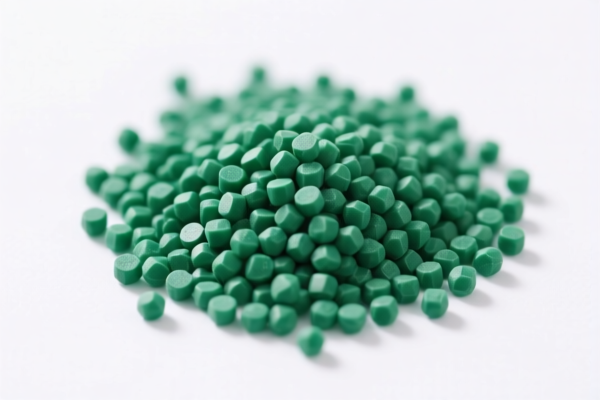
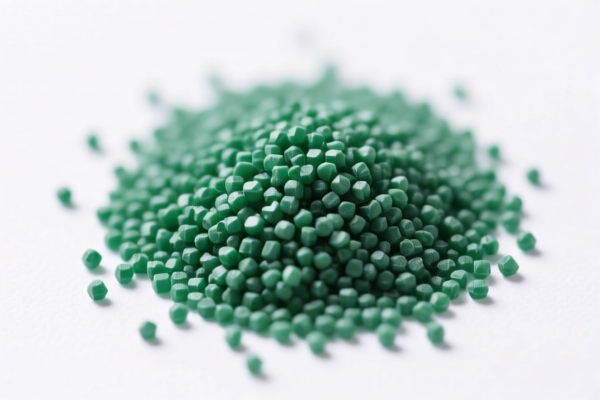
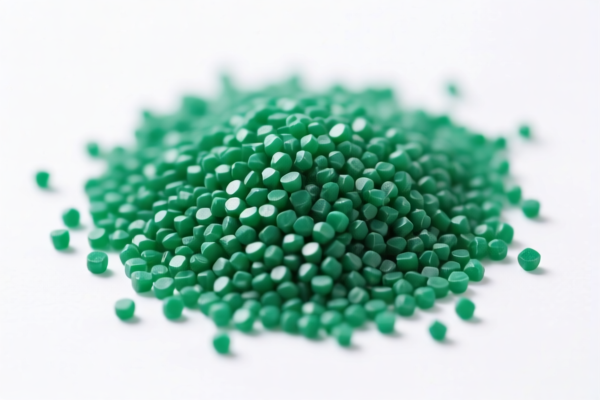
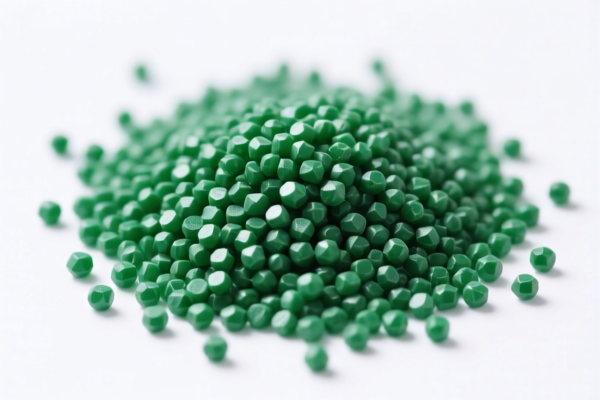
toy grade polymer particles
CN → US| HS Code | Tariff Rate | Origin | Destination | Doc |
|---|---|---|---|---|
| 3907690010 | 41.5% | CN | US | Official Doc |
| 3907610010 | 41.5% | CN | US | Official Doc |
Product Images
AI Analysis
🧸 Toy Grade Polymer Particles (Acrylic Polymers)
🌐 HS Code Reference & Customs Clearance Guide | 2026 Latest Tariff Analysis | Professional Clearance Strategy
📌 One, Product Definition & Classification: Do You Really Understand "Acrylic Polymer Particles"?
Acrylic polymers, in primary forms, are synthetic resin materials widely used in various industries, including toys, packaging, and construction. In international trade, they are strictly classified based on their physical state and technical specifications, specifically the viscosity number. For "Toy Grade" particles, the critical factor is not the end-use (toys) but the viscosity number (VN), which determines the HS Code and the corresponding tariff burden.
⚠️ Key Distinction Point:
- The classification depends entirely on the Viscosity Number (VN) measured in ml/g.
- Two specific ranges are defined in the provided data:
1. VN ≥ 70 ml/g but < 78 ml/g
2. VN ≥ 78 ml/g but ≤ 88 ml/g
- Crucial Note: "Toy Grade" is not a separate HS Code category. It is a marketing/usage term. The customs authority classifies based on the chemical/physical property (VN), not the end-use. Misclassification due to ignoring VN ranges leads to severe penalties.
📦 Two, HS Code Classification Details (2026 Latest Tariff Authority Comparison)
| HS Code | Product Description | Applicable Scenario | Viscosity Number (VN) Range |
|---|---|---|---|
3907.69.00.10 |
Acrylic polymers in primary forms: Other: Other: Other | Acrylic particles/resins with moderate viscosity | ≥ 70 ml/g but < 78 ml/g |
3907.61.00.10 |
Acrylic polymers in primary forms: Other: Other: Other | Acrylic particles/resins with higher viscosity | ≥ 78 ml/g but ≤ 88 ml/g |
🔍 Key Reminder:
- Both codes fall under Chapter 39 (Plastics and Articles Thereof).
- The distinction is strictly numerical. A VN of 77.9 ml/g goes to3907.69.00.10. A VN of 78.1 ml/g goes to3907.61.00.10.
- Do not use generic terms like "Acrylic Beads" or "Polymer Granules" in customs declarations. You must specify the Viscosity Number range or provide test reports proving the VN.
- If the VN is < 70 ml/g or > 88 ml/g, it may fall under different subheadings (not covered in this specific data), so precise testing is essential.
💰 Three, 2026 Latest Tariff Rate Details (Including Surtax & Policy Add-ons)
✅ Applicable Country: United States (US)
✅ Origin: China (CN)
✅ Effective Time: Ongoing (Subject to 301 Tariff List)
🎯 1. 3907.69.00.10 —— Acrylic Polymers (VN: 70–78 ml/g)
| Item | Content |
|---|---|
| Base Tariff Rate | 6.5% (Ad Valorem) |
| Additional Surtax (Section 301) | +25.0% |
| Total Tax Rate | 31.5% |
| Tax Calculation | CIF Value × 31.5% |
| De Minimis Exemption Eligible | ❌ No (High duty rate exceeds threshold for exemption) |
| Legal Basis Path | HTSUS:3907.69.00.10 → USITC Footnote 9903.88.01 (Section 301) |
📌 Explanation:
- The 6.5% is the standard Most Favored Nation (MFN) base tariff for acrylic polymers.
- The 25.0% surtax is applied under Section 301 of the Trade Act of 1974, targeting specific Chinese-origin goods.
- Total Burden: 31.5%. This is a high-cost item for importers. Cost calculation must include this 31.5% on top of product cost, shipping, and insurance.
🎯 2. 3907.61.00.10 —— Acrylic Polymers (VN: 78–88 ml/g)
| Item | Content |
|---|---|
| Base Tariff Rate | 6.5% (Ad Valorem) |
| Additional Surtax (Section 301) | +25.0% |
| Total Tax Rate | 31.5% |
| Tax Calculation | CIF Value × 31.5% |
| De Minimis Exemption Eligible | ❌ No |
| Legal Basis Path | HTSUS:3907.61.00.10 → USITC Footnote 9903.88.01 (Section 301) |
📌 Note:
- Identical Tax Rate: Despite the different HS Code (due to VN difference), the tax burden is exactly the same (31.5%).
- Why Different Codes? Customs requires precise classification for statistical and regulatory purposes. However, for cost planning, both ranges carry the same high duty rate.
- Test Reports Are Mandatory: Importers must provide Certificate of Analysis (CoA) or Viscosity Test Reports to prove the VN falls within the declared range. Failure to do so may result in reclassification and additional duties.
🛠️ Four, Customs Clearance Practical Advice (实战避坑指南)
✅ 1. Required Document Checklist (Non-Negotiable)
| Document | Required? | Description |
|---|---|---|
| ✅ Certificate of Analysis (CoA) | ✔️ Must | Must include Viscosity Number (ml/g) test results. This is the most critical document. |
| ✅ Product Specification Sheet | ✔️ | Details molecular weight, particle size, color, and intended use (e.g., "Toy Grade"). |
| ✅ Commercial Invoice | ✔️ | Must state "Acrylic Polymers in Primary Forms" and specify the VN range if possible. |
| ✅ Packing List | ✔️ | Weight, dimensions, and package count. |
| ✅ Bill of Lading/Air Waybill | ✔️ | Standard shipping document. |
| ✅ Test Report from Accredited Lab | ✔️ | Recommended to have a third-party lab (e.g., SGS, Intertek) verify VN to avoid customs disputes. |
✅ 2. Declaration Tips (Key Mantra)
🔥 "Viscosity Number is King, Test Report is Proof, Misclassification is Risk!"
| Situation | Correct Declaration | Wrong Practice |
|---|---|---|
| VN is 75 ml/g | HS Code: 3907.69.00.10Description: "Acrylic Polymers, VN 75 ml/g" |
Declare as "Plastic Beads" without VN → Reclassification Risk |
| VN is 82 ml/g | HS Code: 3907.61.00.10Description: "Acrylic Polymers, VN 82 ml/g" |
Declare as "Toy Parts" → Wrong Chapter, High Penalty |
| VN is 65 ml/g | Not Covered in This Data Consult expert for other subheadings |
Force into 3907.69 → Illegal Misclassification |
| No Test Report | Do Not Declare Request lab test before shipment |
Guess the code → Customs Hold & Inspection |
✅ 3. Special Case Handling
| Scenario | Handling Advice |
|---|---|
| Mixed VN Ranges in One Shipment | Must Split Declaration. Each HS Code requires separate line items. Mixing VN ranges in one declaration is a violation. |
| "Toy Grade" Marketing Label | Include in the description field (e.g., "For Toy Manufacturing") but not as the primary classification basis. The VN still dictates the code. |
| Supplier Provides No VN Data | Reject Shipment or Require Retesting. Without VN data, you cannot accurately declare. Risk of 31.5% error or higher penalties. |
| Import for R&D vs. Commercial | Tax rate is same (31.5%). No exemption for "Toy Grade" or "R&D". Plan for full duty cost. |
🌍 Five, Global Market Comparison (2026 Latest)
| Country/Region | Recommended HS Code | Total Tariff Rate | Certification/Note |
|---|---|---|---|
| 🇺🇸 USA | 3907.69.00.10 or 3907.61.00.10 |
31.5% | Section 301 Surtax applies. VN proof required. |
| 🇨🇳 China | 3907.69.10 or 3907.61.10 (Local Subhead) | ~6.5% | No additional surtax. Standard import VAT 13%. |
| 🇪🇺 EU | 3907.69.10 or 3907.61.10 | 6.5% | No Section 301 equivalent. REACH compliance required. |
| 🇬🇧 UK | 3907.69.10 or 3907.61.10 | 6.5% | Post-Brexit tariff. No US-style surtax. |
| 🇨🇦 Canada | 3907.69.00.00 or 3907.61.00.00 | 6.5% | CET (Common External Tariff). No surtax. |
📌 Conclusion:
- USA is the most expensive market for this product due to the 25% Section 301 surtax.
- EU, UK, Canada, and China have significantly lower duties (around 6.5%).
- Strategy: If targeting the US, factor in the 31.5% total tax. Consider sourcing from Vietnam, India, or Thailand if possible to avoid Section 301 (check rules of origin).
📌 Six, Common Mistakes & Pitfalls (Blood & Tears Lessons)
❌ Mistake 1: Using "Acrylic Beads" as the product name without VN.
👉 Consequence: Customs cannot classify. Shipment held. Delay costs + storage fees.
❌ Mistake 2: Assuming "Toy Grade" gets a lower tax rate.
👉 Consequence: No exemption. Tax remains 31.5%. Budget error leads to profit loss.
❌ Mistake 3: Ignoring the VN threshold boundary (78 ml/g).
👉 Consequence: A VN of 78.0 ml/g is 3907.61.00.10. A VN of 77.9 ml/g is 3907.69.00.10. Precision is key. Small errors in test results lead to wrong HS codes.
❌ Mistake 4: Not providing test reports.
👉 Consequence: Customs demands retesting. Importer pays for testing + delays. Possible fines.
✅ Correct Approach:
"Acrylic Polymers in Primary Forms, Viscosity Number 75 ml/g, For Toy Manufacturing, CN Origin"
🎯 Seven, Conclusion: Precise Classification Saves Money!
🎯 Remember the Mantra:
🔹 "Viscosity Number Dictates Code, Test Report is Your Shield."
🔹 "31.5% Tax is Non-Negotiable for US Imports, Plan Your Pricing Accordingly."
🔹 "Don't Gamble on 'Toy Grade', Classify by Science, Not Marketing."
📌 Pro Tip:
If your supplier cannot provide accredited Viscosity Number test reports, do not import. The risk of misclassification is too high.
Consider Advance Rulings from US Customs (CBP) if you have large, consistent shipments. This provides legal certainty on the HS Code.
📣 Immediate Action:
📞 Contact Your Freight Forwarder + Request CoA from Supplier + Verify VN Range.
🚀 Ensure Smooth Clearance, Avoid Surprises, Protect Margins!
✨ Professional Clearance Starts with Precise Classification!
💼 Every Percent of Tax Matters in Global Trade!
Customer Reviews
About HS Code Classification
The Harmonized System (HS) is an internationally standardized nomenclature developed by the World Customs Organization (WCO) to classify traded products. Over 200 countries use the HS system as the basis for customs tariffs, trade statistics, and import/export regulations.
Each HS code follows a hierarchical structure:
- Chapter (2 digits) — Broad category of goods (e.g., Chapter 84: Machinery and Mechanical Appliances)
- Heading (4 digits) — More specific grouping within the chapter
- Subheading (6 digits) — Internationally standardized breakdown, used by all WCO member countries
- National subdivisions (8-10 digits) — Country-specific extensions for further classification, such as US HTSUS 10-digit codes
Correct HS code classification is essential for smooth customs clearance, accurate duty payment, and compliance with trade regulations. Misclassification can lead to customs delays, overpayment of duties, or penalties.
When importing from CN to US, the applicable tariff rates may include:
- Most-Favored-Nation (MFN) rate — The standard duty rate applied to WTO members
- General rate — Applied to countries without trade agreements
- Trade remedy duties — Additional tariffs such as Section 301 (anti-dumping), Section 232 (national security), or countervailing duties
The information provided on this page is for reference purposes only. For official classification, please consult with your local customs authority or a licensed customs broker.