tractor hs code 8701301090
CN → US| HS Code | Tariff Rate | Origin | Destination | Doc |
|---|---|---|---|---|
| 8701301090 | 35.0% | CN | US | Official Doc |
| 8701911000 | 35.0% | CN | US | Official Doc |
| 8701915000 | 35.0% | CN | US | Official Doc |
Product Images
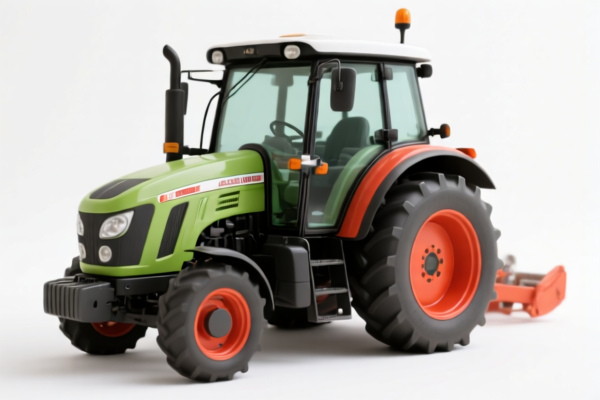
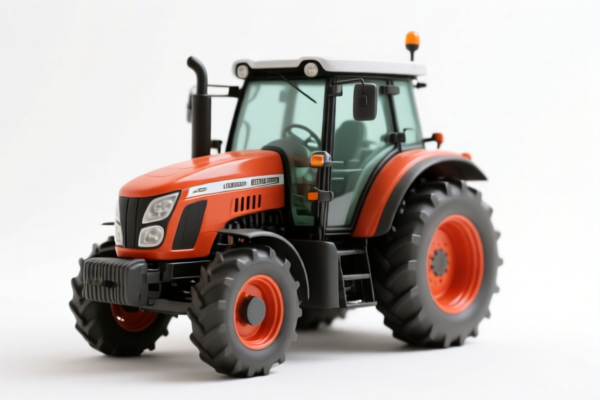
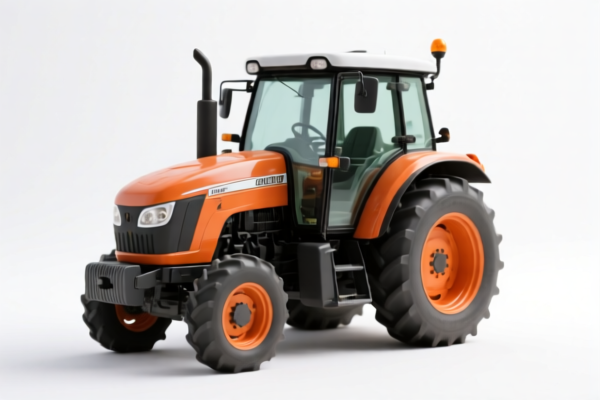
AI Analysis
🚜 Track-Laying Tractors for Agricultural Use (HS Code: 8701.30.10.90)
🌐 HS Code Reference & Clearance Guide | 2026 Latest Tariff Analysis | Professional Customs Strategy
📌 I. Product Definition & Classification: What Exactly is a "Track-Laying Agricultural Tractor"?
In international trade, Tractors are primarily defined by their propulsion system and intended use. The specific HS Code 8701.30.10.90 refers to a highly specialized category:
Track-Laying Tractors (Crawlers): Unlike wheeled tractors, these utilize continuous tracks (like tanks) for superior traction in soft, muddy, or uneven terrain.
* Usage: Specifically designed for Agricultural Use (farming, plowing, harvesting).
* Condition: The code 90 at the end typically denotes "Other" or "Used" (depending on specific national sub-category definitions, but in the provided data, it is grouped with "Used" and general agricultural applicability alongside the new high-power category).
* Key Distinction: It is NOT a wheeled tractor (Heading 8701.10/20) and NOT a military or specialized industrial crawler not intended for agriculture.
⚠️ Critical Differentiation:
- If the tractor has wheels → It falls under different sub-headings (e.g., 8701.20 or 8701.30 depending on power).
- If it is New and has Net Engine Power ≥ 257.4 kW → It falls under 8701.30.10.75.
- If it is Used or New but < 257.4 kW (and not otherwise specified) → It may fall under 8701.30.10.90 (depending on specific country interpretation of "Other"), but in the provided data,90is linked to "Used" agricultural track-laying tractors.
📦 II. HS Code Classification Details (Based on Provided Data 2026)
| HS Code | Product Description | Key Attributes | Tax Status |
|---|---|---|---|
8701.30.10.90 |
Track-laying tractors: Suitable for agricultural use: Used | Crawler system, Farm application, Non-new condition | 25.0% Total |
8701.30.10.75 |
Track-laying tractors: Suitable for agricultural use: New: With a net engine power of 257.4 kW or more | Crawler system, Farm application, New, High Power (≥345 HP) | 25.0% Total |
🔍 Important Note:
- The provided data only lists these two specific sub-codes under Heading 8701.30.
- 8701.30.10.90 is explicitly associated with Used track-laying agricultural tractors in the provided text.
- 8701.30.10.75 is for New high-power (≥257.4 kW) units.
- Any track-laying tractor for agriculture that does not fit these two specific descriptions (e.g., new, low-power) is not explicitly covered in the provided snippet, but logically would fall into a different sub-category not listed here. Stick strictly to the provided data for clearance.
💰 III. 2026 Latest Tariff Rate Breakdown (Detailed)
✅ Applicable Country: United States (US)
✅ Origin: China (CN) (Implied by the "Additional Duty" structure)
✅ Effective Date: Current (2025-2026 period)
🎯 1. 8701.30.10.90 —— Track-Laying Tractor (Agricultural, Used)
| Item | Content |
|---|---|
| Base Tariff Rate | 0.0% (ad valorem) |
| Additional Duty (Section 301) | +25.0% |
| Total Tax Rate | 25.0% |
| Tax Calculation | CIF Value × 25% |
| Exemption Eligibility | ❌ None (Standard agricultural machinery subject to current US-China trade terms) |
| Legal Basis | USITC Heading 8701.30.10.90 |
📌 Interpretation:
- The 0% base tariff reflects the general MFN (Most Favored Nation) rate for certain agricultural equipment.
- The 25% additional duty is a Section 301 tariff imposed on Chinese-origin goods.
- Total Cost Impact: For every $100,000 CIF value, you pay $25,000 in duties alone.
🎯 2. 8701.30.10.75 —— High-Power New Track-Laying Tractor (≥257.4 kW)
| Item | Content |
|---|---|
| Base Tariff Rate | 0.0% (ad valorem) |
| Additional Duty (Section 301) | +25.0% |
| Total Tax Rate | 25.0% |
| Tax Calculation | CIF Value × 25% |
| Exemption Eligibility | ❌ None |
| Legal Basis | USITC Heading 8701.30.10.75 |
📌 Interpretation:
- High-power agricultural machinery is not exempt from the 25% Section 301 tariffs in this dataset.
- The threshold of 257.4 kW (approx. 345 HP) is a critical technical parameter. Misdeclaring a 300 HP unit as "≥257.4 kW" or vice versa can lead to classification errors and audits.
🛠️ IV. Customs Clearance Practical Advice (Pitfall Avoidance Guide)
✅ 1. Documentation Checklist (Mandatory)
| Document | Required? | Explanation |
|---|---|---|
| ✅ Commercial Invoice | ✔️ | Must clearly state "Track-Laying Tractor, Agricultural Use" and specify "Used" or "New". |
| ✅ Packing List | ✔️ | Detail weight, dimensions, and any included attachments (blades, plows). |
| ✅ Proof of Power Output | ✔️ | For 8701.30.10.75, you MUST provide engine test reports or manufacturer specs proving net power ≥257.4 kW. |
| ✅ Certificate of Origin | ✔️ | Essential for determining applicability of Section 301 duties. |
| ✅ Condition Statement | ✔️ | For 8701.30.10.90, if claiming "Used," be prepared to justify non-new status (photos, mileage/hours meter readings). |
| ✅ FCC Certification | ✔️ | Most modern tractors have electronic control units (ECUs). FCC ID may be required. |
✅ 2. Declaration Tips (Crucial Keywords)
🔥 "Define by Propulsion & Use: Tracks, Not Wheels; Farm, Not Military."
| Scenario | Correct HS Code | Wrong Approach |
|---|---|---|
| Used Crawler Tractor | 8701.30.10.90 |
Declaring as wheeled tractor (8701.20) → Misclassification Risk |
| New Crawler, Power ≥ 257.4 kW | 8701.30.10.75 |
Declaring as "Used" to avoid scrutiny → Fraud Risk |
| New Crawler, Power < 257.4 kW | Not in Provided Data | Do not use 8701.30.10.75 or .90. Seek other sub-headings (e.g., 8701.30.10.30/40/50 not listed). |
| Military Crawler | Wrong Heading | Do not use 8701 (Agricultural). Use Heading 8701 or 8706 depending on specifics. |
✅ 3. Special Considerations
| Situation | Advice |
|---|---|
| Used Equipment Age | Ensure the "Used" declaration is truthful. Customs may inspect for signs of newness (fresh paint, zero hours). |
| Engine Power Dispute | Net power must be measured at the crankshaft per SAE standards. Provide certified test data. |
| Attachments | If shipped with heavy plows, ensure they are not declared separately with lower tariffs. Bundled shipment = Tractor tariff. |
| Section 301 Exclusions | Check if this specific model was ever on an exclusion list. (Note: Provided data shows no exemption). |
🌍 V. Global Market Comparison (2026)
| Region | HS Code Alignment | Tariff Impact | Notes |
|---|---|---|---|
| 🇺🇸 USA | 8701.30.10.90 / .75 |
25% | Section 301 applies. High duty burden. |
| 🇨🇳 China | 8701.30 |
Varies | Import tariffs may differ; check current Chinese customs tariff book. |
| 🇪🇺 EU | 8701.30 |
~0-3% | Generally lower agricultural machinery tariffs, but strict EPA/Emmissions rules apply. |
| 🇦🇺 Australia | 8701.30 |
~5-10% | Check for recent FTA agreements. |
📌 Conclusion:
- The USA market presents the highest tariff barrier (25%) for these goods.
- Accurate classification between.90(Used) and.75(New, High Power) is critical.
- Power rating is a key technical differentiator.
📌 VI. Common Errors & Pitfalls (Lessons Learned)
❌ Error 1: Declaring a wheeled tractor as "Track-Laying"
👉 Consequence: Wrong HS Code, potential penalties, seizure.
👉 Fix: Verify propulsion type. Crawler tracks = Track-laying. Wheels = Wheeled.
❌ Error 2: Misstating Engine Power
👉 Consequence: If a 300 HP tractor is declared as ≥257.4 kW, it’s correct. But if a 200 HP tractor is declared as such, it’s misclassification.
👉 Fix: Provide engine manufacturer datasheet.
❌ Error 3: Ignoring "Used" status documentation
👉 Consequence: Customs may suspect undervaluation or fraud.
👉 Fix: Include photos, hour meter readings, and maintenance logs.
❌ Error 4: Assuming 0% Base Rate means 0% Total Duty
👉 Consequence: Budgeting errors. You still pay 25%.
👉 Fix: Plan for 25% total duty on CIF value.
✅ Correct Declaration Example:
"Track-Laying Tractor, Model XYZ, Used, Agricultural Use, Net Engine Power 150 kW, Model Year 2018, HS Code 8701.30.10.90"
🎯 VII. Conclusion: Precision in Agriculture Machinery Clearance
🎯 Key Takeaway:
🔹 "Tracks define 8701.30; Power defines 75 vs 90; China origin adds 25%."
🔹 Don't confuse "Wheeled" with "Track-Laying".
🔹 Don't underestimate the 25% Section 301 duty.
📌 Pro Tip:
For New, High-Power tractors (≥257.4 kW), ensure your engine test certificates are up-to-date and clearly state Net Power. For Used tractors, maintain historical usage records to justify the "Used" classification.
📣 Immediate Action:
📞 Consult a Customs Broker: Validate your tractor’s exact power output and condition.
📄 Prepare Engine Specs: Have SAE-certified power data ready.
💰 Budget for 25% Duty: Include this in your landed cost calculation.
✨ Accurate Classification Saves Money!
💼 Your Profit Margin Depends on Duty Accuracy!
Customer Reviews
About HS Code Classification
The Harmonized System (HS) is an internationally standardized nomenclature developed by the World Customs Organization (WCO) to classify traded products. Over 200 countries use the HS system as the basis for customs tariffs, trade statistics, and import/export regulations.
Each HS code follows a hierarchical structure:
- Chapter (2 digits) — Broad category of goods (e.g., Chapter 84: Machinery and Mechanical Appliances)
- Heading (4 digits) — More specific grouping within the chapter
- Subheading (6 digits) — Internationally standardized breakdown, used by all WCO member countries
- National subdivisions (8-10 digits) — Country-specific extensions for further classification, such as US HTSUS 10-digit codes
Correct HS code classification is essential for smooth customs clearance, accurate duty payment, and compliance with trade regulations. Misclassification can lead to customs delays, overpayment of duties, or penalties.
When importing from CN to US, the applicable tariff rates may include:
- Most-Favored-Nation (MFN) rate — The standard duty rate applied to WTO members
- General rate — Applied to countries without trade agreements
- Trade remedy duties — Additional tariffs such as Section 301 (anti-dumping), Section 232 (national security), or countervailing duties
The information provided on this page is for reference purposes only. For official classification, please consult with your local customs authority or a licensed customs broker.