transfer line adapter
CN → US| HS Code | Tariff Rate | Origin | Destination | Doc |
|---|---|---|---|---|
| 8544493080 | 40.3% | CN | US | Official Doc |
| 8536904000 | 35.0% | CN | US | Official Doc |
| 8536908585 | 85.0% | CN | US | Official Doc |
| 8544493040 | 40.3% | CN | US | Official Doc |
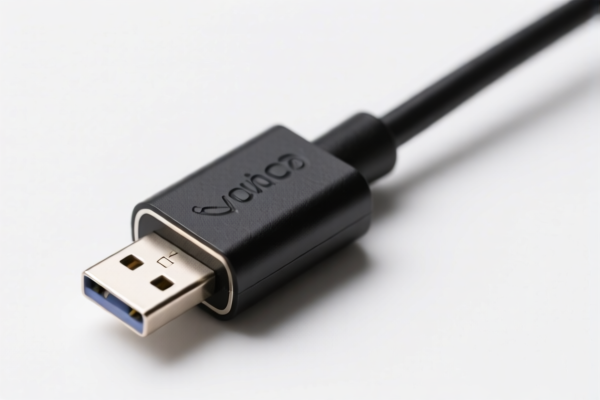
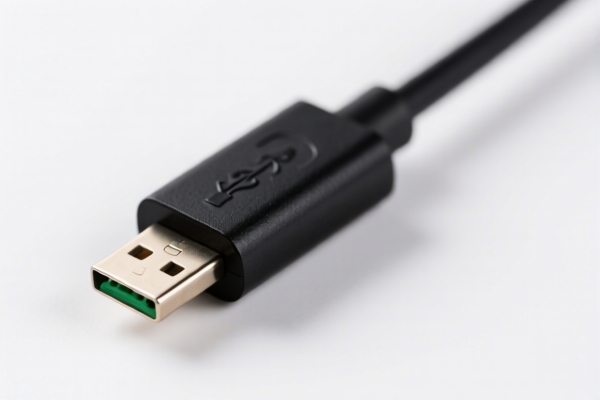
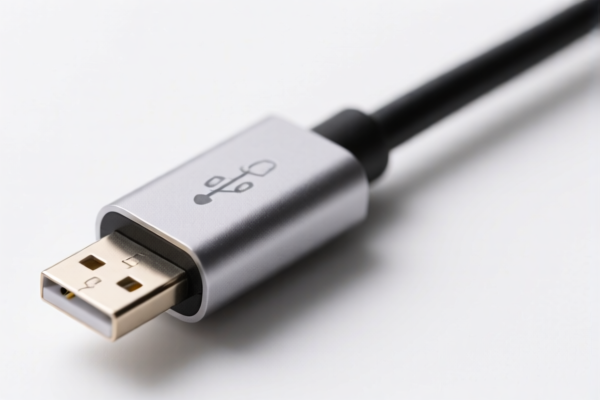
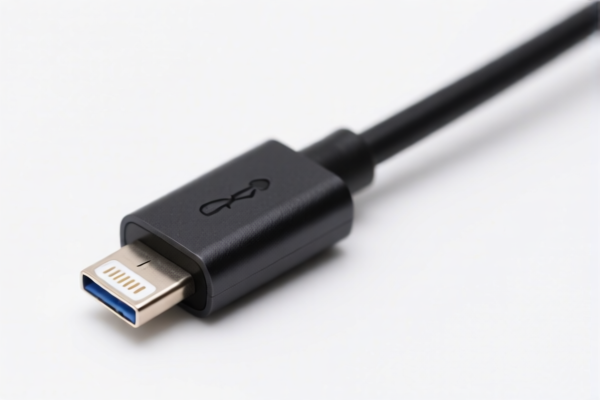
Product Images
AI Analysis
🔌 Transfer Line Adapter (Transmission Line Adapter)
🌐 HS Code Reference & Customs Clearance Guide | 2026 Latest Tariff Analysis | Professional Clearance Strategy
📌 1. Product Definition and Classification: What Exactly is a "Transfer Line Adapter"?
A Transfer Line Adapter (often referred to as a Transmission Line Adapter, Cable Assembly, or Interconnect Cable) is an electrical component used to connect circuits, transmit signals, or deliver power between electronic devices. In international trade, its classification depends heavily on its construction, material, and specific function.
⚠️ Critical Distinction:
- If it is a simple conductive wire/cable without complex electronic components → Typically falls under Chapter 8544 (Insulated Wires, Cables).
- If it is a connector/coupler/jack used to join wires or equipment → Typically falls under Chapter 8536 (Electrical Apparatus for Switching/Protecting/Connecting Circuits).
- Material Impact: The presence of steel, aluminum, or copper can trigger additional "Section 122" tariffs in the US (up to 50% extra).
📦 2. HS Code Classification Details (2026 Latest Tariff Authority Mapping)
Based on the provided data, here are the four most relevant HS Codes for Transfer Line Adapters, categorized by their logical function and material conflict:
| HS Code | Product Description | Classification Logic (Why this Code?) | Key Risk Factor |
|---|---|---|---|
8544.49.30.80 |
Insulated Conductors & Cables (Other) | "Conductor Definition": The item is viewed primarily as an electric conductor. There is no obvious material conflict (e.g., no special steel/aluminum triggers). | Lower Risk |
8536.90.40.00 |
Connectors / Couplers for Circuits | "Connector Definition": The item is viewed as an electrical apparatus for connecting circuits (e.g., a jack, plug, or coupling device). | Medium Risk |
8536.90.85.85 |
Other Electrical Connectors/Couplers | "Common Sense/Default": Used when the specific connector type doesn't fit niche codes. High Risk: Explicitly notes potential Steel/Aluminum/Copper tariffs. | HIGH RISK |
8544.49.30.40 |
Insulated Conductors & Cables (Other) | "Conductor Definition": Similar to .80 but possibly different sub-segment. No material/voltage conflict identified. | Lower Risk |
🔍 Key Insight:
- Codes ending in .40 or .80 under 8544 are generally safer if the item is a pure cable/wire assembly.
- Codes under 8536 are for connectors. If your adapter is a cable with connectors on both ends, customs may still classify it as 8544 (the whole assembly) OR 8536 (the connector function), depending on interpretation. The data shows a split opinion.
💰 3. 2026 Latest Tariff Rate Breakdown (Including Surcharges & Policy Add-ons)
✅ Applicable Country: United States (US)
✅ Origin: China (CN) (Implied by Section 122 and 301 tariffs)
✅ Effective Time: Current active rates (Section 301 & IEEPA)
🎯 1. 8544.49.30.80 & 8544.49.30.40 — Insulated Conductors/Cables
(Categorized as "No Obvious Material Conflict")
| Item | Detail |
|---|---|
| Base Tariff | 5.3% (Ad Valorem) |
| Section 301 Surcharge | +25.0% (USITC Footnote 9903.88.01) |
| Section 122/IEEPA Surcharge | +10.0% (Specific to China-origin electrical goods/cables) |
| Total Effective Rate | 40.3% |
| Tax Calculation | CIF Value × 40.3% |
| De Minimis Exemption? | ❌ NO (Denied for Section 301/122 items) |
| Legal Path | USITC:8544.49.30 → FOOTNOTE:9903.88.01 → IEEPA:Section122 |
📌 Explanation:
- This is the preferred classification for pure cable/line assemblies without exotic metals.
- Total 40.3% is high but significantly lower than the "Material Conflict" category.
🎯 2. 8536.90.40.00 — Connectors/Couplers
(Categorized as "Electrical Apparatus for Connecting Circuits")
| Item | Detail |
|---|---|
| Base Tariff | 0.0% (Free) |
| Section 301 Surcharge | +25.0% |
| Section 122/IEEPA Surcharge | +10.0% |
| Total Effective Rate | 35.0% |
| Tax Calculation | CIF Value × 35.0% |
| De Minimis Exemption? | ❌ NO |
| Legal Path | USITC:8536.90.40 → FOOTNOTE:9903.88.01 → IEEPA:Section122 |
📌 Explanation:
- Interestingly, the base rate is 0%, making the total tax 35.0% (lower than 8544).
- BUT: This only applies if Customs agrees the item is a pure connector/coupler and not a cable assembly. If it's a long cable with connectors, they may revert to 8544.
🎯 3. 8536.90.85.85 — Other Connectors (Default/High Risk)
(Categorized as "Common Sense" with Material Conflict)
| Item | Detail |
|---|---|
| Base Tariff | 0.0% |
| Section 301 Surcharge | +25.0% |
| Section 122/IEEPA Surcharge | +10.0% |
| Steel/Aluminum/Copper Surcharge | +50.0% (CRITICAL: "Steel, Aluminum, Copper Products Surcharge") |
| Total Effective Rate | 85.0% |
| Tax Calculation | CIF Value × 85.0% |
| De Minimis Exemption? | ❌ NO |
| Legal Path | USITC:8536.90.85 → FOOTNOTE:9903.88.01 → IEEPA:Section122 → Steel/Al/Cu Tariff |
📌 Explanation:
- AVOID THIS CODE IF POSSIBLE.
- The 85.0% total tax is punitive. It triggers because the classification is vague ("Other"), and Customs applies the strictest "Section 122" metal tariffs.
- If your adapter contains steel, aluminum, or significant copper, this risk is real.
🛠️ 4. Customs Clearance Practical Advice (Battle-Tested Pitfall Guide)
✅ 1. Material Declaration Strategy (The "Metal" Trap)
| Material Component | Recommendation | Risk Level |
|---|---|---|
| Pure Copper/Silver Wires | Declare as 8544.49.30.80 (Cable) | ✅ Low (40.3%) |
| Plastic/Metal Connectors | Try to argue for 8536.90.40.00 (Connector) | ✅ Medium (35.0%) |
| Steel Case / Aluminum Housing | Be very careful. May trigger 85.0% rate. | ❌ HIGH RISK |
📌 Expert Tip:
- If your "Transfer Line Adapter" is a short patch cable (e.g., HDMI, USB, Ethernet), emphasize its function as a signal conductor (8544).
- If it is a standalone jack/panel mount, emphasize its function as a circuit coupler (8536.90.40.00).
- Never use the vague code8536.90.85.85unless you have no other choice and can prove zero steel/aluminum/copper content (which is rare).
✅ 2. Required Documentation for Smooth Clearance
| Document | Required? | Notes |
|---|---|---|
| Product Photos | ✅ Mandatory | Show both ends (connectors) and the cable body. |
| Specifications Sheet | ✅ Mandatory | Must state: Length, Material (Copper/PVC/Steel), Voltage Rating. |
| Commercial Invoice | ✅ Mandatory | Description: "Cable Assembly, Model XYZ" (Not just "Adapter"). |
| Country of Origin | ✅ Mandatory | Must clearly state "Made in China" (to trigger correct 301/122 rates). |
| Material Composition | ✅ Recommended | Breakdown of % Copper, % PVC, % Steel (if any). |
✅ 3. Strategic Recommendations for Importers
- Prefer 8536.90.40.00 if Possible:
- If your product is a connector (not a long cable), this code has a 35.0% total tax rate, which is 5% cheaper than the 8544 cable codes (40.3%).
-
Argument: "This is an electrical coupling device, not a length of wire."
-
Avoid "Default" Classifications:
- Do not let customs assign
8536.90.85.85by default. The 85.0% tax is devastating. -
If your adapter has metal housing, consider using plastic/non-metallic materials to avoid the Steel/Aluminum surcharge.
-
Bundle Shipping Strategy:
- If importing small quantities, remember De Minimis (Section 321) does NOT apply to Section 301/122 goods. You will pay taxes on all shipments from China.
🌍 5. Global Market Comparison (2026)
| Market | Recommended HS Code | Approx. Total Tax | Notes |
|---|---|---|---|
| 🇺🇸 USA | 8544.49.30.80 or 8536.90.40.00 |
35.0% - 40.3% | Avoid 8536.90.85.85 (85%) |
| 🇨🇳 China | 8544.49.30.80 |
~5-10% | Lower import duty, no Section 301 |
| 🇪🇺 EU | 8544.49.30 |
~0-2.5% | No punitive tariffs, but VAT applies |
| 🇬🇧 UK | 8544.49.30 |
~0-5% | Post-Brexit rules, generally favorable |
📌 Conclusion:
The USA is the most challenging market due to Section 301 (25%) and Section 122 (10-50%) tariffs.
Optimization: Aim for8536.90.40.00(35%) if the item is a pure connector, or8544.49.30.80(40.3%) if it's a cable. Avoid the "Other" category at all costs.
📌 6. Common Mistakes & Pitfalls (Lessons Learned)
❌ Mistake 1: Declaring a steel-jacketed cable as 8544.49.30.80
👉 Result: Customs may reclassify to 8536.90.85.85 + Steel Tariff → 85% Tax.
✅ Fix: Provide material breakdown. If steel content is high, consider redesigning with plastic/steel-free alternatives.
❌ Mistake 2: Calling a cable assembly a "Connector" to get 0% base rate
👉 Result: Customs rejects it because it's clearly a cable (8544). You pay penalties for misdeclaration.
✅ Fix: Be honest. If it's a cable, use 8544 (40.3%). It's predictable.
❌ Mistake 3: Ignoring Section 122 (10%)
👉 Result: Paying only 25% (Section 301) and getting hit with a 10% back-tariff + interest.
✅ Fix: Always add 10% for China-origin electrical goods in the US.
🎯 7. Final Recommendation
🎯 For Maximum Savings & Compliance:
- If it's a Connector: Use
8536.90.40.00→ 35.0% Total Tax. - If it's a Cable/Line: Use
8544.49.30.80→ 40.3% Total Tax. - ABSOLUTELY AVOID
8536.90.85.85due to the 85.0% risk.
📞 Action Step:
Send your product photos and material specs to a customs broker BEFORE shipping. Request a Pre-Ruling if the value is high.
Clarify: "Is this item viewed as a 'Connector' (8536) or 'Cable' (8544) by your local port?"
✨ Professional Clearance, Starting from Accurate Classification!
💼 Your Cost Savings = Precision in HS Code Selection!
Customer Reviews
About HS Code Classification
The Harmonized System (HS) is an internationally standardized nomenclature developed by the World Customs Organization (WCO) to classify traded products. Over 200 countries use the HS system as the basis for customs tariffs, trade statistics, and import/export regulations.
Each HS code follows a hierarchical structure:
- Chapter (2 digits) — Broad category of goods (e.g., Chapter 84: Machinery and Mechanical Appliances)
- Heading (4 digits) — More specific grouping within the chapter
- Subheading (6 digits) — Internationally standardized breakdown, used by all WCO member countries
- National subdivisions (8-10 digits) — Country-specific extensions for further classification, such as US HTSUS 10-digit codes
Correct HS code classification is essential for smooth customs clearance, accurate duty payment, and compliance with trade regulations. Misclassification can lead to customs delays, overpayment of duties, or penalties.
When importing from CN to US, the applicable tariff rates may include:
- Most-Favored-Nation (MFN) rate — The standard duty rate applied to WTO members
- General rate — Applied to countries without trade agreements
- Trade remedy duties — Additional tariffs such as Section 301 (anti-dumping), Section 232 (national security), or countervailing duties
The information provided on this page is for reference purposes only. For official classification, please consult with your local customs authority or a licensed customs broker.