transparent binder
CN → US| HS Code | Tariff Rate | Origin | Destination | Doc |
|---|---|---|---|---|
| 3923109000 | 38.0% | CN | US | Official Doc |
| 4820300020 | 35.0% | CN | US | Official Doc |
| 3926908700 | 40.3% | CN | US | Official Doc |
| 3926100000 | 15.3% | CN | US | Official Doc |
| 3923900080 | 38.0% | CN | US | Official Doc |
| 4820300040 | 35.0% | CN | US | Official Doc |
Product Images
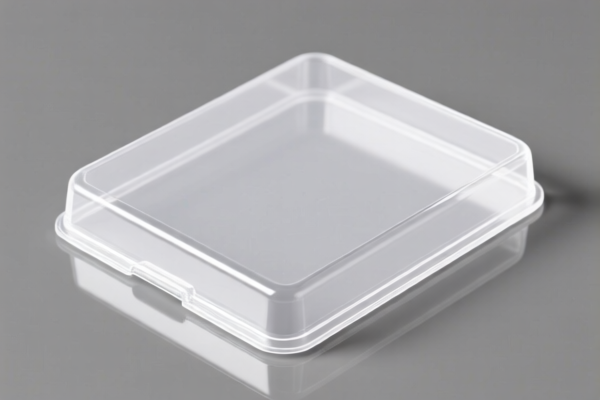
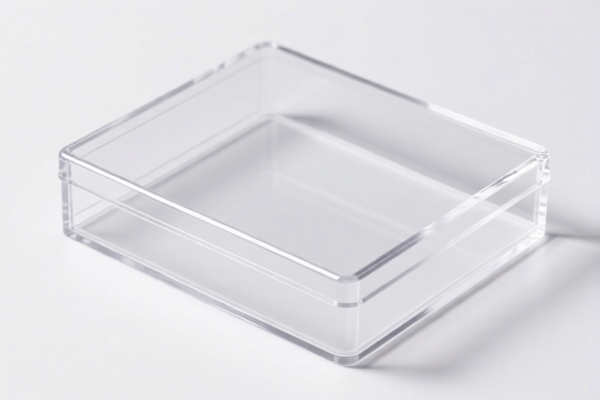
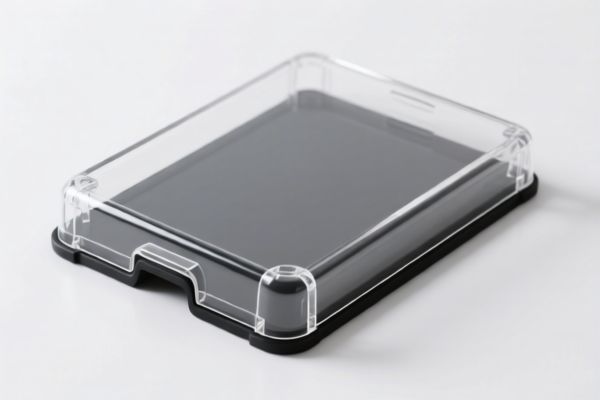
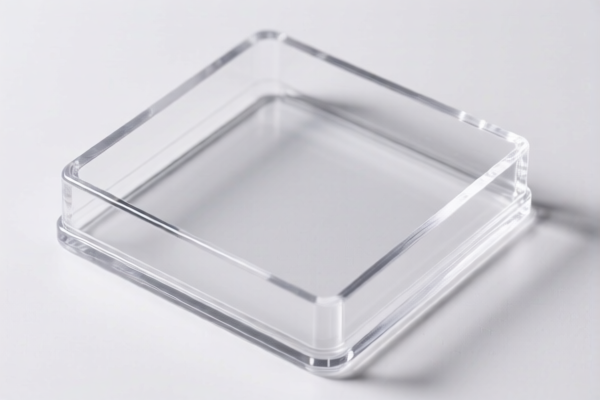
AI Analysis
📂 Transparent Binder (Clear Document Organizer)
🌐 HS Code Reference & Customs Clearance Guide | 2026 Latest Tariff Analysis | Professional Clearance Strategy
📌 1. Product Definition & Classification: What is a "Transparent Binder"?
A "Transparent Binder" in international trade is a versatile office supply or packaging item. Its classification depends heavily on material composition (plastic vs. paper/board) and primary function (storage/packaging vs. writing instrument).
Key Distinction: * Plastic Binders: If made of plastics (e.g., PVC, PE), they are generally classified under Chapter 39 (Plastics) or Chapter 39 (Articles of plastics). * Paper/Cardboard Binders: If made of paper or paperboard, they fall under Chapter 48 (Paper and Paperboard). * Function Matters: Are they "packaging containers" (keeping documents safe for transport/storage) or "stationery/office accessories" (for binding/filing)?
⚠️ Critical Point:
- If it is a plastic pocket/file used for storing documents → Often 3923.10 (Sacks, bags, pouches) or 3926.90 (Other plastic articles).
- If it is a plastic office accessory (binder rings, clips) → 3926.10 or 3926.90.
- If it is paper-based → 4820.30 (Notebooks, letter pads, etc.).
📦 2. HS Code Classification Details (2026 Latest Tariff Mapping)
Based on the provided data, here are the specific HS Codes applicable to "Transparent Binders":
| HS Code | Product Description | Application Scenario | Material/Function |
|---|---|---|---|
3923.10.90.00 |
Transparent binder, categorized as plastic-made packaging/storage item | Plastic file folders, zip-lock document bags | ✅ Plastic, Packaging/Storage |
4820.30.00.20 |
Transparent binder, categorized as paper/plastic stationery | Paper-based or mixed media file folders | ✅ Paper/Plastic, Stationery |
3926.90.87.00 |
Transparent binder, fits the definition of document binding clips | Plastic document clips, ring binders with plastic components | ✅ Plastic, Office Accessories |
3926.10.00.00 |
Transparent binder, fits the office supplies category | Plastic office accessories (e.g., plastic clips, holders) | ✅ Plastic, Office Supplies |
3923.90.00.80 |
Transparent binder, categorized as plastic-made packaging/storage (other) | Plastic storage boxes, non-standard plastic packaging | ✅ Plastic, Packaging/Storage |
4820.30.00.40 |
Transparent binder, categorized as paper/cardboard stationery | Cardboard file folders, paper document organizers | ✅ Paper/Cardboard, Stationery |
🔍 Key Observation:
- The Plastic variants (3923and3926) generally face higher total taxes due to additional tariffs.
- The Paper/Cardboard variants (4820) have lower base tariffs (0%) but still incur additional duties.
💰 3. 2026 Latest Tariff Rate Breakdown (Including Surtaxes & Policy Add-ons)
✅ Applicable Country: United States (US)
✅ Origin: China (CN)
✅ Effective Date: Post-2025 Policies (Including IEEPA & Section 301)
🎯 1. 3923.10.90.00 —— Plastic Packaging/Storage Item
| Item | Content |
|---|---|
| Base Rate | 3.0% (ad valorem) |
| Section 301 Surcharge | +25.0% |
| IEEPA Add-on (122 Clause) | +10.0% |
| Total Tax Rate | 38.0% |
| Calculation | CIF Value × 38% |
| De Minimis Exemption | ❌ Not Eligible (deny_de_minimis) |
| Legal Path | USITC:3923.10.90.00 → FOOTNOTE:301 → IEEPA:122 |
📌 Explanation:
- This code treats the binder as a plastic packaging product.
- High base rate (3%) + 301 tariff (25%) + IEEPA (10%) = 38%.
- Cost Impact: Significant. Must be factored into pricing strategies.
🎯 2. 4820.30.00.20 —— Paper/Plastic Stationery
| Item | Content |
|---|---|
| Base Rate | 0.0% (ad valorem) |
| Section 301 Surcharge | +25.0% |
| IEEPA Add-on (122 Clause) | +10.0% |
| Total Tax Rate | 35.0% |
| Calculation | CIF Value × 35% |
| De Minimis Exemption | ❌ Not Eligible (deny_de_minimis) |
| Legal Path | USITC:4820.30.00.20 → FOOTNOTE:301 → IEEPA:122 |
📌 Note:
- Although the base rate is 0%, the 35% total is still very high.
- Applies to paper-based folders or mixed media.
- Cost Impact: High, but 3% cheaper than plastic packaging codes.
🎯 3. 3926.90.87.00 —— Plastic Office Accessory (Binding Clips)
| Item | Content |
|---|---|
| Base Rate | 5.3% (ad valorem) |
| Section 301 Surcharge | +25.0% |
| IEEPA Add-on (122 Clause) | +10.0% |
| Total Tax Rate | 40.3% |
| Calculation | CIF Value × 40.3% |
| De Minimis Exemption | ❌ Not Eligible (deny_de_minimis) |
| Legal Path | USITC:3926.90.87.00 → FOOTNOTE:301 → IEEPA:122 |
📌 Warning:
- This is the highest tax rate in the dataset.
- Applies if the item is strictly classified as a "plastic article of office use" under 3926.90.
- Cost Impact: Critical. Avoid this classification if possible by redefining the product's primary function.
🎯 4. 3926.10.00.00 —— Plastic Office Supplies (No Section 301?)
| Item | Content |
|---|---|
| Base Rate | 5.3% (ad valorem) |
| Section 301 Surcharge | 0.0% |
| IEEPA Add-on (122 Clause) | +10.0% |
| Total Tax Rate | 15.3% |
| Calculation | CIF Value × 15.3% |
| De Minimis Exemption | ❌ Not Eligible (deny_de_minimis) |
| Legal Path | USITC:3926.10.00.00 → IEEPA:122 |
📌 Strategic Insight:
- This is the LOWEST tax rate!
- Why? It seems to be excluded from the 25% Section 301 surcharge, applying only the base (5.3%) + IEEPA (10%).
- Action: If your transparent binder can be justified as a "plastic office article" under 3926.10, USE THIS CODE.
- Condition: Must meet the definition of "Articles of plastics for office uses" (e.g., plastic clips, staples, paper clips, though clips are often 3926.90, 3926.10 is specified here for "office supplies"). Note: This classification is specific to the provided data, so ensure product description aligns.
🎯 5. 3923.90.00.80 —— Other Plastic Packaging
| Item | Content |
|---|---|
| Base Rate | 3.0% (ad valorem) |
| Section 301 Surcharge | +25.0% |
| IEEPA Add-on (122 Clause) | +10.0% |
| Total Tax Rate | 38.0% |
| Calculation | CIF Value × 38% |
| De Minimis Exemption | ❌ Not Eligible (deny_de_minimis) |
| Legal Path | USITC:3923.90.00.80 → FOOTNOTE:301 → IEEPA:122 |
📌 Note:
- Similar to3923.10, but for "other" plastic packaging.
- Cost Impact: High (38%).
🎯 6. 4820.30.00.40 —— Paper/Cardboard Stationery
| Item | Content |
|---|---|
| Base Rate | 0.0% (ad valorem) |
| Section 301 Surcharge | +25.0% |
| IEEPA Add-on (122 Clause) | +10.0% |
| Total Tax Rate | 35.0% |
| Calculation | CIF Value × 35% |
| De Minimis Exemption | ❌ Not Eligible (deny_de_minimis) |
| Legal Path | USITC:4820.30.00.40 → FOOTNOTE:301 → IEEPA:122 |
📌 Note:
- Identical tax structure to4820.30.00.20.
- Applies to paper/cardboard file folders.
🛠️ 4. Customs Clearance Practical Advice (Real-World Pitfall Avoidance)
✅ 1. Documentation Checklist (Essential)
| Document | Required | Explanation |
|---|---|---|
| ✅ Product Specification | ✔️ | Material (Plastic/Paper), Dimensions, Usage |
| ✅ Product Photos | ✔️ | Clear images showing transparency, closures, clips |
| ✅ Commercial Invoice | ✔️ | Must specify "Transparent Binder" and HS Code |
| ✅ Packing List | ✔️ | Item count, weight, dimensions |
| ✅ Material Declaration | ✔️ | Explicitly state % Plastic vs. % Paper |
| ✅ FCC/ROHS (if applicable) | ✔️ | For plastic components if electronic elements are present |
✅ 2. Classification Strategy (Key Tips)
🔥 "Lowest Tax First: Is it Office Supply or Packaging?"
| Scenario | Recommended HS Code | Total Tax | Reason |
|---|---|---|---|
| Plastic Binder, Office Use | 3926.10.00.00 |
15.3% | ✅ BEST OPTION - Exempt from 301 tariff |
| Plastic Folder, Packaging | 3923.10.90.00 |
38.0% | High tax, 301 applies |
| Plastic Clip/Accessory | 3926.90.87.00 |
40.3% | Highest tax, 301 applies |
| Paper Folder | 4820.30.00.20 |
35.0% | Low base, but 301 applies |
| Cardboard Folder | 4820.30.00.40 |
35.0% | Low base, but 301 applies |
📌 Strategy:
- Priority 1: Try to classify as3926.10.00.00if it’s a plastic office accessory. This saves 22.7% in taxes compared to other plastic codes.
- Priority 2: If paper-based, use4820.30.00.20or.40(35% total).
- Avoid:3926.90.87.00(40.3%) unless absolutely necessary, as it has the highest rate.
✅ 3. Special Cases & Handling
| Situation | Handling Advice |
|---|---|
| Mixed Material (Plastic + Paper) | Declare the dominant material. If >50% plastic, likely Chapter 39. If >50% paper, Chapter 48. |
| OEM Custom Binders | Provide design specs to justify "office supply" use rather than "packaging" to potentially qualify for lower rates. |
| Bulk Import | Ensure HS Code is consistent across all units to avoid customs audits. |
| De Minimis Exemption | ❌ Not applicable for these HS Codes under current US-China trade policies (Section 301 & IEEPA). All shipments are subject to duties. |
🌍 5. Global Market Comparison (2026)
| Country/Region | Recommended HS Code | Tariff Rate (China Origin) | Notes |
|---|---|---|---|
| 🇺🇸 USA | 3926.10.00.00 |
15.3% | Best rate for plastic office supplies |
| 🇺🇸 USA | 4820.30.00.20 |
35.0% | For paper-based binders |
| 🇨🇳 China | 3926.10.00.00 |
~5% | Lower base rate, no 301/IEEPA |
| 🇪🇺 EU | 3926.10.00.00 |
~6% | Standard EU duty, no 301 |
| 🇬🇧 UK | 3926.10.00.00 |
~4.5% | Post-Brexit tariff, no 301 |
📌 Conclusion:
- USA is the most challenging market due to Section 301 and IEEPA tariffs.
- Plastic office supplies (3926.10) offer the best tax efficiency in the US (15.3%).
- Paper-based products are taxed at 35% in the US, significantly higher than in EU/UK.
📌 6. Common Mistakes & Pitfalls (Lessons Learned)
❌ Mistake 1: Classifying plastic binders as 3926.90 (40.3%) instead of 3926.10 (15.3%)
👉 Result: Overpayment of $25 per $100 CIF value!
❌ Mistake 2: Using "Plastic Packaging" code (3923.10) for office use
👉 Result: 38% tax vs. 15.3%. Unnecessary cost increase.
❌ Mistake 3: Assuming De Minimis applies
👉 Result: All shipments are taxable. No duty-free threshold for these items from China.
❌ Mistake 4: Misidentifying material
👉 Result: Customs may reclassify, leading to delays, penalties, and retroactive duties.
✅ Correct Practice:
"Plastic Office Binder, Model XYZ, Transparent PVC, for Document Storage, FCC RoHS Compliant"
→ Use3926.10.00.00for best tax outcome.
🎯 7. Conclusion: Smart Classification, Cost Savings!
🎯 Remember:
🔹 "Plastic Office? Go 3926.10! (15.3%)"
🔹 "Paper Folder? Go 4820.30! (35%)"
🔹 "Packaging? Go 3923.10! (38%)"
🔹 "Avoid 3926.90! (40.3% is too high!)"
📌 Tip:
If your product can be described as an "Office Accessory" rather than a "Packaging Item" or "General Plastic Article," fight for 3926.10.00.00. It saves you 22.7% in taxes compared to other plastic classifications.
📣 Immediate Action:
📞 Consult your customs broker to verify if your transparent binder qualifies for
3926.10.00.00.
🚀 Optimize your supply chain tax burden by choosing the right HS Code!
✨ Professional Clearance Starts with Accurate Classification!
💼 Every Dollar Saved in Tariffs is Pure Profit!
Customer Reviews
About HS Code Classification
The Harmonized System (HS) is an internationally standardized nomenclature developed by the World Customs Organization (WCO) to classify traded products. Over 200 countries use the HS system as the basis for customs tariffs, trade statistics, and import/export regulations.
Each HS code follows a hierarchical structure:
- Chapter (2 digits) — Broad category of goods (e.g., Chapter 84: Machinery and Mechanical Appliances)
- Heading (4 digits) — More specific grouping within the chapter
- Subheading (6 digits) — Internationally standardized breakdown, used by all WCO member countries
- National subdivisions (8-10 digits) — Country-specific extensions for further classification, such as US HTSUS 10-digit codes
Correct HS code classification is essential for smooth customs clearance, accurate duty payment, and compliance with trade regulations. Misclassification can lead to customs delays, overpayment of duties, or penalties.
When importing from CN to US, the applicable tariff rates may include:
- Most-Favored-Nation (MFN) rate — The standard duty rate applied to WTO members
- General rate — Applied to countries without trade agreements
- Trade remedy duties — Additional tariffs such as Section 301 (anti-dumping), Section 232 (national security), or countervailing duties
The information provided on this page is for reference purposes only. For official classification, please consult with your local customs authority or a licensed customs broker.