transparent packing tape within 5cm
CN → US| HS Code | Tariff Rate | Origin | Destination | Doc |
|---|---|---|---|---|
| 3919102030 | 40.8% | CN | US | Official Doc |
| 3919102040 | 40.8% | CN | US | Official Doc |
| 3926904800 | 13.4% | CN | US | Official Doc |
| 3926909989 | 22.8% | CN | US | Official Doc |
| 3919102030 | 40.8% | CN | US | Official Doc |
Product Images
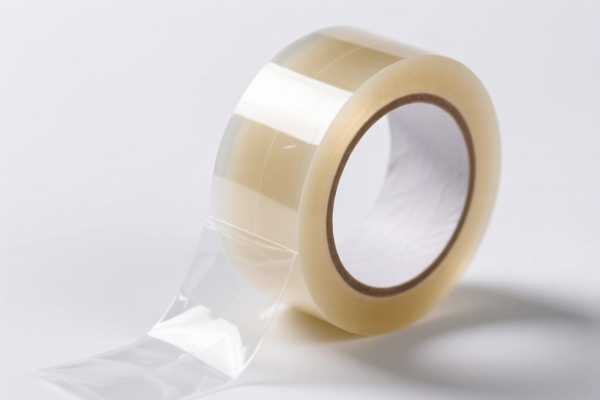
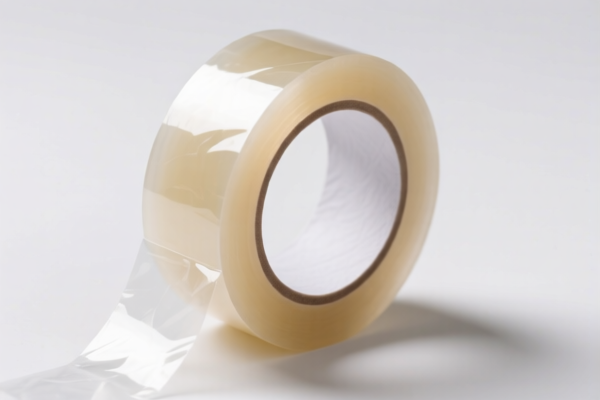

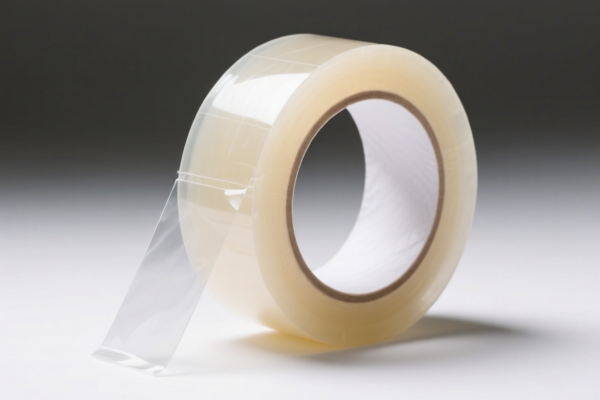
AI Analysis
🎞️ Transparent Packing Tape (Width ≤ 5cm)
🌐 HS Code Reference & Clearance Guide | 2026 Latest Tariff Analysis | Professional US Customs Strategy
📌 I. Product Definition & Classification: Do You Really Understand "Transparent Tape"?.
Transparent packing tape is a ubiquitous adhesive product used for sealing boxes, protecting surfaces, and general-purpose binding. In international trade, specifically under the Harmonized Tariff Schedule (HTS), it is classified primarily under Chapter 39 (Plastics and Articles Thereof).
The critical distinction in classification lies in the width and the material structure: * Self-Adhesive Plastics of All Kinds (3919): This is the primary chapter for rolled plastics with self-adhesive layers. * Width Threshold: The HTS code specifically differentiates tapes by width. Tapes not exceeding 5 cm fall under a specific subheading, while wider tapes fall under "Other." * Material: Typically made of polypropylene (BOPP) or PVC coated with acrylic or rubber-based adhesive.
⚠️ Key Classification Point:
- If the tape width is ≤ 5 cm and transparent, it is strictly classified under 3919.10.20.30.
- If the tape width is > 5 cm (e.g., standard 2-inch packing tape which is ~4.8cm is often borderline, but anything up to 20cm falls into the "Other" bucket if not meeting the ≤5cm specific criteria, though 3919.10.20.40 covers up to 20cm as "Other" in the provided data).
- Note: The provided data distinguishes between ≤5cm and ≤20cm (categorized as "Other transparent tapes").
📦 II. HS Code Classification Details (Based on Provided Data 2026)
| HS Code | Product Description | Width Constraint | Classification Logic |
|---|---|---|---|
3919.10.20.30 |
Transparent Tape, Width ≤ 5cm | ≤ 5 cm | Fits the specific classification logic for narrow transparent tapes. Material and form match the category explanation. |
3919.10.20.40 |
Other Transparent Tapes | > 5cm & ≤ 20cm | Fits the "Other" transparent tape category for widths up to 20cm. Does not meet the ≤5cm specific criteria. |
3926.90.48.00 |
Plastic Articles | N/A | General plastic items. Included in data but NOT applicable to standard transparent packing tape if 3919 is more specific. |
3926.90.99.89 |
Other Plastic Articles | N/A | Catch-all for plastic items. NOT applicable if the item is a self-adhesive tape (3919 is more specific). |
🔍 Critical Analysis:
- Primary Code:3919.10.20.30is the most accurate code for transparent tape ≤ 5 cm.
- Secondary Code:3919.10.20.40is for wider tapes (>5cm, up to 20cm).
- Misclassification Risk: Do not use3926(General Plastic Articles) if the item is a self-adhesive tape. Chapter 39 Note 4 and Chapter 39.19 make self-adhesive tapes of plastics specifically classifiable under 3919, making 3926 incorrect for this product.
💰 III. 2026 Latest Tariff Rate Breakdown (Including Surcharges & Policy Add-ons)
✅ Applicable Country: USA (US)
✅ Origin: China (CN)
✅ Effective Time: 2025-11-10 (including subsequent imports)
🎯 1. 3919.10.20.30 —— Transparent Tape, Width ≤ 5cm
| Item | Content |
|---|---|
| Base Duty Rate | 5.8% (Ad Valorem) |
| Section 301 Surcharge | +25.0% (From USITC Footnote) |
| IEEPA Surcharge (Section 122) | +10.0% (Targeting China/HK products, effective from 2025-11-10) |
| Total Tax Rate | 40.8% |
| Tax Calculation | CIF Value × 40.8% |
| De Minimis Exemption | ❌ NOT Eligible (Deny De Minimis) |
| Legal Basis Path | IEEPA:9903.01.24 → USITC:3919.10.20.30 → FOOTNOTE:301-Related |
📌 Explanation:
- The 5.8% is the standard Most Favored Nation (MFN) base duty for self-adhesive tapes.
- The 25% is the standard Section 301 tariff for many Chinese plastic products.
- The 10% is the new IEEPA-based surcharge (often referred to as "122 Clause Tariff" in some internal systems) specifically targeting Chinese goods.
- Total 40.8% is extremely high. This significantly impacts profit margins.
🎯 2. 3919.10.20.40 —— Other Transparent Tapes (Width ≤ 20cm)
| Item | Content |
|---|---|
| Base Duty Rate | 5.8% |
| Section 301 Surcharge | +25.0% |
| IEEPA Surcharge (Section 122) | +10.0% |
| Total Tax Rate | 40.8% |
| Tax Calculation | CIF Value × 40.8% |
| De Minimis Exemption | ❌ NOT Eligible |
| Legal Basis Path | IEEPA:9903.01.24 → USITC:3919.10.20.40 → FOOTNOTE:301-Related |
📌 Note:
- Despite being "Other," the tariff structure is identical to the ≤5cm tape.
- Width differentiation does not change the duty rate in this specific dataset, but it does change the HS Code, which must be precise for customs compliance.
🎯 3. 3926.90.48.00 —— Plastic Articles (General)
| Item | Content |
|---|---|
| Base Duty Rate | 3.4% |
| Section 301 Surcharge | 0.0% |
| IEEPA Surcharge (Section 122) | +10.0% |
| Total Tax Rate | 13.4% |
| De Minimis Exemption | ❌ NOT Eligible (Likely, due to IEEPA) |
| Legal Basis Path | IEEPA:9903.01.24 → USITC:3926.90.48.00 |
📌 Warning:
- While the rate is lower (13.4%), this code is likely incorrect for transparent packing tape because Chapter 39.19 is more specific for self-adhesive tapes. Using this code may lead to classification errors and potential audits.
🎯 4. 3926.90.99.89 —— Other Plastic Articles (Catch-all)
| Item | Content |
|---|---|
| Base Duty Rate | 5.3% |
| Section 301 Surcharge | +7.5% |
| IEEPA Surcharge (Section 122) | +10.0% |
| Total Tax Rate | 22.8% |
| De Minimis Exemption | ❌ NOT Eligible |
| Legal Basis Path | IEEPA:9903.01.24 → USITC:3926.90.99.89 |
📌 Warning:
- Similar to above, this is a "catch-all" code. Misclassifying a standard tape here is a common compliance risk. Customs may reclassify it to 3919, leading to back taxes and penalties.
🛠️ IV. Clearance Practical Advice (Avoiding Pitfalls)
✅ 1. Required Documentation Checklist
| Document | Required | Description |
|---|---|---|
| ✅ Product Specification Sheet | ✔️ | Must clearly state Width (e.g., "4.5cm" or "2 inches") and Transparency. |
| ✅ Commercial Invoice | ✔️ | Description: "Transparent Adhesive Tape, BOPP Material, Width 5cm." Avoid vague terms like "Tape." |
| ✅ Packing List | ✔️ | Show weight and quantity. |
| ✅ Certificate of Origin (CO) | ✔️ | Required to verify Chinese origin for Section 301/IEEPA duties. |
| ✅ Product Photos | ✔️ | Show the roll, width measurement, and adhesive side. |
✅ 2. Declaration Tips (Key Mantra)
🔥 "Be Specific on Width, Cite 3919, Don't Guess 3926!"
| Scenario | Correct Declaration | Incorrect Practice |
|---|---|---|
| Tape width is 4.5 cm | 3919.10.20.30 |
Using 3926.90.48.00 to save tax → Risk of Audit |
| Tape width is 10 cm | 3919.10.20.40 |
Using 3919.10.20.30 → Misdeclaration |
| Tape width is 30 cm | 3919.10.90 (Other) |
Using provided codes (if not applicable) |
✅ 3. Special Handling
| Situation | Advice |
|---|---|
| Customs Audit | Provide evidence that the tape is self-adhesive and made of plastic (BOPP/PVC). |
| Section 122 Tariff | Ensure the origin is clearly marked as China. If transshipped, proof of substantial transformation is needed to avoid the 10% IEEPA surcharge. |
| De Minimis | Do not expect $800 de minimis exemption. These high-tariff items are explicitly excluded. |
🌍 V. Global Market Comparison (2026 Latest)
| Country/Region | Recommended HS Code | Duty Rate | Certification | Remarks |
|---|---|---|---|---|
| 🇺🇸 USA | 3919.10.20.30 |
40.8% | None specific | High tariffs due to Section 301 + IEEPA. |
| 🇨🇳 China | 3919.10.20.30 |
~3.0%* | N/A | *Import into China. Low duty. |
| 🇪🇺 EU | 3919.10.20 |
~6.5% | CE (if applicable) | No Section 301 equivalents. |
| 🇬🇧 UK | 3919.10.20 |
~6.5% | N/A | Post-Brexit tariff alignment. |
📌 Conclusion:
- The US market is the most challenging due to the 40.8% effective duty rate.
- Cost Impact: For a $10,000 shipment, you pay $4,080 in duties alone.
- Strategy: Consider sourcing from non-China countries (e.g., Vietnam, Thailand) if eligible for de minimis or lower tariffs, but verify substantial transformation rules.
📌 VI. Common Mistakes & Pitfalls (Lessons Learned)
❌ Mistake 1: Using 3926 codes to reduce duty from 40.8% to 13.4%
👉 Consequence: Customs reclassifies to 3919, demands back taxes, penalties, and delays shipment. Not worth the risk.
❌ Mistake 2: Ignoring the "Width" specification
👉 Consequence: If you declare ≤5cm but the actual product is 6cm, you are misdeclaring. While the duty rate is the same in this data, the HS Code must be accurate for legal compliance and potential future rate changes.
❌ Mistake 3: Assuming "De Minimis" applies
👉 Consequence: Shipments under $800 will be seized or returned because high-tariff Chinese plastic products are excluded from de minimis relief.
✅ Correct Practice:
"Transparent BOPP Packing Tape, Self-Adhesive, Width 4.8cm, 48mm x 66m, Roll, Model XYZ, Made in China."
🎯 VII. Conclusion: Professional Declaration, Save Time, Reduce Costs!
🎯 Remember the Mantra:
🔹 "Width is King: ≤5cm is .30, >5cm is .40."
🔹 "Don't Hide: 40.8% is Real, 13.4% is a Trap."
🔹 "Check Origin: China Means Surcharges."
📌 Pro Tip:
If your tape is packed with other non-tape items (e.g., tape guns, dispensers), consider separate line items. Tape dispensers (plastic) may have different classifications, potentially allowing for clearer duty separation. However, the tape itself must be declared under 3919.
📣 Immediate Action:
📞 Consult a licensed customs broker.
📸 Provide clear photos of the tape roll and width measurement.
📋 Apply for Pre-Ruling if importing large volumes to confirm classification.
✨ Professional clearance starts with precise classification!
💼 Every percent of duty counts! Know your HS Code!
Customer Reviews
About HS Code Classification
The Harmonized System (HS) is an internationally standardized nomenclature developed by the World Customs Organization (WCO) to classify traded products. Over 200 countries use the HS system as the basis for customs tariffs, trade statistics, and import/export regulations.
Each HS code follows a hierarchical structure:
- Chapter (2 digits) — Broad category of goods (e.g., Chapter 84: Machinery and Mechanical Appliances)
- Heading (4 digits) — More specific grouping within the chapter
- Subheading (6 digits) — Internationally standardized breakdown, used by all WCO member countries
- National subdivisions (8-10 digits) — Country-specific extensions for further classification, such as US HTSUS 10-digit codes
Correct HS code classification is essential for smooth customs clearance, accurate duty payment, and compliance with trade regulations. Misclassification can lead to customs delays, overpayment of duties, or penalties.
When importing from CN to US, the applicable tariff rates may include:
- Most-Favored-Nation (MFN) rate — The standard duty rate applied to WTO members
- General rate — Applied to countries without trade agreements
- Trade remedy duties — Additional tariffs such as Section 301 (anti-dumping), Section 232 (national security), or countervailing duties
The information provided on this page is for reference purposes only. For official classification, please consult with your local customs authority or a licensed customs broker.