travel set
CN → US| HS Code | Tariff Rate | Origin | Destination | Doc |
|---|---|---|---|---|
| 9617006000 | 17.2% | CN | US | Official Doc |
| 9617001000 | 17.2% | CN | US | Official Doc |
| 4202321000 | 0.0% | CN | US | Official Doc |
| 4202329300 | 52.6% | CN | US | Official Doc |
Product Images
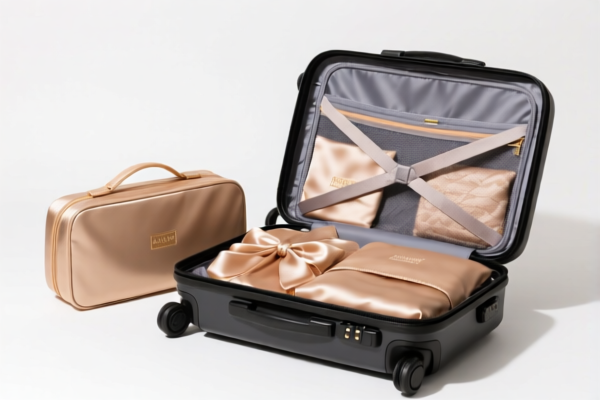
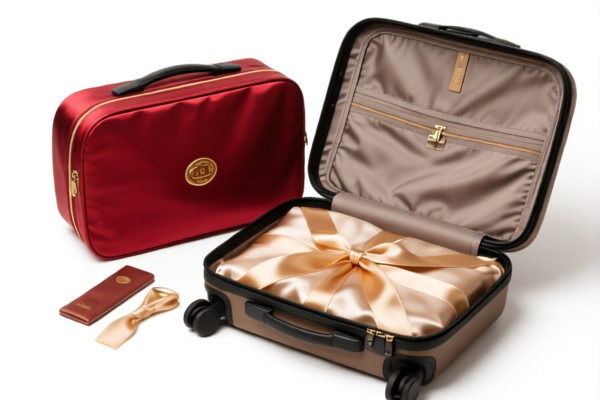
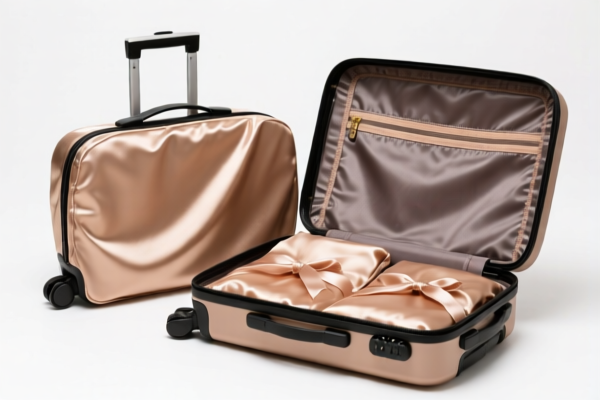
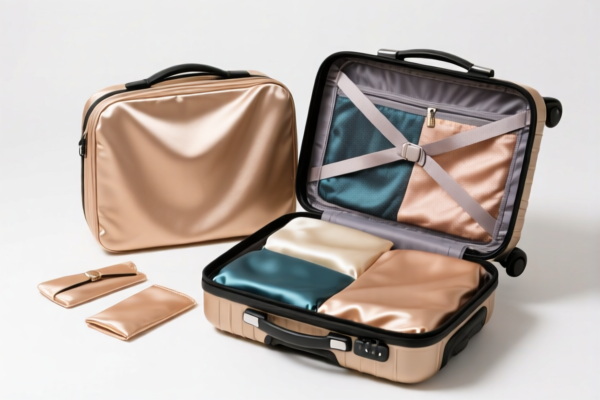
AI Analysis
🧳 Travel Set (Travel Accessories & Cases)
🌐 HS Code Reference & Customs Clearance Guide | 2026 Latest Tariff Analysis | Professional Clearance Strategy
📌 Part 1: Product Definition & Classification: What Exactly is a "Travel Set"?
A "Travel Set" is a broad, functional term referring to accessories used for carrying, organizing, or protecting items during travel. In international trade, this category is notoriously ambiguous because it describes usage rather than material or specific structure.
To ensure compliance, customs authorities require you to distinguish between:
Vacuum/Thermal Containers: Items designed to maintain temperature (e.g., vacuum flasks, thermos bottles). These fall under Chapter 96. Luggage & Travel Bags: Items designed to carry other goods (e.g., toiletry bags, cosmetic cases, packing cubes). These fall under Chapter 42 (Articles of leather/plastic) or Chapter 42/63 (Textiles/Other materials).
⚠️ Key Distinction Point:
- If the item is primarily a container for liquids (like a flask), it is likely 9617.
- If the item is primarily a bag/case for holding other items, it is likely 4202.
- Warning: Misclassification leads to massive tariff discrepancies (e.g., 17.2% vs. 52.6%).
📦 Part 2: Detailed HS Code Breakdown (2026 Latest Tariff Authoritative Comparison)
Based on the provided data, here are the four most likely classifications for "Travel Sets" with varying materials and functions:
| HS Code | Product Description | Application Scenario | Material/Type |
|---|---|---|---|
9617.00.60.00 |
Other vacuum insulated vessels and parts thereof | Vacuum flasks, travel mugs, insulated bottles included in a set | Glass/Metal/Vacuum Container |
9617.00.10.00 |
Vacuum insulated vessels (parts/accessories) | Caps, lids, or specific parts of vacuum containers | Parts of 9617 vessels |
4202.32.10.00 |
Travel accessories, toiletry bags, etc., of plastic sheeting | Plastic toiletry kits, hard-shell cosmetic cases, packing cubes | Plastic Sheet / Hard Material |
4202.32.93.00 |
Other travel accessories, of textile materials | Fabric toiletry bags, canvas packing cubes, soft-sided cosmetic organizers | Textile Material |
🔍 Critical Reminder:
- "Travel Set" is not a valid HS Code description on its own. You must specify the material (Plastic, Textile, or Vacuum Vessel). - If a set contains both a flask and a bag, they may need to be declared separately if the flask is the principal item, or the bag is. However, based on the data, we analyze them as potential individual components of a "set".
💰 Part 3: 2026 Latest Tariff Rate Breakdown (Including Surcharges & Policy Add-ons)
✅ Applicable Country: United States (US)
✅ Origin: China (CN)
✅ Effective Date: Current Rates (Includes Section 301 & Section 122 Surcharges)
🎯 1. 9617.00.60.00 & 9617.00.10.00 —— Vacuum Insulated Vessels & Parts
| Item | Content |
|---|---|
| Base Duty Rate | 7.2% (Ad Valorem) |
| Section 301 Surcharge | 0.0% (No additional 301 tariff for these specific subheadings based on provided data) |
| Section 122 Surcharge | 10% (Specific provision for certain Chinese goods) |
| Total Effective Tax Rate | 17.2% |
| Tax Calculation | CIF Value × 17.2% |
| De Minimis Eligibility | ❌ No (Section 122 goods generally do not qualify for $800 exemption if aggregated or specific rules apply; note: Section 122 often targets de minimis, but the data implies a 17.2% total rate for formal entry. Check latest CBP updates on Section 122 de minimis exemptions.) |
| Legal Basis Path | HTS:9617.00.60/10 → Section 122: 10% |
📌 Explanation:
- Vacuum flasks are generally duty-friendly (7.2%) but suffer from the Section 122 10% surcharge. - Total Cost: 17.2%. This is relatively low compared to other travel accessories. - Strategy: If your "Travel Set" is primarily a high-quality vacuum flask, this is the most cost-effective classification.
🎯 2. 4202.32.10.00 —— Plastic Sheet Travel Accessories
| Item | Content |
|---|---|
| Base Duty Rate | 4.6% (Ad Valorem) + 12.1¢/kg (Specific Duty) |
| Section 301 Surcharge | 25.0% (Standard 301 tariff on Chinese textiles/plastics) |
| Section 122 Surcharge | 10% |
| Total Effective Tax Rate | ~52.6% + Specific Duty |
| Tax Calculation | (CIF × 39.6%) + (12.1¢/kg) |
| De Minimis Eligibility | ❌ No (Subject to Section 301 and 122 restrictions) |
| Legal Basis Path | HTS:4202.32.10 → Section 301: Footnote 9903.88.01 (25%) → Section 122: 10% |
📌 Explanation:
- Plastic travel bags are hit hard by Section 301 (25%). - Plus, there is a specific duty ($0.121 per kg). - Total Cost: Over 50%. This is extremely high. - Strategy: Avoid this code unless necessary. Plastic cases are a high-risk, high-cost category.
🎯 3. 4202.32.93.00 —— Textile Travel Accessories
| Item | Content |
|---|---|
| Base Duty Rate | 17.6% (Ad Valorem) |
| Section 301 Surcharge | 25.0% |
| Section 122 Surcharge | 10% |
| Total Effective Tax Rate | 52.6% |
| Tax Calculation | CIF Value × 52.6% |
| De Minimis Eligibility | ❌ No (Subject to Section 301 and 122) |
| Legal Basis Path | HTS:4202.32.93 → Section 301: Footnote 9903.88.01 (25%) → Section 122: 10% |
📌 Explanation:
- Textile bags (canvas, nylon, polyester) also face the full Section 301 (25%) burden. - Total Cost: 52.6%. - Strategy: Same as plastic—very expensive. Only use if the product is explicitly textile and cannot be reclassified.
🛠️ Part 4: Customs Clearance Practical Advice (Field Survival Guide)
✅ 1. Preparation Checklist (Non-negotiable)
| Document | Must Provide | Description |
|---|---|---|
| ✅ Product Photos | ✔️ | Clear images showing material (e.g., "Is this hard plastic or fabric?") |
| ✅ Material Composition | ✔️ | e.g., "60% Polyester, 40% EVA Foam" or "Stainless Steel 304 + Silicone Lid" |
| ✅ Function Description | ✔️ | Is it a container (vacuum) or a carrier (bag)? |
| ✅ Invoice | ✔️ | Must list item by item. Do not lump "Travel Set" as a single line without breakdown if values differ significantly. |
| ✅ Country of Origin | ✔️ | Must be China (CN) to trigger Section 301/122. |
✅ 2. Declaration Strategy (Key Mantra)
🔥 "Vacuum is 17%, Textile/Plastic is 52%. Choose wisely!"
| Scenario | Correct HS Code | Error to Avoid |
|---|---|---|
| Set contains a Thermos/Flask | 9617.00.60.00 |
Misdeclaring as "Bag" → 52.6% |
| Set is a Plastic Toiletry Kit | 4202.32.10.00 |
Misdeclaring as "Textile" → Same tax but wrong material code |
| Set is a Fabric Cosmetic Bag | 4202.32.93.00 |
Misdeclaring as "Vacuum Vessel" → 17.2% (Illegal if not vacuum) |
| Set is a Mixed Bag | Split Declaration | Lumping everything into one high-tax code |
📌 Note: If a "Travel Set" contains a vacuum flask AND a fabric bag, customs may require separate declarations. If the flask is the main value, classify the flask. If the bag is the main value, classify the bag. Do not hide components.
✅ 3. Special Considerations
| Situation | Advice |
|---|---|
| De Minimis ($800) | Section 122 (10% surcharge) often blocks de minimis entry for these goods. Even if under $800, you may need to file a formal entry. Check latest CBP enforcement on Section 122. |
| Section 301 Exclusions | Most travel accessories (textiles/plastics) do not have exclusions. Assume 25% is applicable. |
| Material Confusion | If a "hard" case is made of plastic, use 4202.32.10. If it is made of fiberglass or other materials, it might fall elsewhere. Be precise. |
🌍 Part 5: Global Market Comparison (2026 Snapshot)
| Market | Recommended HS Code | Est. Total Duty | Key Requirement |
|---|---|---|---|
| 🇺🇸 USA | 9617.00.60 (Vacuum) |
17.2% | Section 122 Declaration |
| 🇺🇸 USA | 4202.32.93 (Textile) |
52.6% | Section 301 + 122 |
| 🇨🇳 China | 9617.00.60 |
6-8% | Standard Import Tax |
| 🇪🇺 EU | 9617.00.60 |
4.5% | No Section 301 |
| 🇪🇺 EU | 4202.32.93 |
12-17% | Depends on material |
📌 Conclusion:
- USA is the most expensive market for travel accessories due to Section 301 and 122. - Vacuum vessels (9617) are significantly cheaper to import than Textile/Plastic bags (4202). - Strategy: If possible, design your "Travel Set" to emphasize the vacuum vessel component or ensure the vessel is the principal item to leverage the 17.2% rate.
📌 Part 6: Common Mistakes & Pitfalls (Lessons Learned)
❌ Mistake 1: Declaring a "Vacuum Flask Set" as "Plastic Bag"
👉 Consequence: Pay 52.6% instead of 17.2%. Overpayment of 35%!
❌ Mistake 2: Claiming "De Minimis" for Section 122 Goods
👉 Consequence: Goods held at customs, forced to file formal entry, potential penalties.
❌ Mistake 3: Ignoring Material Composition
👉 Consequence: Customs reclassifies the item, applying the highest applicable duty (often 52.6% for textiles/plastics).
❌ Mistake 4: Vague Description "Travel Set"
👉 Consequence: Customs Examiner uses "Best Judgment," likely assigning the highest-risk code (4202.32.93 → 52.6%).
✅ Correct Approach:
"Vacuum Insulated Stainless Steel Water Bottle with Silicone Lid, Model XYZ, 500ml, BPA-Free" →
9617.00.60.00
🎯 Part 7: Conclusion: Precise Classification Saves Money!
🎯 Remember the Mantra:
🔹 "Vacuum is 17, Textile is 52. Don't guess, verify!"
🔹 "Section 122 hits 10%, Section 301 hits 25%. Add them up!"
📌 Pro Tip:
If you are importing a "Travel Set", consider splitting the shipment or restructuring the product:
1. Ship the vacuum flask as 9617.00.60.00 (17.2% tax).
2. Ship the fabric bag separately if it is low value, or accept the 52.6% tax if it's integral.
3. Avoid declaring a mixed set under a single, ambiguous code.
📣 Immediate Action:
📞 Contact your customs broker with material specs and product photos.
📝 Apply for a Binding Ruling if your volume is high.
🚀 Optimize your HS Code to save 35%+ in duties!
✨ Professional clearance starts with precise classification!
💼 Every cent in duty is a cent lost in profit!
Customer Reviews
About HS Code Classification
The Harmonized System (HS) is an internationally standardized nomenclature developed by the World Customs Organization (WCO) to classify traded products. Over 200 countries use the HS system as the basis for customs tariffs, trade statistics, and import/export regulations.
Each HS code follows a hierarchical structure:
- Chapter (2 digits) — Broad category of goods (e.g., Chapter 84: Machinery and Mechanical Appliances)
- Heading (4 digits) — More specific grouping within the chapter
- Subheading (6 digits) — Internationally standardized breakdown, used by all WCO member countries
- National subdivisions (8-10 digits) — Country-specific extensions for further classification, such as US HTSUS 10-digit codes
Correct HS code classification is essential for smooth customs clearance, accurate duty payment, and compliance with trade regulations. Misclassification can lead to customs delays, overpayment of duties, or penalties.
When importing from CN to US, the applicable tariff rates may include:
- Most-Favored-Nation (MFN) rate — The standard duty rate applied to WTO members
- General rate — Applied to countries without trade agreements
- Trade remedy duties — Additional tariffs such as Section 301 (anti-dumping), Section 232 (national security), or countervailing duties
The information provided on this page is for reference purposes only. For official classification, please consult with your local customs authority or a licensed customs broker.