tricycle
CN → US| HS Code | Tariff Rate | Origin | Destination | Doc |
|---|---|---|---|---|
| 8713900030 | 10.0% | CN | US | Official Doc |
| 8713900060 | 10.0% | CN | US | Official Doc |
| 9503000071 | 10.0% | CN | US | Official Doc |
| 9503000073 | 10.0% | CN | US | Official Doc |
| 8712005000 | 0.0% | CN | US | Official Doc |
| 8712004800 | 46.0% | CN | US | Official Doc |
Product Images
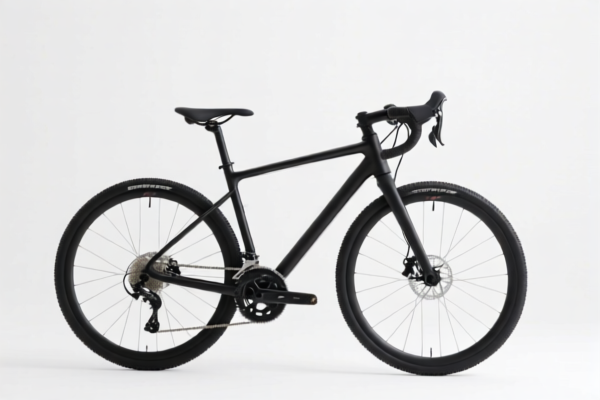
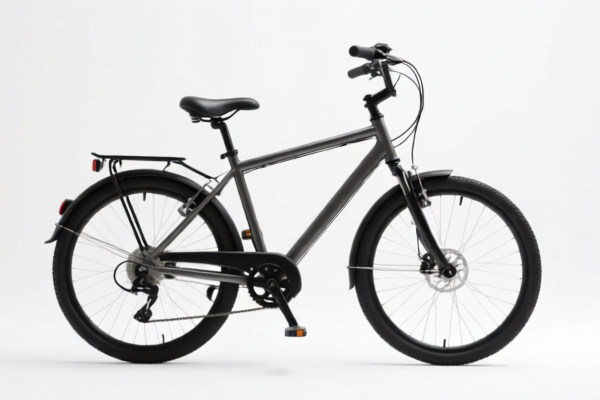
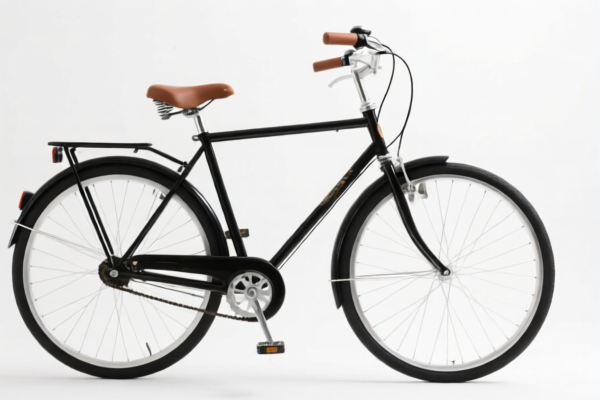
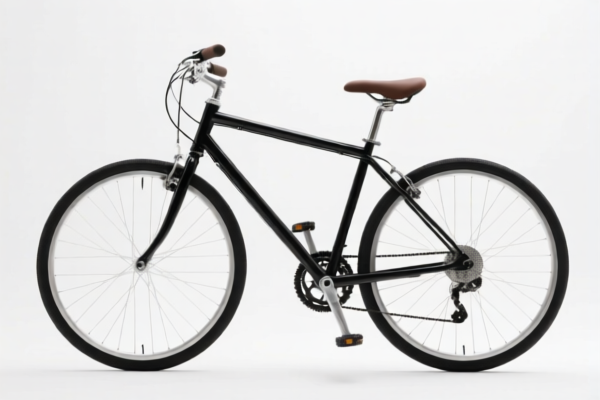
AI Analysis
🚲 Tricycles & Similar Wheeled Vehicles (Classification Deep Dive)
🌐 HS Code Reference & Customs Clearance Guide | 2026 Latest Tariff Analysis | Professional Clearance Strategy
📌 I. Product Definition & Classification: Do You Really Understand "Tricycles"?
The term "Tricycle" in international trade is highly context-dependent. It falls into two completely different legal categories based on function, user age, and power source. Misclassification leads to severe tariff discrepancies (from 0% to 36%) and potential compliance risks.
There are two main pillars for classification: 1. Transportation Vehicles (HS Chapter 87): Non-motorized cycles for general transport, sports, or disability assistance. 2. Toys & Recreational Articles (HS Chapter 95): Wheeled toys intended for children (under 12 years old).
⚠️ Critical Distinction Point:
- If the product is a toy intended for children <12 years → Chapter 95 (0% Tax)
- If the product is a cycle/transport vehicle (including adult tricycles or disability aids) → Chapter 87 (0% - 36% Tax)
- Do not mix these up. A "toy tricycle" declared as a "cycle" incurs unnecessary tax; a "cycle" declared as a "toy" risks fraud allegations and penalty.
📦 II. HS Code Classification Details (2026 Latest Tariff Authority Cross-Reference)
Based on the provided data, here are the precise HS Codes and their corresponding tax structures.
| HS Code | Product Description | Target User / Application | Tax Rate (Total) |
|---|---|---|---|
8712.00.50.00 |
Bicycles and other cycles (not motorized): Other cycles | General adult tricycles, delivery trikes, non-standard cycles | 0.0% |
8712.00.48.00 |
Bicycles and other cycles (not motorized): Other bicycles | Standard adult bicycles, folding bikes, high-end sport cycles | 36.0% |
9503.00.00.71 |
Toys (incl. tricycles/scooters): Under 3 years of age | Baby walkers, toddler trikes, safety-focused toys | 0.0% |
9503.00.00.73 |
Toys (incl. tricycles/scooters): 3 to 12 years of age | Kids' pedal cars, recreational tricycles for children | 0.0% |
8713.90.00.30 |
Carriages for disabled persons: Three-wheeled | Medical/assistance tricycles for disabled individuals | 0.0% |
8713.90.00.60 |
Carriages for disabled persons: Other | Four-wheeled or other non-three-wheeled disability aids | 0.0% |
🔍 Key Insight:
-8712.00.48.00(36% Tax) is a trap for "Bicycles." If your tricycle is classified as an "Other Bicycle" under this code, you pay a heavy 36% tariff (11% base + 25% additional). -8712.00.50.00(0% Tax) is the safe harbor for "Other Cycles" (including many tricycles that don't fit the strict "bicycle" definition). - Toys (9503) are entirely duty-free regardless of age (Under 3 or 3-12).
💰 III. 2026 Latest Tariff Rate Breakdown (Detailed Tax Clauses)
✅ Applicable Country: United States (US)
✅ Origin: China (CN)
✅ Effective Time: Current rates apply (subject to USITC/IEEPA rules)
🎯 1. 8712.00.50.00 —— Other Cycles (Non-Motorized)
| Item | Detail |
|---|---|
| Base Tariff | 0.0% |
| Additional Tariff | 0.0% |
| Total Tax Rate | 0.0% |
| Tax Calculation | CIF Value × 0% = $0 |
| Legal Basis | Chapter 87, Heading 8712, Subheading .50 |
📌 Explanation:
- This code captures "Other cycles" not specifically listed as bicycles. Many tricycles (especially cargo, recumbent, or non-standard frames) fall here. - No additional tariffs apply, making it the most cost-effective classification for non-toy tricycles.
🎯 2. 8712.00.48.00 —— Other Bicycles (Non-Motorized)
| Item | Detail |
|---|---|
| Base Tariff | 11.0% |
| Additional Tariff | 25.0% |
| Total Tax Rate | 36.0% |
| Tax Calculation | CIF Value × 36% |
| Legal Basis | Chapter 87, Heading 8712, Subheading .48; USITC Footnote 25.0% |
📌 Explanation:
- This code is often applied to standard two-wheeled bicycles. If Customs determines your tricycle is functionally equivalent to a bicycle or misclassifies it under "bicycles," this 36% rate applies. - Warning: This is a high-risk classification. Ensure your product description clearly distinguishes it from standard bicycles (e.g., "Three-Wheel Cycle" vs. "Bicycle").
🎯 3. 9503.00.00.71 & 9503.00.00.73 —— Children's Toys (Tricycles/Scooters)
| Item | Detail |
|---|---|
| Age Group | Under 3 (71) OR 3-12 Years (73) |
| Base Tariff | 0.0% |
| Additional Tariff | 0.0% |
| Total Tax Rate | 0.0% |
| Tax Calculation | CIF Value × 0% = $0 |
| Legal Basis | Chapter 95, Heading 9503; Defined as "Children's Products" per 15 U.S.C. § 2052 |
📌 Explanation:
- Zero Duty for all toy tricycles. - Compliance Requirement: Must be labeled as intended for the specific age group. Must comply with CPSIA (Consumer Product Safety Improvement Act) if under 12. - Note: Even if the toy is for a 10-year-old, it falls under9503.00.00.73(0%), not the adult cycle codes.
🎯 4. 8713.90.00.30 & 8713.90.00.60 —— Carriages for Disabled Persons
| Item | Detail |
|---|---|
| Product Type | Wheelchairs/Tricycles for disabled persons |
| Base Tariff | 0.0% |
| Additional Tariff | 0.0% |
| Total Tax Rate | 0.0% |
| Legal Basis | Chapter 87, Heading 8713 |
📌 Explanation:
- Medical/assistance devices for the disabled are generally duty-free. - Documentation: May require a letter from a physician or manufacturer confirming medical necessity/design for disabled users to avoid reclassification as "toy" or "general cycle."
🛠️ IV. Customs Clearance Practical Advice (Battle-Tested Tips)
✅ 1. Documentation Checklist (Non-Negotiable)
| Document | Required? | Purpose |
|---|---|---|
| ✅ Product Specification Sheet | ✔️ | Must clearly state: "3-Wheel Tricycle" or "Toys for Kids." Avoid ambiguous terms like "Vehicle." |
| ✅ Photos of Product | ✔️ | Show all 3 wheels. Prove it is not a motorcycle (no engine). |
| ✅ Age Labeling (for Toys) | ✔️ | For 9503, the product MUST be labeled with the target age (e.g., "For Ages 3-5"). |
| ✅ CPSIA Test Report (if Toy) | ✔️ | Required for 9503 entries. Without it, shipment may be detained. |
| ✅ Commercial Invoice | ✔️ | Clearly state: "Non-Motorized Tricycle, Model XYZ, For [Transport/Toys/Medical Use]." |
| ✅ Manufacturer’s Declaration | ✔️ | Confirm no motorized components (for Chapter 87 codes). |
✅ 2. Declaration Strategy (Key Mnemonics)
🔥 "Toy vs. Cycle: Age and Purpose are King!"
| Scenario | Correct HS Code | Risk if Misclassified |
|---|---|---|
| Adult Tricycle (Recumbent, Cargo, Utility) | 8712.00.50.00 |
If called "Bicycle" → 36% Tax |
| Kid's Tricycle (Plastic/Metal, <12 yrs) | 9503.00.00.71 or .73 |
If called "Cycle" → Risk of Compliance Audit (Safety Standards) |
| Disabled Person's Tricycle | 8713.90.00.30 |
If called "Toy" → Customs Rejection (Medical Necessity) |
| Motorized Tricycle | NOT IN DATA | ⛔ DO NOT USE THESE CODES. Motorized cycles are excluded from Chapter 87.12. |
💡 Pro Tip:
- If you sell a foldable adult tricycle, declare it as "Other Cycle" (8712.00.50.00) to get 0% tax. Do NOT use8712.00.48.00("Other Bicycle") unless it strictly meets the technical definition of a bicycle (which is rare for 3-wheelers). - For Toys, ensure the packaging and label explicitly state the age range. Customs will check for CPSIA compliance.
✅ 3. Special Case Handling
| Case | Advice |
|---|---|
| "Unicycle" or "Recumbent Tricycle" | Use 8712.00.50.00. It is not a standard "Bicycle." |
| Electric Tricycle | NOT COVERED in this data. These likely fall under Chapter 87.09 or 87.11. Do not use the codes above for electric models. |
| Adult Tricycle sold as "Toy" | Illegal. If marketed for adults, it must be Chapter 87. If declared as Toy, it will be seized for mislabeling. |
| Medical Tricycle | Provide a Doctor's Note or Product Manual highlighting medical/disability assistance features to secure 8713.90.00.30. |
🌍 V. Global Market Comparison (2026 Snapshot)
| Market | Recommended HS Code | Tax Rate | Key Requirement |
|---|---|---|---|
| 🇺🇸 USA | 8712.00.50.00 (Cycle) |
0% | Clear description as "Tricycle" not "Bicycle" |
| 🇺🇸 USA | 9503.00.00.73 (Toy) |
0% | CPSIA Compliance + Age Labeling |
| 🇪🇺 EU | 8712.00.90 (Cycle) | ~4.5% | CE Marking, EN 14872 Standard |
| 🇯🇵 Japan | 8712.00.90 (Cycle) | 0-8% | PSE Marking (if electric) |
📌 Conclusion:
- The USA offers 0% duty for both non-motorized tricycles (as "Other Cycles") and Toys.
- The biggest risk is misclassification under8712.00.48.00(36%).
- Always define the product as "Tricycle" or "Other Cycle", not "Bicycle."
📌 VI. Common Errors & Pitfalls (Blood & Tears Lessons)
❌ Error 1: Classifying an Adult Tricycle as a Bicycle (8712.00.48.00)
👉 Consequence: 36% Tariff. A $1,000 tricycle incurs $360 in tax.
✅ Fix: Use 8712.00.50.00 ("Other Cycles").
❌ Error 2: Declaring a Kid's Tricycle as a Cycle (8712)
👉 Consequence: Customs may flag for CPSIA Violation. Even if tax is 0%, safety standards apply.
✅ Fix: Use 9503.00.00.73 and provide CPSIA test reports.
❌ Error 3: Ignoring Age Labeling for Toys
👉 Consequence: Detention by CBP for non-compliance with labeling laws.
✅ Fix: Ensure permanent labels on the product and packaging indicate age range.
❌ Error 4: Using "Tricycle" for Electric Models
👉 Consequence: Rejection/Seizure. These codes are for Non-Motorized items only.
✅ Fix: Determine correct HS Code for Electric Vehicles (likely 87.09 or 87.11).
🎯 VII. Conclusion: Precise Classification, Maximum Profit
🎯 Remember the Rule:
🔹 "Non-Motorized Tricycle = 'Other Cycle' (0%)"
🔹 "Kid's Tricycle = Toy (0%)"
🔹 "Adult Tricycle ≠ Bicycle (Don't pay 36%!)"
📌 Action Items:
1. Verify Power Source: Ensure no motor is present.
2. Check Target User: Adult vs. Child vs. Disabled.
3. Select Code:
- Adult/General → 8712.00.50.00
- Child → 9503.00.00.71 or .73
- Disabled → 8713.90.00.30
4. Prepare Docs: Invoice, Photos, CPSIA (if toy), Age Labels.
📣 Immediate Action:
📞 Contact your freight forwarder with the correct HS Code and product photos.
🚀 Clear customs smoothly, avoid 36% penalties, and maximize your margin!
✨ Professional Clearance Starts with Precise Classification!
💼 Every Dollar Saved in Tariffs is Pure Profit!
Customer Reviews
About HS Code Classification
The Harmonized System (HS) is an internationally standardized nomenclature developed by the World Customs Organization (WCO) to classify traded products. Over 200 countries use the HS system as the basis for customs tariffs, trade statistics, and import/export regulations.
Each HS code follows a hierarchical structure:
- Chapter (2 digits) — Broad category of goods (e.g., Chapter 84: Machinery and Mechanical Appliances)
- Heading (4 digits) — More specific grouping within the chapter
- Subheading (6 digits) — Internationally standardized breakdown, used by all WCO member countries
- National subdivisions (8-10 digits) — Country-specific extensions for further classification, such as US HTSUS 10-digit codes
Correct HS code classification is essential for smooth customs clearance, accurate duty payment, and compliance with trade regulations. Misclassification can lead to customs delays, overpayment of duties, or penalties.
When importing from CN to US, the applicable tariff rates may include:
- Most-Favored-Nation (MFN) rate — The standard duty rate applied to WTO members
- General rate — Applied to countries without trade agreements
- Trade remedy duties — Additional tariffs such as Section 301 (anti-dumping), Section 232 (national security), or countervailing duties
The information provided on this page is for reference purposes only. For official classification, please consult with your local customs authority or a licensed customs broker.