trimming tool
CN → US| HS Code | Tariff Rate | Origin | Destination | Doc |
|---|---|---|---|---|
| 8201500000 | 0.0% | CN | US | Official Doc |
| 8201600000 | 0.0% | CN | US | Official Doc |
| 8202990000 | 35.0% | CN | US | Official Doc |
| 8205306000 | 40.0% | CN | US | Official Doc |
Product Images
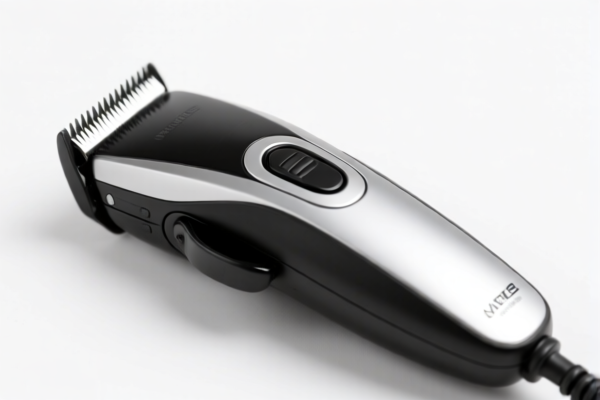
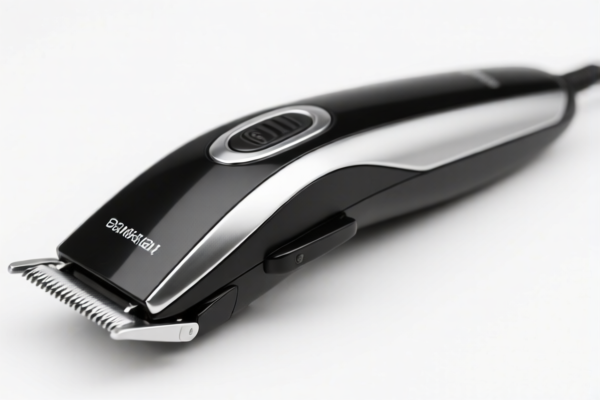
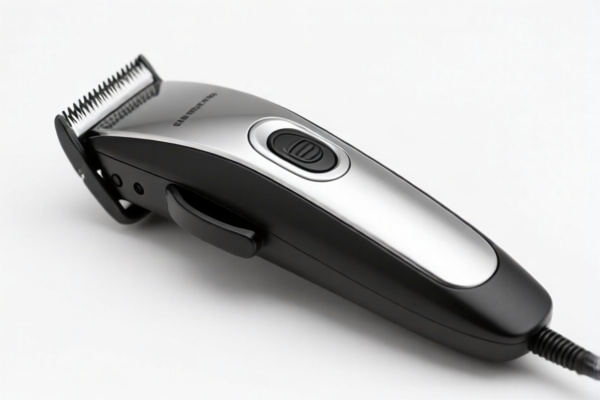
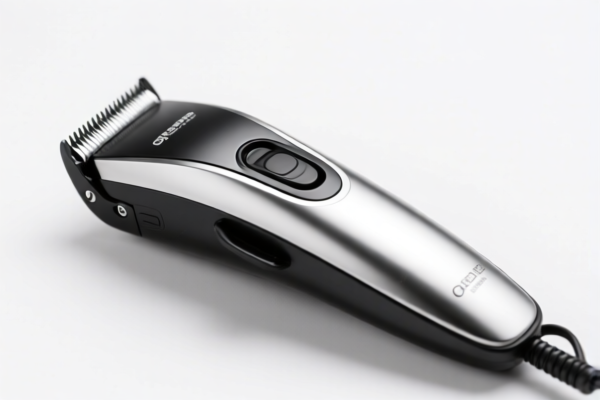
AI Analysis
✂️ Trimming Tool (Pruning Shears & Wood Cutting Implements)
🌐 HS Code Reference & Customs Clearance Guide | 2026 Latest Tariff Analysis | Professional Clearance Strategy
📌 I. Product Definition & Classification: What Exactly is a "Trimming Tool"?
In international trade, "Trimming Tool" is a broad term that can refer to various handheld instruments. Based on the provided data, these tools are primarily classified under Chapter 82 (Tools, Implements, Cutlery, Spoons and Forks of Base Metal), specifically focusing on manual cutting, pruning, or wood-processing implements.
The classification hinges on two key factors: 1. Mechanism/Handle Type: Single-handed vs. Two-handed. 2. Specific Function: Pruning branches (gardening) vs. Cutting timber (woodworking/sawing).
⚠️ Key Distinction Point:
- If it is a single-handed shears or standard pruning tool → Likely 8201.50.00.00
- If it is a two-handed shears (large branch cutters) → Likely 8201.60.00.00
- If it is a manual saw blade for wood trimming → Likely 8202.99.00.00
- If it is a general-purpose wood cutting tool/chisel type → Likely 8205.30.60.00
📦 II. HS Code Classification Details (2026 Latest Tariff Authority Comparison)
| HS Code | Product Description | Application Scenario | Material/Conflict Check |
|---|---|---|---|
8201.50.00.00 |
Hand saws, hand axes, bill hooks and similar hand tools | Pruning tools, pruning shears, single-handed scissors | ✅ No conflict (Metal blade inferred) |
8201.60.00.00 |
Hand saws, hand axes, bill hooks and similar hand tools | Two-handed pruning shears, large branch cutters | ✅ No conflict (Form/Use matches) |
8202.99.00.00 |
Other saw blades and parts thereof | Wood trimming saws, metal/vitreous metal blades | ✅ No conflict (Inferred as metal/vitreous metal) |
8205.30.60.00 |
Other hand tools (incl. glaziers' diamonds) | Wood processing cutting tools, chisels, gouges | ✅ No conflict (Shape matches cutting tools) |
🔍 Key Reminder:
- All these items fall under Base Metal Tools (Chapter 82).
- Misclassification between 8201 (Shears/Axes) and 8205 (Other Hand Tools) can lead to significant tariff differences due to the 5% base duty on 8205 vs. 0% base duty on 8201/8202.
💰 III. 2026 Latest Tariff Rate Breakdown (Including Additional Taxes & Policy Add-ons)
✅ Applicable Country: United States (US)
✅ Origin: China (CN)
✅ Effective Time: Post-2025 Regulations (Section 301 + Section 122)
🎯 1. 8201.50.00.00 & 8201.60.00.00 —— Hand Pruning Shears & Two-Handed Shears
These codes cover general pruning tools and large branch cutters.
| Item | Content |
|---|---|
| Base Duty | 1¢ each + 2.8% (Specific + Ad Valorem) |
| Section 301 Additional Duty | +25.0% (Ad Valorem) |
| Section 122 Duty | +10.0% (Ad Valorem, targeting China) |
| Total Effective Rate | Complex Calculation: (CIF Value × 2.8%) + (CIF Value × 25%) + (CIF Value × 10%) + (1¢ per unit) Total Percentage: 35% + 1¢/unit |
| De Minimis Eligibility | ❌ Not Eligible (deny_de_minimis) |
| Legal Path | USITC:8201.50.00.00 / 8201.60.00.00 → Footnote:301 (25%) → Section 122 (10%) |
📌 Explanation:
- The 35% total percentage rate (2.8% + 25% + 10%) applies to the CIF value.
- Additionally, there is a specific duty of 1 cent per piece, which adds up quickly for high-volume small tool shipments.
- Warning: This is a high-cost category for direct exports from China.
🎯 2. 8202.99.00.00 —— Other Saw Blades (Wood Trimming)
Covers saw blades used for trimming wood, inferred as metal or vitreous metal.
| Item | Content |
|---|---|
| Base Duty | 0.0% |
| Section 301 Additional Duty | +25.0% (Ad Valorem) |
| Section 122 Duty | +10.0% (Ad Valorem, targeting China) |
| Total Effective Rate | 35.0% |
| De Minimis Eligibility | ❌ Not Eligible (deny_de_minimis) |
| Legal Path | USITC:8202.99.00.00 → Footnote:301 (25%) → Section 122 (10%) |
📌 Explanation:
- Unlike shears, saw blades have a 0% base duty, making the total tariff exactly 35% (25% + 10%).
- No specific "per piece" fee, so costs are purely ad valorem.
🎯 3. 8205.30.60.00 —— Other Hand Tools (Wood Cutting/Chisels)
Covers tools used for wood processing cutting, classified as "Other hand tools."
| Item | Content |
|---|---|
| Base Duty | 5.0% |
| Section 301 Additional Duty | +25.0% (Ad Valorem) |
| Section 122 Duty | +10.0% (Ad Valorem, targeting China) |
| Total Effective Rate | 40.0% |
| De Minimis Eligibility | ❌ Not Eligible (deny_de_minimis) |
| Legal Path | USITC:8205.30.60.00 → Footnote:301 (25%) → Section 122 (10%) |
📌 Explanation:
- This is the most expensive option at 40% total.
- The higher rate comes from the 5% base duty. Misclassifying a general cutting tool here instead of 8201 can cost you an extra 5% on top of the standard 35%.
🛠️ IV. Customs Clearance Practical Advice (Battle-Tested Pitfall Guide)
✅ 1. Documentation Checklist (Non-Negotiable)
| Document | Required | Purpose |
|---|---|---|
| ✅ Product Specifications | ✔️ | Must detail: Handle type (single/two-handed), Blade material, Intended use (Pruning vs. Woodworking). |
| ✅ Product Photos | ✔️ | Clear images of the entire tool, including handles and blade shape. Critical for distinguishing 8201 (Shears) from 8205 (Chisels). |
| ✅ Commercial Invoice | ✔️ | Must clearly state "Trimming Tool" or "Pruning Shears." Avoid vague terms like "Hardware." |
| ✅ Packing List | ✔️ | Count the number of pieces (for the 1¢ per unit duty on 8201). |
| ✅ Country of Origin | ✔️ | Must specify Made in China to trigger Section 122 and 301 duties. |
✅ 2. Declaration Tips (Key Mantras)
🔥 "Be Specific on Function: Pruning vs. Cutting!"
| Scenario | Correct Classification | Error Consequence |
|---|---|---|
| Hand Pruning Shears | 8201.50.00.00 (35% + 1¢) |
Misclassifying as 8205 → 40% |
| Large Two-Handed Shears | 8201.60.00.00 (35% + 1¢) |
Misclassifying as 8205 → 40% |
| Saw Blade for Wood | 8202.99.00.00 (35%) |
Misclassifying as 8205 → 40% |
| Chisel/Gouge for Wood | 8205.30.60.00 (40%) |
Misclassifying as 8201 → Underpayment Risk |
✅ 3. Special Cases & Handling
| Situation | Handling Advice |
|---|---|
| Kit Sets (Handle + Blade) | Declare as a complete tool under the principal function. If it's a pruning tool, use 8201. Do not split into blade (8202) and handle. |
| Metal vs. Stainless Steel | Chapter 82 covers "Base Metal." Stainless steel gardening tools are still often classified here unless specifically exempted. Check local ruling. |
| Electric vs. Manual | ⚠️ Warning: This data only covers Manual Tools. Electric trimmers are classified under Chapter 85 (Electrical machinery). Misclassification here leads to massive penalties. |
| High-Value Precision Tools | Ensure the "1¢ per unit" fee is accurately calculated. For 10,000 units, that’s $10,000 added to base duties. |
🌍 V. Global Market Clearance Comparison (2026 Latest)
| Country/Region | Recommended HS Code | Base Tariff | Additional Duties (China) | Total Est. Rate |
|---|---|---|---|---|
| 🇺🇸 USA | 8201.50.00.00 / 8205.30.60.00 |
0-5% | 35% (301+122) | 35% - 40% |
| 🇨🇳 China | 8201.50.00.00 |
5-10% | None | ~10% |
| 🇪🇺 EU | 8201.50.00.00 |
5.5% | None | ~5.5% |
| 🇬🇧 UK | 8201.50.00.00 |
5.5% | None | ~5.5% |
| 🇦🇺 Australia | 8201.50.00.00 |
5% | None | ~5% |
📌 Conclusion:
- The US market is significantly more expensive due to the combination of Section 301 (25%) and Section 122 (10%) duties.
- For US-bound goods, the difference between 35% and 40% is critical for profit margins.
- EU/UK/AU are much more favorable with standard MFN rates.
📌 VI. Common Errors & Pitfall Guide (Lessons Learned)
❌ Error 1: Using generic description "Tool" on Invoice
👉 Consequence: Customs may classify under the highest duty bracket (8205.30.60.00 at 40%) to protect revenue.
❌ Error 2: Confusing Manual Shears (8201) with Electric Trimmers (8543)
👉 Consequence: Electric trimmers have different regulations (FCC/ETL) and different tariffs. Misclassification leads to seizure or heavy fines.
❌ Error 3: Ignoring the "1¢ per unit" duty for 8201 codes
👉 Consequence: For large shipments (e.g., 50,000 units), this adds $50,000 in unexpected duties. Ensure your cost model includes this.
❌ Error 4: Assuming all "Wood Tools" are the same
👉 Consequence: A pruning shear (8201) is 35%, but a chisel (8205) is 40%. Precision in naming ("Pruning Shear" vs. "Wood Chisel") saves 5%.
✅ Correct Practice:
"Manual Pruning Shears, Double-Action, Metal Blade, for Garden Use, Model XYZ, Made in China"
🎯 VII. Conclusion: Precise Classification Saves Money!
🎯 Remember the Mantra:
🔹 "Pruning Shears: 35% + 1¢/unit"
🔹 "Saw Blades: 35% Flat"
🔹 "Other Wood Tools: 40% Flat"
🔹 "Electric? Think Chapter 85!"📌 Tip:
If your product is Electric, do not use these HS Codes. It belongs in Chapter 85.
For Manual Tools, verify if the blade is replaceable. If so, the set usually classifies under the principal function.
📣 Immediate Action:
📞 Consult your broker with clear photos and specific use cases.
🚀 Pre-clearance ruling is highly recommended for high-volume shipments to the US to avoid surprise 40% tariffs or delays.
✨ Professional clearance starts with precise classification!
💼 Your profit margin depends on the last 5% difference!
Customer Reviews
About HS Code Classification
The Harmonized System (HS) is an internationally standardized nomenclature developed by the World Customs Organization (WCO) to classify traded products. Over 200 countries use the HS system as the basis for customs tariffs, trade statistics, and import/export regulations.
Each HS code follows a hierarchical structure:
- Chapter (2 digits) — Broad category of goods (e.g., Chapter 84: Machinery and Mechanical Appliances)
- Heading (4 digits) — More specific grouping within the chapter
- Subheading (6 digits) — Internationally standardized breakdown, used by all WCO member countries
- National subdivisions (8-10 digits) — Country-specific extensions for further classification, such as US HTSUS 10-digit codes
Correct HS code classification is essential for smooth customs clearance, accurate duty payment, and compliance with trade regulations. Misclassification can lead to customs delays, overpayment of duties, or penalties.
When importing from CN to US, the applicable tariff rates may include:
- Most-Favored-Nation (MFN) rate — The standard duty rate applied to WTO members
- General rate — Applied to countries without trade agreements
- Trade remedy duties — Additional tariffs such as Section 301 (anti-dumping), Section 232 (national security), or countervailing duties
The information provided on this page is for reference purposes only. For official classification, please consult with your local customs authority or a licensed customs broker.