tripod
CN → US| HS Code | Tariff Rate | Origin | Destination | Doc |
|---|---|---|---|---|
| 9013908000 | 89.5% | CN | US | Official Doc |
| 9013907000 | 35.0% | CN | US | Official Doc |
| 9620007000 | 37.5% | CN | US | Official Doc |
| 9620005500 | 38.3% | CN | US | Official Doc |
Product Images
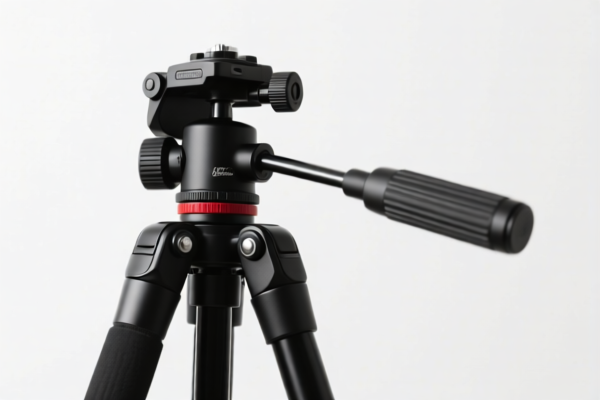
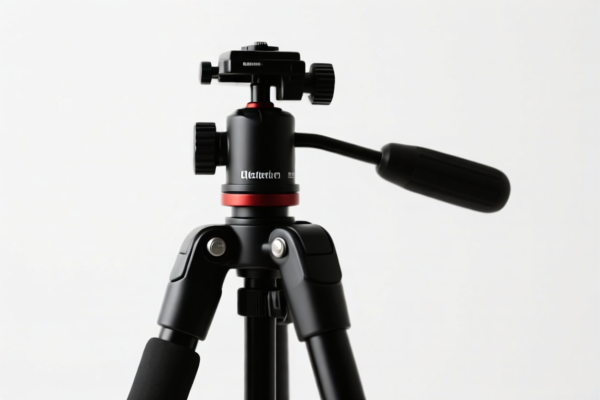

AI Analysis
📸 Tripod (Optical & General Support Stand)
🌐 HS Code Reference & Customs Clearance Guide | 2026 Latest Tariff Analysis | Professional Clearance Strategy
📌 Part I: Product Definition & Classification: What exactly is a "Tripod"?
A tripod is a three-legged stand used to support equipment. In international trade, its classification depends heavily on its specific use and material composition. It is not a single HS code but falls into different categories based on whether it is an accessory to optical instruments or a general-purpose stand.
Key Distinctions:
- Optical Accessories: If the tripod is specifically designed for cameras, binoculars, or scientific optical instruments, it may fall under Chapter 90 (Optical Instruments).
- General Stands: If it is for mobile phones, general photography without optical precision, or general support, it may fall under Chapter 96 (Miscellaneous Manufactured Articles) or others.
- Material Matters: The material (Aluminum, Wood, Steel) can influence the specific sub-heading, especially regarding additional tariffs (Section 301/122).
⚠️ Critical Note:
- No Material Conflict: The provided data indicates no material conflicts for the listed HS codes, but the inferred material (Aluminum vs. Wood) changes the base tariff and thus the total tax burden.
- Accessory vs. Product: Is it a standalone tripod or an attachment? The summary suggests they are treated as attachments/supports.
📦 Part II: HS Code Classification Details (2026 Latest Tariff Reference)
Based on the provided data, here are the four potential HS Codes for a Tripod, ranging from high-tax optical accessories to lower-tax general stands.
| HS Code | Product Description | Summary from Data | Total Tax Rate |
|---|---|---|---|
9013.90.80.00 |
Parts & Accessories of Optical Instruments | "Tripod as a support accessory for optical instruments. No material conflict." | 89.5% |
9013.90.70.00 |
Other Parts & Accessories of Optical Instruments | "Usage matches other parts and accessories of optical instruments. No material conflict." | 35.0% |
9620.00.70.00 |
Other Stands (General Purpose) | "Matches tripod form and use. Inferred as Aluminum or other material stand. No material conflict." | 37.5% |
9620.00.55.00 |
Wooden Stands | "Matches tripod form. Inferred material is Wood. Complies with this code classification." | 38.3% |
🔍 Key Insight:
-9013.90.80.00is the most expensive due to high additional tariffs (Steel/Aluminum/Copper products under Section 122).
-9013.90.70.00is a mid-range option for optical accessories with lower base tariffs.
-9620.00.70.00&9620.00.55.00are general-purpose stands (Chapter 96), avoiding the highest optical instrument surcharges, but still subject to Section 301 and IEEPA tariffs.
💰 Part III: 2026 Latest Tariff Rate Breakdown (Including Additional Taxes)
✅ Applicable Country: United States (US)
✅ Origin: China (CN) (Inferred from tariff structure: 25% Section 301 + 10% IEEPA)
✅ Effective Date: 2025/2026 Import Cycle
🎯 1. 9013.90.80.00 —— Parts & Accessories of Optical Instruments (High Tax)
| Item | Content |
|---|---|
| Base Tariff | 4.5% |
| Section 301 Additional Tariff | +25.0% |
| Section 122 Additional Tariff | +10% (For Steel/Aluminum/Copper products) |
| Other Additional Tariffs | +50% (Specific to Steel, Aluminum, Copper articles under Section 122) |
| Total Tax Rate | 89.5% |
| Calculation | CIF Value × 89.5% |
| Legal Basis | Combination of HTSUS 9013.90.80.00 + Section 301 Footnote + Section 122 provisions. |
📌 Explanation:
- This code attracts the highest tariff burden due to the 50% Section 122 tariff on metal components (Steel/Aluminum/Copper).
- Even if the tripod is primarily aluminum, the "metal article" classification triggers the 50% surcharge.
- Strategy: Avoid this code unless the product is strictly a high-precision optical instrument part and has no alternative classification.
🎯 2. 9013.90.70.00 —— Other Optical Instrument Accessories
| Item | Content |
|---|---|
| Base Tariff | 0.0% |
| Section 301 Additional Tariff | +25.0% |
| Section 122 Additional Tariff | +10% |
| Total Tax Rate | 35.0% |
| Calculation | CIF Value × 35.0% |
| Legal Basis | HTSUS 9013.90.70.00 + Section 301 + Section 122 (if applicable). |
📌 Note:
- Lower base tariff (0%) compared to .80.00.
- Still subject to 25% Section 301 and 10% Section 122.
- Suitable for optical accessories that do not fall under the "metal product" heavy surcharge category of .80.00.
🎯 3. 9620.00.70.00 —— General Purpose Stands (Aluminum/Other)
| Item | Content |
|---|---|
| Base Tariff | 2.5% |
| Section 301 Additional Tariff | +25.0% |
| Section 122 Additional Tariff | +10% |
| Total Tax Rate | 37.5% |
| Calculation | CIF Value × 37.5% |
| Legal Basis | HTSUS 9620.00.70.00 + Section 301 + Section 122. |
📌 Note:
- Classified under Chapter 96 (Miscellaneous Manufactured Articles).
- Base tariff is higher (2.5%) than .90.70.00 (0%), but total tax is similar to .90.70.00 (35% vs 37.5%).
- Inferred Material: Aluminum or other non-wood materials.
- Advantage: May avoid the "optical instrument" strict scrutiny if not strictly for professional optics.
🎯 4. 9620.00.55.00 —— Wooden Stands
| Item | Content |
|---|---|
| Base Tariff | 3.3% |
| Section 301 Additional Tariff | +25.0% |
| Section 122 Additional Tariff | +10% |
| Total Tax Rate | 38.3% |
| Calculation | CIF Value × 38.3% |
| Legal Basis | HTSUS 9620.00.55.00 + Section 301 + Section 122. |
📌 Note:
- Inferred Material: Wood.
- Wood products generally do not fall under the Steel/Aluminum/Copper Section 122 surcharge of 50%, but the data shows +10% Section 122. Note: This seems to be a standard Section 122 application in the provided data, but typically wood is exempt from metal surcharges. Please verify specific Section 122 text for wood.
- Total tax is slightly higher than Aluminum general stands due to higher base tariff.
🛠️ Part IV: Customs Clearance Practical Advice (Real-World Pitfall Guide)
✅ 1. Preparation Checklist (Non-Negotiable)
| Document | Required | Explanation |
|---|---|---|
| ✅ Product Specifications | ✔️ | Must detail dimensions, weight, max load, and material composition (Aluminum vs. Wood vs. Steel). |
| ✅ Material Declaration | ✔️ | Crucial for distinguishing between 9013.90.80.00 (Metal) and 9620.00.55.00 (Wood). |
| ✅ Intended Use Statement | ✔️ | Is it for "Optical Instruments" (Chapter 90) or "General Support" (Chapter 96)? This determines the Chapter. |
| ✅ Product Photos | ✔️ | Clear images showing legs, head, and material finish. |
| ✅ Commercial Invoice | ✔️ | Must accurately describe the item (e.g., "Aluminum Tripod for Camera" vs. "Wooden Tripod for Display"). |
| ✅ Packing List | ✔️ | Show if tripod is shipped with the optical instrument (bundled) or separately. |
✅ 2. Declaration Tips (Key Mnemonics)
🔥 “Material Defines Duty, Use Defines Chapter!”
| Scenario | Correct Declaration | Wrong Action | Consequence |
|---|---|---|---|
| Metal Tripod for Camera | 9013.90.80.00 (if strict optical accessory) OR 9620.00.70.00 (if general) |
Misclassifying as "Stand" without material detail | Risk of 89.5% tax if deemed metal optical accessory. |
| Wooden Tripod | 9620.00.55.00 |
Declaring as "Aluminum" | Penalty for false declaration + tax difference. |
| General Phone Tripod | 9620.00.70.00 |
Declaring as 9013.90.80.00 |
Overpaying taxes (89.5% vs 37.5%). |
| Bundled with Camera | Ensure correct primary use | Splitting unnecessarily | Complex customs valuation. |
✅ 3. Special Case Handling
| Situation | Recommendation |
|---|---|
| OEM Custom Tripod | Provide design specs. If it has specialized optical heads, lean towards Chapter 90. If just a stand, Chapter 96. |
| Mixed Material (Aluminum Legs, Wood Head) | Classify based on the essential character. If legs are main support, likely Chapter 96.20.70.00. |
| Avoiding Section 122 50% Surcharge | If possible, declare as Chapter 96 (General Stand) rather than Chapter 90 (Optical Accessory) to avoid the 50% metal surcharge, provided it is not exclusively for precision optics. |
| Pre-Ruling | Highly Recommended. Apply for a US CBP Advance Ruling to confirm whether your tripod is "Optical Accessory" or "General Stand." |
🌍 Part V: Global Market Comparison (2026 Latest)
| Country/Region | Recommended HS Code | Estimated Tax | Notes |
|---|---|---|---|
| 🇺🇸 USA | 9620.00.70.00 or 9013.90.70.00 |
35% - 37.5% | Avoid 9013.90.80.00 (89.5%) if possible. |
| 🇨🇳 China | 9620.00.70.00 or 9013.90.80.00 |
5% - 10% | No Section 301/122 tariffs. Base tariff applies. |
| 🇪🇺 EU | 9013.90.89 or 9620.00 |
0% - 4.5% | No additional Section 122/301 tariffs. |
| 🇬🇧 UK | 9620.00 or 9013.90 |
0% - 5% | Post-Brexit tariffs similar to EU. |
📌 Conclusion:
- USA is the most complex market due to Section 301 (25%) and Section 122 (10-50%) tariffs.
- Strategic Advice: For general tripods, Chapter 96 (9620.00.70.00) is often the safest and most cost-effective classification (37.5%) compared to the high-risk Chapter 90 metal surcharge (89.5%).
- Material Verification: Ensure your Bill of Materials (BOM) accurately reflects whether the product is Aluminum or Wood to justify9620.00.70.00or9620.00.55.00.
📌 Part VI: Common Mistakes & Pitfalls (Lessons Learned)
❌ Mistake 1: Declaring all tripods as 9013.90.80.00
👉 Consequence: Paying 89.5% tax due to the 50% Section 122 metal surcharge.
👉 Fix: If it’s a general stand, use 9620.00.70.00 (37.5%).
❌ Mistake 2: Ignoring material composition
👉 Consequence: Customs may reclassify based on their inspection, leading to back-taxes.
👉 Fix: Clearly state "Aluminum Alloy" or "Solid Wood" on the invoice and packing list.
❌ Mistake 3: Assuming "Tripod" always means "Optical Accessory"
👉 Consequence: Misclassification. Many tripods are for DSLRs, which are consumer goods, not necessarily "precision optical instruments" under HTS 9013.
👉 Fix: Check the head type. If it’s a general fluid head, Chapter 96 is viable.
✅ Correct Approach:
"Aluminum Tripod Stand, Model XYZ, for General Photography, Weight 2kg, Made of Aluminum Alloy" →
9620.00.70.00
🎯 Part VII: Conclusion: Precision Saves Money!
🎯 Remember the Mnemonic:
🔹 "Chapter 96 is cheaper for general stands!
Chapter 90 metal trips the 89% tax trap!
Declare material clearly, avoid the 50% surcharge gap!"
📌 Pro Tip:
If your supplier provides tripods made of Wood, declare as
9620.00.55.00(38.3%).
If Aluminum, declare as9620.00.70.00(37.5%) to avoid the optical instrument high tariff.
Never default to9013.90.80.00unless you are sure it’s a high-precision optical accessory component, and even then, check if it can be classified under9013.90.70.00(35%).
📣 Immediate Action:
📞 Contact your customs broker to apply for a Pre-Ruling on your specific tripod model.
📄 Audit your BOM to confirm material percentages.
🚀 Optimize your supply chain by choosing the right HS code to save up to 52% in tariffs!
✨ Professional Clearance Starts with Accurate Classification!
💼 Every Dollar Saved in Tariffs is Pure Profit!
Customer Reviews
About HS Code Classification
The Harmonized System (HS) is an internationally standardized nomenclature developed by the World Customs Organization (WCO) to classify traded products. Over 200 countries use the HS system as the basis for customs tariffs, trade statistics, and import/export regulations.
Each HS code follows a hierarchical structure:
- Chapter (2 digits) — Broad category of goods (e.g., Chapter 84: Machinery and Mechanical Appliances)
- Heading (4 digits) — More specific grouping within the chapter
- Subheading (6 digits) — Internationally standardized breakdown, used by all WCO member countries
- National subdivisions (8-10 digits) — Country-specific extensions for further classification, such as US HTSUS 10-digit codes
Correct HS code classification is essential for smooth customs clearance, accurate duty payment, and compliance with trade regulations. Misclassification can lead to customs delays, overpayment of duties, or penalties.
When importing from CN to US, the applicable tariff rates may include:
- Most-Favored-Nation (MFN) rate — The standard duty rate applied to WTO members
- General rate — Applied to countries without trade agreements
- Trade remedy duties — Additional tariffs such as Section 301 (anti-dumping), Section 232 (national security), or countervailing duties
The information provided on this page is for reference purposes only. For official classification, please consult with your local customs authority or a licensed customs broker.