tropical logs excluding teak unprocessed
CN → US| HS Code | Tariff Rate | Origin | Destination | Doc |
|---|---|---|---|---|
| 4403490200 | 35.0% | CN | US | Official Doc |
| 4407230100 | 35.0% | CN | US | Official Doc |
| 4403260165 | 35.0% | CN | US | Official Doc |
| 4403260108 | 35.0% | CN | US | Official Doc |
| 4403970022 | 35.0% | CN | US | Official Doc |
Product Images
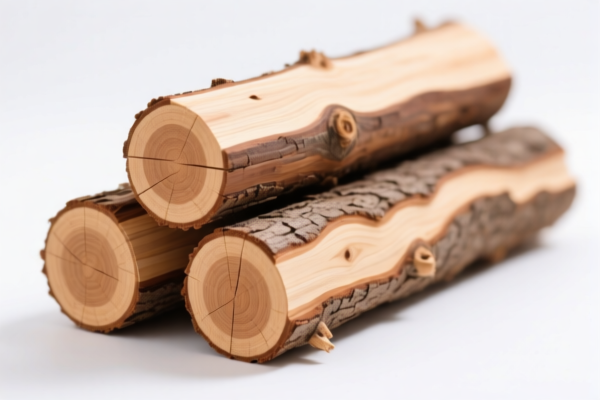
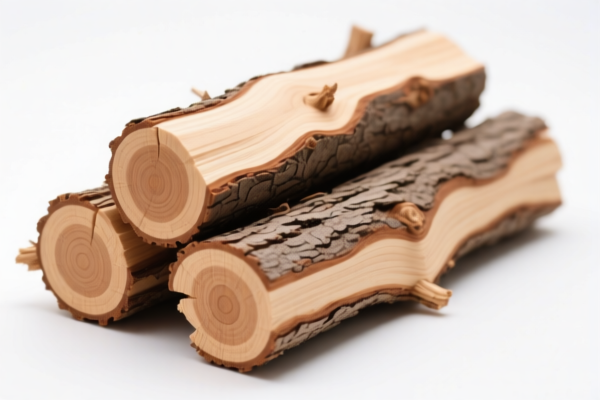
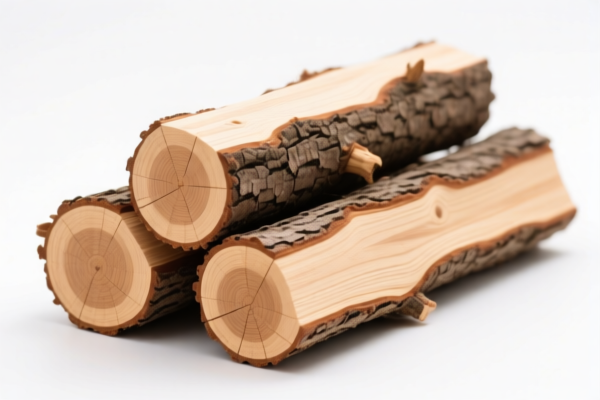
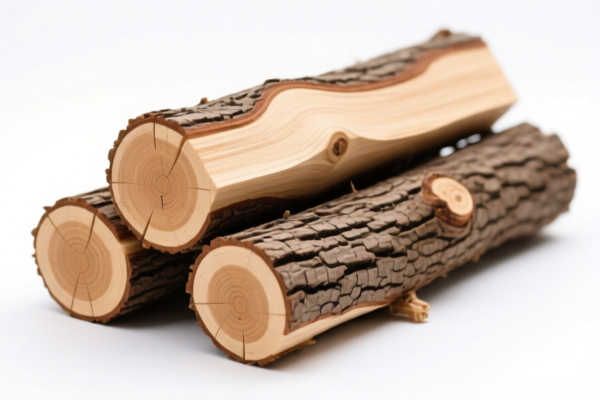
AI Analysis
🪵 Tropical Logs (Excluding Teak) – Unprocessed
🌐 HS Code Reference & Customs Clearance Guide | 2026 Latest Tariff Analysis | Professional Clearance Strategy
📌 I. Product Definition & Classification: What are "Unprocessed Tropical Logs"?
Tropical logs, excluding teak, refer to wood harvested from tropical regions, characterized by high density, durability, and rich coloring, commonly used in furniture, flooring, and construction. In international trade, "unprocessed" refers to wood that has undergone minimal processing, typically just stripping of bark and shaping into rough logs or cross-cut sections, without sawing or planing.
⚠️ Key Distinction:
- If the wood is merely barked and shaped into logs, it is classified under Chapter 44, Heading 4403.
- If it is sawed or peeled, it falls under Heading 4407.
- Teak is explicitly excluded and has its own specific subheading.
📦 II. HS Code Classification Details (2026 Latest Tariff Authority Match)
Based on the provided DATA, here are the specific HS Codes for unprocessed tropical logs (excluding teak):
| HS Code | Product Description | Applicable Scenario | Form |
|---|---|---|---|
4403.49.02.00 |
Unprocessed tropical logs, material: tropical wood, form: rough logs | Standard unprocessed tropical hardwood logs | Rough Logs |
4403.26.01.65 |
Other unprocessed coniferous logs, material: coniferous wood, form: rough logs | Unprocessed coniferous wood logs (if classified under tropical broadleaf category due to regional overlap or specific trade rules) | Rough Logs |
4403.26.01.08 |
Other unprocessed coniferous logs, material: coniferous wood, form: logs, other category | Unprocessed coniferous wood logs under "other" classification | Logs |
4403.97.00.22 |
Unprocessed poplar logs, material: poplar, form: roughly sawn timber or logs | Unprocessed poplar wood logs | Rough Logs/Logs |
🔍 Important Note:
- The provided DATA lists specific subheadings for tropical logs (4403.49.02.00), coniferous logs (4403.26.01.65, 4403.26.01.08), and poplar logs (4403.97.00.22).
- Teak is explicitly excluded from this group and is covered under HS Code 4407.23.01.00 (though the user query excludes teak, the DATA includes teak as a separate entry for reference).
- All listed HS Codes in the DATA have a total tax rate of 35% for imports from China to the US.
💰 III. 2026 Latest Tariff Rate Breakdown (Including Additional Duties & Policy Surcharges)
✅ Applicable Country: United States (US)
✅ Origin: China (CN)
✅ Effective Date: From November 10, 2025 (including subsequent imports)
🎯 1. 4403.49.02.00 — Unprocessed Tropical Logs (Excluding Teak)
| Item | Content |
|---|---|
| Basic Tariff Rate | 0% (ad valorem) |
| USITC Additional Duty | +25% (under USITC Footnote for Section 301 tariffs) |
| IEEPA Additional Duty | +10% (Targeting Chinese/Hong Kong products, effective Nov 10, 2025) |
| Total Tariff Rate | 35% |
| Tax Calculation | CIF Value × 35% |
| De Minimis Eligibility | ❌ Not Eligible (deny_de_minimis) |
| Legal Basis Path | IEEPA:9903.01.25 → IEEPA:9903.01.24 → USITC:4403.49.02.00 → FOOTNOTE:301 |
📌 Explanation:
- The 25% USITC duty is part of the Section 301 tariffs on Chinese goods.
- The 10% IEEPA duty is an additional surcharge under the International Emergency Economic Powers Act targeting Chinese timber products.
- Total 35% is a high tariff rate, requiring advance planning and cost assessment.
🎯 2. 4403.26.01.65 & 4403.26.01.08 — Other Unprocessed Coniferous Logs
| Item | Content |
|---|---|
| Basic Tariff Rate | 0% |
| USITC Additional Duty | +25% |
| IEEPA Additional Duty | +10% |
| Total Tariff Rate | 35% |
| Tax Calculation | CIF × 35% |
| De Minimis Eligibility | ❌ Not Eligible |
| Legal Basis Path | IEEPA:9903.01.25 → IEEPA:9903.01.24 → USITC:4403.26.01.65/08 → FOOTNOTE:301 |
📌 Note:
- Coniferous logs (softwoods) face the same tariff structure as tropical logs in this context.
- Ensure accurate classification as "coniferous" vs. "tropical broadleaf" to avoid misclassification penalties.
🎯 3. 4403.97.00.22 — Unprocessed Poplar Logs
| Item | Content |
|---|---|
| Basic Tariff Rate | 0% |
| USITC Additional Duty | +25% |
| IEEPA Additional Duty | +10% |
| Total Tariff Rate | 35% |
| Tax Calculation | CIF × 35% |
| De Minimis Eligibility | ❌ Not Eligible |
| Legal Basis Path | IEEPA:9903.01.25 → IEEPA:9903.01.24 → USITC:4403.97.00.22 → FOOTNOTE:301 |
📌 Note:
- Poplar logs are classified under "other wood" in this specific US tariff schedule.
- Same 35% total duty applies.
🎯 4. 4407.23.01.00 — Unprocessed Teak (For Reference Only, Excluded from User Query)
| Item | Content |
|---|---|
| Basic Tariff Rate | 0% |
| USITC Additional Duty | +25% |
| IEEPA Additional Duty | +10% |
| Total Tariff Rate | 35% |
| Tax Calculation | CIF × 35% |
| De Minimis Eligibility | ❌ Not Eligible |
📌 Note:
- Although teak is excluded from the user's query, the DATA includes it for completeness.
- Teak is classified under Heading 4407 (sawed/peeled) rather than 4403 (logs), but the tariff rate remains the same in this dataset.
🛠️ IV. Customs Clearance Practical Advice (Pitfall Avoidance Guide)
✅ 1. Required Documentation Checklist (All Mandatory)
| Document | Required | Notes |
|---|---|---|
| ✅ Commercial Invoice | ✔️ | Must clearly state "Unprocessed Tropical Logs (Excluding Teak)" |
| ✅ Packing List | ✔️ | Detail dimensions, weight, and number of logs per package |
| ✅ Phytosanitary Certificate | ✔️ | Issued by the exporting country’s plant protection agency |
| ✅ Fumigation Certificate | ✔️ | Required to prevent pest introduction |
| ✅ Wood Species Declaration | ✔️ | Specify exact species to avoid misclassification (e.g., Mahogany vs. Teak) |
| ✅ Bill of Lading | ✔️ | Confirm origin and shipment details |
| ✅ HS Code Pre-Ruling | ✔️ | Recommended to confirm classification with CBP |
✅ 2. Declaration Tips (Key Mnemonics)
🔥 “Be Precise on Wood Type, Avoid Teak, Declare Rough Form!”
| Scenario | Correct Declaration | Incorrect Practice |
|---|---|---|
| Tropical Logs | 4403.49.02.00 |
Misclassifying as Teak (4407.23.01.00) → No difference in rate, but audit risk |
| Coniferous Logs | 4403.26.01.65 |
Confusing with broadleaf → Potential penalty |
| Sawed Timber | 4407.xxxx.xxxx |
Declaring as "logs" when sawn → Misclassification |
| Processed Wood | 4409.xxxx.xxxx |
Declaring as "unprocessed" → Higher duty risk |
✅ 3. Special Case Handling
| Scenario | Handling Advice |
|---|---|
| Mixed Species Logs | Declare the majority species or use "Other Wood" (4403.97) if mixed. Provide species breakdown in invoice. |
| Teak Mixed with Other Tropical Wood | Separate shipment if possible. If mixed, declare as "Tropical Logs Excluding Teak" and provide proof of exclusion. |
| Roughly Sawn vs. Log | If wood is cross-cut but not sawed into planks, it remains "log" (4403). If sawed, it becomes "sawn wood" (4407). |
| Pest Control | Ensure fumigation is done before shipment. CBP may inspect and reject without valid phytosanitary certificate. |
🌍 V. Global Market Comparison for Unprocessed Logs (2026 Latest)
| Country/Region | Recommended HS Code | Tariff (China Origin) | Certification Requirements | Notes |
|---|---|---|---|---|
| 🇺🇸 USA | 4403.49.02.00 |
35% (25% + 10%) | Phytosanitary + Fumigation | High duty, strict inspection |
| 🇨🇳 China | 4403.49.02.00 |
0% (Most Favored Nation) | Phytosanitary | No additional duties |
| 🇪🇺 EU | 4403.49.02.00 |
0% (with FLEGT/EUTR compliance) | FLEGT License / Due Diligence | No additional duties, but strict legality proof |
| 🇯🇵 Japan | 4403.49.02.00 |
0% | Phytosanitary | No additional duties |
📌 Conclusion:
- USA is the only market with significant additional duties (35% total) for Chinese unprocessed logs.
- EU requires FLEGT/EUTR compliance to prove legality, but no tariff.
- China and Japan have 0% basic tariffs for unprocessed logs.
📌 VI. Common Errors & Pitfalls (Lessons Learned)
❌ Error 1: Misclassifying sawed timber as "logs"
👉 Consequence: If wood is sawed, it should be under 4407, not 4403. Misclassification may lead to penalties or delayed clearance.
❌ Error 2: Including Teak in "Tropical Logs" declaration
👉 Consequence: Teak has its own HS Code (4407.23.01.00). While the tariff rate is the same in this dataset, misdeclaration can trigger audits or fines.
❌ Error 3: Missing Phytosanitary Certificate
👉 Consequence: CBP will reject the shipment or require re-export at your cost.
❌ Error 4: Not declaring wood species accurately
👉 Consequence: If the species is not verifiable, CBP may assign a higher tariff or deny entry.
✅ Correct Practice:
"Unprocessed Tropical Logs (Excluding Teak), Species: Mahogany, Roughly Shaped, Fumigated, Phytosanitary Certificate Attached, HS Code 4403.49.02.00"
🎯 VII. Conclusion: Professional Declaration, Cost Efficiency!
🎯 Remember the Mnemonic:
🔹 "Logs vs. Sawn: Rough is 4403, Sawed is 4407!"
🔹 "Teak Excluded: Declare Correctly to Avoid Audit Risk!"
🔹 "Phytosanitary & Fumigation: Mandatory for Smooth Clearance!"
📌 Pro Tip:
If your logs are originating from Southeast Asia (non-China), you may qualify for lower or zero duties under FTAs (e.g., ASEAN-US trade agreements).
Consider pre-clearance rulings to confirm HS Code and avoid unexpected 35% duty at port.
📣 Immediate Action:
📞 Contact a licensed customs broker + Provide species details + Apply for CBP Pre-Ruling
🚀 Ensure your unprocessed logs clear customs smoothly, avoid delays, and minimize costs!
✨ Professional Clearance, Starts with Accurate Classification!
💼 Every penny of your logistics cost deserves precise calculation!
Customer Reviews
About HS Code Classification
The Harmonized System (HS) is an internationally standardized nomenclature developed by the World Customs Organization (WCO) to classify traded products. Over 200 countries use the HS system as the basis for customs tariffs, trade statistics, and import/export regulations.
Each HS code follows a hierarchical structure:
- Chapter (2 digits) — Broad category of goods (e.g., Chapter 84: Machinery and Mechanical Appliances)
- Heading (4 digits) — More specific grouping within the chapter
- Subheading (6 digits) — Internationally standardized breakdown, used by all WCO member countries
- National subdivisions (8-10 digits) — Country-specific extensions for further classification, such as US HTSUS 10-digit codes
Correct HS code classification is essential for smooth customs clearance, accurate duty payment, and compliance with trade regulations. Misclassification can lead to customs delays, overpayment of duties, or penalties.
When importing from CN to US, the applicable tariff rates may include:
- Most-Favored-Nation (MFN) rate — The standard duty rate applied to WTO members
- General rate — Applied to countries without trade agreements
- Trade remedy duties — Additional tariffs such as Section 301 (anti-dumping), Section 232 (national security), or countervailing duties
The information provided on this page is for reference purposes only. For official classification, please consult with your local customs authority or a licensed customs broker.