tropical teak
CN → US| HS Code | Tariff Rate | Origin | Destination | Doc |
|---|---|---|---|---|
| 4409220545 | 38.2% | CN | US | Official Doc |
| 4403420000 | 35.0% | CN | US | Official Doc |
| 4403490200 | 35.0% | CN | US | Official Doc |
| 4407230100 | 35.0% | CN | US | Official Doc |
| 4407230100 | 35.0% | CN | US | Official Doc |
Product Images
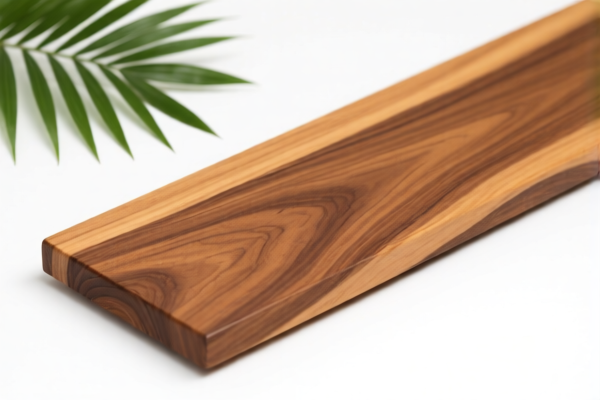
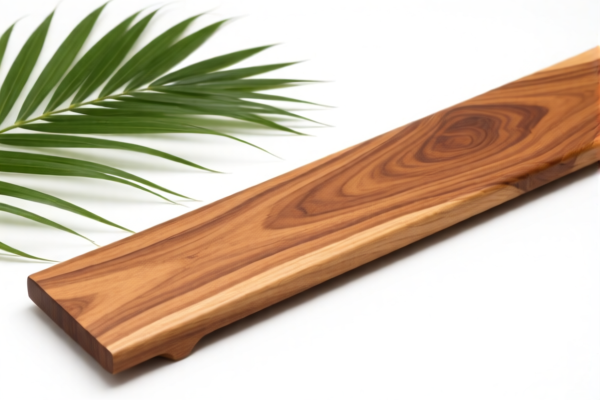
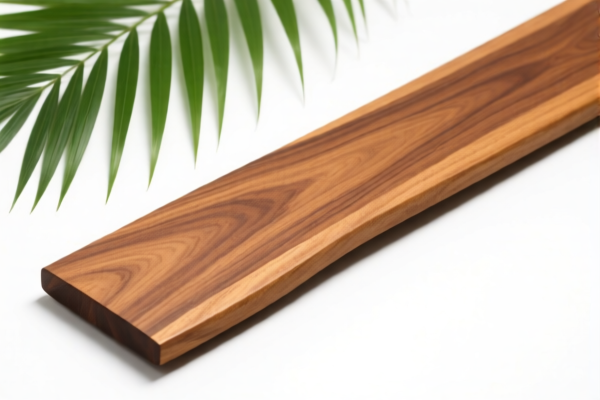
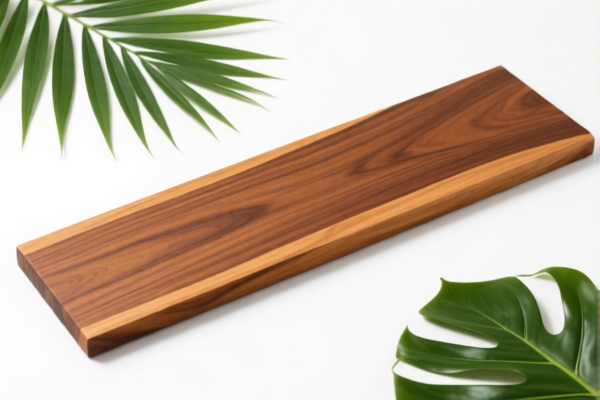
AI Analysis
🌳 Tropical Teak (Tropical Teak Wood)
🌐 HS Code Reference & Customs Clearance Guide | 2026 Latest Tariff Analysis | Professional Clearance Strategy
📌 I. Product Definition & Classification: Do You Really Understand "Tropical Teak"?
Tropical Teak (Tectona grandis) is a high-value hardwood prized for its durability, oil content, and aesthetic appeal. In international trade, it is not a single commodity but is categorized based on its processing stage. Misclassifying raw logs versus processed planks can lead to significant duty discrepancies and customs delays.
The product is broadly split into two categories:
- Raw/Coarsely Processed Teak: Logs, round timber, or roughly squared blocks that retain their natural shape.
- Processed Teak: Planed, sawn, or shaped boards, veneers, or joinery items ready for manufacturing.
⚠️ Critical Distinction: - If the wood is in its natural log form or simply cut to length without planing/surfacing → Classified as Raw/Coarsely Processed Wood. - If the wood has been planed, smoothed, or finished into boards/slabs → Classified as Sawn Wood/Lumber. - If the wood is further processed into shaped profiles (molding, tongues, etc.) → Classified as Continuously Shaped Wood.
📦 II. HS Code Classification Details (2026 Latest Tariff Authority Mapping)
Based on the provided data, here is the authoritative mapping for Tropical Teak:
| HS Code | Product Description | Processing Stage | Visual/Physical Characteristics |
|---|---|---|---|
4403.49.02.00 |
Tropical Teak, Coarsely Processed (General Tropical Wood) | Raw/Semi-raw | Logs, rounds, or rough cuts not further prepared. |
4407.23.01.00 |
Tropical Teak, Sawn Wood/Planks | Planed/Sawn | Planed or sanded boards, planks, veneer sheets. |
4409.22.05.45 |
Non-coniferous Tropical Wood, Continuously Shaped | Shaped/Profiled | Molding, tongue-and-groove, scalloped, or other continuously shaped profiles. |
4403.42.00.00 |
Tropical Teak, Coarsely Processed (Specific Teak) | Raw/Semi-raw | Logs or rough timber specifically identified as Teak (Tectona grandis). |
🔍 Key Reminder: - Raw Teak falls under Chapter 44.03 (Wood prepared for use as fuel, etc., but specifically here meaning raw/rough). - Sawn/Plank Teak falls under Chapter 44.07 (Wood sawn or chipped lengthwise). - Shaped Teak falls under Chapter 44.09 (Wood continuously shaped along its length). - Do NOT mix these categories. A "sawn plank" misdeclared as a "log" or vice versa triggers audits.
💰 III. 2026 Latest Tariff Rate Breakdown (Including Surtaxes & Policy Surcharges)
✅ Applicable Country: United States (US)
✅ Country of Origin: China (CN)
✅ Effective Date: From November 10, 2025 onwards
🎯 1. Raw Teak: 4403.49.02.00 & 4403.42.00.00
(Coarsely Processed Tropical Teak)
| Item | Content |
|---|---|
| Base Tariff Rate | 0.0% (ad valorem) |
| USITC Surtax (Section 301) | +25.0% |
| IEEPA Surtax (Clause 122) | +10.0% |
| Total Tax Rate | 35.0% |
| Tax Calculation | CIF Value × 35% |
| De Minimis Exemption | ❌ Not Eligible (deny_de_minimis) |
| Legal Basis Path | IEEPA:9903.01.25 → USITC:4403.49.02.00 → FOOTNOTE:9903.88.01 |
📌 Explanation: - Base Tariff 0%: Raw wood typically has low base duties. - Section 301 Surtax (+25%): Applied to all Chinese-origin wood products in this category. - Clause 122 IEEPA Surtax (+10%): Additional surcharge targeting specific Chinese timber imports. - Total 35%: High duty burden. Must be factored into landed cost calculations immediately.
🎯 2. Sawn Wood/Planks: 4407.23.01.00
(Tropical Teak Planks/Boards)
| Item | Content |
|---|---|
| Base Tariff Rate | 0.0% |
| USITC Surtax (Section 301) | +25.0% |
| IEEPA Surtax (Clause 122) | +10.0% |
| Total Tax Rate | 35.0% |
| Tax Calculation | CIF Value × 35% |
| De Minimis Exemption | ❌ Not Eligible |
| Legal Basis Path | IEEPA:9903.01.25 → USITC:4407.23.01.00 → FOOTNOTE:9903.88.01 |
📌 Note: - Despite being more processed than raw logs, sawn teak still enjoys a 0% base tariff. - However, the surtaxes remain identical at 35%. - Many importers mistakenly believe processing reduces duty; here, it does not. The cost structure for raw vs. sawn is effectively the same regarding duties.
🎯 3. Shaped/Profiled Wood: 4409.22.05.45
(Non-coniferous Tropical Wood, Continuously Shaped)
| Item | Content |
|---|---|
| Base Tariff Rate | 3.2% |
| USITC Surtax (Section 301) | +25.0% |
| IEEPA Surtax (Clause 122) | +10.0% |
| Total Tax Rate | 38.2% |
| Tax Calculation | CIF Value × 38.2% |
| De Minimis Exemption | ❌ Not Eligible |
| Legal Basis Path | IEEPA:9903.01.25 → USITC:4409.22.05.45 → FOOTNOTE:9903.88.01 |
📌 Critical Alert: - This category carries the highest duty rate (38.2%). - Why? Because the Base Tariff jumps to 3.2% for continuously shaped wood. - Action: If you are importing decking, molding, or profiled teak, budget for nearly 40% in duties. Do not misdeclare shaped wood as plain planks to save 3.2%—this is customs fraud and carries heavy penalties.
🛠️ IV. Customs Clearance Practical Advice (Real-World Pitfall Avoidance)
✅ 1. Preparation Checklist (No Exceptions)
| Document | Mandatory | Explanation |
|---|---|---|
| ✅ Product Specification Sheet | ✔️ | Must detail species (Tectona grandis), moisture content, and processing level (rough vs. planed). |
| ✅ Photos of Product | ✔️ | Show cross-section, grain, and any machining (tongue/groove). Critical for verifying HS Code. |
| ✅ Bill of Lading / Packing List | ✔️ | Must explicitly state "Tropical Teak" and HS Code. Vague terms like "Wood" are rejected. |
| ✅ Phytosanitary Certificate | ✔️ | Mandatory for all raw wood to prove freedom from pests. Without it, shipment is quarantined/destroyed. |
| ✅ Lacey Act Declaration | ✔️ | US requires proof that the wood was legally harvested. Declare value, species, and country of harvest. |
✅ 2. Declaration Tactics (Key Mnemonic)
🔥 “Shape Determines Duty, Raw is Same as Sawn, Never Fake the Spec!”
| Scenario | Correct Declaration | Incorrect Practice | Consequence |
|---|---|---|---|
| Raw Logs | 4403.42.00.00 or 4403.49.02.00 |
Declare as Planks (4407...) |
May trigger inspection for "under-declared value" if logs are cheaper. |
| Planed Boards | 4407.23.01.00 |
Declare as Raw Logs (4403...) |
High Risk. Customs will measure thickness. If planed, fine applied. |
| Shaped Molding | 4409.22.05.45 |
Declare as Planks (4407...) |
Fraud. Rate difference is small, but intent is clear. Penalty + back taxes. |
✅ 3. Special Handling Cases
| Situation | Handling Advice |
|---|---|
| Mixed Shipments | If a container has both raw logs and planks, must split into two separate line items. Do not average them. |
| Lacey Act Compliance | Ensure the Lacey Act Declaration matches the exact scientific name (Tectona grandis). Generic "Teak" is often rejected. |
| Fumigation Certificates | If wood is not heat-treated (HT) or methyl bromide (MB) treated, it will be rejected. Ensure IPPC Marks are visible on pallets/crates. |
| Value Fluctuation | Teak prices vary by grade (A vs. B). Declare accurate transaction value. Under-valuation leads to audits. |
🌍 V. Global Market Customs Comparison (2026 Latest)
| Country/Region | Recommended HS Code | Tariff Rate (China Origin) | Certification Requirements | Notes |
|---|---|---|---|---|
| 🇺🇸 USA | 4403.42.00.00 / 4407.23.01.00 |
35.0% - 38.2% | Lacey Act + Phytosanitary | Highest barrier. Surtaxes are punitive. |
| 🇨🇳 China | 4403.42.00.00 / 4407.23.01.00 |
0% - 5% (Varies by trade agreement) | N/A | Major exporter. Low import duty if re-exporting. |
| 🇪🇺 EU | 4403.42.00 / 4407.23.00 |
0% - 6.5% | EUTR (EU Timber Regulation) | Strict Deforestation Regulation (EUDR). Requires geo-location data. |
| 🇦🇺 Australia | 4403.42.00 / 4407.23.00 |
5% | IPPC + Biosecurity | Strict biosecurity checks for all wood. |
📌 Conclusion: - USA is the most costly market due to Section 301 + Clause 122 tariffs (35%+). - EU has the strictest compliance requirements (EUDR) but lower tariffs. - Strategy: If targeting the US, ensure supply chain transparency and budget for ~35% duty. If targeting EU, invest in EUDR compliance software.
📌 VI. Common Mistakes & Pitfalls (Lessons from the Field)
❌ Mistake 1: Declaring "Shaped Teak" as "Planks" to save 3.2% base duty. 👉 Result: Customs inspector measures the profile. Fine + Back Taxes + 20% penalty.
❌ Mistake 2: Using generic "Teak" without scientific name (Tectona grandis) on Lacey Act forms. 👉 Result: Hold at port. Requires expensive botanical verification. Delays shipment by weeks.
❌ Mistake 3: Ignoring Phytosanitary Certificate for raw wood. 👉 Result: Immediate return or destruction. No exceptions.
❌ Mistake 4: Assuming "Coarsely Processed" means "Ready to Use".
👉 Result: Customs defines "Coarsely" as rough-cut. If it’s planed, it’s 4407. Misclassification leads to audit.
✅ Correct Approach:
"Tectona grandis, Sawn Planks, Planed on 4 Sides, Moisture Content 10-12%, IPPC Heat Treated, Lacey Act Value: $XX,XXX."
🎯 VII. Conclusion: Precision in Classification, Profit in Clearance!
🎯 Remember the Mnemonic:
🔹 "Raw & Sawn are 35%, Shaped is 38.2%, Lacey Act is Key, Phytosanitary is Mandatory!" 🔹 "HS Code dictates duty, mistake costs double, declare accurately, profit stays stable!"
📌 Pro Tip:
- If your teak is grown in Asia but processed in Vietnam/Thailand, check if Rules of Origin allow a tariff reduction under USMCA or other FTAs. However, Section 301 tariffs often still apply if substantial transformation did not occur.
- Apply for a Binding Ruling from CBP (US Customs) before shipping if you are unsure if your product is "Sawn" or "Shaped". This provides legal protection.
📣 Immediate Action:
📞 Contact a licensed customs broker + Provide Product Photos + Verify Lacey Act Data. 🚀 Let your Tropical Teak Clear Smoothly, Avoid Delays, and Maximize Margins!
✨ Professional Customs Clearance Starts with Accurate Classification! 💼 Every percent of duty saved is pure profit added to your bottom line!
Customer Reviews
About HS Code Classification
The Harmonized System (HS) is an internationally standardized nomenclature developed by the World Customs Organization (WCO) to classify traded products. Over 200 countries use the HS system as the basis for customs tariffs, trade statistics, and import/export regulations.
Each HS code follows a hierarchical structure:
- Chapter (2 digits) — Broad category of goods (e.g., Chapter 84: Machinery and Mechanical Appliances)
- Heading (4 digits) — More specific grouping within the chapter
- Subheading (6 digits) — Internationally standardized breakdown, used by all WCO member countries
- National subdivisions (8-10 digits) — Country-specific extensions for further classification, such as US HTSUS 10-digit codes
Correct HS code classification is essential for smooth customs clearance, accurate duty payment, and compliance with trade regulations. Misclassification can lead to customs delays, overpayment of duties, or penalties.
When importing from CN to US, the applicable tariff rates may include:
- Most-Favored-Nation (MFN) rate — The standard duty rate applied to WTO members
- General rate — Applied to countries without trade agreements
- Trade remedy duties — Additional tariffs such as Section 301 (anti-dumping), Section 232 (national security), or countervailing duties
The information provided on this page is for reference purposes only. For official classification, please consult with your local customs authority or a licensed customs broker.