tungsten based casting rust preventive agent
CN → US| HS Code | Tariff Rate | Origin | Destination | Doc |
|---|---|---|---|---|
| 3824993500 | 41.5% | CN | US | Official Doc |
| 3824992900 | 41.5% | CN | US | Official Doc |
| 3824993500 | 41.5% | CN | US | Official Doc |
| 3824993500 | 41.5% | CN | US | Official Doc |
| 3824992900 | 41.5% | CN | US | Official Doc |
Product Images
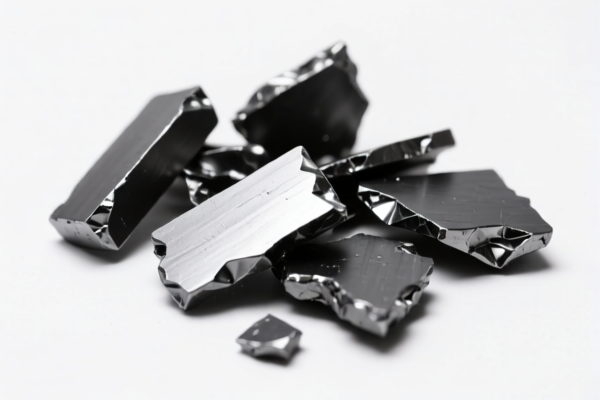
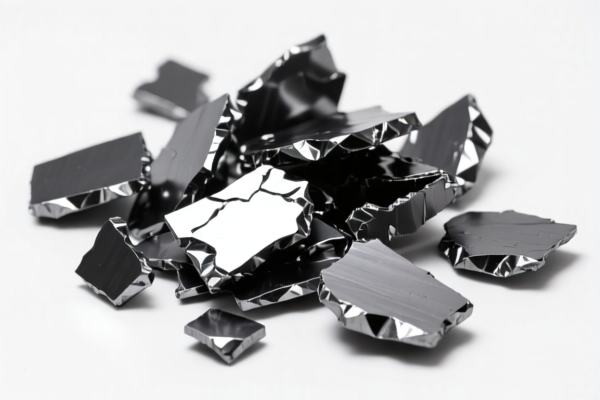
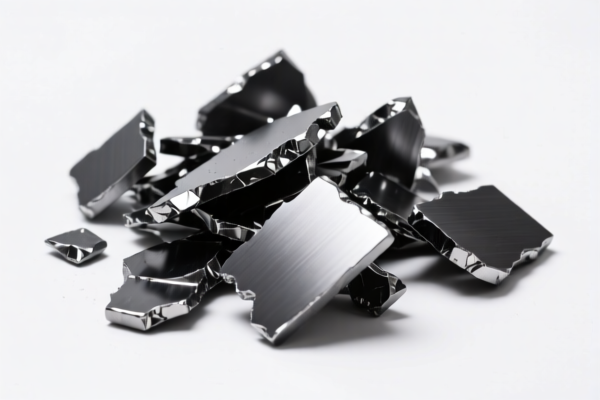

AI Analysis
🏭 Tungsten-Based Casting Rust Preventive Agent
🌐 HS Code Reference & Customs Clearance Guide | 2026 Latest Tariff Analysis | Professional Clearance Strategy
📌 I. Product Definition & Classification: What Exactly Is a "Tungsten-Based Casting Rust Preventive Agent"?
A Tungsten-Based Casting Rust Preventive Agent is a specialized chemical product used in the foundry industry to prevent rust and corrosion on cast metal components during storage or transportation. Its primary material base is Tungsten (W), often in the form of salts or compounds.
In international trade, these products fall under Chapter 38: Miscellaneous Chemical Products. Specifically, they are classified based on their specific chemical composition and application:
1. Mixtures of Tungsten Compounds:
If the product is a mixture of two or more inorganic compounds (e.g., Tungstate mixed with binders/adhesives) used for casting molds or cores, it may be classified as a miscellaneous chemical preparation.
2. Specific Tungsten Salts (e.g., Sodium Tungstate):
If the product is a specific chemical salt like Sodium Tungstate used as a mold binder or rust preventive, it falls under Sodium Tungstate categories.
⚠️ Key Distinction Point:
- If the product is a complex mixture containing Tungsten used as a rust preventive for casting → It generally falls under 3824.99.35.00.
- If the product is Sodium Tungstate specifically used as a mold/core binder or rust preventive → It generally falls under 3824.99.29.00 (or 3824.99.35.00 depending on exact formulation and local interpretation of "mixture").
📦 II. HS Code Classification Details (2026 Latest Tariff Authority Comparison)
| HS Code | Product Description | Application Scenario | Key Component |
|---|---|---|---|
3824.99.35.00 |
Casting Rust Preventive Agents, Tungsten-Based | Prevents rust on castings; material contains Tungsten. | Tungsten compounds/mixtures |
3824.99.29.00 |
Sodium Tungstate for Casting | Used for casting molds/cores; material is Sodium Tungstate. | Sodium Tungstate (Na₂WO₄) |
3824.99.35.00 |
Tungsten Sodium for Casting (Mixture) | Material is Tungsten; used as a binder/modifier for molds/cores. | Mixture of inorganic compounds |
🔍 Important Note:
- Both HS Codes 3824.99.35.00 and 3824.99.29.00 are considered Miscellaneous Chemical Products.
- The critical difference lies in the specific chemical identity:
-3824.99.35.00is broader and includes rust preventive agents and mixtures.
-3824.99.29.00is more specific to Sodium Tungstate preparations.
- However, in the provided data, both are associated with similar tax treatments due to Section 301 and 122 tariffs.
💰 III. 2026 Latest Tariff Rate Breakdown (Including Surcharge Taxes & Policy Add-ons)
✅ Applicable Country: United States (US)
✅ Country of Origin: China (CN)
✅ Effective Date: 2025 November 10 onwards (for subsequent imports)
🎯 1. 3824.99.35.00 —— Tungsten-Based Casting Rust Preventive Agent / Mixture
| Item | Content |
|---|---|
| Base Tariff | 6.5% (ad valorem) |
| Section 301 Surcharge | +25.0% (China-origin goods) |
| Section 122 Tariff | +10.0% (Specific provision for certain industrial chemicals) |
| Total Tariff Rate | 41.5% |
| Tax Calculation | CIF Value × 41.5% |
| De Minimis Exemption? | ❌ No (deny_de_minimis applies to Section 301 goods) |
| Legal Basis Path | USITC:3824.99.35.00 → Section 301: Footnote 9903.88.01 → Section 122 |
📌 Explanation:
- Base Tariff 6.5%: The standard Most Favored Nation (MFN) rate for miscellaneous chemical products.
- Section 301 Surcharge 25%: Applied to all Chinese-origin goods listed in the trade war tariffs (List 3/4). Chemical products like this are typically included.
- Section 122 Tariff 10%: This is a specific tariff applied to certain industrial inputs, often for national security or balance of payments reasons.
- Total 41.5%: This is a very high tariff, significantly impacting profit margins.
🎯 2. 3824.99.29.00 —— Sodium Tungstate for Casting
| Item | Content |
|---|---|
| Base Tariff | 6.5% (ad valorem) |
| Section 301 Surcharge | +25.0% (China-origin goods) |
| Section 122 Tariff | +10.0% (Specific provision for certain industrial chemicals) |
| Total Tariff Rate | 41.5% |
| Tax Calculation | CIF Value × 41.5% |
| De Minimis Exemption? | ❌ No (deny_de_minimis applies to Section 301 goods) |
| Legal Basis Path | USITC:3824.99.29.00 → Section 301: Footnote 9903.88.01 → Section 122 |
📌 Note:
- Although the chemical composition differs slightly (Sodium Tungstate vs. general Tungsten mixture), the tariff outcome is identical under current US trade policies.
- Both are subject to the same 41.5% total duty, so cost-saving opportunities via HS code switching are limited unless the product origin changes.
🛠️ IV. Customs Clearance Practical Advice (Real-World Pitfall Avoidance)
✅ 1. Required Documentation Checklist (All Mandatory)
| Document | Mandatory | Description |
|---|---|---|
| ✅ Product Technical Data Sheet (TDS) | ✔️ | Must specify chemical composition, especially Tungsten content. |
| ✅ Safety Data Sheet (SDS) | ✔️ | Required for chemical products; confirms hazard classification. |
| ✅ Commercial Invoice | ✔️ | Must clearly state "Tungsten-Based" or "Sodium Tungstate" and HS Code. |
| ✅ Packing List | ✔️ | Details net/gross weight, quantity. |
| ✅ Certificate of Origin | ✔️ | Crucial for proving CN origin (triggers 301/122 tariffs). |
| ✅ Proof of Non-Diversion | ✔️ | If applicable, prove end-use is industrial casting, not dual-use military. |
✅ 2. Declaration Tips (Key Mantras)
🔥 "Be Specific on Chemicals, Don't Hide the Tungsten!"
| Scenario | Correct Declaration | Incorrect Practice |
|---|---|---|
| Product is a mixture of tungsten compounds | Declare as 3824.99.35.00 |
Vague "Chemical Agent" → Risk of audit |
| Product is pure Sodium Tungstate | Declare as 3824.99.29.00 |
Misclassified as generic fertilizer → Penalty |
| Product contains other binders/additives | Must declare full composition | Omitting binders → HS Code error |
💡 Strategy:
- Ensure the SDS and TDS match the declared HS Code.
- If the product is a mixture, lean towards3824.99.35.00.
- If it is a specific salt, use3824.99.29.00.
- Do not under-declare value or mislabel as "Industrial Lubricant" or "Fertilizer" to avoid tariffs — this is fraud.
✅ 3. Special Cases & Mitigation
| Situation | Handling Advice |
|---|---|
| OEM Custom Mixtures | Provide detailed formulation. If Tungsten content is minimal, argue for a different HS code (but 41.5% still likely if classified as 3824). |
| Transshipment via Third Country | Caution: If goods are merely transshipped through Vietnam/Malaysia without substantial transformation, they may still be deemed CN origin. Avoid false origin labeling. |
| Small Samples | No De Minimis Exemption: Section 301 goods ($800 de minimis) do not apply. Even small shipments are subject to 41.5%. |
| National Security Concerns | Tungsten is a critical mineral. Ensure no BIS (Bureau of Industry and Security) restrictions apply if the product has potential dual-use applications. |
🌍 V. Global Market Clearance Comparison (2026 Latest)
| Country/Region | Recommended HS Code | Tariff Rate | Certification | Notes |
|---|---|---|---|---|
| 🇺🇸 United States | 3824.99.35.00 / 29.00 |
41.5% | SDS, TDS | High tariff due to 301 + 122. |
| 🇨🇳 China | 3824.99.35.00 / 29.00 |
~6-13% | CCC (if applicable) | Lower tax burden domestically. |
| 🇪🇺 European Union | 3824.99.89 |
~6.5% | REACH Registration | REACH compliance is critical for chemicals. |
| 🇯🇵 Japan | 3824.99.990 |
~6-8% | PRTR Law | Report if tungsten exceeds threshold. |
| 🇮🇳 India | 3824.99.99 |
~7.5-10% | BIS | Standard IEC duties apply. |
📌 Conclusion:
- The US market is the most expensive due to the unique combination of Section 301 (25%) and Section 122 (10%) tariffs.
- Other markets do not apply these punitive surcharges.
- REACH (EU) and PRTR (Japan) chemical registrations are additional compliance hurdles.
📌 VI. Common Mistakes & Pitfalls (Lessons Learned)
❌ Mistake 1: Treating this as a "General Chemical" with low tariff
👉 Consequence: 41.5% duty applied retroactively + penalties.
❌ Mistake 2: Assuming $800 de minimis applies
👉 Consequence: Small samples/separates are not exempt. All shipments face 41.5%.
❌ Mistake 3: Misdeclaring as "Fertilizer" or "Paint"
👉 Consequence: Customs seizure, fraud investigation, and blacklisting.
❌ Mistake 4: Ignoring Section 122 Tariff
👉 Consequence: Underpayment by 10%. While less than 301, it is still a significant cost.
✅ Correct Practice:
"Tungsten-Based Rust Preventive Agent for Metal Castings, Containing Sodium Tungstate, for Industrial Use Only."
🎯 VII. Conclusion: Professional Declaration Saves Money!
🎯 Remember the Mantra:
🔹 "Tungsten in Casting, 41.5% is the Price!"
🔹 "Section 301 + 122 = High Cost, Be Precise in Declaration!"
📌 Pro Tip:
If your product is not from China (e.g., produced in the US, EU, or other FTA partners), the Section 301 and 122 tariffs do NOT apply.
- Strategy: Consider supply chain diversification. If you can source Tungsten-based rust preventatives from Vietnam, Mexico, or Thailand, you may qualify for 0%~10% duties instead of 41.5%.
- Action: Consult with a customs broker to apply for FTAs (Free Trade Agreements) like USMCA (Mexico/Canada) or ASEAN agreements if origin can be legitimately shifted.
📣 Immediate Action:
📞 Contact a licensed customs broker.
📄 Prepare SDS and TDS.
📊 Calculate landed cost with 41.5% duty.
🚀 Optimize your supply chain to reduce tariff exposure!
✨ Professional clearance starts with accurate classification!
💼 Every dollar of duty saved is pure profit!
Customer Reviews
About HS Code Classification
The Harmonized System (HS) is an internationally standardized nomenclature developed by the World Customs Organization (WCO) to classify traded products. Over 200 countries use the HS system as the basis for customs tariffs, trade statistics, and import/export regulations.
Each HS code follows a hierarchical structure:
- Chapter (2 digits) — Broad category of goods (e.g., Chapter 84: Machinery and Mechanical Appliances)
- Heading (4 digits) — More specific grouping within the chapter
- Subheading (6 digits) — Internationally standardized breakdown, used by all WCO member countries
- National subdivisions (8-10 digits) — Country-specific extensions for further classification, such as US HTSUS 10-digit codes
Correct HS code classification is essential for smooth customs clearance, accurate duty payment, and compliance with trade regulations. Misclassification can lead to customs delays, overpayment of duties, or penalties.
When importing from CN to US, the applicable tariff rates may include:
- Most-Favored-Nation (MFN) rate — The standard duty rate applied to WTO members
- General rate — Applied to countries without trade agreements
- Trade remedy duties — Additional tariffs such as Section 301 (anti-dumping), Section 232 (national security), or countervailing duties
The information provided on this page is for reference purposes only. For official classification, please consult with your local customs authority or a licensed customs broker.