tweezers set
CN → US| HS Code | Tariff Rate | Origin | Destination | Doc |
|---|---|---|---|---|
| 9018904000 | 10.0% | CN | US | Official Doc |
| 9018905040 | 10.0% | CN | US | Official Doc |
| 8214203000 | 14.0% | CN | US | Official Doc |
| 8214209000 | 14.1% | CN | US | Official Doc |
Product Images
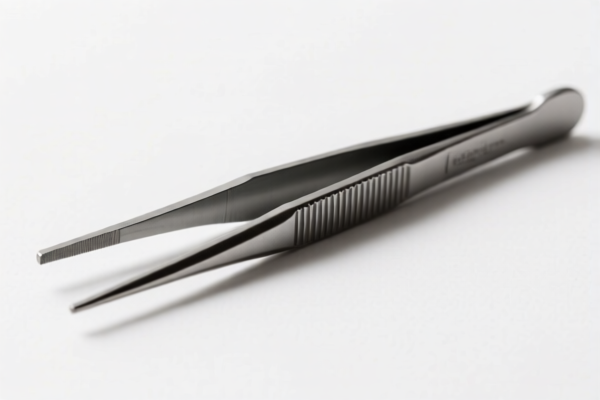
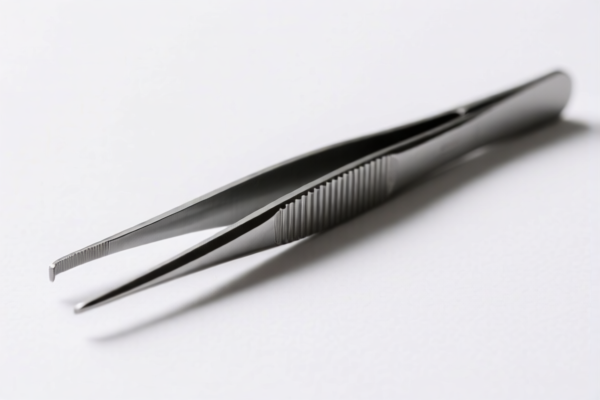
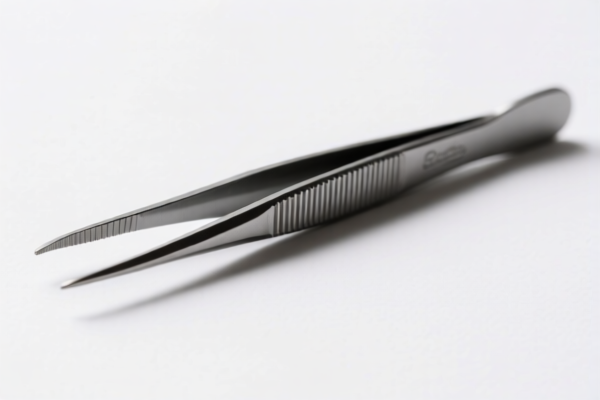
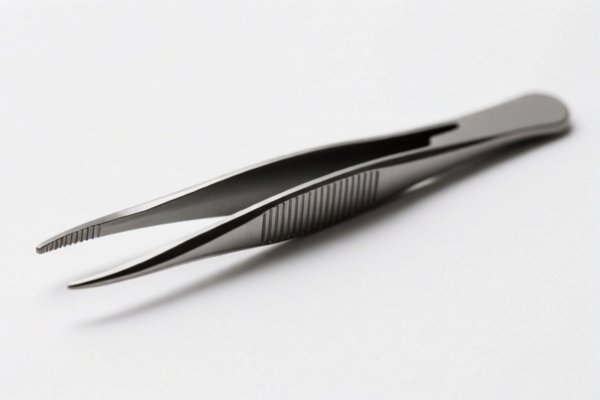
AI Analysis
✂️ Tweezers Set (Manicure/Pedicure Tools)
🌐 HS Code Reference & Customs Clearance Guide | 2026 Latest Tariff Full Analysis | Professional Level Clearance Strategy
📌 I. Product Definition and Classification: Do You Really Understand "Tweezers"?
In international trade, "tweezers" are often misunderstood. The classification depends entirely on purpose and set composition.
1. Manicure/Pedicure Tweezers: Designed for beauty care (removing ingrown nails, cuticles). These fall under Chapter 82 (Base Metal Cutlery & Tools).
2. Medical/Industrial Tweezers: Designed for medical surgery or laboratory use. These may fall under Chapter 90 (Medical Instruments) if they are part of a specific diagnostic/surgical kit, but single-use or general medical tweezers often still fall under Chapter 82 unless they are specialized surgical instruments.
⚠️ Key Distinction Point:
- If the tweezers are part of a manicure/pedicure set (including nail files, clippers, etc.) →归入 8214.20 (Base Metal Cutlery).
- If they are single, general-purpose tweezers for non-beauty, non-medical use → Often still 8214.90, but verify specific national interpretations.
- Crucial: Most commercial "Tweezers Sets" sold online are Manicure/Pedicure Sets.
📦 II. HS Code Classification Details (2026 Latest Tariff Authority Comparison)
Based on the provided DATA, here is the precise classification for Tweezers Sets:
| HS Code | Product Description | Application Scenario | Tax Rate (Total) |
|---|---|---|---|
8214.20.30.00 |
Cuticle or cornknives, cuticle pushers, nail files, nail cleaners, nail nippers and clippers, and parts thereof used for manicure or pedicure purposes. | Individual tools or non-set components specifically for nail care (e.g., standalone tweezers if classified as "other instruments" in this subheading, though often grouped with nippers/files). | 4.0% |
8214.20.90.00 |
Manicure and pedicure sets, and combinations thereof: Other. | Complete Sets: A boxed set containing tweezers, nail clippers, files, cuticle pushers, etc. This is the most common classification for "Tweezers Set". | 4.1% |
🔍 Key Interpretation:
-8214.20.90.00is the primary choice for a "Tweezers Set" if it includes multiple tools (e.g., tweezers + clipper + file) in one package.
-8214.20.30.00applies if you are importing individual items (like just the tweezers) that are explicitly used for manicure/pedicure, or if the customs authority treats single tweezers separately from "sets."
- Both are classified under Chapter 82 (Articles of Cutlery), NOT Chapter 83 (Base Metal General Hardware) or Chapter 90 (Medical), because they are considered "cutlery-like" tools for personal grooming.
💰 III. 2026 Latest Tariff Rate Details
✅ Applicable Country: United States (US)
✅ Origin: China (CN)
✅ Effective Time: Current Rates (No additional Section 301 or IEEPA tariffs apply to these specific HS codes as per the provided DATA)
🎯 1. 8214.20.30.00 —— Individual Manicure/Pedicure Tools
| Item | Content |
|---|---|
| Base Tariff | 4.0% (ad valorem) |
| Additional Tariff | 0.0% |
| Total Tariff | 4.0% |
| Tax Calculation | CIF Value × 4.0% |
| De Minimis Eligibility | ✅ Yes (For shipments under $800, eligible for Section 321 de minimis exemption) |
| Legal Basis | HTSUS 8214.20.30 |
📌 Explanation:
- This is a low-risk, low-tax category.
- No additional trade war tariffs (Section 301) or emergency powers tariffs (IEEPA) apply to this specific subheading.
- Ideal for small parcel shipments via e-commerce.
🎯 2. 8214.20.90.00 —— Manicure/Pedicure Sets
| Item | Content |
|---|---|
| Base Tariff | 4.1% (ad valorem) |
| Additional Tariff | 0.0% |
| Total Tariff | 4.1% |
| Tax Calculation | CIF Value × 4.1% |
| De Minimis Eligibility | ✅ Yes (For shipments under $800, eligible for Section 321 de minimis exemption) |
| Legal Basis | HTSUS 8214.20.90 |
📌 Explanation:
- The tax rate is almost identical to individual tools.
- Sets are slightly more expensive (0.1% difference) but offer better consumer value.
- No additional penalties or complex compliance requirements beyond standard customs declaration.
🛠️ IV. Customs Clearance Practical Advice (Real-World Pitfall Guide)
✅ 1. Required Documentation Checklist
| Document | Mandatory | Explanation |
|---|---|---|
| ✅ Commercial Invoice | ✔️ | Must clearly state "Manicure/Pedicure Set" or "Tweezers for Manicure." Avoid vague terms like "Metal Tools." |
| ✅ Product Photos | ✔️ | Show the entire set if declaring under 8214.20.90.00. If individual, show close-ups of the handle and tip. |
| ✅ Material Declaration | ✔️ | Specify "Stainless Steel" or "Base Metal." Do not claim "Stainless Steel" if it's actually plated iron, as this affects duty eligibility. |
| ✅ Packing List | ✔️ | Detail each item in the set (e.g., 1x Tweezers, 1x Clipper, 1x File) to justify "Set" classification. |
✅ 2. Declaration Tips (Critical Mnemonic)
🔥 “Set vs. Single: Name Matters, Tax Difference is Small!”
| Scenario | Correct Declaration | Wrong Action |
|---|---|---|
| Boxed Set (Tweezers + Clipper + File) | 8214.20.90.00 (Manicure Set) |
Declaring as "Single Tweezers" → May be flagged for incorrect valuation. |
| Single Tweezers (Bare, no box) | 8214.20.30.00 (Other Instruments) |
Declaring as "Set" → Misclassification risk. |
| Medical Tweezers (Surgical, sterile) | Verify Chapter 90 (Not in provided DATA) | Do NOT use 8214 if they are explicitly surgical/medical devices. Use 9018.90 if part of a medical kit. |
| Cosmetic Tweezers (Plastic handles, metal tips) | Still 8214.20 (Base metal parts) |
Do not classify under plastics (Chapter 39) just because of handles. |
✅ 3. Special Case Handling
| Scenario | Handling Advice |
|---|---|
| OEM Custom Sets | Provide design specs. If the set includes non-manicure items (e.g., a small mirror), it may still be classified as a set if the primary purpose is manicure. |
| E-Commerce Dropshipping | Use De Minimis (Section 321) if value <$800. No duty payment, fast clearance. |
| Large Container Import | Pay 4.1% duty. Ensure invoice matches box contents exactly. |
| Plastic-Handled Tweezers | Still 8214.20. The cutting/nipping part determines the classification. Base metal parts of cutlery are included in Chapter 82. |
🌍 V. Global Market Clearance Comparison (2026 Latest)
| Country/Region | Recommended HS Code | Tariff | Certification | Notes |
|---|---|---|---|---|
| 🇺🇸 USA | 8214.20.90.00 |
4.1% | None (Standard) | Low tariff, no Section 301. |
| 🇨🇳 China (Import) | 8214.20.90 |
4.1% | CCC (if applicable) | Similar rates. |
| 🇪🇺 EU | 8214.20 |
4.0% | CE (if deemed general product) | Check REACH compliance for metal plating. |
| 🇬🇧 UK | 8214.20 |
4.0% | UKCA (Post-Brexit) | Post-Brexit rules apply. |
| 🇨🇦 Canada | 8214.20.90.00 |
4.0% | CSA (if electrical) | No electrical, so standard. |
📌 Conclusion:
- USA, EU, Canada all have low tariffs (~4%) for manicure/pedicure tools.
- No trade war tariffs apply to these specific HS codes.
- Compliance is simple: Focus on accurate description and material declaration.
📌 VI. Common Mistakes & Pitfall Guide (Blood & Tears Lessons)
❌ Mistake 1: Declaring "Tweezers" as "General Metal Tools" (Chapter 73/83)
👉 Consequence: Wrong classification → Audit risk, fines, or delayed clearance.
Fix: Use Chapter 82 for grooming tools.
❌ Mistake 2: Declaring a "Set" as "Single Tweezers" to avoid "Set" scrutiny
👉 Consequence: Customs may reject if packaging shows multiple items → Referral for inspection.
Fix: Declare as "Set" if multiple items are in one package.
❌ Mistake 3: Using "Medical Tweezers" for 8214.20
👉 Consequence: If they are surgical-grade, they may fall under 9018.90 (0% tax) but require FDA registration or CE Medical Device certification.
Fix: Verify if they are "grooming" (Chapter 82) or "medical" (Chapter 90).
❌ Mistake 4: Ignoring "Base Metal" definition
👉 Consequence: If handles are wood/plastic, the cutting part is still base metal.
Fix: Always declare the material of the working end.
✅ Correct Declaration Example:
"Manicure and Pedicure Set, Stainless Steel Tweezers, Nail Clippers, Nail Files, in Retail Box, for Personal Grooming Use, Model XYZ"
🎯 VII. Conclusion: Professional Clearance, Save Time, Cut Costs!
🎯 Remember the Mnemonic:
🔹 "Grooming Tools = Chapter 82, Tax ~4%, No War Tariffs!"
🔹 "Sets > Singles for Beauty, 8214.20 is the Way!"
🔹 "De Minimis under $800? No Duty, Just Go!"
📌 Pro Tip:
If your tweezers are sterile, single-use, and surgical, do NOT use 8214.20. Contact your customs broker to classify under Chapter 90 (Medical Instruments), which may have 0% duty but requires FDA/CE compliance.
📣 Immediate Action:
📞 Confirm if your tweezers are "Grooming" (8214) or "Medical" (9018).
📦 For e-commerce: Use De Minimis to clear duty-free under $800.
🚀 Clearance should be smooth and cheap!
✨ Professional clearance starts with precise classification!
💼 Your cost savings depend on getting the HS Code right!
Customer Reviews
About HS Code Classification
The Harmonized System (HS) is an internationally standardized nomenclature developed by the World Customs Organization (WCO) to classify traded products. Over 200 countries use the HS system as the basis for customs tariffs, trade statistics, and import/export regulations.
Each HS code follows a hierarchical structure:
- Chapter (2 digits) — Broad category of goods (e.g., Chapter 84: Machinery and Mechanical Appliances)
- Heading (4 digits) — More specific grouping within the chapter
- Subheading (6 digits) — Internationally standardized breakdown, used by all WCO member countries
- National subdivisions (8-10 digits) — Country-specific extensions for further classification, such as US HTSUS 10-digit codes
Correct HS code classification is essential for smooth customs clearance, accurate duty payment, and compliance with trade regulations. Misclassification can lead to customs delays, overpayment of duties, or penalties.
When importing from CN to US, the applicable tariff rates may include:
- Most-Favored-Nation (MFN) rate — The standard duty rate applied to WTO members
- General rate — Applied to countries without trade agreements
- Trade remedy duties — Additional tariffs such as Section 301 (anti-dumping), Section 232 (national security), or countervailing duties
The information provided on this page is for reference purposes only. For official classification, please consult with your local customs authority or a licensed customs broker.