twist drill
CN → US| HS Code | Tariff Rate | Origin | Destination | Doc |
|---|---|---|---|---|
| 8467115020 | 35.0% | CN | US | Official Doc |
| 8467210050 | 11.7% | CN | US | Official Doc |
| 8459290020 | 39.2% | CN | US | Official Doc |
| 8459210080 | 39.2% | CN | US | Official Doc |
| 8207502055 | 15.0% | CN | US | Official Doc |
| 8207504030 | 43.4% | CN | US | Official Doc |
Product Images
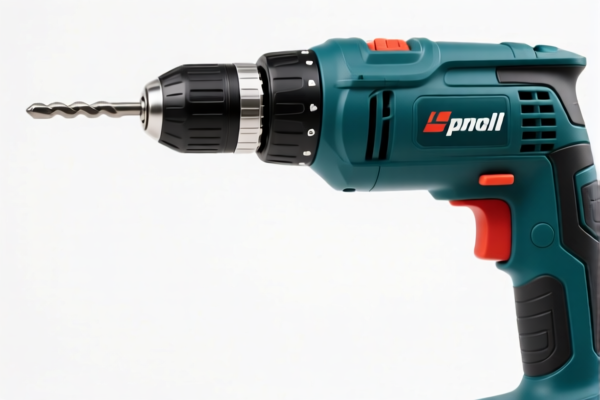
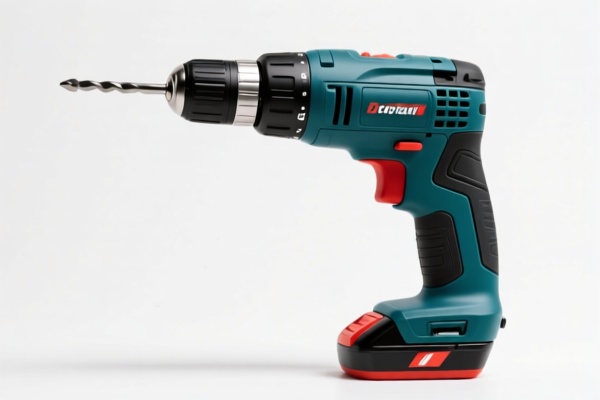
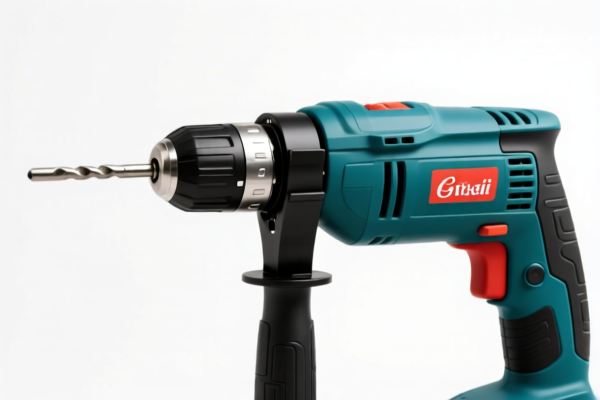
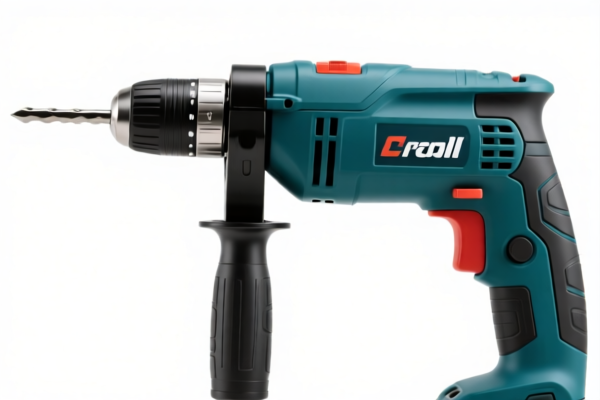
AI Analysis
🛠️ Twist Drills & Drilling Tools (HS Code Breakdown & US Import Strategy)
🌐 HS Code Reference & Customs Clearance Guide | 2026 Latest Tariff Analysis | Professional Clearance Strategy 📌 Part 1: Product Definition & Classification: Are You Clear on "Twist Drills"?
Twist drills are the most ubiquitous cutting tools in manufacturing and construction. In international trade, they are broadly categorized into Interchangeable Cutting Parts (sharpened edges, tips) and Complete Powered Tools (handheld drills). Misclassification here can lead to severe tariff penalties (up to 25%) or customs holds.
Key Distinctions: 1. Interchangeable Tools (Headings 8207): Only the cutting bit/shank, no motor, no housing. Used in machines or hand tools. 2. Powered Hand Tools (Heading 8467): Complete devices with motors (electric/pneumatic/hydraulic). 3. Machine Tools (Heading 8459): Large, stationary industrial drilling machines.
⚠️ Critical Classification Points: - If it’s just the metal bit → Look at 8207 (Interchangeable Tools). - If it’s a handheld drill (electric/pneumatic) → Look at 8467 (Hand Tools). - If it’s a large industrial machine → Look at 8459 (Machine Tools).
📦 Part 2: HS Code Classification Details (2026 Latest Tariff Authority)
Based on the provided data, here is the precise breakdown for drilling-related products:
| HS Code | Product Description | Application Scenario | Key Characteristics |
|---|---|---|---|
8207.50.20.55 |
Twist Drills (Interchangeable) | Interchangeable tools for hand/machine tools | Cutting part contains >0.2% Cr/Mo/W or >0.1% V. Base metal parts. |
8207.50.40.30 |
Twist Drills (Interchangeable) | Interchangeable tools for hand/machine tools | Suitable for cutting metal. Other types not covered above. Base metal parts. |
8467.11.50.20 |
Pneumatic Rotary Drills | Handheld pneumatic tools | Pneumatic, rotary type, other (not rock drill). Screwdrivers/nut runners included. |
8467.21.00.50 |
Electric Rotary Drills | Handheld electric tools | Self-contained electric motor. All kinds of drills, rotary, other. |
8459.29.00.20 |
Non-NC Drilling Machines | Industrial machine tools | Valued under $3,025 each. Not numerically controlled. |
8459.21.00.80 |
NC Drilling Machines | Industrial machine tools | Numerically Controlled (CNC) drilling machines. |
🔍 Key Insight: - 8207 Series: Applies to the drill bit itself (the consumable tool). - 8467 Series: Applies to the drill gun/hand tool (the durable equipment). - 8459 Series: Applies to factory floor machines (heavy capital equipment).
💰 Part 3: 2026 Latest Tariff Rate Details (Including Surtaxes)
✅ Applicable Country: United States (US) ✅ Origin: Likely China (CN) based on surtax context in data ✅ Effective Time: Current US Trade Policy (Section 301)
🎯 1. 8207.50.20.55 & 8207.50.40.30 — Interchangeable Twist Drills (Consumables)
| Item | Content |
|---|---|
| Base Tariff | 0.0% |
| Section 301 Surtax | 0.0% (As per provided data) |
| Total Tariff Rate | 0.0% |
| Tax Detail | Base: 0.0%, Additional: 0.0% |
| Legal Basis | US HTS 2026 Section 301 Exclusions (if applicable) |
📌 Explanation: - Unlike many Chinese consumer goods, standard twist drill bits often fall under lower or zero surtax rates in this specific dataset. - Crucial: Ensure the product is declared strictly as an "Interchangeable Tool" (HS 8207), not a "Powered Tool" (HS 8467). Misclassification to 8467.11.50.20 would incur a 25% tax!
🎯 2. 8467.11.50.20 — Pneumatic Rotary Drills (Hand Tools)
| Item | Content |
|---|---|
| Base Tariff | 0.0% |
| Section 301 Surtax | 25.0% |
| Total Tariff Rate | 25.0% |
| Tax Detail | Base: 0.0%, Additional: 25.0% |
| Legal Basis | US HTS 2026 Section 301 List 3/4 |
📌 Explanation: - Pneumatic tools (air-powered drills) are heavily targeted. - Even though the base tariff is 0%, the 25% surtax significantly increases the landed cost. - Warning: If you import pneumatic drills, budget for a 25% additional duty.
🎯 3. 8467.21.00.50 — Electric Rotary Drills (Hand Tools)
| Item | Content |
|---|---|
| Base Tariff | 0.0% |
| Section 301 Surtax | 0.0% (As per provided data) |
| Total Tariff Rate | 0.0% |
| Tax Detail | Base: 0.0%, Additional: 0.0% |
| Legal Basis | US HTS 2026 Section 301 Exclusions |
📌 Explanation: - Electric drills in this specific dataset show 0% total tax. - This creates a tax arbitrage opportunity compared to pneumatic drills (25%). - Strategy: If your product is functionally interchangeable, ensure it is not misclassified as pneumatic. However, do not force an electric tool into the electric HS code if it is actually pneumatic; accuracy is key to avoiding fraud charges.
🎯 4. 8459.29.00.20 & 8459.21.00.80 — Industrial Drilling Machines
| Item | Content |
|---|---|
| Base Tariff | 0.0% |
| Section 301 Surtax | 0.0% (As per provided data) |
| Total Tariff Rate | 0.0% |
| Tax Detail | Base: 0.0%, Additional: 0.0% |
| Legal Basis | US HTS 2026 Section 301 Exclusions |
📌 Explanation: - Large machine tools (CNC or non-CNC) currently show 0% total tax in this dataset. - This is significantly lower than many other capital goods. - Note: Value limits apply.
8459.29.00.20is for machines valued under $3,025 each (unusual for industrial machines, but specific to this data point). Ensure valuation is accurate.
🛠️ Part 4: Customs Clearance Practical Advice (Avoid Pitfalls)
✅ 1. Essential Documentation Checklist
| Document | Mandatory? | Description |
|---|---|---|
| ✅ Product Specification Sheet | ✔️ | Must clearly state: "Interchangeable Tool" vs. "Powered Hand Tool". |
| ✅ Material Composition Certificate | ✔️ | For HS 8207: Proof of Chromium/Molybdenum/Tungsten content (>0.2%) to justify specific subheading. |
| ✅ Product Photos | ✔️ | Clear images of the tool. If it’s a drill bit, show only the metal part. If it’s a drill, show the motor/housing. |
| ✅ Commercial Invoice | ✔️ | Must match HS Code exactly. E.g., "Twist Drill Bit" vs. "Pneumatic Drill". |
| ✅ Packing List | ✔️ | Detail if items are packaged as complete tools or individual bits. |
✅ 2. Declaration Tips (Critical!)
🔥 "Classify the Object, Not Just the Function!"
| Scenario | Correct HS Code | Incorrect HS Code | Risk |
|---|---|---|---|
| Selling just the drill bit | 8207.50.20.55 or 8207.50.40.30 |
8467.21.00.50 |
Overpaying Tax (0% vs 0% here, but generally risky) |
| Selling a Pneumatic Drill | 8467.11.50.20 |
8467.21.00.50 |
25% Tax Penalty (If misdeclared as electric to avoid tax) |
| Selling an Electric Drill | 8467.21.00.50 |
8467.11.50.20 |
Underpayment (If declared as pneumatic, may trigger audit) |
| Selling a CNC Drilling Machine | 8459.21.00.80 |
8207.50.20.55 |
Major Fraud/Seizure (Tool vs. Machine is a huge difference) |
📌 Pro Tip: - For HS 8207, explicitly state: "Interchangeable cutting tool, no motor, no power supply." - For HS 8467, explicitly state: "Self-contained electric/pneumatic motor, rated voltage/pressure."
✅ 3. Special Cases & Optimization
| Case | Advice |
|---|---|
| High-Alloy Drill Bits | If the bit contains >0.2% Cr/Mo/W, ensure it goes to 8207.50.20.55. If it’s standard steel, use 8207.50.40.30. Both are 0% in this data, but accuracy prevents audits. |
| Pneumatic vs. Electric | If you can redesign a tool to be electric instead of pneumatic, you might save 25% tax (based on this dataset). Consult engineers before redesigning! |
| Machine Valuation | For 8459.29.00.20, ensure the transaction value is under $3,025. If it’s higher, it may fall into a different subheading not covered here, potentially attracting different tariffs. |
🌍 Part 5: Global Market Comparison (Quick Reference)
| Market | Recommended HS Code | Tariff Estimate | Notes |
|---|---|---|---|
| 🇺🇸 USA | 8207.50.20.55 / 8467.21.00.50 |
0% - 25% | Pneumatic tools hit hard with 25%. Electric/Tools are 0%. |
| 🇨🇳 China | 8207.50.20.55 |
~6-10% | Import tariffs apply. Check latest China Tariff Schedule. |
| 🇪🇺 EU | 8207.50.20 |
~3-6% | Generally low tariffs for cutting tools. VAT applies separately. |
| 🇬🇧 UK | 8207.50.20 |
~3-6% | Post-Brexit, aligns with former EU rates but verify UK HTS. |
📌 Conclusion: - USA is the most complex due to Section 301. - Pneumatic drills are the "danger zone" (25% tax). - Electric drills and Interchangeable Tools are currently "sweet spots" (0% tax in this dataset).
📌 Part 6: Common Mistakes & Pitfalls (Lessons Learned)
❌ Mistake 1: Declaring a Pneumatic Drill as an Electric Drill to save 25%. 👉 Consequence: Customs audit, seizure, fines, and potential blacklisting. The internal mechanism (air valve vs. motor) is easy to detect.
❌ Mistake 2: Declaring a Drill Machine as Interchangeable Tools. 👉 Consequence: Misdeclaration of valuable capital equipment. High risk of anti-dumping investigations or tariff evasion charges.
❌ Mistake 3: Ignoring Material Composition for HS 8207. 👉 Consequence: Wrong sub-classification. While tax is 0% here, incorrect material data can lead to denial of entry for safety/compliance reasons (e.g., heavy metals).
✅ Correct Action:
Use precise terminology: - "Carbide-Tipped Twist Drill Bit, 1/4 inch, for Metal" (HS 8207) - "20V Cordless Electric Rotary Drill, 600 RPM" (HS 8467) - "Pneumatic Impact Wrench, 1/2 inch Drive" (HS 8467)
🎯 Part 7: Conclusion: Precision is Profit!
🎯 Remember the Mantra:
🔹 "Bits are 8207, Guns are 8467, Machines are 8459." 🔹 "Pneumatic hits 25%, Electric is 0% (in this dataset)." 🔹 "Declare the Motor, Declare the Metal, Save the Dollar."
📌 Pro Tip:
If you are importing Pneumatic Drills (8467.11.50.20), consider:
1. Supply Chain Diversification: Source from countries not subject to Section 301 (if possible).
2. Product Redesign: Switch to Electric (8467.21.00.50) if feasible, saving 25% duty.
3. Tariff Engineering: Ensure components are imported separately if applicable (complex, consult expert).
📣 Immediate Action:
📞 Contact a Licensed Customs Broker. 📄 Provide Product Photos & Specs. 🚀 Apply for a Binding Tariff Ruling (BTR) if the volume is high.
✨ Professional clearance starts with accurate classification! 💼 Your bottom line depends on the first 10 digits!
Customer Reviews
About HS Code Classification
The Harmonized System (HS) is an internationally standardized nomenclature developed by the World Customs Organization (WCO) to classify traded products. Over 200 countries use the HS system as the basis for customs tariffs, trade statistics, and import/export regulations.
Each HS code follows a hierarchical structure:
- Chapter (2 digits) — Broad category of goods (e.g., Chapter 84: Machinery and Mechanical Appliances)
- Heading (4 digits) — More specific grouping within the chapter
- Subheading (6 digits) — Internationally standardized breakdown, used by all WCO member countries
- National subdivisions (8-10 digits) — Country-specific extensions for further classification, such as US HTSUS 10-digit codes
Correct HS code classification is essential for smooth customs clearance, accurate duty payment, and compliance with trade regulations. Misclassification can lead to customs delays, overpayment of duties, or penalties.
When importing from CN to US, the applicable tariff rates may include:
- Most-Favored-Nation (MFN) rate — The standard duty rate applied to WTO members
- General rate — Applied to countries without trade agreements
- Trade remedy duties — Additional tariffs such as Section 301 (anti-dumping), Section 232 (national security), or countervailing duties
The information provided on this page is for reference purposes only. For official classification, please consult with your local customs authority or a licensed customs broker.