undergarments
CN → US| HS Code | Tariff Rate | Origin | Destination | Doc |
|---|---|---|---|---|
| 6108910015 | 26.0% | CN | US | Official Doc |
| 6107110010 | 24.9% | CN | US | Official Doc |
| 6108920015 | 33.5% | CN | US | Official Doc |
Product Images
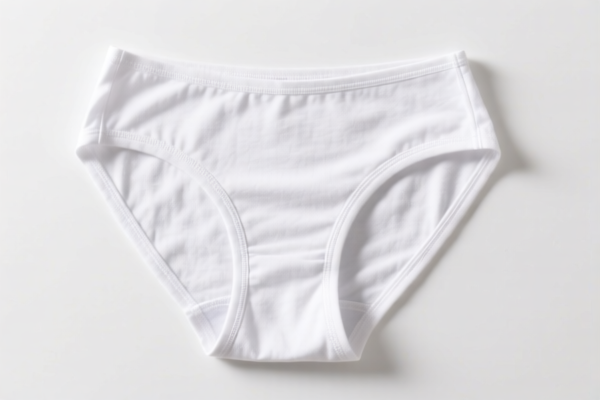
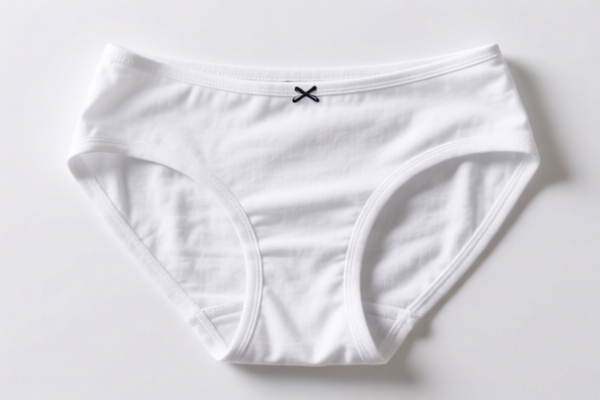
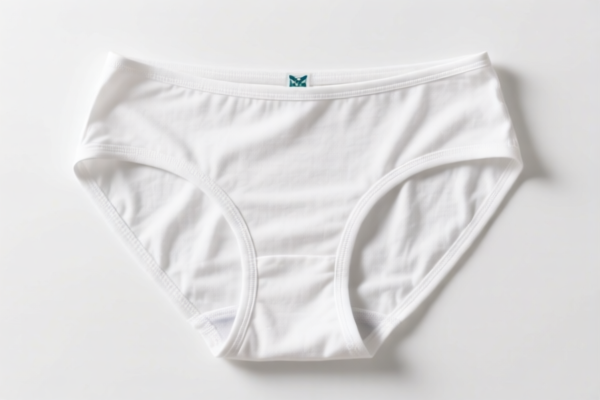
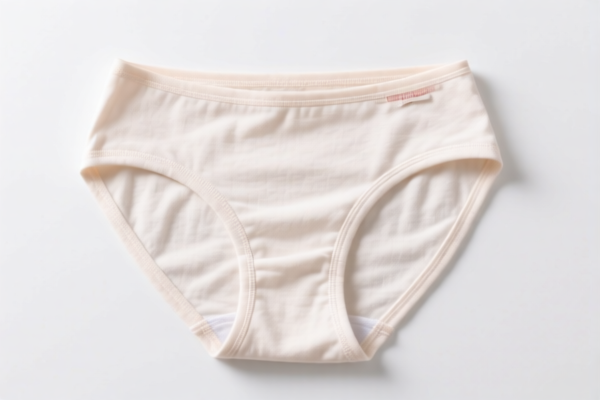
AI Analysis
👙 Undergarments (Lingerie & Hosiery)
🌐 HS Code Reference & Customs Clearance Guide | 2026 Latest Tariff Analysis | Professional Clearance Strategy
📌 I. Product Definition & Classification: Do You Really Know "Undergarments"?
Undergarments, the foundational layer of any wardrobe, are strictly categorized in international trade based on gender, construction method (knitted vs. woven), and material composition. In the context of U.S. imports, the distinction between women’s and men’s garments, and between knitted and non-knitted fabrics, drastically affects the HS Code and, consequently, the total tax burden.
Women’s Undergarments (6108/6208 Series): Typically includes bras, panties, negligees, and nightdresses.
Men’s Undergarments (6107 Series): Primarily includes undershirts, boxers, briefs, and trunks.
⚠️ Key Distinction Point:
- Knitted (610x): Made from flexible fabrics (cotton, synthetic knits). Includes most underwear, sleepwear, and robes.
- Non-Knitted/Woven (620x): Structured fabrics (denim, woven cotton, wool suits). Rare for basic underwear but common for structured corsets or specific woven lingerie.
- Material Matters: Synthetic fibers (nylon, polyester) vs. Natural fibers (cotton, wool) trigger different duty rates and potential Section 301/122 penalties.
📦 II. HS Code Classification Matrix (2026 Latest Tariff Authority)
Based on the provided data, the following HS Codes are the primary classifications for undergarments, with specific attention to material and gender.
| HS Code | Product Description | Gender/Application | Material Assumption | Key Feature |
|---|---|---|---|---|
6108.91.00.15 |
Women’s knitted/crocheted undergarments (other than bras/panties) | Women | Unspecified/Default | "Other" lingerie; often includes slips, camisoles, or non-specific knitted undergarments. |
6107.11.00.10 |
Men’s knitted/crocheted undershirts & T-shirts | Men | Unspecified/Knit | Focuses on knitted fabric. Often captures basic knit underwear/shirts if not specifically categorized as "boxers" (which may fall elsewhere). |
6108.92.00.15 |
Women’s knitted/crocheted undergarments (synthetic fibers) | Women | Artificial/Synthetic Fibers | Explicitly for synthetic materials (polyester, nylon). Common in modern lingerie. |
🔍 Critical Reminder:
-6108is exclusively for Women’s garments.
-6107is exclusively for Men’s garments.
- If your product is Men’s Boxer Briefs, ensure it doesn’t fall under a more specific subheading like6107.11or6107.21. The provided data suggests6107.11.00.10is the closest fit for "knitted underwear/shirts" in the dataset.
- Material Conflict Check: If6108.91.00.15is selected for a synthetic product, it may lead to misclassification.6108.92.00.15is the safer bet for synthetic women’s undergarments.
💰 III. 2026 Latest Tariff Rate Breakdown (Including Additional Taxes & Policies)
✅ Applicable Country: United States (US)
✅ Country of Origin: China (CN)
✅ Effective Date: Post-November 2025 Policies (Inclusion of Section 122)
🎯 1. 6108.91.00.15 – Women’s Other Knitted Undergarments (Unspecified Material)
| Item | Content |
|---|---|
| Base Duty Rate | 8.5% (Ad Valorem) |
| Section 301 (Additional Duty) | +7.5% (List 4B/C) |
| Section 122 (Additional Duty) | +10% (Newer trade measure on specific apparel/textiles) |
| Total Effective Tax Rate | 26.0% |
| Tax Calculation | CIF Value × 26% |
| De Minimis Eligibility | ❌ No (Value exceeds $800 or subject to specific exclusion) |
| Legal Basis Path | HTSUS:6108.91.00.15 → USITC Footnote → IEEPA:Section 122 → USTR:Section 301 |
📌 Explanation:
- The 8.5% base rate applies to women’s knitted other undergarments.
- 7.5% is added due to ongoing Section 301 tariffs on Chinese textiles.
- 10% is the new Section 122 tariff, specifically targeting certain apparel imports to protect domestic manufacturing.
- Total 26% is a significant cost factor. Importers must factor this into pricing strategies.
🎯 2. 6107.11.00.10 – Men’s Knitted Undershirts/Underwear
| Item | Content |
|---|---|
| Base Duty Rate | 7.4% (Ad Valorem) |
| Section 301 (Additional Duty) | +7.5% (List 4B/C) |
| Section 122 (Additional Duty) | +10% (Newer trade measure on specific apparel/textiles) |
| Total Effective Tax Rate | 24.9% |
| Tax Calculation | CIF Value × 24.9% |
| De Minimis Eligibility | ❌ No |
| Legal Basis Path | HTSUS:6107.11.00.10 → USITC Footnote → IEEPA:Section 122 → USTR:Section 301 |
📌 Note:
- Men’s knitted garments often enjoy a slightly lower base rate (7.4% vs 8.5%) than some women’s categories.
- However, the Section 301 (7.5%) and Section 122 (10%) penalties remain the same.
- Total 24.9% is marginally lower than the women’s category but still high.
- Misclassification Risk: Do not classify men’s synthetic underwear under this code if it is not knitted. If it is woven, it falls under Chapter 62 (typically higher duties).
🎯 3. 6108.92.00.15 – Women’s Synthetic Knitted Undergarments
| Item | Content |
|---|---|
| Base Duty Rate | 16.0% (Ad Valorem) |
| Section 301 (Additional Duty) | +7.5% (List 4B/C) |
| Section 122 (Additional Duty) | +10% (Newer trade measure on specific apparel/textiles) |
| Total Effective Tax Rate | 33.5% |
| Tax Calculation | CIF Value × 33.5% |
| De Minimis Eligibility | ❌ No |
| Legal Basis Path | HTSUS:6108.92.00.15 → USITC Footnote → IEEPA:Section 122 → USTR:Section 301 |
📌 Alert:
- This is the highest tax bracket in the provided data.
- The 16.0% base rate for synthetic fibers is significantly higher than for unspecified/natural fibers.
- Total 33.5% can severely impact profit margins.
- Strategy: If your product is synthetic, consider if re-classification (if legally permissible) or sourcing from non-China origins can mitigate this cost.
🛠️ IV. Customs Clearance Practical Advice (Battle-Tested Pitfall Avoidance)
✅ 1. Documentation Checklist (Non-Negotiable)
| Document | Must Provide | Explanation |
|---|---|---|
| ✅ Product Specification Sheet | ✔️ | Must detail: Fabric content (% Cotton, % Polyester, etc.), Knit Type, Gender, Use. |
| ✅ Tech Pack / Construction Diagram | ✔️ | Shows seams, stitching, and layers. Proves if it’s "knitted" (61xx) vs "woven" (62xx). |
| ✅ Fabric Swatch | ✔️ | Physical proof of material. Essential for distinguishing 6108.91 (unspecified) from 6108.92 (synthetic). |
| ✅ Commercial Invoice | ✔️ | Must clearly state: "Women’s/Men’s Knitted Undergarments," HS Code, Country of Origin. |
| ✅ Packing List | ✔️ | Item count by SKU. Avoid mixing genders or materials in one BL if possible. |
| ✅ Labeling | ✔️ | Must show fiber content and country of origin as per FTC/FDA rules. |
✅ 2. Declaration Tips (Golden Rules)
🔥 "Material is King, Gender is Queen, Knit vs. Woven Defines the Lane!"
| Scenario | Correct Declaration | Wrong Practice |
|---|---|---|
| Women’s Nylon Panty | 6108.92.00.15 (Synthetic) |
Declare as 6108.91.00.15 → Audit Risk |
| Men’s Cotton Briefs | 6107.11.00.10 (Knitted) |
Declare as woven (6207) → Wrong Code |
| Silk Nightgown | 6108.91.00.15 (Non-synthetic) |
Declare as synthetic → Overpay 7.5% |
| Mixed Fabric Garment | Declare by Primary Material | Guessing material → Customs Delay |
⚠️ Critical Warning:
- Section 122 (10%) is applied broadly to apparel. Ensure your product is indeed "undergarments" and not "outerwear" (which might have different exemptions or penalties).
- Fabric Content Accuracy: If you declare6108.91.00.15(unspecified) but the product is 100% Polyester, Customs may reclassify to6108.92.00.15, charging the 33.5% rate + penalties.
✅ 3. Special Cases & Exceptions
| Situation | Handling Strategy |
|---|---|
| OEM/Private Label | Provide authorization letters. Ensure labels match invoice. |
| Mixed Containers | If shipping men’s and women’s, ensure clear segregation in packing list. Do not lump "underwear" together. |
| Samples | Samples under $800 may enter duty-free under De Minimis, but verify if Section 301/122 exemptions apply (often they do NOT for apparel). |
| Cotton vs. Synthetic | Always verify % composition. A 95% Cotton/5% Spandex blend may still be classified under synthetic depending on HTS rules (usually weight-based). |
🌍 V. Global Market Comparison (2026 Update)
| Country/Region | Recommended HS Code | Base Duty | Additional Taxes (China Origin) | Total Est. Tax | Notes |
|---|---|---|---|---|---|
| 🇺🇸 USA | 6108.92.00.15 (Synth) |
16.0% | +7.5% (301) +10% (122) | 33.5% | High protectionism. |
| 🇨🇳 China | 6108.92.00.15 |
16.0% | None | 16.0% | Export-friendly. |
| 🇪🇺 EU | 6108.92.00 |
12% | None | 12% | No Section 301/122. |
| 🇬🇧 UK | 6108.92.00 |
12% | None | 12% | Post-Brexit tariff. |
| 🇨🇦 Canada | 6108.92.00 |
16% | CUSMA Exemption | 0% | If originating in USMCA. |
📌 Conclusion:
- USA is the most expensive market for Chinese undergarments due to Section 301 and Section 122.
- EU and UK offer significantly lower total duties, but have stricter sustainability and labeling regulations.
- Canada/Mexico offer duty-free options if Rules of Origin are met.
📌 VI. Common Errors & Pitfalls (Learn from Others’ Mistakes)
❌ Error 1: Declaring synthetic garments as 6108.91.00.15 (Unspecified)
👉 Consequence: Customs reclassifies to 6108.92.00.15, charging 33.5% instead of 26%. Back taxes + penalties.
❌ Error 2: Mixing Men’s and Women’s garments in one HS Code
👉 Consequence: Rejection of entry. Must separate by gender-specific codes (6107 vs 6108).
❌ Error 3: Ignoring Section 122
👉 Consequence: Underpayment of 10% additional duty. Audit target.
❌ Error 4: Vague Description "Lingerie"
👉 Consequence: Customs asks for clarification, causing 3-5 day delay.
✅ Correct Description: "Women’s Knitted Synthetic Nylon Underwear, HTS 6108.92.00.15, Made in China"
🎯 VII. Conclusion: Precision in Classification Saves Profit!
🎯 Remember the Mantra:
🔹 "Gender First, Material Second, Knit vs. Woven Third."
🔹 "Section 122 is Real, 10% is Not Free, Check Your Origin."
🔹 "Synthetic Costs More, Cotton Saves More, But Always Verify."
📌 Pro Tip:
If you are importing large volumes, consider duty drawback programs or explore non-China sourcing (e.g., Vietnam, Bangladesh, India) to avoid Section 301 (7.5%) and Section 122 (10%) penalties.
Apply for an Binding Ruling with CBP if your product is complex (e.g., mixed fabrics, unique constructions).
📣 Take Action Now:
📞 Engage a licensed customs broker
📋 Verify fabric composition certificates
🚀 Secure your margin with accurate HS codes!
✨ Expert Clearance Starts with Correct Classification!
💼 Every Percentage Point of Duty is Pure Profit Lost!
Customer Reviews
About HS Code Classification
The Harmonized System (HS) is an internationally standardized nomenclature developed by the World Customs Organization (WCO) to classify traded products. Over 200 countries use the HS system as the basis for customs tariffs, trade statistics, and import/export regulations.
Each HS code follows a hierarchical structure:
- Chapter (2 digits) — Broad category of goods (e.g., Chapter 84: Machinery and Mechanical Appliances)
- Heading (4 digits) — More specific grouping within the chapter
- Subheading (6 digits) — Internationally standardized breakdown, used by all WCO member countries
- National subdivisions (8-10 digits) — Country-specific extensions for further classification, such as US HTSUS 10-digit codes
Correct HS code classification is essential for smooth customs clearance, accurate duty payment, and compliance with trade regulations. Misclassification can lead to customs delays, overpayment of duties, or penalties.
When importing from CN to US, the applicable tariff rates may include:
- Most-Favored-Nation (MFN) rate — The standard duty rate applied to WTO members
- General rate — Applied to countries without trade agreements
- Trade remedy duties — Additional tariffs such as Section 301 (anti-dumping), Section 232 (national security), or countervailing duties
The information provided on this page is for reference purposes only. For official classification, please consult with your local customs authority or a licensed customs broker.