undyed bovine belting leather
CN → US| HS Code | Tariff Rate | Origin | Destination | Doc |
|---|---|---|---|---|
| 4203300000 | 37.7% | CN | US | Official Doc |
| 4203290800 | 49.0% | CN | US | Official Doc |
| 4205000500 | 37.9% | CN | US | Official Doc |
| 4205001000 | 35.0% | CN | US | Official Doc |
Product Images
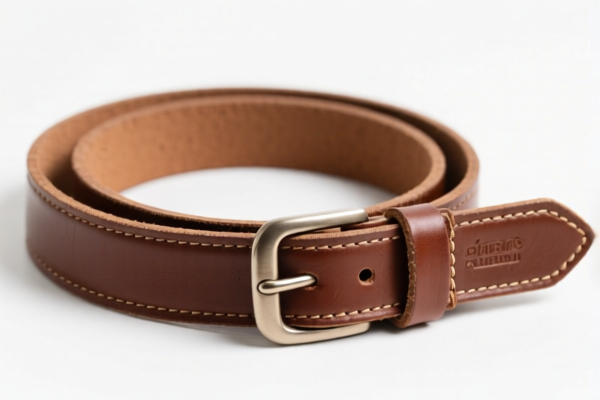
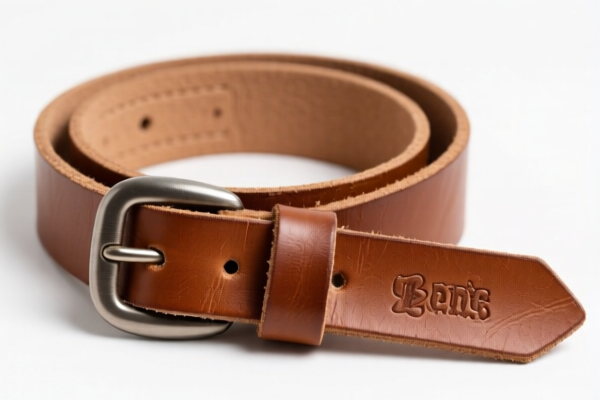
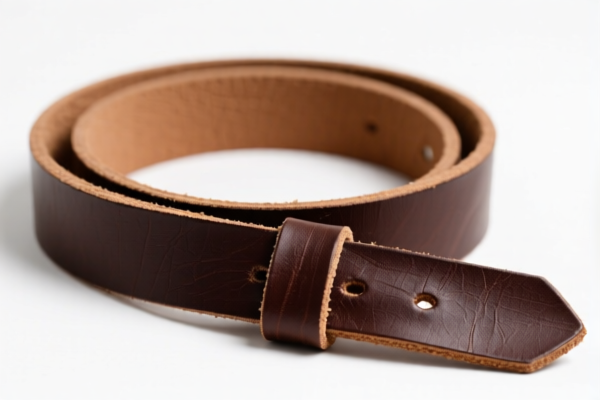
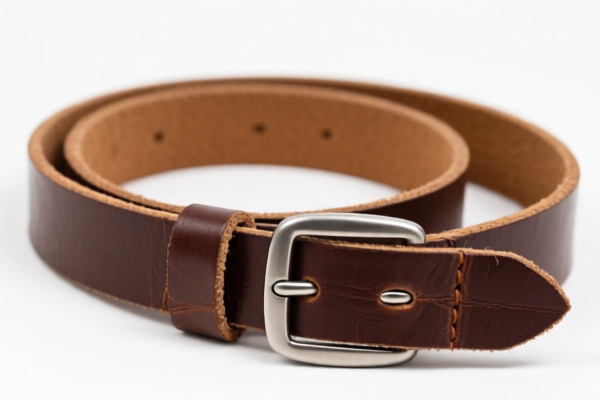
AI Analysis
🐂 Undyed Bovine Belting Leather (Unprocessed Cowhide Belting)
🌐 HS Code Reference & Customs Clearance Guide | 2026 Latest Tariff Analysis | Professional Compliance Strategy
📌 I. Product Definition & Classification: Do You Really Understand "Belting"?
Undyed bovine belting leather refers to raw or partially processed cowhide strips used primarily for industrial machinery transmission, automotive accessories, or general-purpose belts. In international trade, the classification depends heavily on whether the leather is considered a "finished accessory" (like a belt for clothing/industrial use) or "raw material" (unfinished leather goods).
Key Distinction:
- Finished/Accessory Form: If shaped as a belt with holes, buckles, or specific industrial dimensions ready for use → Classified under Chapter 42 (Articles of Leather).
- Raw/Material Form: If in simple strip form, unfinished, or intended for further manufacturing → Classified under Chapter 42 (Leather articles) or Chapter 41 (Leather), but specific HS codes in the data point to 4205 for "leather articles" in unfinished states or 4203 for "leather apparel accessories."
⚠️ Critical Clarification:
- The provided data focuses on HS Codes within Chapter 42, specifically distinguishing between 4203 (Clothing accessories like belts) and 4205 (Other leather articles, including unprocessed/semi-finished belts).
- 4203.30.00.00: Targets belts as clothing/apparel accessories.
- 4203.29.08.00: Targets other leather accessories (fallback category).
- 4205.00.05.00 / 4205.00.10.00: Targets leather articles in unprocessed or primary shapes.
📦 II. HS Code Classification Details (2026 Latest Tariff对照)
| HS Code | Product Description | Application Scenario | Material State |
|---|---|---|---|
4203.30.00.00 |
Undyed bovine leather belts, classified as clothing accessories | Belts for industrial machinery, automotive, or general use, shaped as belts | ✅ Shaped belt |
4203.29.08.00 |
Other leather articles (undyed bovine belting) | Fallback category for leather articles not specified elsewhere | ✅ Other accessory |
4205.00.05.00 |
Undyed bovine belting, unprocessed/primary form | Raw leather strips, unfinished, for further manufacturing | ❌ Unprocessed |
4205.00.10.00 |
Undyed bovine belting, basic raw form | Basic raw leather materials, no further processing | ❌ Unprocessed |
🔍 Key Reminder:
- 4203 codes are for finished/apparel-style belts.
- 4205 codes are for unprocessed/industrial belting materials.
- Misclassification can lead to significant tariff differences due to the "Section 122" and "301" tariffs.
💰 III. 2026 Latest Tariff Rate Breakdown (Including Additional Taxes & Policies)
✅ Applicable Country: United States (US)
✅ Origin: China (CN)
✅ Effective Date: 2025-11-10 onwards
🎯 1. 4203.30.00.00 —— Undyed Bovine Leather Belt (Clothing Accessory)
| Item | Details |
|---|---|
| Base Tariff | 2.7% |
| Section 301 Tariff | +25.0% |
| Section 122 Tariff | +10.0% |
| Total Rate | 37.7% |
| Tax Calculation | CIF Value × 37.7% |
| De Minimis Exemption | ❌ Not Eligible (High duty rate exceeds threshold) |
| Legal Basis | HTS:4203.30.00.00 → USITC Footnote 9903.88.01 (301) + 122 |
📌 Explanation:
- This code treats the belt as a finished accessory.
- Total 37.7% includes base duty (2.7%), 301 tariff (25%), and 122 tariff (10%).
- 122 Tariff is a special additional duty applied to certain leather goods.
🎯 2. 4203.29.08.00 —— Other Leather Articles (Undyed Bovine Belting)
| Item | Details |
|---|---|
| Base Tariff | 14.0% |
| Section 301 Tariff | +25.0% |
| Section 122 Tariff | +10.0% |
| Total Rate | 49.0% |
| Tax Calculation | CIF Value × 49.0% |
| De Minimis Exemption | ❌ Not Eligible |
| Legal Basis | HTS:4203.29.08.00 → USITC Footnote 9903.88.01 (301) + 122 |
📌 Warning:
- This is the highest duty rate among the options.
- Use only if the product does not fit 4203.30.00.00 (e.g., unusual shape, non-standard accessory).
- Avoid this code unless necessary, as it increases costs by 11.3% compared to4203.30.00.00.
🎯 3. 4205.00.05.00 —— Undyed Bovine Belting (Unprocessed)
| Item | Details |
|---|---|
| Base Tariff | 2.9% |
| Section 301 Tariff | +25.0% |
| Section 122 Tariff | +10.0% |
| Total Rate | 37.9% |
| Tax Calculation | CIF Value × 37.9% |
| De Minimis Exemption | ❌ Not Eligible |
| Legal Basis | HTS:4205.00.05.00 → USITC Footnote 9903.88.01 (301) + 122 |
📌 Note:
- Similar to4203.30.00.00but for unprocessed belts.
- Total 37.9% is nearly identical to the accessory category.
🎯 4. 4205.00.10.00 —— Undyed Bovine Belting (Basic Raw Form)
| Item | Details |
|---|---|
| Base Tariff | 0.0% |
| Section 301 Tariff | +25.0% |
| Section 122 Tariff | +10.0% |
| Total Rate | 35.0% |
| Tax Calculation | CIF Value × 35.0% |
| De Minimis Exemption | ❌ Not Eligible |
| Legal Basis | HTS:4205.00.10.00 → USITC Footnote 9903.88.01 (301) + 122 |
📌 Advantage:
- Lowest total rate (35.0%) among all options.
- Base tariff is 0%, reducing the burden of additional duties.
- Best for raw, unprocessed leather strips intended for further manufacturing.
🛠️ IV. Customs Clearance Practical Advice (Avoiding Pitfalls)
✅ 1. Required Documents Checklist (Mandatory)
| Document | Required | Notes |
|---|---|---|
| ✅ Product Specification Sheet | ✔️ | Include dimensions, thickness, material (cowhide), dye status (undyed) |
| ✅ Photos of Product | ✔️ | Clear images showing texture, edges, and any markings |
| ✅ Commercial Invoice | ✔️ | Clearly state "Undyed Bovine Belting Leather, Unprocessed" |
| ✅ Packing List | ✔️ | Detail weight, dimensions, and packaging type |
| ✅ Certificate of Origin (CO) | ✔️ | If applicable for preferential treatment (not available for US-China trade currently) |
| ✅ Material Safety Data Sheet (MSDS) | ✔️ | If chemical processing is involved |
✅ 2. Declaration Tips (Key Strategies)
🔥 "Raw is Lower, Finished is Higher; Shape Matters, Don't Lie!"
| Scenario | Correct Declaration | Wrong Approach |
|---|---|---|
| Raw leather strips | 4205.00.10.00 (35.0%) |
Misdeclare as 4203.29.08.00 (49.0%) → +14% cost |
| Shaped belt with holes | 4203.30.00.00 (37.7%) |
Misdeclare as raw → Risk of penalty |
| Unprocessed but shaped | 4205.00.05.00 (37.9%) |
Misdeclare as finished accessory → Slight overpayment |
| Other leather accessories | 4203.29.08.00 (49.0%) |
Avoid unless necessary; highest cost |
✅ 3. Special Cases Handling
| Case | Recommendation |
|---|---|
| OEM Custom Belts | Provide design specs to prove if "finished" or "raw" |
| Mixed Shipment | Separate raw and finished items in different HS codes |
| Chemical Treatment | If tanned but undyed, still consider 4205 if unprocessed |
| Sample Shipments | Same rules apply; no de minimis exemption for high-duty goods |
🌍 V. Global Market Comparison (2026 Latest)
| Country/Region | Recommended HS Code | Tariff Rate | Notes |
|---|---|---|---|
| 🇺🇸 USA | 4205.00.10.00 |
35.0% | Lowest duty among options; prefer raw form |
| 🇨🇳 China | 4205.00.10.00 |
~5-10% | Lower base duty; no 301/122 tariffs |
| 🇪🇺 EU | 4205.00.00 |
~0-4% | No additional tariffs; CE/RoHS may apply |
| 🇬🇧 UK | 4205.00.00 |
~4-6% | Post-Brexit rules; check UK GCMS |
| 🇦🇺 Australia | 4205.00.00 |
~5% | No special tariffs; straightforward import |
📌 Conclusion:
- USA has the highest effective duty due to 301 and 122 tariffs.
- Choosing the right HS code can save 14% in costs (35.0% vs. 49.0%).
- Raw, unprocessed leather is the most cost-effective classification for US imports.
📌 VI. Common Mistakes & Pitfalls (Lessons Learned)
❌ Mistake 1: Declaring raw leather as "finished belt"
👉 Consequence: Higher duty (37.7% vs. 35.0%) → Overpayment!
❌ Mistake 2: Using 4203.29.08.00 for standard belts
👉 Consequence: Highest duty (49.0%) → Unnecessary cost increase!
❌ Mistake 3: Ignoring Section 122 Tariff
👉 Consequence: Under-declaration → Penalties + Back Taxes!
❌ Mistake 4: Mixing raw and finished items without separate codes
👉 Consequence: Customs delays, re-inspection, potential seizure.
✅ Correct Approach:
"Undyed Bovine Leather Belting, Unprocessed, Raw Strips, For Industrial Use"
🎯 VII. Conclusion: Precision Classification Saves Money!
🎯 Remember:
🔹 "Raw is cheaper, finished is dearer; 35% beats 49%!"
🔹 "HS Code dictates duty; mistake cost, huge loss!"
📌 Tips:
- If your leather is tanned but undyed, confirm if it's "unprocessed" (4205) or "finished" (4203).
- For US imports, always aim for 4205.00.10.00 if possible to minimize duty to 35.0%.
- Consider Advance Ruling from US Customs to confirm classification.
📣 Immediate Action:
📞 Consult a customs broker + Provide product images + Apply for HS Code Advance Ruling
🚀 Ensure smooth clearance, minimize costs, and maximize profit!
✨ Professional clearance starts with accurate classification!
💼 Every percentage point of duty matters!
Customer Reviews
About HS Code Classification
The Harmonized System (HS) is an internationally standardized nomenclature developed by the World Customs Organization (WCO) to classify traded products. Over 200 countries use the HS system as the basis for customs tariffs, trade statistics, and import/export regulations.
Each HS code follows a hierarchical structure:
- Chapter (2 digits) — Broad category of goods (e.g., Chapter 84: Machinery and Mechanical Appliances)
- Heading (4 digits) — More specific grouping within the chapter
- Subheading (6 digits) — Internationally standardized breakdown, used by all WCO member countries
- National subdivisions (8-10 digits) — Country-specific extensions for further classification, such as US HTSUS 10-digit codes
Correct HS code classification is essential for smooth customs clearance, accurate duty payment, and compliance with trade regulations. Misclassification can lead to customs delays, overpayment of duties, or penalties.
When importing from CN to US, the applicable tariff rates may include:
- Most-Favored-Nation (MFN) rate — The standard duty rate applied to WTO members
- General rate — Applied to countries without trade agreements
- Trade remedy duties — Additional tariffs such as Section 301 (anti-dumping), Section 232 (national security), or countervailing duties
The information provided on this page is for reference purposes only. For official classification, please consult with your local customs authority or a licensed customs broker.