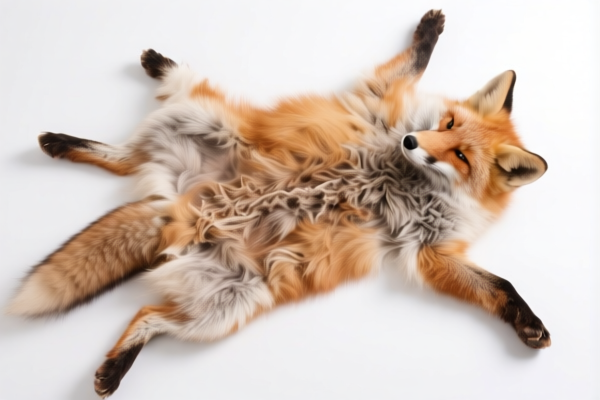
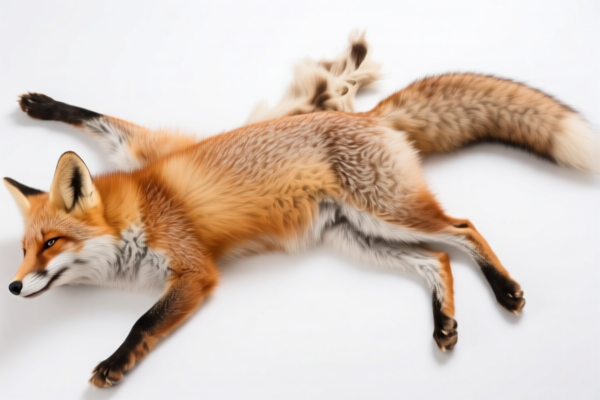
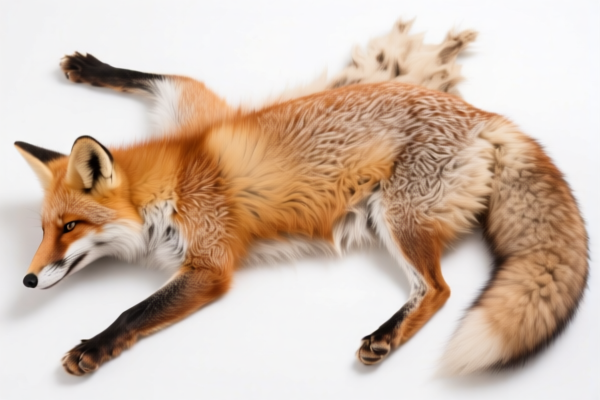
undyed fox fur
CN → US| HS Code | Tariff Rate | Origin | Destination | Doc |
|---|---|---|---|---|
| 4301603000 | 22.6% | CN | US | Official Doc |
| 4301606000 | 17.5% | CN | US | Official Doc |
Product Images

AI Analysis
🦊 Undyed Fox Fur (Raw Furskins)
🌐 HS Code Reference & Customs Clearance Guide | 2026 Latest Tariff Analysis | Professional Clearance Strategy
📌 I. Product Definition & Classification: Understanding "Undyed Fox Fur"
"Undyed Fox Fur" refers to raw fox pelts that have undergone minimal processing (such as salting or fresh chilling) but have not yet been dyed, colored, or chemically finished for final fashion use. In international trade, these are classified as "Raw Furskins suitable for furriers' use."
The classification depends strictly on the color/mutation type of the fox pelt: 1. Premium Variants: Silver, Black, or Platinum foxes (including mutations/developed types from these colors). 2. Other Variants: All other fox colors (e.g., Red Fox, Arctic Fox in natural states, Cross Fox, etc.).
⚠️ Key Distinction Point:
- If the fur is Silver, Black, or Platinum (or mutations thereof) → HS Code: 4301.60.30.00
- If the fur is Any other color/type → HS Code: 4301.60.60.00
- Note: "Undyed" implies raw state. If dyed, it would fall under a different heading (4302). The provided data covers raw skins.
📦 II. HS Code Classification Details (2026 Latest Tariff Authority)
| HS Code | Product Description | Applicable Scenario | Tax Rate (Total) |
|---|---|---|---|
4301.60.30.00 |
Of fox, whole, with or without head, tail or paws: Of silver, black or platinum fox (including mutations/developed types) | Premium luxury raw pelts; Silver, Black, or Platinum foxes | 0.0% |
4301.60.60.00 |
Of fox, whole, with or without head, tail or paws: Other | Red Fox, Arctic Fox, Cross Fox, or any non-silver/black/platinum fox | 7.5% |
🔍 Important Reminder:
- The term "Undyed" confirms the goods are raw furskins. Do not misclassify as "prepared fur" (Heading 4302), which attracts higher duties.
- "Whole" means the pelt is intact, including head, tail, or paws, or consists of pieces/cuttings suitable for furriers.
- Silver/Black/Platinum exclusions are strict. If the fox is a natural red color, it falls under "Other" (7.5%), even if it is high quality.
💰 III. 2026 Latest Tariff Rate Breakdown
✅ Applicable Country: United States (US)
✅ Origin: China (CN) (Inferred from tax details in DATA)
✅ Effective Date: Current tariff schedule
🎯 1. 4301.60.30.00 —— Silver, Black, or Platinum Fox Fur
| Item | Content |
|---|---|
| Base Duty Rate | 0.0% |
| Additional Duty (Section 301/IEEPA) | 0.0% |
| Total Tax Rate | 0.0% |
| Tax Calculation | CIF Value × 0% = $0 |
| De Minimis Eligibility | ❓ See Clearance Advice below |
| Legal Basis | Heading 4301, Subheading 60.30 |
📌 Explanation:
- This is a zero-duty category for premium fox furs (Silver/Black/Platinum).
- No additional Section 301 or IEEPA tariffs apply to this specific raw fur classification in the provided data.
- Advantage: Ideal for high-value luxury goods importers seeking tariff efficiency.
🎯 2. 4301.60.60.00 —— Other Fox Fur
| Item | Content |
|---|---|
| Base Duty Rate | 0.0% |
| Additional Duty (Section 301/IEEPA) | +7.5% |
| Total Tax Rate | 7.5% |
| Tax Calculation | CIF Value × 7.5% |
| De Minimis Eligibility | ❓ See Clearance Advice below |
| Legal Basis | Heading 4301, Subheading 60.60 |
📌 Explanation:
- While the Base Duty is 0%, an additional tariff of 7.5% applies to this category.
- This likely stems from specific trade measures (e.g., Section 301 or specific agricultural/fur trade restrictions) on non-premium fur types.
- Cost Impact: For a $10,000 shipment, duty = $750.
🛠️ IV. Customs Clearance Practical Advice (Avoid Pitfalls)
✅ 1. Documentation Checklist (Mandatory)
| Document | Required | Notes |
|---|---|---|
| ✅ Commercial Invoice | ✔️ | Must explicitly state "Raw Fox Fur" and specify color (Silver/Black/Platinum vs. Other). |
| ✅ Packing List | ✔️ | Detail number of pelts, including heads/tails if present. |
| ✅ Species Certificate | ✔️ | CITES certificates if applicable (Fox species may require permits). |
| ✅ Processing Description | ✔️ | Confirm "Undyed" and "Raw" status. Do not use terms like "Finished" or "Dyed." |
| ✅ HS Code Declaration | ✔️ | Precisely identify whether it is 4301.60.30.00 or 4301.60.60.00. |
✅ 2. Declaration Tips (Key Mnemonics)
🔥 "Color Determines Cost: Silver/Black/Platinum is Free, Others Pay 7.5%!"
| Scenario | Correct HS Code | Error Consequence |
|---|---|---|
| Silver Fox Pelt | 4301.60.30.00 |
If misdeclared as "Other" → Pay 7.5% unnecessarily. |
| Black Fox Pelt | 4301.60.30.00 |
Same as above. |
| Platinum Fox | 4301.60.30.00 |
Same as above. |
| Red Fox Pelt | 4301.60.60.00 |
If misdeclared as "Silver" → Severe penalty + Back Tax. |
| Mixed Lot | Split Declaration | Must separate by color type for accurate duty calculation. |
✅ 3. Special Considerations
| Situation | Handling Advice |
|---|---|
| Mutated Foxes | If the fox is a mutation developed from Silver/Black/Platinum, it still qualifies for 4301.60.30.00 (0%). Provide genetic or breeder documentation if questioned. |
| Pieces/Cuttings | Heads, tails, or paws suitable for furriers are included. Ensure they are clearly described as "parts of raw furskins." |
| CITES Compliance | Verify if the specific fox species requires CITES permits. Even with 0% duty, lack of permit can cause seizure. |
| De Minimis (Section 321) | ⚠️ Caution: While the duty rate is low, fur products are often exempt from de minimis (under $800) duty exemptions under US law (9903.01.25 or similar). Always confirm with a customs broker. |
🌍 V. Global Market Comparison (2026)
| Country/Region | Recommended HS Code | Duty Rate | Notes |
|---|---|---|---|
| 🇺🇸 United States | 4301.60.30.00 |
0.0% | For Silver/Black/Platinum |
| 🇺🇸 United States | 4301.60.60.00 |
7.5% | For Other Fox Fur |
| 🇪🇺 European Union | 4301.60.30 / 4301.60.60 | Varies (typically 0-3%) | Depends on EU Tariff Schedule and Origin. |
| 🇨🇳 China | 4301.60.30 / 4301.60.60 | Varies | Usually lower base rates; check specific FTAs. |
📌 Conclusion:
- The US market offers a clear tariff advantage for Premium Fox Furs (Silver/Black/Platinum) with 0% duty.
- Non-premium furs face a 7.5% tariff, so accurate classification is financially critical.
📌 VI. Common Errors & Pitfalls (Blood Lessons)
❌ Error 1: Calling all fox fur "Silver" to avoid the 7.5% tariff.
👉 Consequence: Customs audit, back taxes, fines, and potential seizure.
👉 Solution: Provide breeder certificates proving mutation/type.
❌ Error 2: Misclassifying "Dyed" fur as "Raw Undyed."
👉 Consequence: Wrong HS Code heading (4302 vs 4301), leading to incorrect duty and legal issues.
👉 Solution: Clearly state "Undyed" and provide processing descriptions.
❌ Error 3: Ignoring CITES requirements.
👉 Consequence: Shipment held at port, fines, or destruction.
👉 Solution: Check species-specific CITES appendices before shipping.
✅ Correct Practice:
"Raw Undyed Fox Fur, Silver Mutation, Whole Pelt, with Head and Tail, 50 Pelts, B2B Shipment."
🎯 VII. Conclusion: Precise Classification, Maximum Savings!
🎯 Remember the Mantra:
🔹 "Silver, Black, Platinum = 0% Duty. Other Fox = 7.5% Duty."
🔹 "Undyed is Raw, Raw is 4301. Dyed is 4302. Don't Mix Them!"
📌 Pro Tip:
If you import mixed lots (e.g., 70% Silver Fox, 30% Red Fox), split the shipment or declare separately to ensure the correct duty is applied to each portion. Do not lump them together under the higher tax rate unless it benefits your total cost (rare in this case).
📣 Immediate Action:
📞 Consult a licensed customs broker.
📄 Provide detailed photos and breeder information.
🚀 Ensure your commercial invoice matches the exact color type to avoid delays.
✨ Professional clearance starts with accurate classification!
💼 Your profit margin depends on getting the HS Code right!
Customer Reviews
About HS Code Classification
The Harmonized System (HS) is an internationally standardized nomenclature developed by the World Customs Organization (WCO) to classify traded products. Over 200 countries use the HS system as the basis for customs tariffs, trade statistics, and import/export regulations.
Each HS code follows a hierarchical structure:
- Chapter (2 digits) — Broad category of goods (e.g., Chapter 84: Machinery and Mechanical Appliances)
- Heading (4 digits) — More specific grouping within the chapter
- Subheading (6 digits) — Internationally standardized breakdown, used by all WCO member countries
- National subdivisions (8-10 digits) — Country-specific extensions for further classification, such as US HTSUS 10-digit codes
Correct HS code classification is essential for smooth customs clearance, accurate duty payment, and compliance with trade regulations. Misclassification can lead to customs delays, overpayment of duties, or penalties.
When importing from CN to US, the applicable tariff rates may include:
- Most-Favored-Nation (MFN) rate — The standard duty rate applied to WTO members
- General rate — Applied to countries without trade agreements
- Trade remedy duties — Additional tariffs such as Section 301 (anti-dumping), Section 232 (national security), or countervailing duties
The information provided on this page is for reference purposes only. For official classification, please consult with your local customs authority or a licensed customs broker.