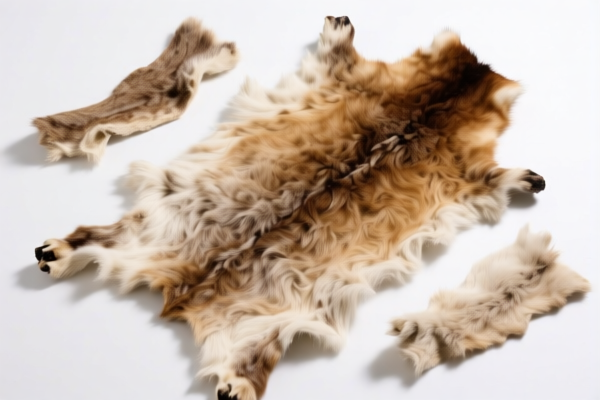
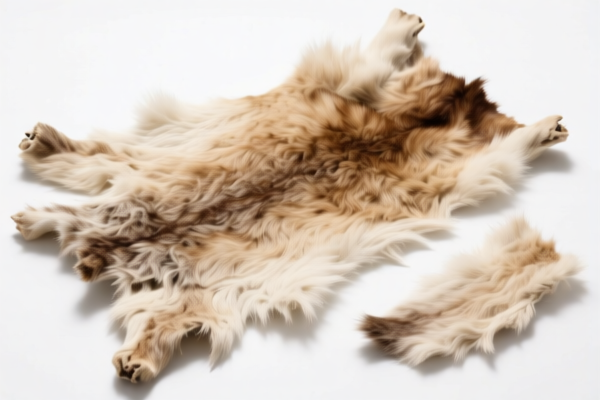
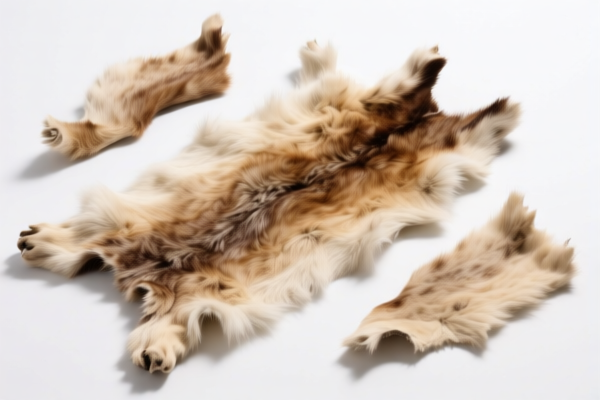
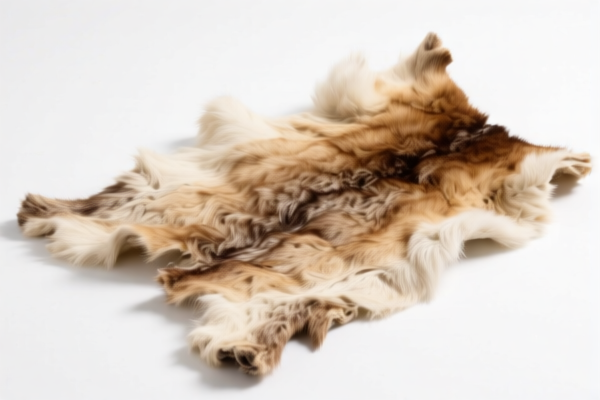
undyed tanned leather small items
CN → US| HS Code | Tariff Rate | Origin | Destination | Doc |
|---|---|---|---|---|
| 4205008000 | 35.0% | CN | US | Official Doc |
| 4205006000 | 39.9% | CN | US | Official Doc |
Product Images
AI Analysis
🧵 Undyed Tanned Leather Small Items: The Ultimate HS Code & Tax Guide for 2026
🌐 HS Code Reference & Customs Clearance Guide | 2026 Latest Tariff Analysis | Professional Customs Strategy
📌 I. Product Definition & Classification: What Exactly Are "Undyed Tanned Leather Small Items"?
"Undyed Tanned Leather Small Items" refer to accessories or articles made from leather that has undergone the tanning process but has not yet been dyed or colored. These items are typically small in scale and not intended for large-scale use like furniture or automotive interiors. Common examples include: * Wallets, key holders, and card holders * Small pouches, coin purses, and zippered cases * Leather straps, bands, or decorative trim pieces * Small leather tags, labels, or charms
In international trade, these goods fall under Chapter 42 of the Harmonized System (HS), specifically under heading 4205. The critical distinction lies in the material type: standard leather vs. reptile leather.
⚠️ Key Distinction Point:
- If the item is made from standard leather (cow, pig, sheep, etc.) or composition leather, it falls under 4205.00.80.00.
- If the item is made from reptile leather (snake, crocodile, lizard, etc.), it falls under 4205.00.60.00.
- "Undyed" does not change the HS code in these categories; it is simply a product attribute. The key is the leather type.
📦 II. HS Code Classification Details (2026 Latest Tariff Authority Comparison)
| HS Code | Product Description | Applicable Scenarios | Leather Type |
|---|---|---|---|
4205.00.80.00 |
Other articles of leather or composition leather: Other: Other | Standard leather wallets, pouches, straps, keychains, small bags | ✅ Standard Leather / Composition Leather |
4205.00.60.00 |
Other articles of leather or composition leather: Other: Other: Of reptile leather | Reptile leather accessories (e.g., snake skin wallet, crocodile strap) | ✅ Reptile Leather |
🔍 Critical Reminder:
- "Undyed" status does not exempt you from tariffs. The tax rate depends on the material and the country of origin (specifically for US imports).
- If you import reptile leather goods, you must use4205.00.60.00. Misdeclaring as standard leather (4205.00.80.00) can lead to severe penalties.
- If you import standard leather goods, you must use4205.00.80.00.
💰 III. 2026 Latest Tariff Rate Details (Including Additional Taxes & Policy Surcharges)
✅ Applicable Country: United States (US)
✅ Country of Origin: China (CN)
✅ Effective Date: From November 10, 2025 (including subsequent imports)
🎯 1. 4205.00.80.00 —— Standard Leather or Composition Leather Small Items
| Item | Content |
|---|---|
| Basic Tariff | 0.0% (Ad Valorem) |
| Additional Tariff (Section 301) | +25.0% |
| Total Tax Rate | 25.0% |
| Tax Calculation | CIF Value × 25% |
| De Minimis Exemption | ❌ Not Applicable |
| Legal Basis Path | Section 301: 4205.00.80.00 |
📌 Explanation:
- The basic tariff for most leather articles is 0%, meaning there is no base customs duty.
- However, under Section 301 of the Trade Act, a 25% additional tariff is imposed on goods from China.
- Total Cost Impact: You will pay 25% of the CIF value in additional duties. This is a significant cost for low-value leather items.
- Note: There is no de minimis exemption (Section 321) for these goods from China if they are classified under this specific code with Section 301 surcharges.
🎯 2. 4205.00.60.00 —— Reptile Leather Small Items
| Item | Content |
|---|---|
| Basic Tariff | 0.0% (Ad Valorem) |
| Additional Tariff (Section 301) | 0.0% |
| Total Tax Rate | 0.0% |
| Tax Calculation | CIF Value × 0% = $0 |
| De Minimis Exemption | ✅ Applicable (if under $800) |
| Legal Basis Path | Section 301: Exempt for 4205.00.60.00 |
📌 Explanation:
- The basic tariff for reptile leather articles is also 0%.
- Crucially, reptile leather goods are EXEMPT from the Section 301 additional tariffs (25%).
- Total Cost Impact: 0% tariff. This is a massive cost advantage compared to standard leather.
- Note: If the shipment value is under $800, you may also qualify for de minimis (Section 321) exemption, meaning zero duties and zero taxes for individual shipments.
🛠️ IV. Customs Clearance Practical Advice (Real-World Pitfall Avoidance Guide)
✅ 1. Documentation Checklist (All Required)
| Document | Must Provide | Description |
|---|---|---|
| ✅ Product Specifications | ✔️ | Must clearly state "Undyed Tanned Leather" and specify Leather Type (e.g., Cowhide, Snake, Crocodile). |
| ✅ Material Certificate | ✔️ | Proof of leather origin and type. Critical for distinguishing between 4205.00.80.00 and 4205.00.60.00. |
| ✅ Product Photos | ✔️ | Clear images showing texture, dye status (or lack thereof), and final product form. |
| ✅ Commercial Invoice | ✔️ | Must explicitly describe the item as "Undyed Tanned Leather [Product Name]" and include HS Code. |
| ✅ Packing List | ✔️ | Detail quantity, weight, and dimensions. |
| ✅ CITES Permit (If Applicable) | ✔️ | For reptile leather: If the species is endangered, a CITES permit is MANDATORY. Without it, goods will be seized. |
✅ 2. Declaration Strategy (Key Mnemonic)
🔥 "Check Leather Type, Avoid 25%, CITES for Reptiles!"
| Scenario | Correct Declaration | Wrong Practice |
|---|---|---|
| Standard Leather Wallet | 4205.00.80.00 (25% Tariff) |
Declaring as "Textile Accessory" → Misclassification Penalty |
| Snake Skin Keychain | 4205.00.60.00 (0% Tariff) |
Declaring as "Standard Leather" → Underpayment + Penalty |
| Undyed Cowhide Strap | 4205.00.80.00 (25% Tariff) |
Claiming "Undyed" for tax exemption → Invalid |
| Reptile Leather with CITES | 4205.00.60.00 + CITES Permit |
Importing without CITES → Seizure & Confiscation |
✅ 3. Special Handling & Risk Mitigation
| Situation | Handling Advice |
|---|---|
| Mixed Shipments | If a shipment contains both standard and reptile leather goods, split the declaration or declare the highest-risk item. Misdeclaration can affect the entire shipment. |
| OEM Customization | Provide design sketches and material approvals. Ensure the supplier certifies the leather type. |
| Reptile Leather (CITES) | Always verify CITES status before shipping. Use only farmed reptiles if possible, as wild-caught species may be banned. |
| Undyed vs. Dyed | "Undyed" does not change the HS code. It only affects the visual appearance. Taxation is based on leather type, not dye status. |
| Composition Leather | If the item is made from composition leather (paper-based or textile-based leather), it still falls under 4205.00.80.00 (25% Tariff). |
🌍 V. Global Market Comparison for Leather Small Items (2026)
| Country/Region | Recommended HS Code | Tariff (China Origin) | Certification Requirements | Notes |
|---|---|---|---|---|
| 🇺🇸 USA | 4205.00.80.00 |
25% (Standard) / 0% (Reptile) | None typically required | High tax on standard leather. 0% on reptile. |
| 🇨🇳 China | 4205.00.80.00 |
5% | None | Low base tariff. |
| 🇪🇺 EU | 4205.00.80.00 |
6% | REACH Compliance | No Section 301 equivalent. |
| 🇦🇺 Australia | 4205.00.80.00 |
5% | None | Low tariff. |
| 🇯🇵 Japan | 4205.00.80.00 |
6% | FSC Certification (if wood packaging) | Stable tariff. |
📌 Conclusion:
- USA is the only major market with a 25% punitive tariff on standard leather goods from China.
- Reptile leather offers a 0% tariff advantage in the US, but comes with CITES regulatory complexity.
- Standard leather goods face a 25% hit in the US, making them less competitive unless value-added or shipped from a non-China origin.
📌 VI. Common Errors & Pitfall Guide (Lessons Learned)
❌ Error 1: Declaring reptile leather as standard leather to avoid CITES checks
👉 Consequence: Seizure of goods, heavy fines, and potential criminal charges.
❌ Error 2: Assuming "Undyed" means 0% tax
👉 Consequence: 25% additional tariff still applies to standard leather from China.
❌ Error 3: Not providing material certificates for leather type
👉 Consequence: Customs may reclassify the goods, leading to delays, audits, and back-taxes.
❌ Error 4: Ignoring CITES requirements for reptile leather
👉 Consequence: Goods detained at port, destroyed if permits are invalid or missing.
✅ Correct Practice:
"Undyed Tanned Leather Wallet, Cowhide, Model XYZ, No Dyes Applied, HS 4205.00.80.00"
OR
"Undyed Tanned Leather Strap, Snake Skin (Farmed), Model ABC, CITES Permit #12345, HS 4205.00.60.00"
🎯 VII. Conclusion: Precise Classification Saves Money & Time
🎯 Key Takeaways:
🔹 "Leather Type Determines Tariff, Not Dye Status."
🔹 "Standard Leather = 25% (USA). Reptile Leather = 0% (USA) + CITES."
🔹 "Misdeclaring Reptile Leather as Standard is a Major Compliance Risk."
📌 Pro Tip:
If you are importing standard leather goods to the US, consider sourcing from Vietnam, Mexico, or India to avoid the 25% Section 301 tariff.
If you are importing reptile leather, ensure CITES compliance is bulletproof. The 0% tariff is worth the extra paperwork.
📣 Immediate Action Required:
📞 Contact Your Customs Broker: Confirm the exact leather type and CITES status.
📄 Gather Documentation: Material certificates, CITES permits (if applicable), and clear product photos.
🚀 File Accurately: Use the correct HS Code (4205.00.80.00or4205.00.60.00) to avoid costly errors.
✨ Professional Customs Clearance Starts with Accurate Classification!
💼 Every Percent of Tax Matters. Every Document Counts.
Customer Reviews
About HS Code Classification
The Harmonized System (HS) is an internationally standardized nomenclature developed by the World Customs Organization (WCO) to classify traded products. Over 200 countries use the HS system as the basis for customs tariffs, trade statistics, and import/export regulations.
Each HS code follows a hierarchical structure:
- Chapter (2 digits) — Broad category of goods (e.g., Chapter 84: Machinery and Mechanical Appliances)
- Heading (4 digits) — More specific grouping within the chapter
- Subheading (6 digits) — Internationally standardized breakdown, used by all WCO member countries
- National subdivisions (8-10 digits) — Country-specific extensions for further classification, such as US HTSUS 10-digit codes
Correct HS code classification is essential for smooth customs clearance, accurate duty payment, and compliance with trade regulations. Misclassification can lead to customs delays, overpayment of duties, or penalties.
When importing from CN to US, the applicable tariff rates may include:
- Most-Favored-Nation (MFN) rate — The standard duty rate applied to WTO members
- General rate — Applied to countries without trade agreements
- Trade remedy duties — Additional tariffs such as Section 301 (anti-dumping), Section 232 (national security), or countervailing duties
The information provided on this page is for reference purposes only. For official classification, please consult with your local customs authority or a licensed customs broker.