universal animal horse tack detachable
CN → US| HS Code | Tariff Rate | Origin | Destination | Doc |
|---|---|---|---|---|
| 4015900050 | 39.0% | CN | US | Official Doc |
| 4201003000 | 37.4% | CN | US | Official Doc |
| 4201006000 | 37.8% | CN | US | Official Doc |
| 4201006000 | 37.8% | CN | US | Official Doc |
| 4201003000 | 37.4% | CN | US | Official Doc |
Product Images
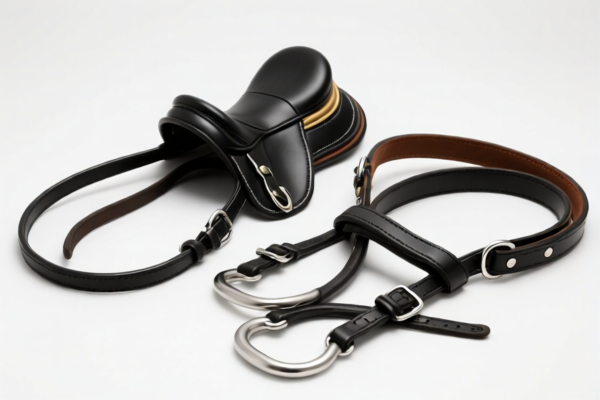
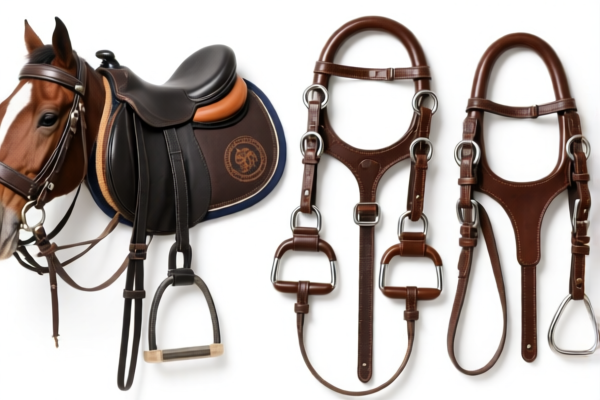
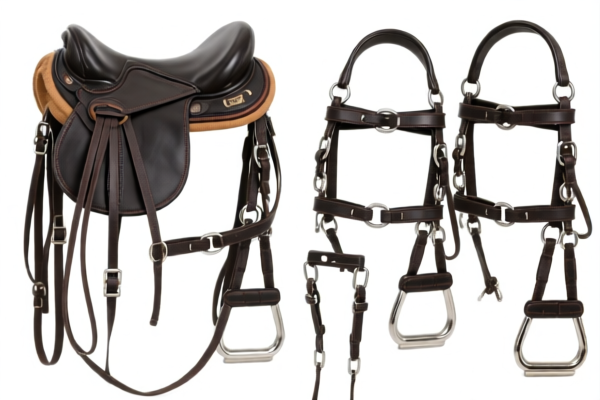

AI Analysis
🐎 Universal Animal Horse Tack Detachable (Saddlery & Harnesses)
🌐 HS Code Reference & Customs Clearance Guide | 2026 Latest Tariff Analysis | Strategic Import Strategy
📌 1. Product Definition & Classification: What exactly is "Detachable Horse Tack"?
"Universal Animal Horse Tack" refers to equipment used for controlling, riding, or pulling animals, such as saddles, bridles, halters, and harnesses. The term "Detachable" implies that these are modular components or adjustable parts rather than rigid, non-removable units. In international trade, classification hinges on whether the item is viewed as a garment/accessory or as specific animal tackle.
⚠️ Key Distinction:
- If the item is interpreted broadly as an "accessory to clothing" or generic fitting → May fall under Chapter 40 (Rubber Articles) or Chapter 42 (Leather Articles) depending on material and specificity.
- If the item matches the specific description of "Saddlery and Harness" → It belongs squarely in Chapter 42 (Saddlery and Harness).
- Core Rule: Specific descriptions (Saddlery/Harness) generally override general accessory descriptions.
📦 2. HS Code Classification Matrix (2026 Latest Tariff Authority)
Based on the provided data, here are the applicable HS Codes for "Universal Animal Horse Tack Detachable," ranked by specificity and tax efficiency.
| HS Code | Product Description | Applicability / Summary | Material Conflict? |
|---|---|---|---|
4201.00.60.00 |
Saddlery and Harness for Animals | Core Coverage: Explicitly covers horse tack. Usage matches saddle/harness functions. Specificity: High. | ❌ No Conflict |
4201.00.60.00 |
Saddlery and Harness for Animals | Specific Product Category: Falls within the specific product scope of saddlery. Specificity: High. | ❌ No Conflict |
4201.00.30.00 |
Saddlery and Harness for Animals | Animal-Specific: Matches the use of animal tack and harnesses. Specificity: Medium-High. | ❌ No Conflict |
4201.00.30.00 |
Saddlery and Harness for Animals | General Tack: Consistent with animal tack/harness use. Generic, no material conflict. Specificity: Medium. | ❌ No Conflict |
4015.90.00.50 |
Other Articles of Rubber (Accessories) | Accessory Property: Classified as "Other" in clothing/accessories. General "Universal" label leads here. Specificity: Low (Generic Accessory). | ⚠️ Material Dependent (Rubber?) |
🔍 Critical Insight:
- HS Code4201is the correct and preferred classification for horse tack because Chapter 42 explicitly covers "Saddlery and Harness."
- HS Code4015is a less precise fallback, treating the item merely as an "accessory" rather than functional tack, resulting in a higher tax burden.
- "Detachable" does not change the primary function; if it’s still part of the saddle/harness system, it remains under 4201.
💰 3. 2026 Tariff Rate Breakdown (Detailed Tax Clauses)
✅ Applicable Jurisdiction: USA (US)
✅ Origin: China (CN)
✅ Effective Date: Post-2025 Import Rules (Including Section 301 & Section 122)
🎯 Option A: Preferred Classification – 4201.00.60.00
(Most Specific: Saddlery and Harness)
| Item | Detail |
|---|---|
| Base Duty Rate | 2.8% (Ad Valorem) |
| Section 301 Additional Duty | +25.0% (Trade Remedy Tariff) |
| Section 122 Additional Duty | +10.0% (Specific to certain imports from China) |
| Total Effective Tax Rate | 37.8% |
| Tax Calculation | CIF Value × 37.8% |
| De Minimis Exemption | ❌ Not Eligible (Value > $800 or restricted category) |
| Legal Basis Path | USITC:4201.00.60.00 → Section 301 → Section 122 |
📌 Explanation:
- Base 2.8%: Standard MFN rate for saddlery/harness.
- +25% Section 301: Standard punitive tariff on Chinese goods in this category.
- +10% Section 122: Additional levy for specific Chinese-origin goods.
- Total: 37.8% is the lowest among the options because the base rate (2.8%) is lower than the generic accessory rate (4.0%).
🎯 Option B: Alternative Classification – 4201.00.30.00
(General Animal Tack)
| Item | Detail |
|---|---|
| Base Duty Rate | 2.4% (Ad Valorem) |
| Section 301 Additional Duty | +25.0% |
| Section 122 Additional Duty | +10.0% |
| Total Effective Tax Rate | 37.4% |
| Tax Calculation | CIF Value × 37.4% |
| De Minimis Exemption | ❌ Not Eligible |
| Legal Basis Path | USITC:4201.00.30.00 → Section 301 → Section 122 |
📌 Note:
- This code has a lower base rate (2.4%) than4201.60, resulting in a slightly lower total tax (37.4%).
- However, customs may scrutinize this if the product is clearly a "saddle" rather than general "tack." Use only if the product is not a standard saddle/harness but a universal strap/fitting.
🎯 Option C: Least Preferred – 4015.90.00.50
(Rubber Articles / General Accessory)
| Item | Detail |
|---|---|
| Base Duty Rate | 4.0% (Ad Valorem) |
| Section 301 Additional Duty | +25.0% |
| Section 122 Additional Duty | +10.0% |
| Total Effective Tax Rate | 39.0% |
| Tax Calculation | CIF Value × 39.0% |
| De Minimis Exemption | ❌ Not Eligible |
| Legal Basis Path | USITC:4015.90.00.50 → Section 301 → Section 122 |
📌 Warning:
- This is the most expensive option.
- It classifies the item as a generic "accessory" rather than functional tack, which is often challenged by customs if the item is clearly horse equipment.
- Avoid unless the product is made entirely of rubber and has no clear tack function.
🛠️ 4. Customs Clearance Practical Advice (Risk Mitigation)
✅ 1. Documentation Checklist (Mandatory)
| Document | Required? | Notes |
|---|---|---|
| ✅ Product Specifications | ✔️ | Detail materials (leather, nylon, rubber), dimensions, and "detachable" mechanism. |
| ✅ Product Photos | ✔️ | Show the item in use on an animal or clear close-ups of buckles/straps. |
| ✅ Material Breakdown | ✔️ | Specify % of leather, rubber, fabric. Critical for Chapter 40 vs. 42 decision. |
| ✅ Commercial Invoice | ✔️ | Use precise terminology: "Leather Horse Harness Strap, Detachable" NOT "Generic Accessory." |
| ✅ Packing List | ✔️ | Ensure quantity matches invoice. |
| ✅ Origin Certificate | ✔️ | Confirm CN origin for Section 301/122 calculation. |
✅ 2. Classification Strategy & Tips
🔥 Golden Rule: "Function Defines Classification, Not Just Material."
| Scenario | Recommended HS Code | Reason |
|---|---|---|
| Item is a Saddle, Bridle, or Main Harness | 4201.00.60.00 |
Direct match for "Saddlery and Harness." Most defensible. |
| Item is a Universal Strap/Attachment | 4201.00.30.00 |
"Other" tack, but still within Chapter 42. Lower base rate. |
| Item is Purely Rubber Gadget/Accessory | 4015.90.00.50 |
Only if no tack function exists. Higher tax, high risk of challenge. |
| Mixed Materials (Leather + Rubber) | 4201.00.60.00 |
Leather usually dominates classification for tack. |
✅ 3. Special Handling for "Detachable" Features
- Modularity: If the "detachable" part is sold separately, ensure the description highlights its intended use (e.g., "Detachable Buckle for Horse Saddle").
- Kitting: If sold as a full set, declare the primary function (Tack) for the whole kit. Do not split into accessories and tack to avoid higher rates.
- Material Declaration: Clearly state if rubber is a minor component (lining, grip) vs. major component. If rubber >50%, customs might push for Chapter 40, but function still points to 4201.
🌍 5. Global Market Comparison (2026)
| Country/Region | Recommended HS Code | Total Tax (China Origin) | Notes |
|---|---|---|---|
| 🇺🇸 USA | 4201.00.60.00 |
37.8% | Section 301 + 122 apply. High barrier. |
| 🇨🇳 China | 4201.00.60.00 |
~10% | Standard import duty for saddlery. |
| 🇪🇺 EU | 4201.00.00 |
12% | No Section 301/122. Standard MFN. |
| 🇬🇧 UK | 4201.00.00 |
12% | Post-Brexit tariffs similar to EU. |
| 🇨🇦 Canada | 4201.00.00 |
0% (if CUSMA compliant) | Check origin rules for preferential rate. |
📌 Conclusion:
- USA is the most expensive market due to punitive tariffs.
- Chapter 42 (4201) is the only defensible classification for horse tack.
- Cost Saving Tip: If possible, structure supply chain to avoid "Section 122" applicable goods or negotiate CIF pricing to absorb the ~38% duty.
📌 6. Common Mistakes & Pitfalls (Blood Lessons)
❌ Mistake 1: Classifying as 4015 (Rubber) to save tax.
👉 Consequence: Customs challenges it as "specific article of saddlery," applies 4201 + penalties + retroactive tax. Risk: High.
❌ Mistake 2: Using vague terms like "Universal Animal Accessory" on invoice.
👉 Consequence: Customs assigns worst-case scenario code with higher duty. Risk: Medium.
❌ Mistake 3: Ignoring Section 122.
👉 Consequence: Unexpected 10% hike at border. Always include 122 in cost model. Risk: Financial Loss.
❌ Mistake 4: Splitting detachable parts into separate shipments.
👉 Consequence: If parts are clearly for tack, they are still taxable as tack. Splitting may trigger "complete sets" rules. Risk: Administrative Delay.
✅ Best Practice:
Declare as: "Horse Saddlery, Detachable Strap, Leather/Nylon, Model XYZ."
Use HS Code4201.00.60.00for highest defensibility.
🎯 7. Conclusion: Precision Saves Money
🎯 Key Takeaway:
🔹 Chapter 42 is King: Horse tack belongs in 4201, not 4015.
🔹 Total Tax is ~37.4%–39.0%: Plan for this cost in your pricing.
🔹 Documentation is Key: Prove it’s "Saddlery" to avoid misclassification.
🔹 Section 122 is Real: Don’t forget the extra 10%.
📌 Pro Tip:
If you are importing large volumes, consider applying for an Exclusion under Section 301 (if applicable) or restructure supply chain to source from non-China origins for US entry to mitigate tariffs.
📣 Immediate Action:
📞 Consult a licensed customs broker for Pre-Ruling on "Detachable" components.
📄 Update your Commercial Invoice templates to use precise "Saddlery/Harness" terminology.
📊 Calculate Landed Cost including the 37.8% total duty to ensure profitability.
✨ Clear Classification, Smooth Clearance, Predictable Costs!
💼 Don’t let tariff traps eat your margins!
Customer Reviews
About HS Code Classification
The Harmonized System (HS) is an internationally standardized nomenclature developed by the World Customs Organization (WCO) to classify traded products. Over 200 countries use the HS system as the basis for customs tariffs, trade statistics, and import/export regulations.
Each HS code follows a hierarchical structure:
- Chapter (2 digits) — Broad category of goods (e.g., Chapter 84: Machinery and Mechanical Appliances)
- Heading (4 digits) — More specific grouping within the chapter
- Subheading (6 digits) — Internationally standardized breakdown, used by all WCO member countries
- National subdivisions (8-10 digits) — Country-specific extensions for further classification, such as US HTSUS 10-digit codes
Correct HS code classification is essential for smooth customs clearance, accurate duty payment, and compliance with trade regulations. Misclassification can lead to customs delays, overpayment of duties, or penalties.
When importing from CN to US, the applicable tariff rates may include:
- Most-Favored-Nation (MFN) rate — The standard duty rate applied to WTO members
- General rate — Applied to countries without trade agreements
- Trade remedy duties — Additional tariffs such as Section 301 (anti-dumping), Section 232 (national security), or countervailing duties
The information provided on this page is for reference purposes only. For official classification, please consult with your local customs authority or a licensed customs broker.