universal joint shaft
CN → US| HS Code | Tariff Rate | Origin | Destination | Doc |
|---|---|---|---|---|
| 8708996805 | 37.5% | CN | US | Official Doc |
| 8708508500 | 37.5% | CN | US | Official Doc |
| 8483604080 | 37.8% | CN | US | Official Doc |
| 8483908040 | 37.8% | CN | US | Official Doc |
Product Images
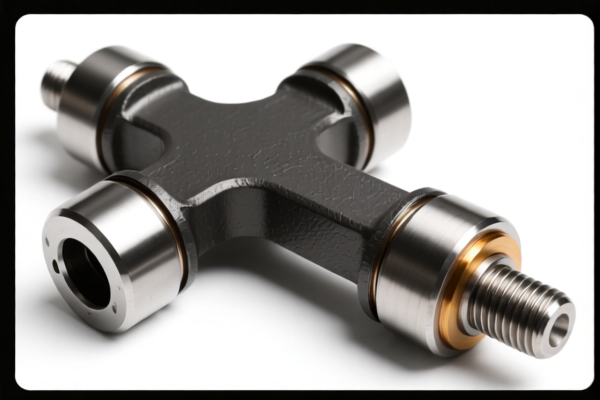
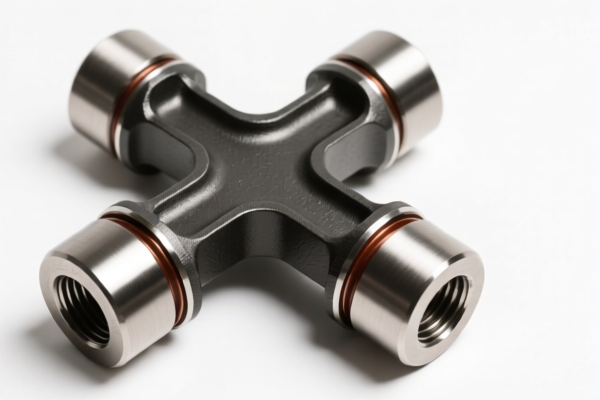
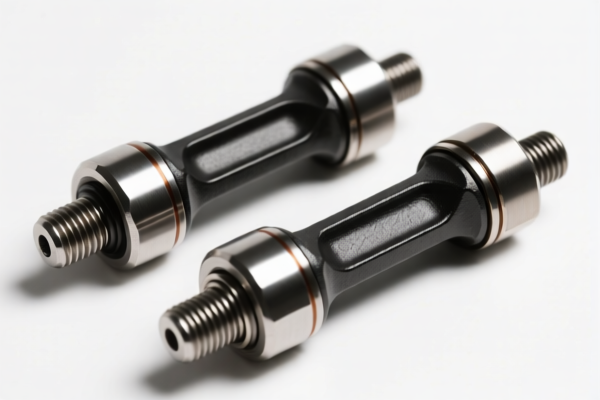
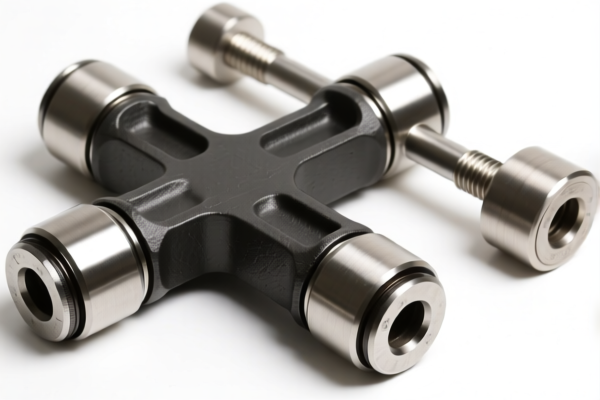
AI Analysis
🔧 Universal Joint Shaft (Drive Shafts & Couplings)
🌐 HS Code Reference & Customs Clearance Guide | 2026 Latest Tariff Analysis | Professional-Level Clearance Strategy
📌 I. Product Definition & Classification: Do You Really Understand "Universal Joint Shafts"?
A "Universal Joint Shaft" typically refers to components used to transmit rotary power between two shafts whose axes are at an angle to each other. In international trade, this term is broad and can cover three distinct categories based on the end-use and structural integration:
- Standalone Universal Joints (Heading 8483): Mechanical parts used in general machinery, automotive drivetrains (non-integrated), or industrial equipment. These are classified under transmission components.
- Parts of Motor Vehicles (Heading 8708): Specific drive shafts, half-shafts, or universal joints designed specifically for motor vehicles (headings 8701–8705). These are classified as vehicle parts.
- Complete Drive Assemblies: If the "shaft" includes the housing, gears, or is a complete axle assembly, it may fall under different headings, but the focus here is on the shaft/joint component itself.
⚠️ Key Distinction:
- If it is a standalone mechanical coupling or universal joint not specifically identifiable as a part of a specific vehicle heading → It falls under 8483.60 (Universal Joints) or 8483.90 (Parts of Universal Joints).
- If it is a half-shaft or drive axle component for a motor vehicle → It falls under 8708.50 or 8708.99.
- Critical Rule: Classification depends entirely on the specific design and intended use. A universal joint used in a car's drivetrain is a "part of a motor vehicle," not just a general mechanical part.
📦 II. HS Code Classification Details (2026 Latest Tariff Authority Comparison)
| HS Code | Product Description | Application Scenario | Tax Rate (China Origin) |
|---|---|---|---|
8483.60.40.80 |
Clutches and universal joints: Universal joints | Standalone universal joints for general machinery, industrial applications, or non-specific vehicle integration. | 0.0% |
8483.90.80.40 |
Transmission elements; parts: Other: Other Parts of universal joints | Separate parts of universal joints (e.g., yokes, cross bearings, caps) not presented as complete joints. | 27.8% |
8708.99.68.05 |
Parts of motor vehicles: Other: Other parts for power trains: Drive shafts | Drive shafts (including those with universal joints) specifically for motor vehicles (headings 8701–8705). | 27.5% |
8708.50.85.00 |
Parts of drive axles: For vehicles of heading 8703: Half-shafts | Half-shafts (semi-axles) for passenger cars (heading 8703). Note: This is a specific type of shaft, not a general universal joint. | 0.0% |
🔍 Key Reminder:
- "Universal Joint" (8483.60.40.80): If the product is a universal joint itself (the coupling mechanism), and it is not clearly identifiable as a part of a specific vehicle heading (like 8703 passenger cars), it often falls here. Tax: 0%.
- "Parts of Universal Joints" (8483.90.80.40): If you are importing individual components (like a spider/kingpin or yoke) separately, not the complete joint, the tax jumps to 27.8%.
- "Drive Shafts for Vehicles" (8708.99.68.05): If the shaft is a complete assembly (shaft + joints) designed for a motor vehicle, it is classified under vehicle parts, attracting a high tax of 27.5%.
- "Half-Shafts" (8708.50.85.00): If the product is specifically a half-shaft for passenger cars, it is 0%. Do not confuse this with general drive shafts.
💰 III. 2026 Latest Tariff Rate Details (Including Surcharges)
✅ Applicable Country: United States (US)
✅ Origin: China (CN)
✅ Effective Date: From November 10, 2025 (including subsequent imports)
🎯 1. 8483.60.40.80 —— Universal Joints (Standalone)
| Item | Content |
|---|---|
| Base Tariff | 0% (ad valorem) |
| Section 301 Surcharge | 0.0% |
| IEEPA Surcharge | 0.0% |
| Total Tariff | 0.0% |
| Calculation | CIF Value × 0% |
| De Minimis Eligibility | ✅ Yes (if under $800, no duty) |
| Legal Basis Path | HTSUS:8483.60.40.80 |
📌 Explanation:
- Standalone universal joints are currently exempt from Section 301 and IEEPA surcharges.
- Zero Duty Advantage: This is a low-risk classification for cost-sensitive imports.
- Note: Ensure the product is clearly a "universal joint" and not a "drive shaft assembly" for a specific vehicle, which would change the code.
🎯 2. 8483.90.80.40 —— Parts of Universal Joints
| Item | Content |
|---|---|
| Base Tariff | 2.8% |
| Section 301 Surcharge | +25.0% |
| IEEPA Surcharge | 0.0% |
| Total Tariff | 27.8% |
| Calculation | CIF Value × 27.8% |
| De Minimis Eligibility | ❌ No (deny_de_minimis for high-tariff items) |
| Legal Basis Path | HTSUS:8483.90.80.40 → USITC:301:8483.90 |
📌 Warning:
- Importing individual parts (yokes, bearings) of universal joints triggers the 25% Section 301 surcharge.
- Total tax is 27.8%, which is significantly higher than the complete joint (0%).
- Strategy: If possible, import complete universal joints (8483.60.40.80) instead of parts to save 27.8%.
🎯 3. 8708.99.68.05 —— Drive Shafts for Motor Vehicles
| Item | Content |
|---|---|
| Base Tariff | 2.5% |
| Section 301 Surcharge | +25.0% |
| IEEPA Surcharge | 0.0% |
| Total Tariff | 27.5% |
| Calculation | CIF Value × 27.5% |
| De Minimis Eligibility | ❌ No |
| Legal Basis Path | HTSUS:8708.99.68.05 → USITC:301:8708 |
📌 Warning:
- Drive shafts for vehicles are considered "parts of motor vehicles" and are subject to the 25% Section 301 surcharge.
- Total tax is 27.5%.
- Risk: Misclassifying a vehicle drive shaft as a general universal joint (8483.60.40.80) can lead to customs penalties, back duties, and interest.
🎯 4. 8708.50.85.00 —— Half-Shafts for Passenger Cars
| Item | Content |
|---|---|
| Base Tariff | 0.0% |
| Section 301 Surcharge | 0.0% |
| IEEPA Surcharge | 0.0% |
| Total Tariff | 0.0% |
| Calculation | CIF Value × 0% |
| De Minimis Eligibility | ✅ Yes (if under $800) |
| Legal Basis Path | HTSUS:8708.50.85.00 |
📌 Key Insight:
- Half-shafts (semi-axles) for passenger cars (8703) are currently exempt from surcharges.
- This is a 0% tariff opportunity, but only applies to specific half-shafts, not general universal joints or drive shafts.
- Verification: Ensure the product is explicitly a "half-shaft" for a passenger car, not a general CV joint or drive shaft.
🛠️ IV. Customs Clearance Practical Advice (Pitfall Avoidance Guide)
✅ 1. Documentation Checklist (Must-Have)
| Document | Required | Description |
|---|---|---|
| ✅ Product Specifications | ✔️ | Detailed dimensions, material, type (CV joint, U-joint, constant velocity, etc.) |
| ✅ Intended Use Statement | ✔️ | Clearly state: "For general machinery" OR "For Passenger Car Model XYZ" |
| ✅ Photos (Clear) | ✔️ | Show the entire product, including any markings, model numbers, and packaging |
| ✅ Bill of Lading / Commercial Invoice | ✔️ | Must match HS Code description exactly (e.g., "Universal Joint" vs. "Drive Shaft") |
| ✅ OEM/Engineering Drawings | ✔️ | If claimed as "Half-Shaft" or "Drive Shaft," provide drawings to prove design intent |
✅ 2. Declaration Strategy (Key Tips)
🔥 "Complete Joints 0%, Parts 28%, Vehicle Shafts 27.5%!"
| Scenario | Correct Declaration | Incorrect Declaration | Consequence |
|---|---|---|---|
| Standalone U-Joint | 8483.60.40.80 (Universal Joint) |
Misdeclare as "Drive Shaft" | Overpay 27.5% |
| Individual Yoke/Bearing | 8483.90.80.40 (Part of U-Joint) |
Misdeclare as "Complete Joint" | Underpay 27.8% → Penalty |
| Car Drive Shaft Assembly | 8708.99.68.05 (Drive Shaft) |
Misdeclare as "Universal Joint" | Underpay 27.5% → Penalty |
| Passenger Car Half-Shaft | 8708.50.85.00 (Half-Shaft) |
Misdeclare as "Drive Shaft" | Overpay 27.5% |
✅ 3. Special Cases
| Scenario | Handling Advice |
|---|---|
| CV Joints (Constant Velocity) | Often classified under 8483.60.40.80 if standalone. Verify if they are "universal joints" or "parts of transmissions." |
| Multi-Variant Shaft | If a shaft has universal joints at both ends and is for a vehicle, it is a "Drive Shaft" (8708.99.68.05), not a "Universal Joint." |
| Kit (Shaft + Joints) | If shipped as a complete assembly for a specific vehicle, declare as Vehicle Part (8708.99.68.05). |
| Repair Parts | If importing for aftermarket repair, ensure the invoice states "Replacement Parts for Vehicle Model XYZ" to justify 8708 classification. |
🌍 V. Global Market Comparison (2026 Latest)
| Country/Region | Recommended HS Code | Tariff (China Origin) | Certification Requirements | Notes |
|---|---|---|---|---|
| 🇺🇸 USA | 8483.60.40.80 |
0% | None | Best Option: Standalone universal joints are tax-free. |
| 🇺🇸 USA | 8708.99.68.05 |
27.5% | None | High tax for vehicle drive shafts. |
| 🇪🇺 EU | 8483.60.40 |
0% | CE (if machinery) | Similar to US, standalone joints are low tax. |
| 🇨🇳 China | 8483.60.40 |
5-10% | CCC (if for cars) | Domestic imports have moderate duties. |
| 🇦🇺 Australia | 8483.60.40 |
5% | RCM | Low duty, but requires compliance. |
📌 Conclusion:
- USA offers 0% duty for standalone universal joints (8483.60.40.80).
- Vehicle-specific shafts face high tariffs globally due to Section 301/Trade Policies.
- Strategy: If possible, import standalone universal joints or half-shafts (0%) instead of drive shaft assemblies (27.5%).
📌 VI. Common Errors & Pitfalls (Lessons Learned)
❌ Error 1: Misclassifying Drive Shafts as Universal Joints
👉 Consequence: Underpayment of 27.5% → Back duties + penalties!
❌ Error 2: Importing Parts (yokes, bearings) and declaring as Complete Joints
👉 Consequence: Underpayment of 27.8% → Customs audit and fines!
❌ Error 3: Confusing Half-Shafts with Drive Shafts
👉 Consequence: Half-shafts are 0%, Drive Shafts are 27.5%. Misclassification leads to overpayment or underpayment.
❌ Error 4: Using vague terms like "Shaft" or "Coupling" on Invoice
👉 Consequence: Customs unclear classification → Delays, inspections, or reclassification.
✅ Correct Declaration Example:
"Universal Joint, Steel, Part No. XYZ, for Industrial Machinery, Model UJ-100" → 8483.60.40.80 (0%)
"Half-Shaft, for Toyota Camry 2020, Part No. ABC" → 8708.50.85.00 (0%)
🎯 VII. Conclusion: Precision Classification Saves Money!
🎯 Remember:
🔹 "Standalone Joint: 0%. Parts: 28%. Vehicle Shaft: 27.5%. Half-Shaft: 0%!"
🔹 "Be Specific: 'Universal Joint' vs. 'Drive Shaft' vs. 'Half-Shaft' changes tax by 27%!"
📌 Tip:
If your universal joint is integrated into a complete drive shaft assembly for a car, it must be declared as a Vehicle Part (8708.99.68.05). Do not try to hide it under 8483.60.40.80.
📣 Immediate Action:
📞 Contact Customs Broker + Provide Product Photos + Verify HS Code Pre-Ruling
🚀 Ensure Smooth Clearance, Avoid Penalties, Maximize Profit!
✨ Professional Customs Clearance Starts with Accurate Classification!
💼 Every Percent of Duty Saved is Pure Profit!
Customer Reviews
About HS Code Classification
The Harmonized System (HS) is an internationally standardized nomenclature developed by the World Customs Organization (WCO) to classify traded products. Over 200 countries use the HS system as the basis for customs tariffs, trade statistics, and import/export regulations.
Each HS code follows a hierarchical structure:
- Chapter (2 digits) — Broad category of goods (e.g., Chapter 84: Machinery and Mechanical Appliances)
- Heading (4 digits) — More specific grouping within the chapter
- Subheading (6 digits) — Internationally standardized breakdown, used by all WCO member countries
- National subdivisions (8-10 digits) — Country-specific extensions for further classification, such as US HTSUS 10-digit codes
Correct HS code classification is essential for smooth customs clearance, accurate duty payment, and compliance with trade regulations. Misclassification can lead to customs delays, overpayment of duties, or penalties.
When importing from CN to US, the applicable tariff rates may include:
- Most-Favored-Nation (MFN) rate — The standard duty rate applied to WTO members
- General rate — Applied to countries without trade agreements
- Trade remedy duties — Additional tariffs such as Section 301 (anti-dumping), Section 232 (national security), or countervailing duties
The information provided on this page is for reference purposes only. For official classification, please consult with your local customs authority or a licensed customs broker.