universal marine boat cup holder
CN → US| HS Code | Tariff Rate | Origin | Destination | Doc |
|---|---|---|---|---|
| 3926305000 | 22.8% | CN | US | Official Doc |
| 8708295110 | 0.0% | CN | US | Official Doc |
| 3926909989 | 22.8% | CN | US | Official Doc |
| 8708295160 | 0.0% | CN | US | Official Doc |
| 8302306000 | 38.5% | CN | US | Official Doc |
Product Images
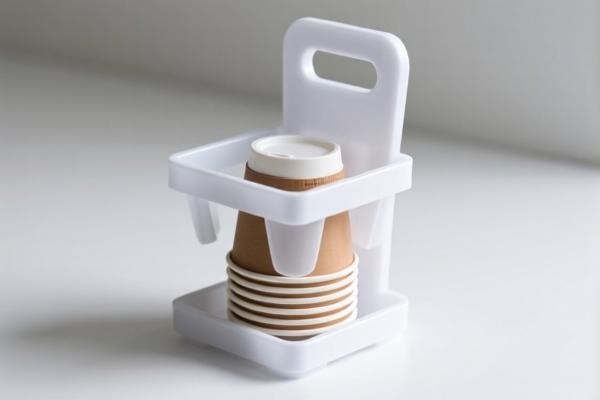
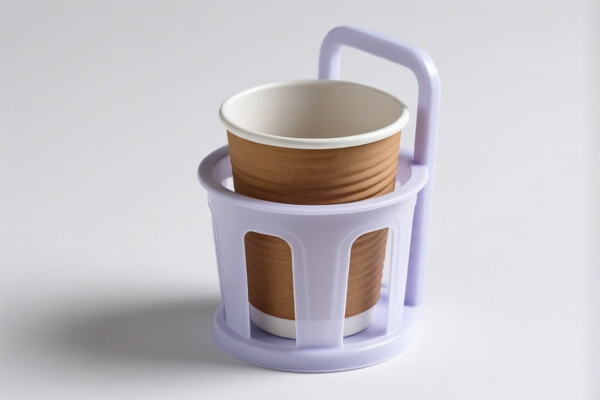
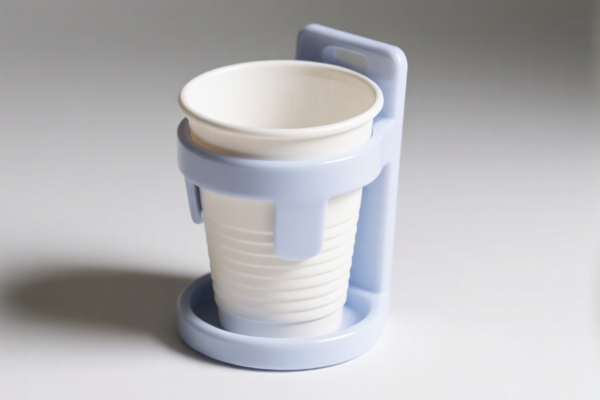
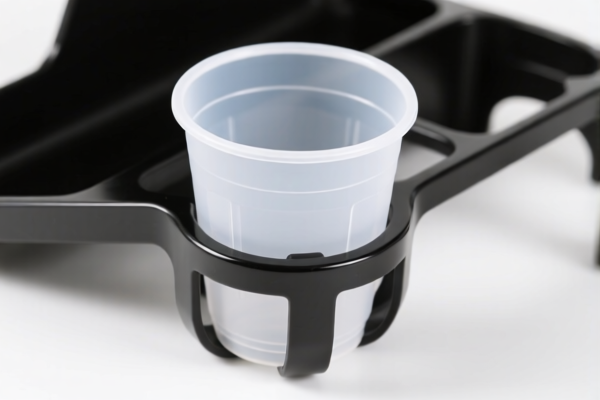
AI Analysis
🚤 Universal Marine Boat Cup Holder
🌐 HS Code Reference & Customs Clearance Guide | 2026 Latest Tariff Analysis | Professional Logistics Strategy
📌 I. Product Definition & Classification: Do You Really Understand the "Universal Marine Boat Cup Holder"?
A Universal Marine Boat Cup Holder is a specialized accessory designed to secure beverage containers in marine environments. In international trade, its classification hinges on two critical factors: Material and Specific Use Case. Unlike automotive parts, marine accessories are often scrutinized under general goods or specific vehicle component chapters depending on their composition.
Key Distinction Points: - Plastic vs. Metal: If made primarily of plastic, it may fall under Chapter 39 (Plastics) or Chapter 87 (Vehicle Parts) if deemed an integral attachment. If made of base metal (aluminum, steel), it leans towards Chapter 83 (Base Metal Articles) or Chapter 87. - General Accessory vs. Specific Part: Is it a generic "holding device" (Chapter 39/83) or a specific "automotive/marine body part" (Chapter 87)? - Marine Specificity: While marketed for "marine" use, U.S. Customs (CBP) often classifies these based on the primary function and material rather than the end-use location, unless it is a dedicated, non-adjustable fixture integral to the vessel's construction.
📦 II. HS Code Classification Details (2026 Latest Tariff Concordance)
Based on the provided data, here are the five most likely HS Codes for a Universal Marine Boat Cup Holder, along with the rationale for each:
| HS Code | Product Description | Rationale for Classification | Primary Material Assumption |
|---|---|---|---|
| 3926.30.50.00 | Other articles of plastics: Connecting or fitting articles for bodies of motor vehicles | Classified as a body fitting/accessory. The rationale states it is a "cup holder" used in a "vehicle" (broadly interpreted), fitting the "other connecting/fitting articles" category. | Plastic (Inferred) |
| 8708.29.51.10 | Parts and accessories of motor vehicles: Other parts and accessories for bodies | Classified as a vehicle accessory. The summary notes it belongs to "vehicle interior accessories," and despite unspecified material, it fits the accessory logic for body parts. | Plastic/Metal (Unspecified, inferred compatible) |
| 3926.90.99.89 | Other articles of plastics: Other | Classified as a general plastic article. It is treated as a "catch-all" plastic product, assuming it is made of plastic but not specifically as a vehicle fitting. | Plastic (Inferred by common sense) |
| 8708.29.51.60 | Parts and accessories of motor vehicles: Other parts and accessories for bodies | Similar to 8708.29.51.10, but this code triggers additional tariffs for steel, aluminum, or copper products. | Steel, Aluminum, or Copper (Inferred) |
| 8302.30.60.00 | Base metal mountings, fittings and similar articles: For vehicles | Classified as a base metal accessory for vehicles. The summary explicitly states "inferred material is base metal" and fits "vehicle accessories." | Base Metal (e.g., Aluminum/Stainless Steel) |
🔍 Critical Observation:
- Codes3926.30.50.00and8708.29.51.10/8708.29.51.60represent different logical paths: one as a plastic fitting and the other as a vehicle part.
- Codes8708.29.51.60and8302.30.60.00carry higher tariffs due to metal composition and Section 301/IEEPA duties.
- Marine Use: Note that CBP may not distinguish "marine" from "automotive" unless it is a specialized, non-transferable marine fixture. "Universal" implies it may fit cars, leading to Chapter 87 scrutiny.
💰 III. 2026 Latest Tariff Rate Breakdown (Including Surcharges & Policy Add-ons)
✅ Applicable Country: United States (US)
✅ Origin: China (CN)
✅ Effective Date: Post-2025 (Current Trade Environment)
🎯 1. 3926.30.50.00 & 3926.90.99.89 —— Plastic Cup Holders (Body Fitting / Other)
| Item | Details |
|---|---|
| Base Tariff | 5.3% (ad valorem) |
| Section 301 Surcharge | +7.5% (Additional tariff on Chinese goods) |
| IEEPA Section 122 Tariff | +10% (New surcharge effective 2025/2026) |
| Total Tariff Rate | 22.8% |
| Tax Calculation | CIF Value × 22.8% |
| De Minimis Exemption? | ❌ No (deny_de_minimis applies to high-risk categories or specific materials) |
| Legal Path | USITC:3926.30.50.00 → FOOTNOTE:Section 301 → IEEPA:122 |
📌 Explanation:
- Plastic products are subject to Section 301 (7.5%) and the new IEEPA 122 (10%) surcharges.
- Even if classified as "other" (3926.90), the same tax structure applies.
- Total Cost Impact: 22.8% is significant for low-value items, affecting FOB/CIF margins.
🎯 2. 8708.29.51.10 —— Vehicle Parts Accessory (Plastic/Unspecified)
| Item | Details |
|---|---|
| Base Tariff | 2.5% (ad valorem) |
| Section 301 Surcharge | +25.0% (Standard high tariff on auto parts) |
| IEEPA Section 122 Tariff | +10% |
| Total Tariff Rate | 37.5% |
| Tax Calculation | CIF Value × 37.5% |
| De Minimis Exemption? | ❌ No |
| Legal Path | USITC:8708.29.51.10 → FOOTNOTE:Section 301 → IEEPA:122 |
📌 Warning:
- Although the base rate is low (2.5%), the Section 301 surcharge is 25% (not 7.5%) for many vehicle parts.
- Total 37.5% is nearly double the plastic general article rate. Misclassification here can be costly.
🎯 3. 8708.29.51.60 —— Vehicle Parts Accessory (Metal: Steel/Aluminum/Copper)
| Item | Details |
|---|---|
| Base Tariff | 2.5% |
| Section 301 Surcharge | +25.0% |
| IEEPA Section 122 Tariff | +10% |
| Additional Metal Surcharge | +50% (Specific to Steel, Aluminum, Copper products under certain conditions) |
| Total Tariff Rate | 87.5% |
| Tax Calculation | CIF Value × 87.5% |
| De Minimis Exemption? | ❌ No |
| Legal Path | USITC:8708.29.51.60 → FOOTNOTE:Section 301 → IEEPA:122 → METAL SURCHARGE:50% |
🚨 Critical Alert:
- If the cup holder is made of aluminum (common for marine grade), it may trigger the additional 50% metal surcharge.
- Total 87.5% is prohibitive for most consumer goods. Avoid this classification if possible.
🎯 4. 8302.30.60.00 —— Base Metal Vehicle Accessories
| Item | Details |
|---|---|
| Base Tariff | 3.5% |
| Section 301 Surcharge | +25.0% |
| IEEPA Section 122 Tariff | +10% |
| Total Tariff Rate | 38.5% |
| Tax Calculation | CIF Value × 38.5% |
| De Minimis Exemption? | ❌ No |
| Legal Path | USITC:8302.30.60.00 → FOOTNOTE:Section 301 → IEEPA:122 |
📌 Note:
- Slightly higher than8708.29.51.10due to a 1% higher base rate.
- Still carries the heavy 35% in surcharges.
🛠️ IV. Customs Clearance Practical Advice (Real-World Pitfall Guide)
✅ 1. Document Checklist (Essential)
| Document | Required? | Notes |
|---|---|---|
| ✅ Product Specification Sheet | ✔️ | Must specify Material (e.g., ABS Plastic, 304 Stainless Steel). This is the #1 factor for classification. |
| ✅ Commercial Invoice | ✔️ | Describe as "Plastic Cup Holder for Marine/Automotive Use". Avoid vague terms like "Accessory." |
| ✅ Product Photos | ✔️ | Show the item clearly. If it’s plastic, highlight that. If metal, specify the alloy. |
| ✅ Material Safety Data Sheet (MSDS) | ✔️ | If plastic, confirm it’s not hazardous. If metal, confirm coating/paint (may affect classification). |
| ✅ Declaration of Origin | ✔️ | Certify China origin to assess accurate tariffs. |
✅ 2. Classification Strategy (Key Mantra)
🔥 "Plastic is Cheaper, Metal is Dangerous. Name it Right, Avoid the 50% Pain!"
| Scenario | Recommended HS Code | Risk |
|---|---|---|
| ABS/Plastic Cup Holder | 3926.30.50.00 or 3926.90.99.89 |
Low Risk. Tariff 22.8%. Ensure it’s clearly plastic. |
| Mixed Material (Plastic body, Metal spring) | 3926.30.50.00 |
Medium Risk. Argue primary material is plastic. |
| Aluminum/Stainless Steel Cup Holder | 8302.30.60.00 |
High Risk. Tariff 38.5%. Avoid 8708.29.51.60 if possible to dodge the 50% add-on. |
| Any "Vehicle Part" Labeling | 8708.29.51.10 |
Very High Risk. Tariff 37.5%. Customs may view "Universal" as not specific enough for auto parts, pushing it to Chapter 39. |
✅ 3. Special Considerations for "Marine" Use
- "Universal" vs. "Marine-Specific":
- If the product is generic (fits car cup holders, then used in boats), argue for Chapter 39 (Plastic Articles) or Chapter 83 (Base Metal).
- If it is hard-mounted to a boat console, it might be argued as a vessel part (Chapter 89), but the data provided does not include Chapter 89 codes. Stick to the provided data: Chapter 39 or 87/83.
- Material Declaration:
- Crucial: Do not simply state "Metal." Specify "Aluminum Alloy 6061" or "Stainless Steel 304."
- If it’s Aluminum, be aware of the potential 50% additional surcharge under
8708.29.51.60. Consider classifying as8302.30.60.00(38.5%) if legally defensible, as it avoids the explicit metal add-on mentioned in the data for8708.29.51.60.
🌍 V. Global Market Comparison (2026 Latest)
| Country/Region | Recommended HS Code | Estimated Total Tariff | Key Certification | Remarks |
|---|---|---|---|---|
| 🇺🇸 USA | 3926.30.50.00 |
22.8% | FCC (if electronic), RoHS | Best option for plastic. Avoid metal if possible. |
| 🇺🇸 USA | 8708.29.51.60 |
87.5% | — | Avoid. Metal surcharge is crippling. |
| 🇨🇳 China | 3926.30.50.00 |
~5% | CCC | Low import duty. |
| 🇪🇺 EU | 3926.90.99.89 |
~4% | CE, REACH | No Section 301 equivalent. |
| 🇬🇧 UK | 3926.30.50.00 |
~4% | UKCA | Post-Brexit tariffs apply. |
📌 Conclusion:
- USA is the most hostile market due to Section 301 and IEEPA surcharges.
- Plastic classification (3926.xx) is significantly cheaper than Metal/Vehicle Part classifications (8708/8302).
- Marine branding does not exempt you from these tariffs; material and function do.
📌 VI. Common Errors & Pitfall Guide (Lessons Learned)
❌ Error 1: Declaring a Plastic cup holder as a Vehicle Part (8708)
👉 Consequence: Tariff jumps from 22.8% to 37.5%. Unnecessary cost increase.
❌ Error 2: Declaring an Aluminum cup holder as "General Accessory" (3926)
👉 Consequence: Customs re-assigns to Metal Category, leading to retroactive taxes + penalties.
❌ Error 3: Ignoring the 50% Metal Surcharge on 8708.29.51.60
👉 Consequence: Total tariff hits 87.5%. Product becomes uncompetitive.
❌ Error 4: Using "Universal" without specifying Material in the invoice
👉 Consequence: Customs may apply the highest duty rate (often the metal/vehicle part rate) as a default.
✅ Correct Declaration Example:
"Plastic Cup Holder, Universal Fit, ABS Material, For Marine/Automotive Use. Model: MC-100. Origin: China."
HS Code:3926.30.50.00
🎯 VII. Conclusion: Smart Classification Saves Money
🎯 Remember the Mantra:
🔹 "Plastic is King, Metal is Stress. Name the Material, Keep the Cost."
🔹 "22.8% for Plastic, 87.5% for Aluminum. Choose Wisely."
📌 Pro Tip:
- If your cup holder is metal, consider if it can be classifiable as a general base metal article (8302.30.60.00) rather than a vehicle part (8708.29.51.60) to avoid the 50% add-on.
- Always provide material certificates to support a Chapter 39 classification if the item is predominantly plastic.
📣 Immediate Action:
📞 Verify material composition with supplier.
📝 Draft invoice with precise material description.
🚀 Apply for Advance Ruling if shipping large volumes.
✨ Professional Customs Clearance Starts with Accurate Classification!
💼 Every Percent Saved is Pure Profit!
Customer Reviews
About HS Code Classification
The Harmonized System (HS) is an internationally standardized nomenclature developed by the World Customs Organization (WCO) to classify traded products. Over 200 countries use the HS system as the basis for customs tariffs, trade statistics, and import/export regulations.
Each HS code follows a hierarchical structure:
- Chapter (2 digits) — Broad category of goods (e.g., Chapter 84: Machinery and Mechanical Appliances)
- Heading (4 digits) — More specific grouping within the chapter
- Subheading (6 digits) — Internationally standardized breakdown, used by all WCO member countries
- National subdivisions (8-10 digits) — Country-specific extensions for further classification, such as US HTSUS 10-digit codes
Correct HS code classification is essential for smooth customs clearance, accurate duty payment, and compliance with trade regulations. Misclassification can lead to customs delays, overpayment of duties, or penalties.
When importing from CN to US, the applicable tariff rates may include:
- Most-Favored-Nation (MFN) rate — The standard duty rate applied to WTO members
- General rate — Applied to countries without trade agreements
- Trade remedy duties — Additional tariffs such as Section 301 (anti-dumping), Section 232 (national security), or countervailing duties
The information provided on this page is for reference purposes only. For official classification, please consult with your local customs authority or a licensed customs broker.