unnapped fabric per square meter
CN → US| HS Code | Tariff Rate | Origin | Destination | Doc |
|---|---|---|---|---|
| 6307906090 | 17.5% | CN | US | Official Doc |
| 3926909950 | 22.8% | CN | US | Official Doc |
| 3926909989 | 22.8% | CN | US | Official Doc |
| 5603110070 | 35.0% | CN | US | Official Doc |
| 5603920070 | 35.0% | CN | US | Official Doc |
Product Images
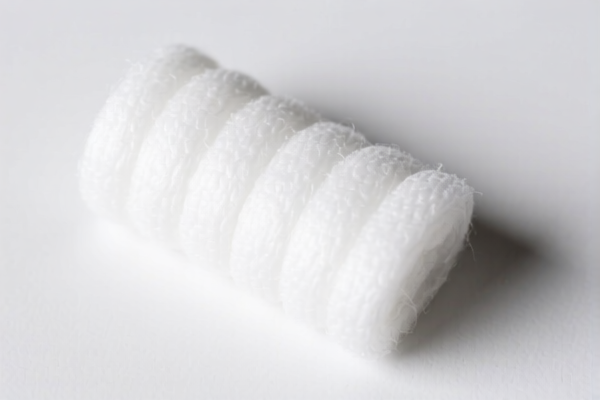
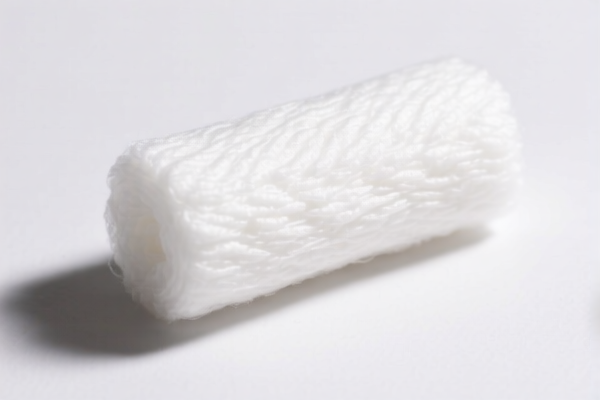
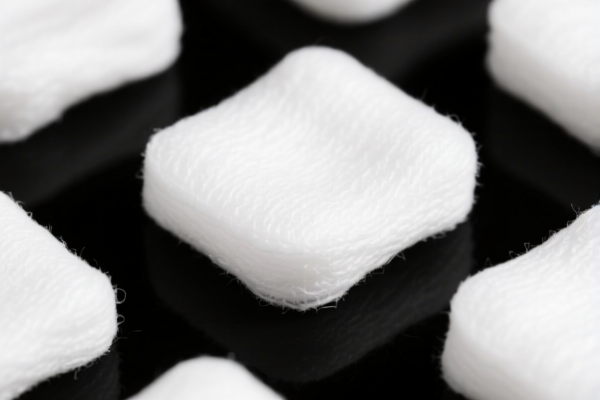
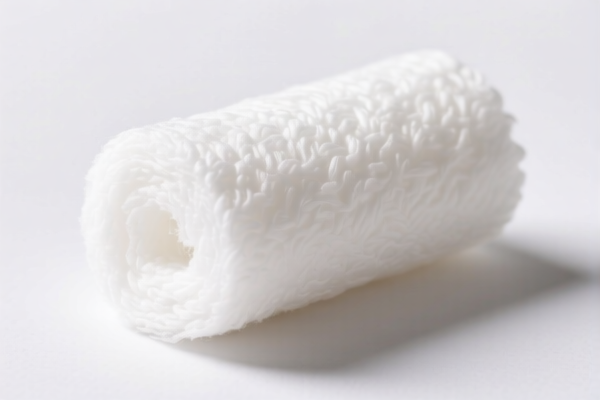
AI Analysis
🧵 Non-Woven Fabric Per Square Meter (Medical Grade)
🌐 HS Code Reference & Customs Clearance Guide | 2026 Latest Tariff Analysis | Professional Clearance Strategy
📌 I. Product Definition & Classification: Do You Really Understand "Medical Non-Woven Fabric"?
Non-woven fabric per square meter, specifically medical-grade, is a critical material used in surgical drapes, gowns, masks, and protective equipment. In international trade, its classification depends heavily on its material composition, end-use purpose, and physical structure.
Key Classification Logic: 1. Material Nature: Is it made of plastics/polymers? → Chapter 39 or 56. 2. End-Use: Is it specifically designed for medical/surgical use? → Potential Chapter 63. 3. Form: Is it raw fabric or a finished article? → Affects duty rates.
⚠️ Critical Distinction Point: - If classified as Textiles/Ready-made Articles (Chapter 63): Often lower base duty but subject to specific trade measures. - If classified as Plastics/Polymers (Chapter 39): May have higher base duties. - If classified as Non-Wovens (Chapter 56): Depends on fiber type (synthetic vs. natural) and weight.
📦 II. HS Code Classification Details (2026 Latest Tariff Authority Comparison)
Based on the provided data, here are the five potential HS codes for Medical Non-Woven Fabric, with detailed tax breakdowns.
| HS Code | Product Description | Applicable Scenario | Estimated Total Tax (China to US) |
|---|---|---|---|
6307.90.60.90 |
Medical-grade Non-Woven Fabric: Classified as textile articles, fitting the material attributes of surgical drapes. | Surgical drapes, gowns, medical textiles | 17.5% |
3926.90.99.50 |
Medical Grade Consumable: Functionally belongs to medical consumables, fitting the category of medical-related products. | Medical disposables, specific medical devices made of plastic/non-woven | 22.8% |
3926.90.99.89 |
Polymer Fiber Product: Material fits plastic/synthetic material category, classified as other unlisted articles. | General synthetic non-wovens, industrial-use medical wraps | 22.8% |
5603.11.00.70 |
Non-Woven Fabric (Specific Weight): Material meets non-woven requirements, square meter specification fits non-woven articles category. | Light-weight synthetic non-wovens (e.g., <150 g/m²) | 35.0% |
5603.92.00.70 |
Non-Woven Fabric (Ready-to-Use): Material fits non-woven attributes, form fits finished products ready for use, industrial/institutional use. | Medium/Heavy-weight synthetic non-wovens (e.g., 150-400 g/m²) | 35.0% |
🔍 Key Reminder: -
6307.90.60.90offers the lowest total tax rate (17.5%). This is ideal if the product can be clearly defined as a "textile article" for medical use (e.g., surgical drapes). -5603codes carry the highest tax rate (35.0%). These are standard non-woven fabric codes. Use only if the product is raw fabric not yet fashioned into a specific medical article. -3926codes (22.8%) are intermediate, often used when the fabric is considered a "part" of a medical device or a polymer-based consumable.
💰 III. 2026 Latest Tariff Rate Details (Including Add-On Duties & Policy Surcharges)
✅ Applicable Country: United States (US)
✅ Origin: China (CN)
✅ Effective Time: 2025/2026 (Current Trade War Policies)
🎯 1. 6307.90.60.90 —— Medical-Grade Non-Woven Fabric (Textile Category)
Best Option for Cost Efficiency
| Item | Content |
|---|---|
| Base Duty Rate | 0.0% |
| Section 301 Additional Duty | +7.5% |
| Section 122 Duty (Tariff) | +10% |
| Total Tax Rate | 17.5% |
| Tax Calculation | CIF Value × 17.5% |
| De Minimis Exemption | ❌ Not Applicable (Section 301 & 122 duties apply) |
| Legal Basis Path | USITC:6307.90.60.90 → Section 301: 7.5% → Section 122: 10% |
📌 Explanation: - Base 0%: Textile articles often have low base duties. - Section 301 (7.5%): Additional tariff on Chinese textiles/non-wovens. - Section 122 (10%): Additional tariff under IEEPA for specific strategic goods. - Total 17.5%: The most competitive rate among the options.
🎯 2. 3926.90.99.50 & 3926.90.99.89 —— Plastic/Consumable Non-Wovens
| Item | Content |
|---|---|
| Base Duty Rate | 5.3% |
| Section 301 Additional Duty | +7.5% |
| Section 122 Duty (Tariff) | +10% |
| Total Tax Rate | 22.8% |
| Tax Calculation | CIF Value × 22.8% |
| De Minimis Exemption | ❌ Not Applicable |
| Legal Basis Path | USITC:3926.90.99.xx → Section 301: 7.5% → Section 122: 10% |
📌 Note: - Base 5.3%: Higher than textile articles due to plastic/polymer classification. - Same Add-Ons: Subject to the same 7.5% (Sec 301) + 10% (Sec 122). - Total 22.8%: Significantly higher than
6307. Only use if the product cannot be classified as a textile article.
🎯 3. 5603.11.00.70 & 5603.92.00.70 —— Standard Non-Woven Fabrics
| Item | Content |
|---|---|
| Base Duty Rate | 0.0% |
| Section 301 Additional Duty | +25.0% |
| Section 122 Duty (Tariff) | +10% |
| Total Tax Rate | 35.0% |
| Tax Calculation | CIF Value × 35.0% |
| De Minimis Exemption | ❌ Not Applicable |
| Legal Basis Path | USITC:5603.xx.xx.xx → Section 301: 25.0% → Section 122: 10% |
📌 Warning: - Base 0%: No base duty for non-wovens. - High Sec 301 (25.0%): Non-wovens fall under a higher bracket of Section 301 tariffs. - Total 35.0%: The most expensive option. Avoid unless no other classification is feasible.
🛠️ IV. Customs Clearance Practical Advice (Real-World Pitfall Guide)
✅ 1. Documentation Checklist (Essential)
| Document | Required | Description |
|---|---|---|
| ✅ Product Specification Sheet | ✔️ | Must detail: Grammage (g/m²), Fiber Type (PP/PE), Sterilization Method, End-Use (Surgical/Medical). |
| ✅ Material Composition Certificate | ✔️ | Prove it is non-woven and specify polymer type. |
| ✅ FDA Registration/Letter | ✔️ | For medical-grade claims, provide FDA 510(k) or establishment registration if applicable. |
| ✅ Commercial Invoice | ✔️ | Clear description: "Medical Grade Non-Woven Fabric, for Surgical Drapes, Not a finished article." |
| ✅ Packing List | ✔️ | Show roll dimensions, weight, and quantity. |
✅ 2. Declaration Tips (Key Mantras)
🔥 "Classify as Textile if Surgical, Claim Low Duty, Avoid Raw Fabric Trap!"
| Situation | Correct Declaration | Wrong Practice |
|---|---|---|
| Surgical Drapes/Gowns | 6307.90.60.90 (Textile/Medical Article) |
Misdeclaring as raw fabric → 35% |
| Raw Non-Woven Rolls | 5603 series (Non-Woven Fabric) |
Misdeclaring as finished article → Risk of penalty |
| Polymer-Based Consumables | 3926 (Plastic Products) |
Misdeclaring as textile → Audit risk |
| Mixed Materials | Consult with customs broker | Assume 0% base duty |
📌 Strategy: - If the fabric is cut and sewn into gowns, drapes, or masks, it is more likely to be classified under 6307 (Textiles). - If the fabric is sold in rolls for further processing, it may fall under 5603 (Non-Wovens) or 3926 (Plastics). - Argument for 6307: Emphasize the specific medical use (surgical) and textile-like properties (woven/non-woven structure used as fabric).
✅ 3. Special Cases
| Situation | Handling Advice |
|---|---|
| Medical-Grade Sterile Fabric | Must provide sterilization proof (EO, Gamma) to justify "Medical" classification. |
| OEM Custom Fabric | Provide customer specs to prove it is not a generic industrial product. |
| High-Performance Non-Woven | If it has special coatings (e.g., fluid-resistant), it may still qualify for 6307 if it meets textile standards. |
| Small Samples (De Minimis) | ❌ Not Eligible: Section 301 and 122 duties apply even for small shipments from China. |
🌍 V. Global Market Customs Comparison (2026 Latest)
| Country/Region | Recommended HS Code | Duty Rate | Certification Requirement | Notes |
|---|---|---|---|---|
| 🇺🇸 USA | 6307.90.60.90 |
17.5% | FDA, OSHA (if applicable) | Best rate for medical textiles |
| 🇨🇳 China | 6307.90.60.90 |
5-10% | NMPA Registration | Export from China has lower base duty |
| 🇪🇺 EU | 6307.90.99 |
0-2% | CE MDR Class I/II | No Section 301/122 duties |
| 🇬🇧 UK | 6307.90.99 |
0% | UKCA | Post-Brexit rules |
| 🇦🇺 Australia | 6307.90.99 |
5% | TGA Registration | No additional tariffs |
📌 Conclusion: - USA has the most complex tariff structure for Chinese medical textiles due to Section 301 & 122. - EU/UK offer significantly lower tariffs but require strict CE/UKCA MDR compliance. - Optimal Strategy for US: Argue for 6307.90.60.90 to minimize the 17.5% total duty. Avoid 5603 (35%) at all costs.
📌 VI. Common Errors & Pitfall Guide (Lessons Learned)
❌ Error 1: Declaring medical non-wovens as 5603 (Raw Fabric)
👉 Consequence: 35% tax. Loss of $17.5% per $100 compared to 6307.
❌ Error 2: Misdeclaring as 3926 (Plastic) without justification
👉 Consequence: 22.8% tax. Higher than necessary if textile classification is valid.
❌ Error 3: Ignoring "Medical" claim
👉 Consequence: May be classified as general non-woven (5603.99), still 35%.
❌ Error 4: Assuming De Minimis applies
👉 Consequence: Shipments under $800 still subject to 17.5-35% duties if from China.
✅ Correct Action:
"Medical Grade Non-Woven Fabric, Polypropylene, Sterilized, for Surgical Drapes, HS 6307.90.60.90"
🎯 VII. Conclusion: Professional Declaration, Save Costs, Ensure Clearance!
🎯 Remember the Mantra:
🔹 "Textile > Plastic > Raw Non-Woven" for tax efficiency.
🔹 6307 is King (17.5%), 3926 is Prince (22.8%), 5603 is Peasant (35%).
🔹 "Medical Use" is your ticket to 6307!
📌 Tip:
If your non-woven fabric is originating from Vietnam, Thailand, or Malaysia, you may apply for IEEPA Exemption or FTZ benefits, reducing duties to 0-5%.
Recommend applying for an Advance Ruling (CBP Ruling) before shipment to secure the 6307.90.60.90 classification.
📣 Immediate Action:
📞 Contact a professional customs broker + Provide Product Specs + Request HS Code Advance Ruling
🚀 Ensure your medical non-wovens clear US customs smoothly, minimize costs, and maximize profit!
✨ Professional clearance starts with precise classification!
💼 Every cent of duty saved is profit earned!
Customer Reviews
About HS Code Classification
The Harmonized System (HS) is an internationally standardized nomenclature developed by the World Customs Organization (WCO) to classify traded products. Over 200 countries use the HS system as the basis for customs tariffs, trade statistics, and import/export regulations.
Each HS code follows a hierarchical structure:
- Chapter (2 digits) — Broad category of goods (e.g., Chapter 84: Machinery and Mechanical Appliances)
- Heading (4 digits) — More specific grouping within the chapter
- Subheading (6 digits) — Internationally standardized breakdown, used by all WCO member countries
- National subdivisions (8-10 digits) — Country-specific extensions for further classification, such as US HTSUS 10-digit codes
Correct HS code classification is essential for smooth customs clearance, accurate duty payment, and compliance with trade regulations. Misclassification can lead to customs delays, overpayment of duties, or penalties.
When importing from CN to US, the applicable tariff rates may include:
- Most-Favored-Nation (MFN) rate — The standard duty rate applied to WTO members
- General rate — Applied to countries without trade agreements
- Trade remedy duties — Additional tariffs such as Section 301 (anti-dumping), Section 232 (national security), or countervailing duties
The information provided on this page is for reference purposes only. For official classification, please consult with your local customs authority or a licensed customs broker.