unprocessed pvc decking profiles
CN → US| HS Code | Tariff Rate | Origin | Destination | Doc |
|---|---|---|---|---|
| 3925900000 | 40.3% | CN | US | Official Doc |
| 3925200020 | 22.8% | CN | US | Official Doc |
Product Images
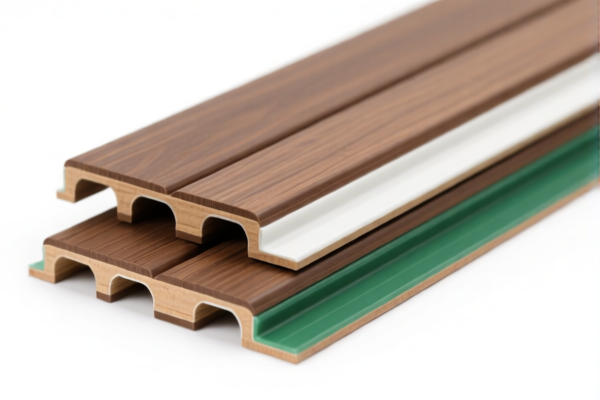
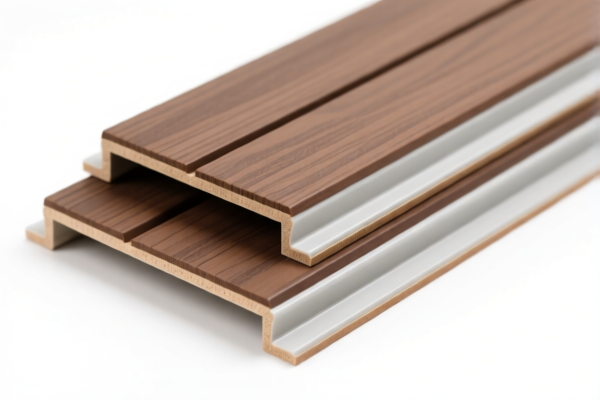
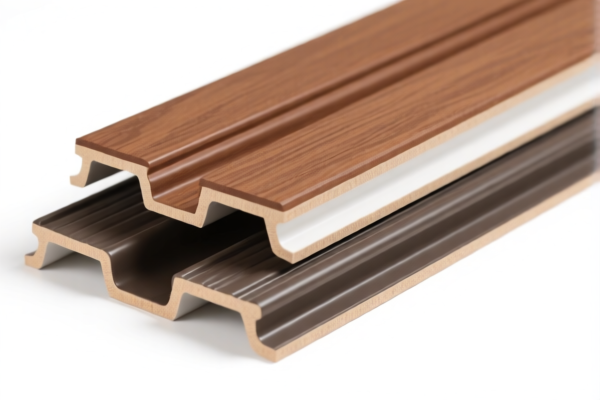
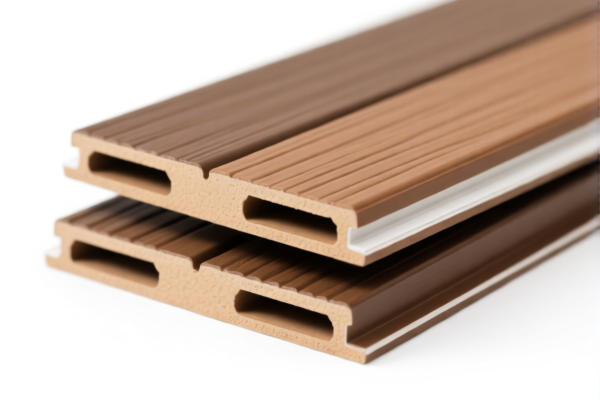
AI Analysis
🏗️ PVC Decking Profiles (Unprocessed Extrusions)
🌐 HS Code Reference & Customs Clearance Guide | 2026 Latest Tariff Analysis | Professional Entry Strategy
📌 I. Product Definition & Classification: Do You Really Understand "Unprocessed PVC Profiles"?
Unprocessed PVC Decking Profiles refer to raw plastic extrusions made primarily from Polyvinyl Chloride (PVC), designed to be cut, assembled, or finished into deck structures. In international trade, these are classified as "Builders' ware of plastics" because they are intended for structural or semi-structural use in construction.
The classification hinges on two key factors: 1. Material Composition: Primarily PVC (Chapters 39). 2. State of Processing: "Unprocessed" implies they are extruded shapes (profiles) that have not yet been assembled into a final door/window unit or complete building component. They are essentially raw materials for carpentry/construction.
⚠️ Key Distinction:
- If the profile is a generic plastic shape not specifically designed for doors/windows → It falls under "Other" builders' ware.
- If the profile is specifically designed as a frame for doors, windows, or thresholds → It falls under the specific sub-category for "Doors, windows, frames, and thresholds."
📦 II. HS Code Classification Details (2026 Latest Tariff Authority Cross-Reference)
Based on the provided data, there are two primary HS codes for Unprocessed PVC Decking Profiles, depending on their specific design intent and customs interpretation:
| HS Code | Product Description | Applicable Scenario | Key Differentiator |
|---|---|---|---|
3925.90.00.00 |
Builders' ware of plastics, n.e.s.: Other | Generic decking boards, railings, non-specific structural shapes, composite decking profiles not explicitly defined as window/door frames. | Generic/Other: Not specifically identified as a door/window frame component. |
3925.20.00.20 |
Builders' ware of plastics: Doors, windows and their frames and thresholds for doors Windows and window frames | Profiles explicitly manufactured as frames, sills, thresholds, or integral parts of door/window assemblies. | Specific: Intended for use as a door/window frame or threshold. |
🔍 Critical Reminder:
- "Unprocessed" means the item is in the form of extruded profiles (strips, beams, planks).
- If the decking profile is just a plank/board for walking on, it is generally considered "Other" (3925.90.00.00) unless it is part of a framed system.
- If the product is marketed as "Window Frame Profile" or "Door Threshold", it must be classified under3925.20.00.20.
- Misclassification can lead to significant tariff differences (see below).
💰 III. 2026 Latest Tariff Rate Details (Including Additional Taxes)
✅ Applicable Country: United States (US)
✅ Origin: China (CN)
✅ Effective Time: Current Rates (As per Data)
🎯 1. 3925.90.00.00 —— Builders' ware of plastics, n.e.s.: Other
| Item | Content |
|---|---|
| Base Tariff | 0.0% |
| Additional Tariff | 0.0% |
| Total Tax Rate | 0.0% |
| Tax Calculation | CIF Value × 0% = $0 |
| De Minimis Exemption | ✅ Eligible (Subject to standard $800 de minimis rules if applicable) |
| Legal Basis | Chapter 39, Heading 3925, Subheading 90.00 |
📌 Explanation:
- This is the most favorable rate for generic PVC decking profiles.
- "n.e.s." means "not elsewhere specified." Generic decking boards that are not explicitly door/window frames fall here.
- No Section 301 tariffs or IEEPA surcharges apply to this specific subheading in the provided data.
🎯 2. 3925.20.00.20 —— Doors, windows and their frames and thresholds for doors Windows and window frames
| Item | Content |
|---|---|
| Base Tariff | 5.3% |
| Additional Tariff | 7.5% |
| Total Tax Rate | 12.8% |
| Tax Calculation | CIF Value × 12.8% |
| De Minimis Exemption | ❌ Not Eligible (Standard high-value cargo rules apply) |
| Legal Basis | Chapter 39, Heading 3925, Subheading 20.00 |
📌 Explanation:
- If customs authorities determine your "decking profile" is actually a window frame or door threshold, this higher rate applies.
- The 7.5% additional tariff may reflect specific trade measures (e.g., anti-dumping, countervailing, or general trade war measures) targeting plastic builders' ware in this specific category.
- 12.8% is significantly higher than the 0% rate for generic profiles.
🛠️ IV. Customs Clearance Practical Advice (Real-World Pitfall Guide)
✅ 1. Preparation Checklist (Must-Have Documents)
| Document | Mandatory? | Description |
|---|---|---|
| ✅ Product Specification Sheet | ✔️ | Must clearly state: "PVC Extruded Profile for Decking," material composition, dimensions, and NOT "Window Frame" unless it is. |
| ✅ Technical Drawings | ✔️ | Show cross-section. If it looks like a generic plank, it supports 3925.90.00.00. If it has grooves for glass/door hinges, it risks 3925.20.00.20. |
| ✅ Commercial Invoice | ✔️ | Use precise language: "PVC Decking Planks/Profiles" or "Extruded Plastic Builders' Ware." Avoid vague terms like "Plastic Parts." |
| ✅ Certificate of Origin | ✔️ | Standard CO for US origin verification. |
| ✅ Packaging List | ✔️ | Detail quantities and weights. |
✅ 2. Declaration Strategy (Key Mnemonics)
🔥 "Generic Decking is Zero, Frame or Threshold is High! Declare as Planks, Not Parts!"
| Scenario | Correct HS Code | Risk if Misclassified |
|---|---|---|
| Generic PVC Decking Boards (for walking, railing posts) | 3925.90.00.00 |
Low Risk: 0% Tax. |
| Profiles intended for Window Frames | 3925.20.00.20 |
High Risk: 12.8% Tax. |
| Thresholds/Sills for Doors | 3925.20.00.20 |
High Risk: 12.8% Tax. |
| Mixed Shipment (Some frames, some planks) | Split Declaration | Critical: Must separate items. Do not lump together. |
✅ 3. Special Case Handling
| Situation | Handling Advice |
|---|---|
| PVC Decking with Wood-Fill | Still classified under Chapter 39 (Plastics) as long as PVC is the principal material. Provide material % breakdown. |
| "Kit" Sets (Profile + Fasteners) | Declare profiles separately. Fasteners may fall under different HS codes (e.g., Chapter 73 or 76). Do not lump. |
| Custom-Extruded Shapes | If the shape is unique and not standard, provide a sample and diagram. Argue for 3925.90.00.00 as "Other" unless it fits the definition of a window/door frame. |
| Pre-cut vs. Extruded | "Unprocessed" means extruded. If pre-cut to length, it’s still the same HS code, but description should reflect "Cut PVC Decking Profiles." |
🌍 V. Global Market Comparison (2026 Latest)
| Country/Region | Recommended HS Code | Tariff | Note |
|---|---|---|---|
| 🇺🇸 United States | 3925.90.00.00 |
0.0% | Best for generic decking. Avoid 3925.20.00.20 if possible due to 12.8%. |
| 🇨🇳 China (Import) | 3925.90.00.00 |
~0% | Varies by origin. |
| 🇪🇺 European Union | 3925.90.00 |
4.5% | PVC builders' ware generally has moderate duties in EU. |
| 🇬🇧 United Kingdom | 3925.90.00 |
4.5% | Post-Brexit tariffs align closely with EU for plastics. |
📌 Conclusion:
- The US market offers a 0% tariff advantage for generic PVC decking profiles (3925.90.00.00).
- Risk Alert: If your product is mistakenly classified as a "window frame," you will pay 12.8%. This is a 12.8 percentage point difference.
- Strategy: Clearly market and label products as "Decking Planks/Profiles" and avoid terms like "Frame," "Sash," or "Threshold" unless they are literally those items.
📌 VI. Common Errors & Pitfalls (Lessons Learned)
❌ Error 1: Labeling generic decking boards as "PVC Window Components"
👉 Consequence: Customs may classify under 3925.20.00.20 → 12.8% tax instead of 0%.
❌ Error 2: Using vague terms like "Plastic Building Materials" on the invoice
👉 Consequence: Customs officer has discretion → May assign the highest possible rate (12.8%) or require manual review → Delays.
❌ Error 3: Ignoring the "Threshold" definition
👉 Consequence: If your profile is used as a door threshold, it falls under 3925.20.00.20. Do not declare thresholds as generic decking.
✅ Correct Practice:
"PVC Extruded Decking Profile, Non-Structural, for Outdoor Flooring, Model XYZ, 100% Virgin PVC"
HS Code:3925.90.00.00
🎯 VII. Conclusion: Precise Classification Saves Money!
🎯 Remember the Golden Rule:
🔹 "Decking Planks = 0% Tax (3925.90.00.00)"
🔹 "Door/Window Frames = 12.8% Tax (3925.20.00.20)"
🔹 "When in doubt, provide technical drawings to prove it's NOT a window frame!"
📌 Pro Tip:
If you are importing large volumes, consider applying for a US Customs Border Protection (CBP) Binding Ruling in advance. This legally binds the customs service to your chosen HS code, protecting you from unexpected 12.8% assessments later.
📣 Immediate Action:
📞 Contact your freight forwarder with product photos and technical specs.
📄 Ensure your Commercial Invoice uses the term "Decking Profiles" and NOT "Window Frames" unless applicable.
🚀 Optimize your supply chain to minimize customs costs by leveraging the 0% tariff rate for generic builders' ware!
✨ Professional customs clearance starts with accurate classification!
💼 Every percentage point matters in international trade!
Customer Reviews
About HS Code Classification
The Harmonized System (HS) is an internationally standardized nomenclature developed by the World Customs Organization (WCO) to classify traded products. Over 200 countries use the HS system as the basis for customs tariffs, trade statistics, and import/export regulations.
Each HS code follows a hierarchical structure:
- Chapter (2 digits) — Broad category of goods (e.g., Chapter 84: Machinery and Mechanical Appliances)
- Heading (4 digits) — More specific grouping within the chapter
- Subheading (6 digits) — Internationally standardized breakdown, used by all WCO member countries
- National subdivisions (8-10 digits) — Country-specific extensions for further classification, such as US HTSUS 10-digit codes
Correct HS code classification is essential for smooth customs clearance, accurate duty payment, and compliance with trade regulations. Misclassification can lead to customs delays, overpayment of duties, or penalties.
When importing from CN to US, the applicable tariff rates may include:
- Most-Favored-Nation (MFN) rate — The standard duty rate applied to WTO members
- General rate — Applied to countries without trade agreements
- Trade remedy duties — Additional tariffs such as Section 301 (anti-dumping), Section 232 (national security), or countervailing duties
The information provided on this page is for reference purposes only. For official classification, please consult with your local customs authority or a licensed customs broker.