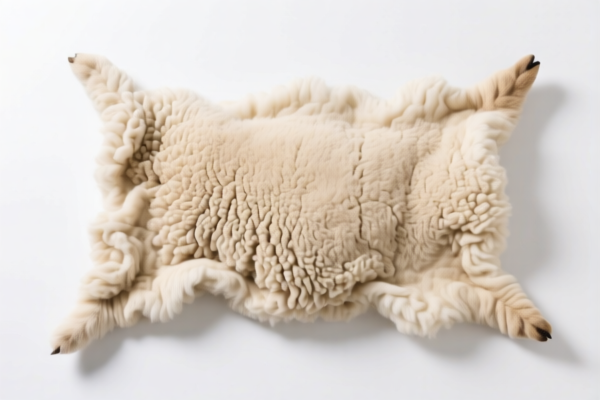
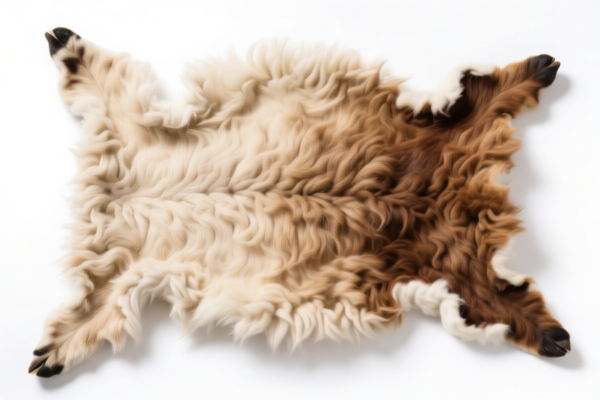
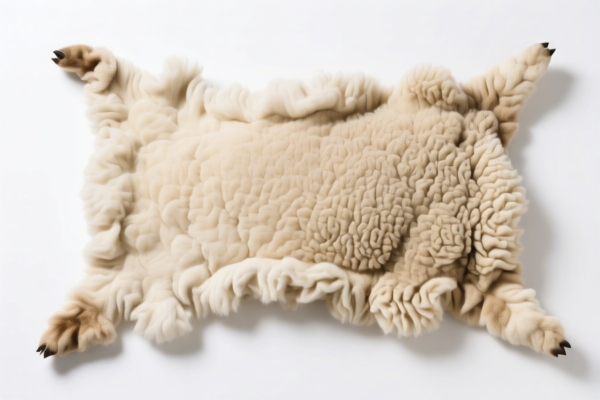
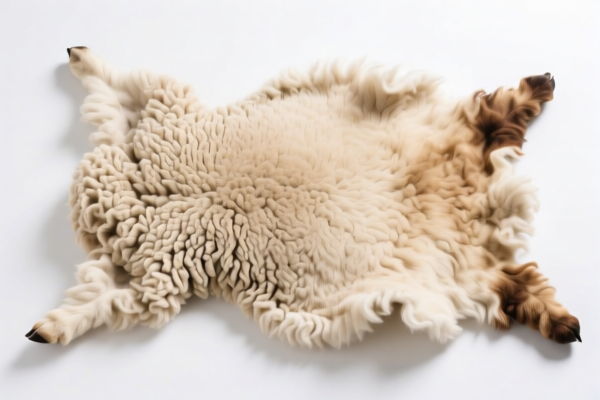
unprocessed sheepskin dry
CN → USProduct Images
AI Analysis
🐑 Unprocessed Sheepskin, Dry (Skins of Sheep or Lambs, Not Tanned)
🌐 HS Code Reference & Clearance Guide | 2026 Latest Tariff Analysis | Professional Clearance Strategy
📌 I. Product Definition & Classification: What exactly is "Unprocessed Sheepskin"?
Unprocessed sheepskin (dry) refers to the skin of a sheep or lamb that has been removed from the animal and preserved solely by drying (salting or air-drying), without any tanning, currying, or further processing. In international trade, these are raw agricultural by-products used primarily for: 1. Industrial Tanning: Imported to be tanned into leather for garments, shoes, and upholstery. 2. Ushas/Clothing: Certain types are processed into sheepskin coats or blankets. 3. Medical/Scientific Use: As substrates for research or surgical dressings.
⚠️ Key Distinction:
- Raw/Dried vs. Tanned: If the skin has been chemically treated to prevent decay and alter texture (tanned), it falls under Chapter 41 (Leather). If it is merely dried/salted, it remains in Chapter 41, Heading 41.01.
- Whole vs. Cut: "Whole skins" are often valued higher and may have different duty implications than "pieces" or "shavings."
📦 II. HS Code Classification Details (2026 Latest Tariff Authority对照)
| HS Code | Product Description | Application Scenario | Key Characteristics |
|---|---|---|---|
4101.21.00.00 |
Sheep or Lamb Skins, Weight ≤ 8 kg, Unsplit, with Hair On | Raw materials for high-quality leather garments | ✅ Hair intact, very light weight |
4101.22.00.00 |
Sheep or Lamb Skins, Weight > 8 kg, Unsplit, with Hair On | Industrial leather production | ✅ Hair intact, heavier, standard leather grade |
4101.30.00.00 |
Sheep or Lamb Skins, Unsplit, Without Hair On (Skinned) | For suede or specific tanning processes | ✅ Hair removed (shearing/scouring) |
4101.40.00.00 |
Sheep or Lamb Skins, Split, With or Without Hair On | Split leather production (lower grade) | ✅ Split into layers |
4101.50.00.00 |
Sheep or Lamb Skins, Already Tanned or Crust | Finished leather goods | ❌ Not applicable to "Unprocessed/Dry" (This is tanned) |
4101.90.00.00 |
Other Sheep or Lamb Skins | Miscellaneous raw skins | ✅ Fallback category |
🔍 Focus Reminder:
- Since the input is "Unprocessed" and "Dry", the correct chapter is 41.01.
- Do not confuse with Chapter 51 (Wool/Yarn) or Chapter 43 (Fur Skins). Sheepskin for leather is Chapter 41.
- The critical factor for classification is Weight and Hair Status.
💰 III. 2026 Latest Tariff Rate Details (Including Additional Taxes & Policies)
✅ Applicable Country: United States (US)
✅ Origin: China (CN)
✅ Effective Time: 2025/2026 Tariff Year
🎯 1. 4101.22.00.00 —— Sheep/Lamb Skins, >8kg, Hair On (Common Import)
| Item | Content |
|---|---|
| Base MFN Rate | 4.4% (ad valorem) |
| Section 301 Additional Duty | +25% (From USITC Footnote 9903.88.01) |
| IEEPA Additional Duty | +10% (For China/HK products, from Nov 2025) |
| Total Effective Rate | ~39.4% (Calculation: Base + 301 + IEEPA layered) |
| Tax Calculation | CIF Value × Total Rate |
| De Minimis Eligibility | ❌ No (deny_de_minimis for animal products often apply) |
| Legal Basis Path | USITC:4101.22.00.00 → FOOTNOTE:9903.88.01 → IEEPA:9903.01.24 |
📌 Explanation:
- Raw hides are considered Section 301 goods due to their industrial value and Chinese dominance in supply.
- The 39.4% rate is significant. Importers must calculate landed cost carefully.
- Phytosanitary/Animal Health Certificates are mandatory to prevent disease (e.g., Foot-and-Mouth Disease), regardless of dryness.
🎯 2. 4101.21.00.00 —— Sheep/Lamb Skins, ≤8kg, Hair On
| Item | Content |
|---|---|
| Base MFN Rate | 4.4% |
| Section 301 Additional Duty | +25% |
| IEEPA Additional Duty | +10% |
| Total Effective Rate | ~39.4% |
| De Minimis Eligibility | ❌ No |
📌 Note:
- Same tariff treatment as heavier skins under Section 301.
- Smaller skins are often used for luxury leather goods but face the same geopolitical tariff risks.
🛠️ IV. Customs Clearance Practical Advice (Real-World Pitfall Guide)
✅ 1. Documentation Checklist (Non-Negotiable)
| Document | Mandatory? | Explanation |
|---|---|---|
| ✅ Phytosanitary Certificate | ✔️ Yes | Issued by origin country's agricultural authority. Proves no animal diseases. |
| ✅ Commercial Invoice | ✔️ Yes | Must clearly state "Sheepskin, Unprocessed, Dry, With Hair" and HS Code. |
| ✅ Packing List | ✔️ Yes | Must specify weight (Gross/Net) and number of skins. |
| ✅ Bill of Lading/Air Waybill | ✔️ Yes | Standard transport doc. |
| ✅ Supplier Declaration | ✔️ Yes | Confirming skins are dry/salted and not tanned. |
| ✅ FDA Prior Notice | ✔️ Sometimes | If intended for human contact (e.g., medical), FDA may require notice. |
✅ 2. Declaration Tips (Key Mnemonic)
🔥 "Dry & Salty, Keep Hair In, Certs are Key, Or It Gets Denied!"
| Scenario | Correct Declaration | Wrong Practice |
|---|---|---|
| Skulls attached? | Remove skulls/hooves (often prohibited) | Ship with skulls → Quarantine/Destroy |
| Wet vs. Dry | Declare "Dry/Salted" | Declare "Fresh" → Perishable, High Risk |
| Hair Status | Declare "With Hair" or "Without Hair" accurately | Vague description "Sheep Skin" → Audits/Delays |
| Origin | Explicitly state "Made in China" | Hidden origin → Smuggling/301 Evasion Penalty |
✅ 3. Special Cases Handling
| Scenario | Handling Advice |
|---|---|
| Mixed Lots (Sheep + Goat) | Must separate or declare separately. Different HS codes (41.02 for Goat). |
| Damaged Skins | Declare as "Rejects" or "Seconds" to claim duty drawback if re-exported. |
| Small Samples (<5kg) | May qualify for different de minimis rules, but animal products are often exempt from de minimis entirely. Check CBP ruling. |
| Transshipment (e.g., via Vietnam) | High Risk. US Customs aggressively checks for Chinese origin transshipment. Require full chain-of-custody docs. |
🌍 V. Global Market Clearance Comparison (2026 Latest)
| Country/Region | Recommended HS Code | Duty Rate (CN Origin) | Certification Required | Remarks |
|---|---|---|---|---|
| 🇺🇸 USA | 4101.22.00.00 |
~39.4% (301+IEEPA) | Phytosanitary Cert | High barrier due to trade war & animal health. |
| 🇨🇳 China | 4101.22.00.00 |
8% | None | Major importer of raw hides. |
| 🇪🇺 EU | 4101.22.00 |
4.4% | EU Phytosanitary Cert | Strict hygiene standards. |
| 🇮🇳 India | 4101.22.00 |
7.5% | Animal Health Cert | Major tanning hub, competitive market. |
| 🇹🇷 Turkey | 4101.22.00 |
0-4% | Phytosanitary Cert | Key leather manufacturing base. |
📌 Conclusion:
- USA is the most expensive market for Chinese raw sheepskins due to Section 301 and IEEPA tariffs.
- Animal Health Compliance is global but especially strict in the US/EU.
- China, India, Turkey, and Turkey are the primary destinations for unprocessed hides.
📌 VI. Common Mistakes & Pitfall Guide (Lessons from Blood & Tears)
❌ Mistake 1: Shipping fresh/wet sheepskins without refrigeration/rapid processing
👉 Consequence: Rotting, odor, rejection at customs, destruction order.
Fix: Ensure skins are salted and dried properly before shipment.
❌ Mistake 2: Omitting the Phytosanitary Certificate
👉 Consequence: Goods held at port for weeks, heavy fines, or destroyed.
Fix: Obtain cert from official agricultural body in origin country.
❌ Mistake 3: Misclassifying as "Leather" (41.04)
👉 Consequence: Incorrect duty rate (0% vs 39.4%), audit penalty.
Fix: Clearly state "Unprocessed/Dry" in commercial invoice.
❌ Mistake 4: Including bones/skulls
👉 Consequence: Banned items. Many countries prohibit animal parts without specific veterinary import permits.
Fix: Ship skins only, cleaned of meat and bones.
✅ Correct Practice:
"Raw Sheepskins, Dry, Salted, With Hair, HS 4101.22.00, Origin China, Phytosanitary Cert No. XYZ123"
🎯 VII. Conclusion: Professional Declaration, Risk-Free Trade!
🎯 Remember the Mantra:
🔹 "Dry & Salted, Hair Intact, Certs Are King, 301 Rates Sting!"
🔹 "HS 4101 for Raw, 4104 for Tanned, Don't Mix Them or Pay the Price!"
📌 Pro Tip:
If your sheepskins are dyed or pre-tanned in China but labeled "Unprocessed" to evade tariffs, this is fraud. US CBP uses X-ray and chemical testing.
Recommend Advance Ruling if unsure about the exact state of processing.
📣 Immediate Action:
📞 Engage a licensed customs broker
📄 Prepare Phytosanitary Certificate immediately
🚀 Ensure skins are clean, dry, and salted to avoid spoilage and rejection.
✨ Professional clearance starts with accurate classification!
💼 Every dollar of duty saved is pure profit!
Customer Reviews
About HS Code Classification
The Harmonized System (HS) is an internationally standardized nomenclature developed by the World Customs Organization (WCO) to classify traded products. Over 200 countries use the HS system as the basis for customs tariffs, trade statistics, and import/export regulations.
Each HS code follows a hierarchical structure:
- Chapter (2 digits) — Broad category of goods (e.g., Chapter 84: Machinery and Mechanical Appliances)
- Heading (4 digits) — More specific grouping within the chapter
- Subheading (6 digits) — Internationally standardized breakdown, used by all WCO member countries
- National subdivisions (8-10 digits) — Country-specific extensions for further classification, such as US HTSUS 10-digit codes
Correct HS code classification is essential for smooth customs clearance, accurate duty payment, and compliance with trade regulations. Misclassification can lead to customs delays, overpayment of duties, or penalties.
When importing from CN to US, the applicable tariff rates may include:
- Most-Favored-Nation (MFN) rate — The standard duty rate applied to WTO members
- General rate — Applied to countries without trade agreements
- Trade remedy duties — Additional tariffs such as Section 301 (anti-dumping), Section 232 (national security), or countervailing duties
The information provided on this page is for reference purposes only. For official classification, please consult with your local customs authority or a licensed customs broker.