unprocessed wild mink skin whole
CN → US| HS Code | Tariff Rate | Origin | Destination | Doc |
|---|---|---|---|---|
| 4103901190 | 17.5% | CN | US | Official Doc |
| 4103902000 | 20.8% | CN | US | Official Doc |
| 4302110010 | 37.1% | CN | US | Official Doc |
| 4302110020 | 37.1% | CN | US | Official Doc |
Product Images
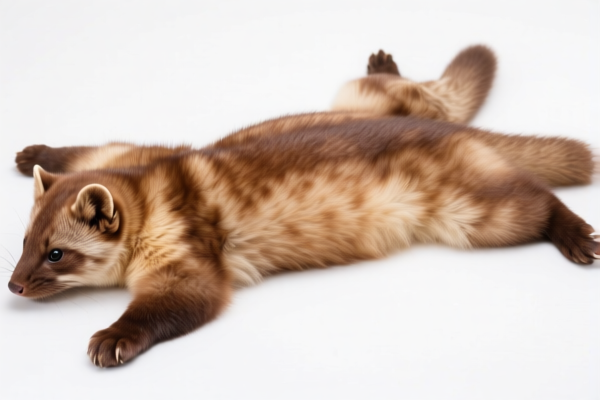
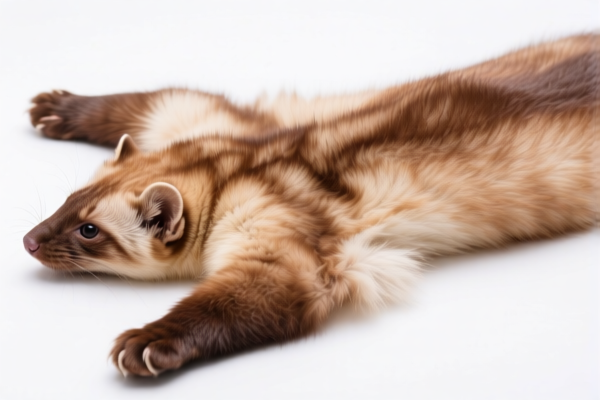
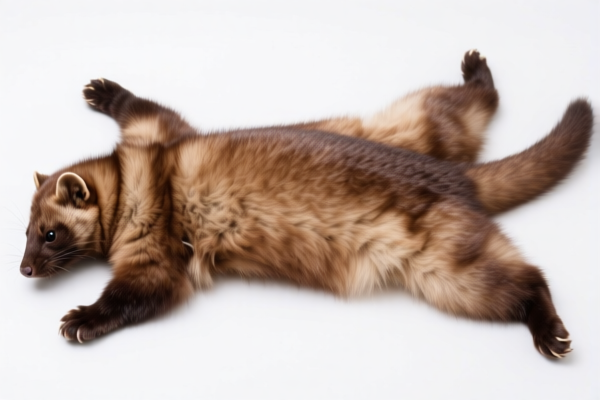
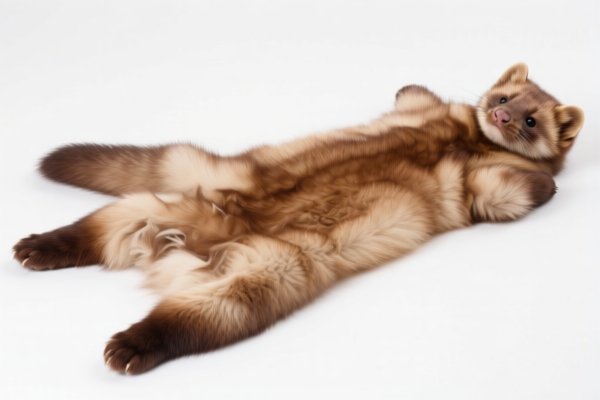
AI Analysis
🦫 Unprocessed Wild Mink Skin (Whole) | 野生水貂原皮(整张)
🌐 HS Code Reference & Customs Clearance Guide | 2024/2025 Latest Tariff Analysis | Professional Clearance Strategy
📌 I. Product Definition & Classification: Do You Know "Unprocessed Wild Mink Skin"?
"Unprocessed Wild Mink Skin (Whole)" refers to the raw hides of wild minks that have not yet undergone pre-tanning or further processing. In international trade, these skins are categorized based on their state of conservation, whether the head is attached, and whether they are considered "raw hides" or "tanned skins" after minor stabilization.
Key Classification Dilemma: * Raw Hides (Chapter 41): Skins that are merely salted, dried, or preserved but not tanned. * Tanned/Prepared Skins (Chapter 43): Skins that have undergone curing or pre-tanning processes, often including those with heads intact for fur grading.
⚠️ Critical Distinction:
- If the skin is minimally processed (e.g., salted/dried) and classified under general raw hides → Chapter 41 (HS 4103)
- If the skin is prepared for fur (even if not fully tanned) and includes the head → Chapter 43 (HS 4302)
📦 II. HS Code Classification Details (Authority Reference for US Import)
| HS Code | Product Description | Application Scenario | Tax Rate Structure |
|---|---|---|---|
4103.90.11.90 |
Wild Mink Raw Hide (Whole) | Classified as other untreated raw hides, non-deer/goat. Minimal processing. | 17.5% (Base: 0% + 7.5% + 10% Sec 301) |
4103.90.20.00 |
Wild Mink Raw Hide (Whole) | Classified as "raw hides" under general definition. | 20.8% (Base: 3.3% + 7.5% + 10% Sec 301) |
4302.11.00.10 |
Whole Mink Skin (With Head) | Fits definition of whole skin (including head) & classified as mink fur. | 37.1% (Base: 2.1% + 25% + 10% Sec 301) |
4302.11.00.20 |
Whole Mink Skin (With Head) | Tanned/prepared mink fur, includes head, unassembled. | 37.1% (Base: 2.1% + 25% + 10% Sec 301) |
🔍 Key Insight:
- The presence of the head and the level of preparation significantly shift the classification from Chapter 41 to Chapter 43. - Chapter 43 codes (4302) carry much higher additional tariffs (25%) compared to Chapter 41 codes (4103).
💰 III. 2024/2025 Tariff Rate Breakdown (Including Additional Duties)
✅ Applicable Country: United States (US)
✅ Origin: China (CN)
✅ Effective Date: Current rates apply (subject to Section 301 & IEEPA adjustments)
🎯 1. 4103.90.11.90 —— Unprocessed Wild Mink Skin (General Raw Hide)
| Item | Details |
|---|---|
| Base Tariff | 0% (ad valorem) |
| Section 301 Additional Tariff | +7.5% |
| IEEPA Additional Tariff | +10% |
| Total Effective Rate | 17.5% |
| Tax Calculation | CIF Value × 17.5% |
| De Minimis Exemption | ❌ Not Eligible (Section 321 does not apply to high-tariff agricultural/fur products) |
| Legal Basis Path | HTSUS:4103.90.11.90 → Section 301 Footnote → IEEPA:9903.01.24 |
📌 Explanation:
- This code assumes the skin is treated as a raw material (leather precursor). - The 7.5% is the specific Section 301 rate for certain hides/skins. - The 10% is the baseline IEEPA tariff on Chinese goods.
🎯 2. 4103.90.20.00 —— Unprocessed Wild Mink Skin (Raw Hide Category)
| Item | Details |
|---|---|
| Base Tariff | 3.3% |
| Section 301 Additional Tariff | +7.5% |
| IEEPA Additional Tariff | +10% |
| Total Effective Rate | 20.8% |
| Tax Calculation | CIF Value × 20.8% |
| De Minimis Exemption | ❌ Not Eligible |
| Legal Basis Path | HTSUS:4103.90.20.00 → Section 301 → IEEPA |
📌 Note:
- Slightly higher than4103.90.11.90due to the 3.3% base duty. - Use this if customs classifies the skin strictly under "other raw hides" without the specific "untreated" exemption.
🎯 3. 4302.11.00.10 & 4302.11.00.20 —— Whole Mink Skin (With Head)
| Item | Details |
|---|---|
| Base Tariff | 2.1% |
| Section 301 Additional Tariff | +25% |
| IEEPA Additional Tariff | +10% |
| Total Effective Rate | 37.1% |
| Tax Calculation | CIF Value × 37.1% |
| De Minimis Exemption | ❌ Not Eligible |
| Legal Basis Path | HTSUS:4302.11.00.10/20 → Section 301 (25%) → IEEPA |
📌 Critical Warning:
- The 25% Section 301 tariff is applied to prepared furskins (Chapter 43), which is significantly higher than the 7.5% for raw hides. - If the skin has the head attached and is considered "prepared for fur use," it falls here, doubling the additional duty compared to raw hides. - Both...00.10and...00.20have the same total rate; the distinction is subtle (e.g., exact preparation stage).
🛠️ IV. Customs Clearance Practical Advice (Avoid Pitfalls)
✅ 1. Document Checklist (Mandatory)
| Document | Required | Notes |
|---|---|---|
| ✅ Commercial Invoice | ✔️ | Must clearly state "Unprocessed Wild Mink Skin" or "Whole Mink Skin with Head." |
| ✅ Packing List | ✔️ | Specify number of skins, size, and whether heads are included. |
| ✅ Origin Certificate | ✔️ | Proof of Chinese origin (triggers Section 301). |
| ✅ Condition Report | ✔️ | Detail if skins are salted, dried, or lightly cured. |
| ✅ Import Permit (USFWS) | ✔️ | Crucial: Wild mink skins are regulated under CITES and US Fish & Wildlife Service. You need a permit to import wildlife products. |
| ✅ Photos | ✔️ | Show whole skins, heads, and texture to prove they are not fully tanned leather. |
✅ 2. Classification Strategy (Key Tips)
🔥 “Raw vs. Prepared: Heads & Processing Matter!”
| Scenario | Correct HS Code | Risk if Misclassified |
|---|---|---|
| Salted/Dried, No Head | 4103.90.11.90 (17.5%) |
Classifying as 4302 → Pay 37.1% (Overpayment) |
| Salted/Dried, With Head | Borderline | Likely 4302.11.00.10 (37.1%) if deemed "prepared." Risk of audit. |
| Fully Tanned Mink Fur | 4302 series |
Must be clearly distinguished from raw hides. |
| De Minimis (800 USD) | ❌ None | Do not attempt to split shipments to use Section 321; fur products are often restricted. |
📌 Expert Advice:
- If the skin is only salted or dried and does not include the head, argue for Chapter 41 (4103) to save ~20% in tariffs. - If the skin includes the head, customs often views it as "prepared for fur," pushing it to Chapter 43 (4302) with a 25% Section 301 duty.
✅ 3. Special Considerations
| Issue | Action |
|---|---|
| CITES Compliance | Wild mink is regulated. Ensure you have the USFWS Permit before shipping. Without it, goods will be seized. |
| Wild vs. Farmed | "Wild" mink skins have stricter biosecurity and import controls than farmed mink. |
| Section 301 Exclusions | Check if your specific HS code was excluded from Section 301 in recent years. (Most furskins are not excluded). |
🌍 V. Global Market Comparison (2024/2025)
| Country/Region | Recommended HS Code | Tariff (China Origin) | Notes |
|---|---|---|---|
| 🇺🇸 USA | 4103 or 4302 |
17.5% – 37.1% | High Section 301 duties. CITES permit required. |
| 🇨🇳 China | 4103 or 4302 |
Low/Zero | Import into China is generally unrestricted for domestic processing. |
| 🇪🇺 EU | 4302 |
Varies (0-12%) | No Section 301-style tariffs. Strict CITES rules apply. |
| 🇯🇵 Japan | 4302 |
Low | Moderate duties. CITES permits required. |
📌 Conclusion:
- The USA is the most expensive market due to Section 301 tariffs. - CITES permits are the biggest non-tariff barrier globally for wild animal products.
📌 VI. Common Mistakes & Pitfalls (Blood & Tears Lessons)
❌ Mistake 1: Claiming "De Minimis" for shipments under $800.
👉 Result: Seizure by CBP. Fur products are often excluded from Section 321.
❌ Mistake 2: Forgetting the USFWS Permit.
👉 Result: Goods confiscated, fines imposed, and potential legal action for wildlife violation.
❌ Mistake 3: Misclassifying "Head-on" skins as "Raw Hides."
👉 Result: Underpayment of duty. CBP will reassess at 37.1% + penalties.
✅ Correct Approach:
"Unprocessed Wild Mink Skin, Salted, 50 pcs, Total Weight 10kg, With Heads Attached, USFWS Permit #XYZ123."
🎯 VII. Conclusion: Precision in Classification Saves Money!
🎯 Remember:
🔹 "Raw = Chapter 41 (17.5-20.8%)"
🔹 "Prepared/Head-on = Chapter 43 (37.1%)"
🔹 "Wild = CITES Permit Mandatory"
📌 Pro Tip:
If you are importing farmed mink skins, they may be classified differently (often cheaper) and have fewer CITES restrictions. Ensure your supplier specifies "Wild" vs. "Farmed" clearly.
📣 Immediate Action:
📞 Contact a licensed customs broker.
📄 Apply for USFWS Import Permit immediately.
📝 Double-check if your supplier's preparation method qualifies for Chapter 41.
✨ Professional Customs Clearance Starts with Accurate Classification!
💼 Every percentage point of duty counts!
Customer Reviews
About HS Code Classification
The Harmonized System (HS) is an internationally standardized nomenclature developed by the World Customs Organization (WCO) to classify traded products. Over 200 countries use the HS system as the basis for customs tariffs, trade statistics, and import/export regulations.
Each HS code follows a hierarchical structure:
- Chapter (2 digits) — Broad category of goods (e.g., Chapter 84: Machinery and Mechanical Appliances)
- Heading (4 digits) — More specific grouping within the chapter
- Subheading (6 digits) — Internationally standardized breakdown, used by all WCO member countries
- National subdivisions (8-10 digits) — Country-specific extensions for further classification, such as US HTSUS 10-digit codes
Correct HS code classification is essential for smooth customs clearance, accurate duty payment, and compliance with trade regulations. Misclassification can lead to customs delays, overpayment of duties, or penalties.
When importing from CN to US, the applicable tariff rates may include:
- Most-Favored-Nation (MFN) rate — The standard duty rate applied to WTO members
- General rate — Applied to countries without trade agreements
- Trade remedy duties — Additional tariffs such as Section 301 (anti-dumping), Section 232 (national security), or countervailing duties
The information provided on this page is for reference purposes only. For official classification, please consult with your local customs authority or a licensed customs broker.