unprocessed wild mink skins whole
CN → US| HS Code | Tariff Rate | Origin | Destination | Doc |
|---|---|---|---|---|
| 4103901190 | 17.5% | CN | US | Official Doc |
| 4103902000 | 20.8% | CN | US | Official Doc |
Product Images
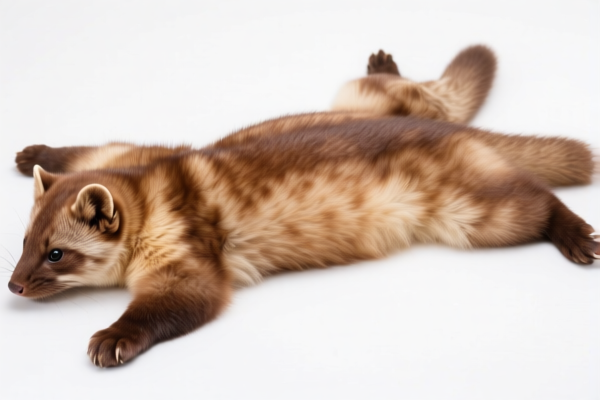
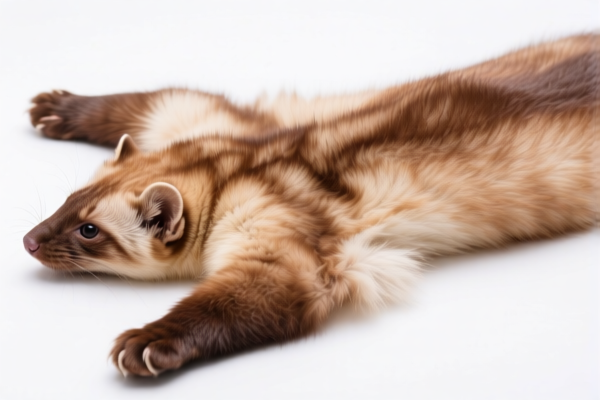
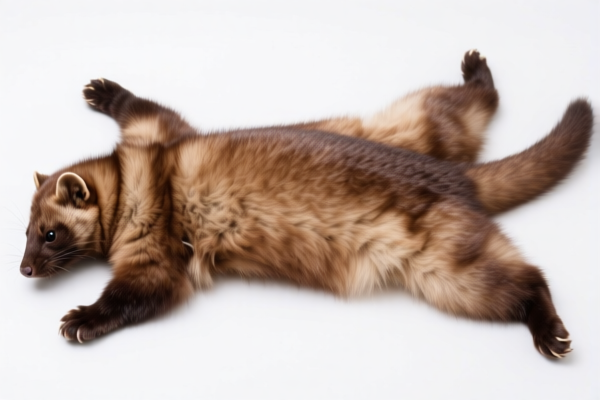
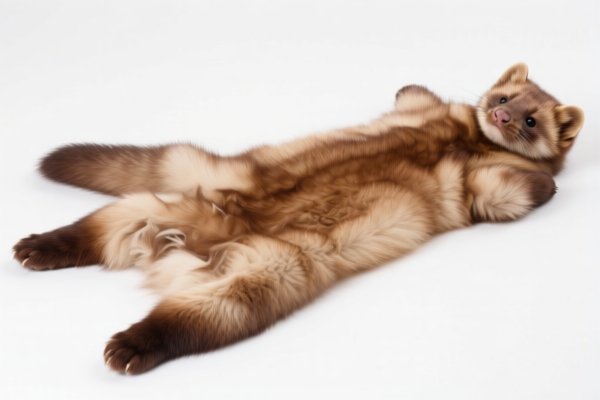
AI Analysis
🦦 Unprocessed Wild Mink Skins (Whole)
🌐 HS Code Reference & Customs Clearance Guide | 2026 Latest Tariff Analysis | Professional-Level Entry Strategy
📌 I. Product Definition & Classification: Do You Truly Understand “Unprocessed Mink Skins”?
Raw mink skins, when harvested from wild animals and exported in their natural state, fall under specific customs classifications based on their preservation method. In international trade, raw hides and skins are defined as animal skins that have been removed from the carcass but have not undergone tanning, parchment dressing, or further preparation beyond preservation methods like salting, drying, liming, or pickling.
Key Distinction for Mink Skins: * "Whole" implies the skin is intact, including the head, limbs, and belly, unless split. * "Unprocessed" means they are not pretanned. If they were pretanned, they would fall under Chapter 41 heading 4104 or 4105. * "Wild" indicates the source, but for HS Code purposes, the species (mink) and condition (raw/unprocessed) dictate the classification, specifically under subheading 4103.90.
⚠️ Critical Distinction Point:
- If the skin is salted, dried, or pickled but NOT tanned → Classified under 4103 (Raw Hides and Skins).
- If the skin has been chemically treated to become leather (pretanned) → Classified under 4104 or 4105.
- Note: "Mink" is often associated with fur (Chapter 43) if it is dressed/finished for fashion. However, raw, unprocessed skins are explicitly excluded from Chapter 43 and must go to Chapter 41.
📦 II. HS Code Classification Details (2026 Latest Tariff Authority Comparison)
Based on the provided <DATA>, here are the applicable HS Codes for unprocessed wild mink skins. The classification depends on whether the skins are "Not Pretanned" or fall under the general "Other" category for raw hides and skins.
| HS Code | Product Description | Application Scenario | Pretanned? |
|---|---|---|---|
4103.90.11.90 |
Other raw hides and skins (fresh, salted, dried, etc.), not pretanned | Wild mink skins, fresh or simply preserved, not chemically tanned | ❌ No |
4103.90.20.00 |
Other raw hides and skins (fresh, salted, dried, etc.), other than those excluded by note 1(b) or 1(c) | General category for other raw hides/skins not specifically listed in 4103.90.11 | ❌ No |
🔍 Key Reminder:
- Mink skins are not explicitly listed as a separate species in the 4-digit or 6-digit headings for bovine, equine, or porcine hides. Therefore, they fall under "Other" (4103.90).
- Since they are unprocessed (no tanning), they cannot be classified under Chapter 43 (Fur).
- The distinction between4103.90.11.90and4103.90.20.00often lies in specific national sub-classifications or whether the skin is "split" or "dehaired" in a specific way. However, both are raw/unprocessed.
💰 III. 2026 Latest Tariff Rate Details (Including Additional Duties & Policy Surcharges)
✅ Applicable Country: United States (US)
✅ Country of Origin: China (CN)
✅ Effective Date: November 10, 2025 (and subsequent imports)
🎯 1. 4103.90.11.90 —— Other Raw Hides and Skins (Not Pretanned)
| Item | Content |
|---|---|
| Base Tariff Rate | 0% (ad valorem) |
| Additional Tariff (Section 301) | +7.5% (Applied to goods from China) |
| Total Tariff Rate | 7.5% |
| Tax Calculation | CIF Value × 7.5% |
| Can De Minimis Exemption Apply? | ❌ No (High value goods or specific categories often excluded; verify with broker, but raw skins are typically not eligible for low-value de minimis if above $800 threshold or subject to specific trade actions) |
| Legal Basis Path | HTSUS:4103.90.11.90 → Section 301 Footnote |
📌 Explanation:
- Base Rate: Raw hides and skins often have low base tariffs to encourage domestic tanning industries.
- Section 301 Tariff: The 7.5% additional duty is part of the ongoing trade measures against Chinese goods.
- Total Cost: For every $1,000 of mink skins, you pay $75 in duties.
🎯 2. 4103.90.20.00 —— Other Raw Hides and Skins (Other)
| Item | Content |
|---|---|
| Base Tariff Rate | 3.3% (ad valorem) |
| Additional Tariff (Section 301) | +7.5% (Applied to goods from China) |
| Total Tariff Rate | 10.8% |
| Tax Calculation | CIF Value × 10.8% |
| Can De Minimis Exemption Apply? | ❌ No |
| Legal Basis Path | HTSUS:4103.90.20.00 → Section 301 Footnote |
📌 Explanation:
- If the customs officer determines the skins do not fit the specific "Not Pretanned" subcategory of4103.90.11.90(e.g., due to slight processing or specific national interpretation), they may fall here.
- The base rate is higher (3.3%), leading to a total duty of 10.8%.
- Cost Difference: On $1,000 value, this is $108 in duties, which is $33 more than the other code.
🛠️ IV. Customs Clearance Practical Advice (Real-World Pitfall Guide)
✅ 1. Document Checklist (Mandatory)
| Document | Must Provide | Description |
|---|---|---|
| ✅ Commercial Invoice | ✔️ | Must clearly state "Raw Mink Skins, Unprocessed, Whole". Do not use "Fur" or "Leather". |
| ✅ Packing List | ✔️ | Detail the number of skins, weight, and preservation method (e.g., "Salted Fresh", "Dried"). |
| ✅ Species Declaration | ✔️ | Confirm "Wild Mink" (Neovison vison). If farmed, it may still be 4103, but origin rules differ. |
| ✅ Preservation Method Statement | ✔️ | Explicitly state: "No tanning, no chrome, no further processing." |
| ✅ Photos of Goods | ✔️ | Show the skin texture, salting/drying process, and whole form (head/limbs intact). |
| ✅ Country of Origin Certificate | ✔️ | Required for origin verification. |
✅ 2. Declaration Tips (Key Mantras)
🔥 “Raw is Not Fur, Unprocessed is Key, Salted/Dried is Safe, Tanned is Different!”
| Scenario | Correct Declaration | Wrong Practice |
|---|---|---|
| Raw, Salted Mink Skins | 4103.90.11.90 |
Declaring as "Fur" (Ch. 43) → Rejected/Seized |
| Dried Mink Skins | 4103.90.20.00 (or .11.90) |
Declaring as "Finished Leather" → High Penalty |
| Pretanned Mink Skins | 4104.19.00 or 4105.30 |
Declaring as "Raw" → Classification Error |
| Split Skins | Verify if split → May affect subcode | Ignoring split status → Potential duty discrepancy |
📌 Note:
- Do not use the word "Fur" in the description for raw skins. "Fur" implies Chapter 43 (dressed/finished).
- Use terms like "Raw Skins", "Unprocessed", "Salted", or "Dried".
✅ 3. Special Case Handling
| Case | Handling Advice |
|---|---|
| Wet-Salted vs. Dry-Salted | Both are "raw". Ensure invoice specifies method. Dry-skinned often weighs less, affecting ad valorem duty base. |
| With Head and Limbs | "Whole" skins are generally preferred for high-value mink. Ensure no other parts (meat, bones) are included, as this may trigger CITES or sanitary checks. |
| CITES Considerations | Mink (Neovison vison) is not typically CITES-listed unless it's a specific wild subspecies. Confirm with CITES if importing from wild populations to avoid illegal wildlife trade accusations. |
| Sanitary Requirements | Raw skins may require veterinary certificates to prevent disease (e.g., rabies, though rare in mink). Check USDA APHIS requirements. |
🌍 V. Global Market Customs Comparison (2026 Latest)
| Country/Region | Recommended HS Code | Tariff (China Origin) | Certification Requirements | Notes |
|---|---|---|---|---|
| 🇺🇸 USA | 4103.90.11.90 |
7.5% | None specific (except sanitary if required) | Section 301 applies. Base rate 0%. |
| 🇪🇺 EU | 4103.90 |
4.7% (General) | None | May require veterinary health certificate for animal products. |
| 🇨🇳 China | 4103.90 |
5% - 8% | Import License may be needed for animal products | Check current China customs rules. |
| 🇬🇧 UK | 4103.90 |
4.7% | Health Certificate | Post-Brexit rules apply. |
📌 Conclusion:
- The US has a 0% base rate but adds 7.5% due to trade tensions.
- EU and UK have moderate base rates (~4.7%) without current similar surcharges for raw hides.
- Raw skins are subject to sanitary controls in many jurisdictions to prevent animal diseases.
📌 VI. Common Errors & Pitfall Guide (Blood & Tears Lessons)
❌ Error 1: Declaring Raw Mink Skins as "Fur Skins" (Chapter 43)
👉 Consequence: Customs will reject the declaration, impose fines, or require reclassification. Raw skins are Chapter 41.
❌ Error 2: Misdeclaring Preservation Method
👉 Consequence: If you declare "Dried" but they are "Wet-Salted", and weight is charged on wet weight, you may underpay duties. Or vice versa. Be accurate!
❌ Error 3: Ignoring Section 301 Surcharges
👉 Consequence: Budgeting errors. If you only account for 0% base rate, you will be shocked by the 7.5% additional duty.
❌ Error 4: Not Specifying "Whole" vs. "Split"
👉 Consequence: Some subcodes differentiate. Ensure your invoice matches the physical goods.
✅ Correct Practice:
"Raw Wild Mink Skins, Whole, Salted, Unprocessed, Not Tanned, Model: No., Quantity: 500 pcs, Weight: 50 kg"
🎯 VII. Conclusion: Precise Classification Saves Money and Time!
🎯 Remember the Mantra:
🔹 "Raw is Ch. 41, Fur is Ch. 43. Unprocessed means 7.5% (US). Don't call it Fur!"
🔹 "HS Code defines duty, description defines risk. Be precise, be safe."
📌 Tips:
- If your mink skins are pretanned, they fall under 4104.19.00 or 4105.30, with different duty rates.
- Always request a Pre-Ruling (Advance Ruling) from US Customs (CBP) if the classification is uncertain.
- Check CITES status if importing from wild sources to avoid illegal wildlife trade violations.
📣 Immediate Action:
📞 Contact a licensed customs broker.
📝 Prepare detailed invoices stating "Raw, Unprocessed, Salted/Dried".
🚀 Ensure smooth clearance by avoiding "Fur" terminology for raw goods.
✨ Professional Customs Clearance Starts with Accurate Classification!
💼 Every cent in duties is worth precise calculation!
Customer Reviews
About HS Code Classification
The Harmonized System (HS) is an internationally standardized nomenclature developed by the World Customs Organization (WCO) to classify traded products. Over 200 countries use the HS system as the basis for customs tariffs, trade statistics, and import/export regulations.
Each HS code follows a hierarchical structure:
- Chapter (2 digits) — Broad category of goods (e.g., Chapter 84: Machinery and Mechanical Appliances)
- Heading (4 digits) — More specific grouping within the chapter
- Subheading (6 digits) — Internationally standardized breakdown, used by all WCO member countries
- National subdivisions (8-10 digits) — Country-specific extensions for further classification, such as US HTSUS 10-digit codes
Correct HS code classification is essential for smooth customs clearance, accurate duty payment, and compliance with trade regulations. Misclassification can lead to customs delays, overpayment of duties, or penalties.
When importing from CN to US, the applicable tariff rates may include:
- Most-Favored-Nation (MFN) rate — The standard duty rate applied to WTO members
- General rate — Applied to countries without trade agreements
- Trade remedy duties — Additional tariffs such as Section 301 (anti-dumping), Section 232 (national security), or countervailing duties
The information provided on this page is for reference purposes only. For official classification, please consult with your local customs authority or a licensed customs broker.