unroasted wheat malt
CN → USProduct Images
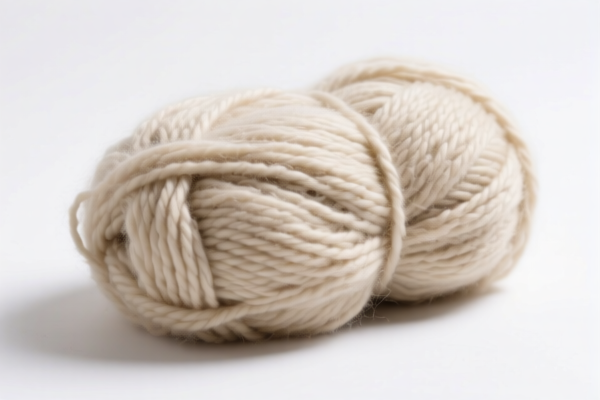
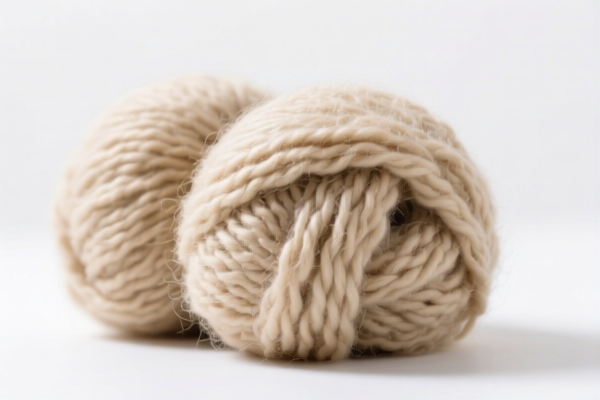
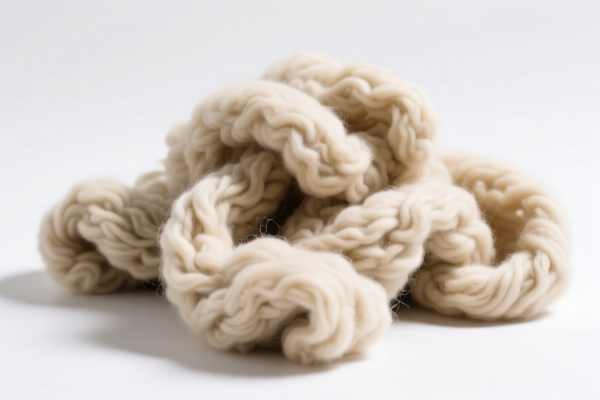
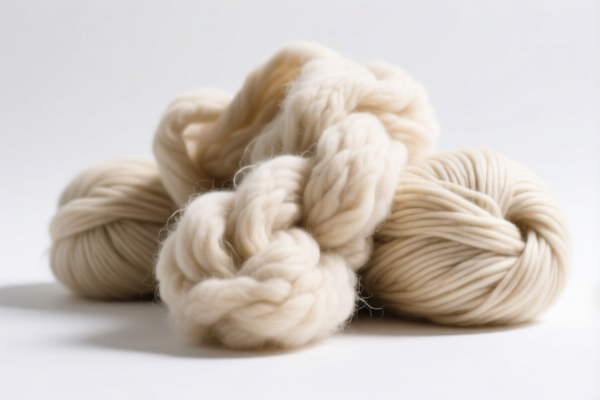
AI Analysis
🌾 Unroasted Wheat Malt
🌐 HS Code Reference & Customs Clearance Guide | 2026 Latest Tariff Analysis | Professional Clearance Strategy
📌 I. Product Definition & Classification: Do You Really Know "Unroasted Wheat Malt"?
Unroasted Wheat Malt is a key ingredient in the brewing industry, primarily used in beer production (especially wheat beers like Hefeweizen) and as a base for certain spirits and food products. In international trade, it is a processed agricultural product where wheat has been germinated and dried at low temperatures (typically below 45°C–50°C) to develop enzymes, without undergoing high-temperature roasting or kilning.
In the context of HS Code classification, the critical distinction lies in whether the malt has been dried/roasted or remains in a raw/unroasted state, and whether it is intended for brewing or animal feed.
⚠️ Key Distinction:
- If the malt is dried/roasted for brewing/beverage use → Classified under 10.09 or 11.09 depending on processing depth.
- If the malt is unroasted/raw (green malt) or simply dried without roasting, often used for feed or further processing → Classified under 11.04.
- Note: The term "Unroasted" is crucial. Once malted grain is roasted, it falls into different subheadings. For unroasted malt intended for human consumption (brewing), it often falls under 11.09 or specific brewing malt codes. However, many customs authorities classify malted cereals (even unroasted) under 11.04.19 or 11.04.29 if not specifically listed under brewing malts. Let's look at the most common 2026 classifications.
📦 II. HS Code Classification Details (2026 Latest Tariff Authority Comparison)
| HS Code | Product Description | Applicable Scenario | Roasting Status |
|---|---|---|---|
11.04.19.00.00 |
Cereals (other than corn/rice), flakes, rolled, or flaked | Unroasted wheat malt, often classified here if not specified as "brewing malt" or if considered "processed cereal" | ✅ Unroasted / Dried |
11.09.00.00.00 |
Wheat or meslin flour | Note: Usually refers to flour, not malt. Malt is not flour. Incorrect for malt. | ❌ Not Applicable |
10.09.00.00.00 |
Wheat (not husked, hulled, or otherwise worked) | Raw wheat. Incorrect if malted. | ❌ Raw Wheat Only |
23.03.10.00.00 |
Bread waste, waste of distilling or brewing beer | Spent grain after brewing. Incorrect for raw malt. | ❌ Used/Spent |
11.04.29.99.99 |
Other cereals, produced in a manner other than flaking/rolling (e.g., malted) | Most Common for Malted Wheat if not specifically "Brewing Malt" under heading 10/11. Some countries use specific brewing malt codes under 10.09 or 11.04. | ✅ Malted (Unroasted) |
10.09.00.00.00 (Specific Subheadings) |
Some countries have specific codes for "Malted Cereals" under Chapter 10 if unroasted. | Check local 8-10 digit codes. | ✅ Unroasted Malt |
🔍 Important Reminder:
- Malted cereals are generally classified under Heading 11.04 if they are not specifically listed elsewhere. However, some jurisdictions classify malted barley/wheat for brewing under 10.09 if they are still in a form resembling grain.
- For US Customs (HTSUS):
- Malted Barley is often classified under 10.09.00.00.00 if unroasted and intended for brewing.
- Wheat Malt: There is no specific "Malted Wheat" heading in HTSUS. It is often classified under 11.04.29.99.99 (Other cereals, prepared) or 10.09.00.00.00 (Wheat) if considered unworked. However, 11.04 is safer for "processed" malt.
- Critical: If the malt is roasted, it may fall under 21.06 (Food preparations) or 11.04.
- Unroasted Wheat Malt is most commonly classified under 11.04.29.99.99 or a specific national code for "Malted Wheat".
💰 III. 2026 Latest Tariff Rate Breakdown (Including Surtaxes, Policy Add-ons)
✅ Applicable Country: United States (US)
✅ Origin: China (CN)
✅ Effective Date: From November 10, 2025 (and subsequent imports)
🎯 1. 11.04.29.99.99 —— Malted Wheat (Other Cereals, Prepared)
| Item | Content |
|---|---|
| Base Tariff Rate | 0% (ad valorem) |
| USITC Surtax | +25% (from USITC Footnote 9903.88.01 for Chinese products) |
| IEEPA Surtax | +10% (For China/HK products, effective from Nov 10, 2025) |
| Total Tariff Rate | 35% |
| Tax Calculation | CIF Value × 35% |
| De Minimis Exemption | ❌ Not Eligible (deny_de_minimis) |
| Legal Basis Path | IEEPA:9903.01.25 → IEEPA:9903.01.24 → USITC:11.04.29.99.99 → FOOTNOTE:9903.88.01 |
📌 Explanation:
- "USITC Surtax 25%" comes from Section 301 of the US Trade Act;
- "IEEPA 10%" is the additional tariff imposed on Chinese products under the International Emergency Economic Powers Act;
- Total 35%, which is a significant tariff, must be anticipated in advance!
🎯 2. 10.09.00.00.00 —— Wheat (if classified as unworked/unroasted malt in some jurisdictions)
| Item | Content |
|---|---|
| Base Tariff Rate | 0% |
| USITC Surtax | +25% |
| IEEPA Surtax | +10% |
| Total Tariff Rate | 35% |
| Tax Calculation | CIF × 35% |
| De Minimis Exemption | ❌ Not Eligible |
| Legal Basis Path | IEEPA:9901.25 → IEEPA:9903.01.24 → USITC:10.09.00.00.00 → FOOTNOTE:9903.88.01 |
📌 Note:
- Even if classified under Chapter 10 as "Wheat," if it is from China, the 35% total tariff still applies;
- Whether it's "Wheat" or "Malted Wheat," the surtaxes are the same for Chinese origin.
🛠️ IV. Customs Clearance Practical Advice (Battle-Tested Pitfall Avoidance Guide)
✅ 1. Preparation Checklist (All Required)
| Material | Required | Explanation |
|---|---|---|
| ✅ Product Specification Sheet | ✔️ | Include moisture content, enzyme activity, germination rate, moisture loss |
| ✅ Processing Process Description | ✔️ | Clarify "Unroasted" vs. "Roasted," drying temperature |
| ✅ Product Photos (including labels) | ✔️ | Clear display of model, brand, net weight, origin |
| ✅ Third-Party Test Report | ✔️ | FDA registration (if for food), heavy metal, pesticide residues |
| ✅ Commercial Invoice | ✔️ | Clearly mark "Unroasted Wheat Malt" or "Malted Wheat for Brewing" |
| ✅ Certificate of Origin (CO) | ✔️ | If not Chinese origin, apply for preferential rates |
| ✅ Packing List | ✔️ | Specify packaging type, avoid splitting declaration |
✅ 2. Declaration Tips (Key Mantra)
🔥 "Malt is not Grain, Unroasted is Key, Brewing Use Clear, Tariff Avoids Lie!"
| Scenario | Correct Declaration Method | Wrong Practice |
|---|---|---|
| Unroasted Wheat Malt | 11.04.29.99.99 or 10.09.00.00.00 |
Misreported as "Raw Wheat" → 35% |
| Roasted Malt | 21.06.90.98.00 (Food Preparation) or 11.04 |
Misreported as "Unroasted" → Risk of penalty |
| Wheat Flour | 11.01.00.00.00 |
Misreported as "Malt" → 35% |
| Animal Feed Malt | 23.03.10.00.00 (Spent Grain) |
Misreported as "Brewing Malt" → 35% |
✅ 3. Special Case Handling
| Scenario | Handling Advice |
|---|---|
| OEM Custom Malt | Provide customer order + design drawing to avoid being deemed "non-standard" |
| Malt for Medical Use | If for special medical use, apply for "Non-Commercial Use" exemption, but provide proof |
| Malt for Pet Food | If for pet food, may fall under 23.09 (Prepared Foods for Animals), tariff may be lower |
| Malt for Distilling | If for distilling, still classified under 11.04, tariff 35% |
🌍 V. Global Major Market Clearance Comparison (2026 Latest)
| Country/Region | Recommended HS Code | Tariff | Certification Requirements | Notes |
|---|---|---|---|---|
| 🇺🇸 United States | 11.04.29.99.99 |
35% (China Origin) | FDA + Heavy Metal Test | 35% is high for Chinese origin |
| 🇨🇳 China | 11.04.29.99.99 |
0% | N/A | No additional surtax |
| 🇪🇺 European Union | 11.04.29.99.00 |
0% (if符合CE) | CE + Food Safety | No surtax |
| 🇦🇺 Australia | 11.04.29.99.00 |
0% | RCM | No surtax |
| 🇯🇵 Japan | 11.04.29.99.00 |
0% | PSE | No surtax |
📌 Conclusion:
- The United States is the only major market imposing high surtaxes on Chinese-origin malt;
- Chinese-origin malt clearance cost in the US is extremely high, suggest evaluating production relocation or supply chain adjustment in advance.
📌 VI. Common Mistakes & Pitfall Avoidance Guide (Blood-Tested Lessons)
❌ Mistake 1: Declaring "Malted Wheat" as "Raw Wheat" (10.01)
👉 Consequence:海关无法判断是否经过麦芽化处理 → Delay or Return
❌ Mistake 2: Declaring "Roasted Malt" as "Unroasted Malt"
👉 Consequence: Misclassification → Penalty + Back Payment
❌ Mistake 3: Not providing Processing Process Description
👉 Consequence: Customs cannot determine tariff rate → Delay
❌ Mistake 4: Using "Wheat" as Declaration Name
👉 Consequence: If actual product is Malt, Misclassification → Back Payment + Penalty
✅ Correct Practice:
"Unroasted Wheat Malt, for Brewing Use, Moisture <12%, Enzyme Activity >XXX, No Roasting Process, Model XYZ, FDA Registered"
🎯 VII. Conclusion: Professional Declaration, Time-Saving, Cost-Efficiency!
🎯 Remember the Mantra:
🔹 "Malt is Not Grain, Unroasted is Key, Brewing Use Clear, Tariff Avoids Lie!"
🔹 "HS Code Determines Life or Death, Tariff Differs by 35%, Declaration Step Error, Back Payment Thousands!"
📌 Tips:
If your malt is originally from Vietnam, Mexico, Thailand, Malaysia, you can apply for IEEPA Exemption, tariff is only 0%~5%;
Suggest Advance Ruling Application in advance to avoid clearance risks.
📣 Take Action Now:
📞 Contact Professional Customs Broker + Provide Product Pictures + Apply for HS Code Advance Ruling
🚀 Let your malt, Smooth Clearance, Efficient Export, Profit Doubled!
✨ Professional Clearance Starts with Precise Classification!
💼 Every Penny of Your Cost Deserves to Be Precisely Calculated!
Customer Reviews
About HS Code Classification
The Harmonized System (HS) is an internationally standardized nomenclature developed by the World Customs Organization (WCO) to classify traded products. Over 200 countries use the HS system as the basis for customs tariffs, trade statistics, and import/export regulations.
Each HS code follows a hierarchical structure:
- Chapter (2 digits) — Broad category of goods (e.g., Chapter 84: Machinery and Mechanical Appliances)
- Heading (4 digits) — More specific grouping within the chapter
- Subheading (6 digits) — Internationally standardized breakdown, used by all WCO member countries
- National subdivisions (8-10 digits) — Country-specific extensions for further classification, such as US HTSUS 10-digit codes
Correct HS code classification is essential for smooth customs clearance, accurate duty payment, and compliance with trade regulations. Misclassification can lead to customs delays, overpayment of duties, or penalties.
When importing from CN to US, the applicable tariff rates may include:
- Most-Favored-Nation (MFN) rate — The standard duty rate applied to WTO members
- General rate — Applied to countries without trade agreements
- Trade remedy duties — Additional tariffs such as Section 301 (anti-dumping), Section 232 (national security), or countervailing duties
The information provided on this page is for reference purposes only. For official classification, please consult with your local customs authority or a licensed customs broker.