unstripped coniferous timber 15cm+
CN → US| HS Code | Tariff Rate | Origin | Destination | Doc |
|---|---|---|---|---|
| 4401110000 | 35.0% | CN | US | Official Doc |
| 4403210130 | 35.0% | CN | US | Official Doc |
| 4407110052 | 35.0% | CN | US | Official Doc |
| 4403250164 | 35.0% | CN | US | Official Doc |
| 4407190056 | 35.0% | CN | US | Official Doc |
Product Images
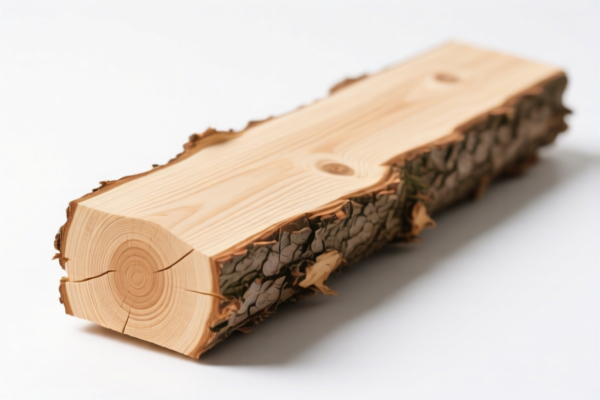
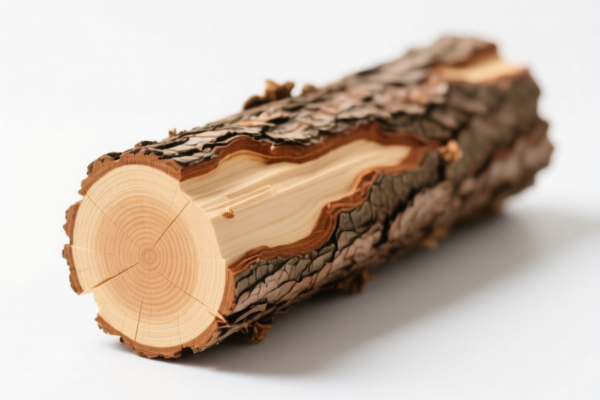
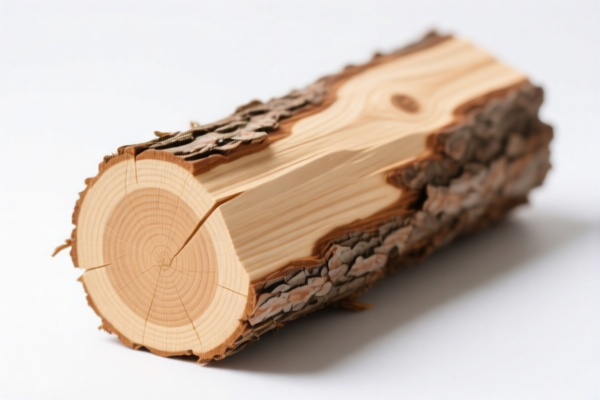
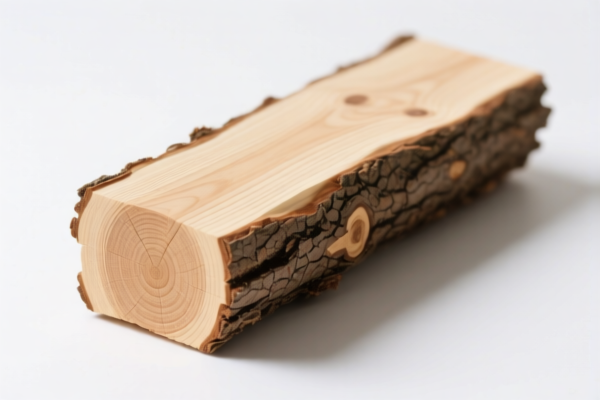
AI Analysis
🪵 Unstripped Coniferous Timber (15cm+ Cross-Section)
🌐 HS Code Reference & Customs Clearance Guide | 2026 Latest Tariff Analysis | Professional Compliance Strategy
📌 I. Product Definition & Classification: What Exactly is "Unstripped Coniferous Timber"?
Unstripped Coniferous Timber (15cm+) refers to wood from coniferous trees (such as Pine, Spruce, Fir, Larch, etc.) that has not been planed, sanded, or smoothed (i.e., rough-sawn or roughly squared). The critical classifier is the cross-sectional dimension: at least one dimension must be 15 cm or more.
In international trade, this product falls under Chapter 44 (Wood and Wood Articles), specifically differentiated by its level of processing and dimensions:
- Roughly Squared (4401/4403): Blocks or beams cut into square/rectangular shapes but not yet planed. Used for construction, scaffolding, or further industrial processing.
- Sawn or Chipped Lengthwise (4407): Planks, timber, or strips cut longitudinally. This category includes both "roughly squared" and "sawn" forms if the cross-section meets the threshold.
⚠️ Key Distinction:
- If the wood is < 15 cm in any dimension → It is considered "thin sawn timber" or "plywood/veneer" components (different HS Codes, often lower base duty but subject to different quotas).
- If the wood is ≥ 15 cm and unstripped/rough → It falls under 4401, 4403, or 4407 series, depending on the specific cut and origin.
📦 II. HS Code Classification Details (2026 Latest Tariff Authority Mapping)
Based on the provided data, the following HS Codes apply to Chinese-origin coniferous timber (15cm+) exported to the US, with specific tax implications.
| HS Code | Product Description | Specific Characteristics | Tax Rate |
|---|---|---|---|
4401.11.00.00 |
Fuel Wood; Chips & Particles | Rough squared logs, suitable for sizes ≥15cm. Often used as industrial fuel or raw material for pulp. | 35.0% |
4403.21.01.30 |
Treated or Untreated Wood | Roughly squared coniferous timber, meeting ≥15cm cross-section. Not planed. | 35.0% |
4407.11.00.52 |
Sawn Wood (Coniferous) | Rough-sawn coniferous timber. Material and form are highly consistent with rough lumber. | 35.0% |
4403.25.01.64 |
Treated Wood (Broadleaf/Conifer) | Roughly squared coniferous timber, meeting minimum cross-section requirements. | 35.0% |
4407.19.00.56 |
Other Sawn Wood | Roughly cut coniferous timber, satisfying ≥12.7cm size limits. (Note: 12.7cm is ~5 inches, often the threshold for "timber" vs. "lumber" in some contexts, but data specifies 15cm+). | 35.0% |
🔍 Key Insight:
- All five HS Codes listed above result in a total tariff of 35.0%.
- The differentiation lies in processing level (4401=Fuel/Raw, 4403=Treated/Untreated Logs, 4407=Sawn Planks/Beams) and specific species/sub-category.
- Do NOT confuse4403(logs/bolts) with4407(sawn planks).4403is typically round or roughly squared logs;4407is sawn into planks or beams.
💰 III. 2026 Latest Tariff Rate Breakdown (Including Additional Duties)
✅ Applicable Country: United States (US)
✅ Origin: China (CN)
✅ Effective Time: Post-2025 November 10 (Includes subsequent imports)
🎯 1. Universal Rate Structure for All Listed HS Codes
| Item | Content |
|---|---|
| Base Tariff Rate | 0.0% (ad valorem) |
| Section 301 Additional Tariff | +25% (USITC Footnote for Chinese Wood Products) |
| IEEPA Additional Tariff (Section 122) | +10% (Targeted Chinese Imports, effective Nov 2025) |
| Total Tax Rate | 35.0% |
| Tax Calculation | CIF Value × 35% |
| De Minimis Exemption | ❌ Not Applicable (Denied for these categories) |
| Legal Basis Path | IEEPA:9903.01.25 → USITC:440x.xx.xx.xx → FOOTNOTE:Section 301 |
📌 Explanation:
- "Base Rate 0%": Coniferous timber often has a low MFN (Most Favored Nation) base rate, but this is irrelevant due to high additional tariffs.
- "Section 301 Tariff 25%": Standard retaliatory tariff on Chinese wood products.
- "IEEPA/Section 122 Tariff 10%": New or ongoing emergency powers targeting specific Chinese imports, adding further cost.
- Total 35%: This is a high-cost category. Profit margins must account for this significant duty burden.
🛠️ IV. Customs Clearance Practical Advice (Real-World Pitfall Avoidance)
✅ 1. Documentation Checklist (Non-Negotiable)
| Document | Required | Description |
|---|---|---|
| ✅ Commercial Invoice | ✔️ | Must clearly state "Unstripped Coniferous Timber," species (e.g., Spruce, Pine), and dimensions. |
| ✅ Packing List | ✔️ | Detail dimensions (L×W×H) of each piece. Crucial: Prove ≥15cm cross-section. |
| ✅ Phytosanitary Certificate | ✔️ | Mandatory. Issued by Chinese customs/forestry bureau. Must show pest-free status. |
| ✅ ISPM 15 Marking (if palletized) | ✔️ | If wood packaging is used, it must be heat-treated/fumigated and marked. |
| ✅ Certificate of Origin | ✔️ | To prove origin as China (for accurate tariff application). |
| ✅ Bill of Lading (B/L) | ✔️ | Ensure HS Codes are listed on B/L to match customs entry. |
| ✅ Species Declaration | ✔️ | Specify exact botanical name (e.g., Pinus sylvestris). Misidentification can lead to delays. |
✅ 2. Classification Strategy (Key Tips)
🔥 “Dimensions Define Duty, Species Define Risk”
| Scenario | Correct HS Code | Risk if Wrong |
|---|---|---|
| Rough Squared Beams (≥15cm) | 4403.21.01.30 or 4403.25.01.64 |
Misclassifying as 4407 (sawn) may trigger different inspection rules. |
| Sawn Planks (≥15cm) | 4407.11.00.52 or 4407.19.00.56 |
If declared as "fuel wood" (4401), it may be rejected if intended for construction. |
| Logs (Round, Unprocessed) | 4403.21.01.30 |
Must clearly state "Unstripped Log" to avoid being classified as "processed timber." |
| Cross-Section < 15cm | Different HS Code | Do NOT use these codes. <15cm timber has different tariff structures and may be subject to anti-dumping duties. |
📌 Critical Note:
- 15cm Threshold: Ensure measurements are accurate. If any dimension is < 15cm, these HS codes are invalid.
- "Unstripped": Must not be planed, sanded, or smoothed. If planed, it may fall under different subcategories with different tax treatments.
✅ 3. Special Circumstances
| Situation | Handling Advice |
|---|---|
| Treated Wood | If chemically treated, ensure the treatment is declared. 4403 codes cover treated wood, but specific treatments must be listed. |
| Mixed Species | If a shipment contains multiple coniferous species, declare the dominant species by volume. Mixed declarations can cause customs audits. |
| Wood Packaging | If timber is on wooden pallets, pallets must comply with ISPM 15. Non-compliant pallets = seizure/return. |
| Anti-Dumping/Countervailing Duties (AD/CVD) | Check if specific coniferous softwood lumber from China has pending AD/CVD cases. While not in the data, it’s a common risk for timber. |
🌍 V. Global Market Comparison (2026 Latest)
| Country/Region | Recommended HS Code | Tariff | Certification | Remarks |
|---|---|---|---|---|
| 🇺🇸 USA | 4403.21.01.30 / 4407.11.00.52 |
35% | Phytosanitary + ISPM 15 | High tariff due to 301 + IEEPA |
| 🇨🇳 China | 4403.21.00.00 |
0-5% | Phytosanitary | Low entry barrier, but export restrictions may apply |
| 🇪🇺 EU | 4403.21.00.00 |
0-6% | FLEGT License (if applicable) | Strict EUTR (EU Timber Regulation) compliance required |
| 🇦🇺 Australia | 4403.21.00.00 |
5% | Biosecurity Permit | High biosecurity standards |
| 🇯🇵 Japan | 4403.21.00.00 |
0-3% | Phytosanitary | Accepts Chinese timber, but prefers certified sustainable sources |
📌 Conclusion:
- USA is the most expensive market for Chinese coniferous timber due to 35% combined tariffs.
- EU and Japan have lower tariffs but stricter sustainability and legality certifications (EUTR, FLEGT).
- Consider supply chain diversification (e.g., sourcing from Russia, Canada, or New Zealand) to mitigate US tariff risks.
📌 VI. Common Mistakes & Pitfall Guide (Lessons Learned)
❌ Mistake 1: Declaring "Lumber" for Rough Squared Logs
👉 Consequence: Customs may reclassify to 4403 (Logs) instead of 4407 (Sawn), leading to phytosanitary inspection delays or incorrect duty assessments.
❌ Mistake 2: Ignoring the 15cm Rule
👉 Consequence: If dimensions are <15cm, these HS codes are invalid. Misclassification leads to penalties, back-taxes, and shipment holds.
❌ Mistake 3: Missing Phytosanitary Certificate
👉 Consequence: Shipment refused entry at US port. Wood is a high-risk category for pests (e.g., Emerald Ash Borer, Pine Wood Nematode).
❌ Mistake 4: Not Marking Wood Packaging
👉 Consequence: Fines and destruction of packaging under ISPM 15 regulations.
✅ Correct Practice:
"Unstripped Coniferous Timber, Spruce, Roughly Squared, 15cm x 15cm x 6m, Origin: China, Phytosanitary Certified, ISPM 15 Pallets"
🎯 VII. Conclusion: Professional Clearance, Cost Control, Compliance
🎯 Remember the Golden Rules:
🔹 "15cm is the Line: Below it, Different Rules; Above it, 35% Duty."
🔹 "Phytosanitary is King: No Certificate, No Entry."
🔹 "HS Code Matters: Rough vs. Sawn, Logs vs. Planks – Precision Saves Money."
📌 Pro Tip:
If your timber is intended for construction or furniture, consider value-added processing (planing, drying) in a third country (e.g., Vietnam, Mexico) to potentially alter origin rules, though Section 301 rules of origin are strict.
Always request a Binding Tariff Information (BTI) or Advance Ruling from US Customs if the classification is ambiguous.
📣 Immediate Action:
📞 Engage a licensed customs broker experienced in wood products.
📋 Verify cross-section dimensions with engineering teams.
📄 Secure Phytosanitary Certificates before shipment.
🚀 Smooth clearance, lower risk, protect your profit margin!
✨ Precision Classification Starts Here!
💼 Every cubic meter counts – ensure your tariffs are accurate!
Customer Reviews
About HS Code Classification
The Harmonized System (HS) is an internationally standardized nomenclature developed by the World Customs Organization (WCO) to classify traded products. Over 200 countries use the HS system as the basis for customs tariffs, trade statistics, and import/export regulations.
Each HS code follows a hierarchical structure:
- Chapter (2 digits) — Broad category of goods (e.g., Chapter 84: Machinery and Mechanical Appliances)
- Heading (4 digits) — More specific grouping within the chapter
- Subheading (6 digits) — Internationally standardized breakdown, used by all WCO member countries
- National subdivisions (8-10 digits) — Country-specific extensions for further classification, such as US HTSUS 10-digit codes
Correct HS code classification is essential for smooth customs clearance, accurate duty payment, and compliance with trade regulations. Misclassification can lead to customs delays, overpayment of duties, or penalties.
When importing from CN to US, the applicable tariff rates may include:
- Most-Favored-Nation (MFN) rate — The standard duty rate applied to WTO members
- General rate — Applied to countries without trade agreements
- Trade remedy duties — Additional tariffs such as Section 301 (anti-dumping), Section 232 (national security), or countervailing duties
The information provided on this page is for reference purposes only. For official classification, please consult with your local customs authority or a licensed customs broker.