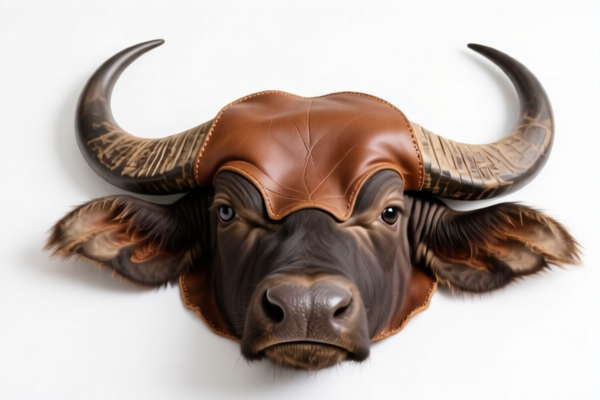
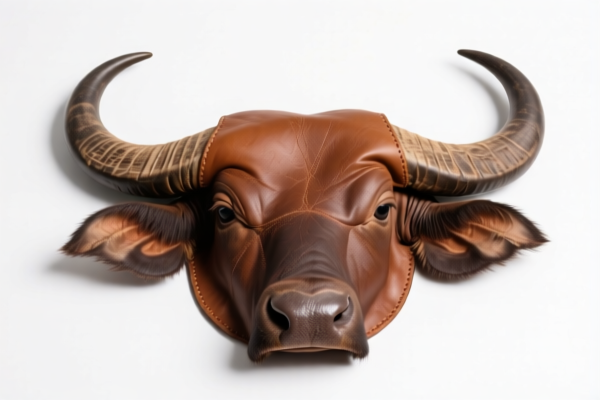
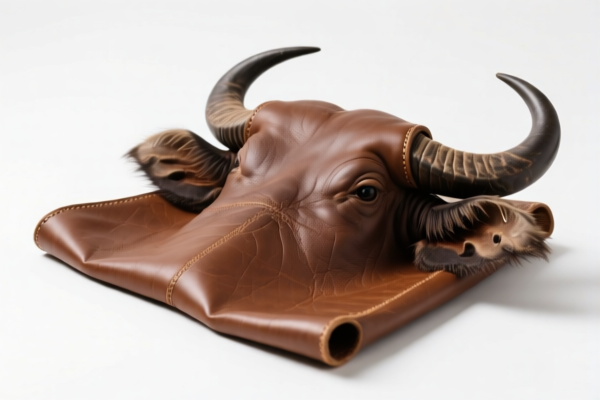
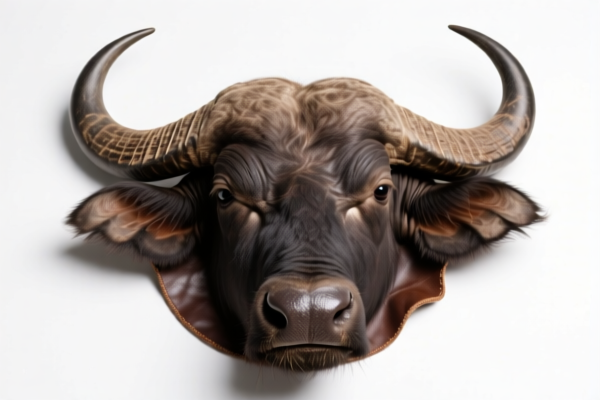
untreated buffalo hide dehaired
CN → US| HS Code | Tariff Rate | Origin | Destination | Doc |
|---|---|---|---|---|
| 4101203500 | 19.9% | CN | US | Official Doc |
| 4101903500 | 19.9% | CN | US | Official Doc |
Product Images
AI Analysis
🐃 Buffalo Hide (Unprocessed, Dehaired) | 4101.20.35.00 & 4101.90.35.00
🌐 HS Code Reference & Customs Clearance Guide | 2026 Latest Tariff Analysis | Professional Clearance Strategy
📌 I. Product Definition & Classification: Do You Really Understand "Untreated Buffalo Hide"?
Raw buffalo hides, whether whole or split, represent the foundational raw material for the leather industry. In international trade, precise classification depends on the preservation state (fresh, salted, dried) and the physical form (whole/unsplit vs. split/butt/belly). Even if dehaired (the hair removed), the material remains "raw" because it has not been tanned, parchment-dressed, or further prepared.
Key Distinction:
- Preservation Method: Fresh, Wet-Salted, Dry-Salted, or Simply Dried?
- Form: Whole unsplit (weight limits apply) OR Split/Other (butts, bends, bellies)?
⚠️ Critical Classification Point:
- If Whole, Unsplit, and weight is within limits (8kg dried, 10kg dry-salted, 16kg fresh/wet-salted) → Classify under 4101.20.35.00.
- If Split, Butts, Bends, Bellies, or exceeds weight limits for whole skins → Classify under 4101.90.35.00.
- Dehaired Status: Being dehaired does not change the classification to prepared leather; it remains in Chapter 41 as raw skins.
📦 II. HS Code Classification Details (2026 Latest Tariff Authority Comparison)
| HS Code | Product Description | Applicable Scenario | Key Condition |
|---|---|---|---|
4101.20.35.00 |
Raw Buffalo Hides, Whole, Unsplit | Intact whole skins, unsplit | Weight ≤ 8kg (dried), ≤ 10kg (dry-salted), or ≤ 16kg (fresh/wet-salted) |
4101.90.35.00 |
Raw Buffalo Hides, Other | Split hides, butts, bends, bellies | Any form other than whole unsplit meeting the above weight limits |
🔍 Important Note:
- Both codes apply to Buffalo species specifically.
- "Untreated" means no tanning agents, chromium, vegetable tannins, or other processing has been applied.
- "Dehaired" only means the hair follicles have been removed via mechanical or chemical means prior to tanning; it is still considered a raw hide.
💰 III. 2026 Latest Tariff Rate Details (Detailed Tax Clauses)
✅ Applicable Market: United States (US)
✅ Origin: China (CN)
✅ Effective Date: Current 2025-2026 Trade Regime
🎯 1. 4101.20.35.00 —— Raw Buffalo Hides, Whole, Unsplit
| Item | Content |
|---|---|
| Base Tariff Rate | 0.0% |
| Section 301 Additional Tariff | 0.0% |
| Total Tariff | 0.0% |
| Tax Calculation | CIF Value × 0.0% = $0 |
| De Minimis Eligibility | ❌ Not Applicable (Raw materials usually exceed de minimis value thresholds, but tax is zero regardless) |
| Legal Basis Path | HTSUS: 4101.20.35.00 → Note: No additional Section 301 or IEEPA surcharges apply to this specific raw material code |
📌 Explanation:
- Unlike many consumer electronics or steel products, raw buffalo hides are currently exempt from additional punitive tariffs (Section 301 or IEEPA).
- This is a significant cost advantage for leather manufacturers importing raw buffalo hides.
- Total Tax Burden: 0%. This makes raw buffalo hide imports highly competitive from a duty perspective.
🎯 2. 4101.90.35.00 —— Raw Buffalo Hides, Other (Split/Butts/Bellies)
| Item | Content |
|---|---|
| Base Tariff Rate | 0.0% |
| Section 301 Additional Tariff | 0.0% |
| Total Tariff | 0.0% |
| Tax Calculation | CIF Value × 0.0% = $0 |
| De Minimis Eligibility | ❌ Not Applicable |
| Legal Basis Path | HTSUS: 4101.90.35.00 → Note: Same zero-treatment as whole hides under current US-China trade framework |
📌 Note:
- Whether you import whole hides or split pieces, the tariff rate remains 0.0%.
- This consistency simplifies cost forecasting for leather goods producers who may purchase different parts of the hide based on quality or intended final product (e.g., full grain vs. corrected grain).
🛠️ IV. Customs Clearance Practical Advice (Real-World Pitfall Guide)
✅ 1. Documentation Checklist (All Required)
| Document | Must Provide | Description |
|---|---|---|
| ✅ Commercial Invoice | ✔️ | Must clearly state "Buffalo Hide," "Untreated," "Dehaired," and "Not Tanned." |
| ✅ Packing List | ✔️ | Detail weight per hide/skin. Crucial for distinguishing between 4101.20 (weight-limited) and 4101.90. |
| ✅ Bill of Lading / Airway Bill | ✔️ | Consistent description with invoice. |
| ✅ Certificate of Origin | ✔️ | Proves origin (e.g., China) to confirm eligibility for 0% tariff (if applicable under other FTAs, though base is 0%). |
| ✅ Product Specification Sheet | ✔️ | Explicitly state: No tanning, no chromium, dehaired method, preservation method (salted/dried). |
| ✅ Phytosanitary Certificate | ✔️ | Often required for animal-derived raw materials to prove freedom from disease and pests. |
| ✅ Import License | ✔️ | Check if your country requires specific licenses for raw animal hides (some countries restrict imports for disease control). |
⚠️ Critical Warning:
- If the hide contains any tanning agents (even residual), it will be misclassified as "Leather" (Chapter 41 Part II) and face different duties and regulations.
- Ensure the invoice explicitly says "RAW, NOT TANNED".
✅ 2. Declaration Tips (Key Mantras)
🔥 "State Preservation, State Form, Weight is Key!"
| Situation | Correct Declaration | Wrong Practice |
|---|---|---|
| Whole hides, 5kg, dried | 4101.20.35.00 |
Classifying as 4101.90 → No penalty, but less precise. |
| Split hides, any weight | 4101.90.35.00 |
Classifying as 4101.20 → High Risk of Penalty (misclassification). |
| Fresh hides, 18kg | 4101.90.35.00 (Exceeds 16kg limit) |
Claiming 4101.20 → Rejected by Customs due to weight violation. |
| Tanned leather | 4104.xxxx (Different Chapter) |
Declaring as "Raw Hide" → Severe Fraud Penalty. |
📌 Emphasis:
- Weight Limits are Mandatory for4101.20:
- Simply Dried: ≤ 8 kg per skin
- Dry-Salted: ≤ 10 kg per skin
- Fresh, Wet-Salted, or Other Preservation: ≤ 16 kg per skin
- If any hide in the shipment exceeds these weights, the entire shipment may need to be declared under4101.90.35.00unless split by weight.
✅ 3. Special Circumstances Handling
| Situation | Handling Advice |
|---|---|
| Mixed Shipment (Whole & Split) | Declare separately or use 4101.90.35.00 for the whole lot to avoid complexity, if no benefit in using 4101.20. |
| Wet-Salted vs. Dry-Salted | Clearly specify. Weight limits differ (16kg vs 10kg). Misdeclaration leads to delays. |
| Dehaired vs. Delimed | Dehaired is standard raw processing. If further limed, still raw. But if tanned, change HS code. |
| Sanitary Restrictions | Some countries ban raw hides from certain regions due to Foot-and-Mouth Disease. Check APHIS (USDA) or local veterinary requirements. |
🌍 V. Global Market Comparison (2026 Latest)
| Country/Region | Recommended HS Code | Tariff Rate | Certification/Requirement | Notes |
|---|---|---|---|---|
| 🇺🇸 United States | 4101.20.35.00 / 4101.90.35.00 |
0.0% | USDA/APHIS Import Permit | Zero Duty Advantage. Strict sanitary checks. |
| 🇨🇳 China | 4101.20 / 4101.90 |
0% - 5% | Varies by origin | Check for anti-dumping on processed leather, not raw. |
| 🇪🇺 European Union | 4101.20 / 4101.90 |
0% (if EBA eligible) | CE Marking not required for raw; Health Certificate required | Strict on animal by-products. |
| 🇮🇳 India | 4101.20 / 4101.90 |
5% - 10% | Phytosanitary Certificate | High import duties on raw hides to protect domestic tanning. |
| 🇻🇳 Vietnam | 4101.20 / 4101.90 |
0% (under EEC) | Health Certificate | Free trade agreement benefits possible. |
📌 Conclusion:
- The USA is a top destination for raw buffalo hides due to the 0% tariff and large leather goods industry.
- However, sanitary barriers are the main challenge, not tariffs.
- Always verify the preservation method and weight to avoid misclassification.
📌 VI. Common Errors & Pitfall Guide (Blood-Lesson Insights)
❌ Error 1: Declaring Tanned Leather as "Raw Buffalo Hide"
👉 Consequence: Severe penalties for misclassification, potential seizure. Tanned leather has different duties and restrictions.
❌ Error 2: Ignoring Weight Limits for Whole Hides
👉 Consequence: If a whole hide weighs 17kg (fresh), declaring it as 4101.20.35.00 is invalid. Must use 4101.90.35.00. Failure to do so can lead to entry refusal.
❌ Error 3: Failing to Provide Phytosanitary Certificates
👉 Consequence: Shipment held at port, incur demurrage fees, or returned/destroyed due to disease risk.
❌ Error 4: Vague Invoice Description ("Leather Raw Material")
👉 Consequence: Customs may assess higher duties under "Other" categories or demand additional scrutiny, causing delays.
✅ Correct Practice:
"Raw Buffalo Hides, Dehaired, Wet-Salted, Unsplit, Whole, 15kg each. Not Tanned, Not Parchment-Dressed. USDA Approved Source."
🎯 VII. Conclusion: Professional Declaration Saves Time and Money!
🎯 Remember the Mantra:
🔹 "Raw is 0%, But Sanitary Rules Are Key!"
🔹 "Weight Limits for Whole, Split is Other!"
🔹 "Dehaired is Still Raw, Tanned is Different!"
📌 Pro Tip:
- If you are importing large volumes, consider applying for an Import Permit from the USDA’s Animal and Plant Health Inspection Service (APHIS) before shipment.
- Ensure your supplier provides a Declaration of Non-Tanning to streamline customs clearance.
📣 Immediate Action:
📞 Verify USDA/APHIS requirements for buffalo hides.
📄 Confirm weight and preservation method with supplier.
🚀 Ensure accurate HS Code declaration (4101.20.35.00or4101.90.35.00) to benefit from 0% Duty.
✨ Professional Clearance, Starts with Accurate Classification!
💼 Your Cost Efficiency Depends on Precision!
Customer Reviews
About HS Code Classification
The Harmonized System (HS) is an internationally standardized nomenclature developed by the World Customs Organization (WCO) to classify traded products. Over 200 countries use the HS system as the basis for customs tariffs, trade statistics, and import/export regulations.
Each HS code follows a hierarchical structure:
- Chapter (2 digits) — Broad category of goods (e.g., Chapter 84: Machinery and Mechanical Appliances)
- Heading (4 digits) — More specific grouping within the chapter
- Subheading (6 digits) — Internationally standardized breakdown, used by all WCO member countries
- National subdivisions (8-10 digits) — Country-specific extensions for further classification, such as US HTSUS 10-digit codes
Correct HS code classification is essential for smooth customs clearance, accurate duty payment, and compliance with trade regulations. Misclassification can lead to customs delays, overpayment of duties, or penalties.
When importing from CN to US, the applicable tariff rates may include:
- Most-Favored-Nation (MFN) rate — The standard duty rate applied to WTO members
- General rate — Applied to countries without trade agreements
- Trade remedy duties — Additional tariffs such as Section 301 (anti-dumping), Section 232 (national security), or countervailing duties
The information provided on this page is for reference purposes only. For official classification, please consult with your local customs authority or a licensed customs broker.