unvulcanized rubber washers
CN → US| HS Code | Tariff Rate | Origin | Destination | Doc |
|---|---|---|---|---|
| 4006901000 | 35.0% | CN | US | Official Doc |
| 4006905000 | 37.7% | CN | US | Official Doc |
| 4005910000 | 35.0% | CN | US | Official Doc |
| 4005990000 | 35.0% | CN | US | Official Doc |
| 4006901000 | 35.0% | CN | US | Official Doc |
Product Images
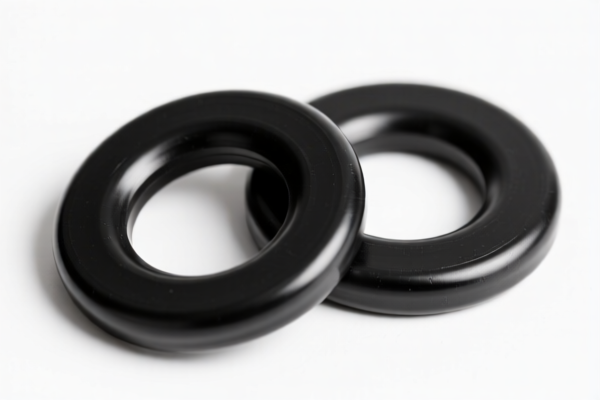
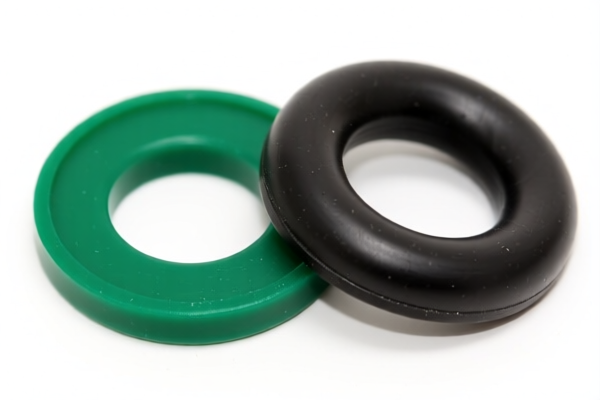


AI Analysis
🛢️ Unvulcanized Rubber Washers (未硫化橡胶垫片)
🌐 HS Code Reference & Customs Clearance Guide | 2026 Latest Tariff Analysis | Professional Customs Strategy
📌 I. Product Definition & Classification: Are You Sure About "Unvulcanized Rubber"?
Unvulcanized Rubber Washers are raw rubber components used in industrial manufacturing, typically as temporary seals or gaskets before further processing, or as raw material substrates. The key characteristic is that the rubber has not undergone the vulcanization process (cross-linking), meaning it remains sticky, soft, and shapeable.
In international trade, these are strictly classified under Chapter 40 (Rubber and Articles Thereof). The specific HS Code depends on the shape (washer/disc vs. rod/bar) and the material composition (natural vs. synthetic/mixed).
⚠️ Key Distinction Point:
- Shape: "Washer" (disc/pad) vs. "Rod/Bar" (cylindrical).
- State: Must be clearly stated as "Unvulcanized" (未硫化). If vulcanized, it falls under different subheadings with potentially different tax rates.
- Material: "Natural Rubber" vs. "Other Rubber" (synthetic/blends).
📦 II. HS Code Classification Details (2026 Latest Tariff Authority Mapping)
Based on the provided data, here is the precise mapping for Unvulcanized Rubber Washers and similar unvulcanized rubber forms:
| HS Code | Product Description | Shape/State | Material Conflict? | Total Tax Rate |
|---|---|---|---|---|
4006.90.10.00 |
Unvulcanized Rubber Washers (Disc/Pad) | Washer/Pad | No (Matches "Other shapes") | 35.0% |
4006.90.50.00 |
Unvulcanized Rubber Washers (Non-specific Shape) | Washer/Pad (Non-specific) | No | 37.7% |
4005.91.00.00 |
Unvulcanized Rubber Rods (Bar) | Rod/Cylindrical | No (Matches "Strips") | 35.0% |
4005.99.00.00 |
Unvulcanized Rubber Rods (Other Forms) | Rod/Bar (Mixed/Crumb) | No | 35.0% |
4006.90.10.00 |
Unvulcanized Rubber Rods (Bar) | Rod | No (Exact shape match) | 35.0% |
🔍 Critical Note:
- Washers (Discs) primarily fall under 4006.90.10.00 if they match "Other shapes of unvulcanized natural rubber."
- If the shape is ambiguous or "non-specific," it may fall under 4006.90.50.00 with a slightly higher tax (37.7%).
- Rods/Bars fall under 4005.91.00.00 (if strip-like) or 4005.99.00.00 (other unvulcanized mixes).
- Do NOT confuse "Washer" with "Rod"; shape matters significantly for customs clearance.
💰 III. 2026 Latest Tariff Rate Breakdown (Including Surcharges & Policy Add-ons)
✅ Applicable Country: United States (US)
✅ Country of Origin: China (CN)
✅ Effective Date: November 10, 2025 onwards
🎯 1. 4006.90.10.00 & 4005.*.00.* Categories (Standard Unvulcanized Rubber)
| Item | Detail |
|---|---|
| Base Duty | 0.0% (Ad valorem) |
| Section 301 Surcharge | +25.0% (USITC Footnote 9903.88.01 / Trade Act) |
| IEEPA Surcharge | +10.0% (For Chinese/HK products, effective Nov 2025) |
| Total Effective Tax Rate | 35.0% |
| Tax Calculation | CIF Value × 35% |
| De Minimis Exemption | ❌ Not Eligible (deny_de_minimis applies to these HS codes from China) |
| Legal Basis Path | IEEPA:9903.01.25 → IEEPA:9903.01.24 → USITC:4006.90.10.00 / 4005.91.00.00 → FOOTNOTE:9903.88.01 |
📌 Explanation:
- The Base Duty is 0%, meaning no standard MFN tariff is applied.
- However, the 25% Section 301 tariff and 10% IEEPA tariff are mandatory additions for Chinese-origin unvulcanized rubber.
- Total 35% is the final landed cost percentage for duties alone.
🎯 2. 4006.90.50.00 (Non-Specific Shape Washers)
| Item | Detail |
|---|---|
| Base Duty | 2.7% (Ad valorem) |
| Section 301 Surcharge | +25.0% |
| IEEPA Surcharge | +10.0% |
| Total Effective Tax Rate | 37.7% |
| Tax Calculation | CIF Value × 37.7% |
| De Minimis Exemption | ❌ Not Eligible |
| Legal Basis Path | IEEPA:9903.01.25 → IEEPA:9903.01.24 → USITC:4006.90.50.00 → FOOTNOTE:9903.88.01 |
📌 Note:
- If the washer is considered "non-specific" or doesn't strictly match the "natural rubber other shapes" description, it may be taxed at a higher base rate (2.7% + 35% = 37.7%).
- Precision in description is critical to avoid this higher bracket.
🛠️ IV. Customs Clearance Practical Advice (Expert Pitfall Avoidance)
✅ 1. Required Documentation Checklist (Mandatory)
| Document | Required | Purpose |
|---|---|---|
| ✅ Product Specification Sheet | ✔️ | Must explicitly state "Unvulcanized" (未硫化) and "Rubber Type" (Natural/Synthetic). |
| ✅ Material Safety Data Sheet (MSDS) | ✔️ | Proves chemical composition and unvulcanized state. |
| ✅ Product Photos | ✔️ | Clear images showing raw, sticky texture (not hardened like vulcanized rubber). |
| ✅ Commercial Invoice | ✔️ | Must list HS Code and declare "Unvulcanized Rubber Washer, Raw Material for Further Processing." |
| ✅ Packing List | ✔️ | Weight and dimensions for customs verification. |
| ✅ Country of Origin Certificate | ✔️ | To prove Chinese origin (triggers 301/IEEPA taxes). |
✅ 2. Declaration Tips (Golden Rules)
🔥 "Declare Unvulcanized, Specify Shape, Avoid Ambiguity!"
| Scenario | Correct Declaration | Incorrect Declaration |
|---|---|---|
| Unvulcanized Discs/Washers | 4006.90.10.00 |
4008.99 (Vulcanized) → Misclassification Risk |
| Unvulcanized Rods | 4005.91.00.00 |
4006.90.10.00 (Wrong shape) |
| Mixed/Blended Rubber | 4005.99.00.00 |
4005.91.00.00 (Natural rubber only) |
| Vulcanized Rubber (Hardened) | 4016.93 or 4016.99 |
4006.90.10.00 → High Audit Risk |
⚠️ Critical Warning:
- Do NOT use generic terms like "Rubber Parts" without specifying "Unvulcanized."
- If the rubber is vulcanized (hard, elastic, not sticky), it does NOT fall under 4005/4006. It likely falls under 4016 (Other articles of vulcanized rubber), which may have different tax rates.
- Ensure the invoice description matches the HS code exactly: "Unvulcanized Rubber Washer, HS 4006.90.10.00."
✅ 3. Special Cases
| Situation | Handling Advice |
|---|---|
| Raw Material for Further Processing | Declare as such to potentially claim duty drawbacks if re-exported after processing (check local regulations). |
| Mixed Natural & Synthetic Rubber | Use 4005.99.00.00 if it doesn't fit "Natural Rubber" strictly. |
| Customs Inspection | Be prepared to provide a sample for physical inspection to confirm unvulcanized state. |
| Origin Fraud | Do NOT misdeclare origin to avoid 35-37.7% taxes. Customs AI checks origin data extensively. |
🌍 V. Global Market Comparison (2026 Latest)
| Country/Region | Recommended HS Code | Total Duty (China Origin) | Certification | Notes |
|---|---|---|---|---|
| 🇺🇸 USA | 4006.90.10.00 |
35.0% | FDA (if food contact), RoHS | High taxes due to 301/IEEPA |
| 🇨🇳 China | 4006.90.10.00 |
0% (Import Duty) | CCC (if applicable) | No extra surcharges |
| 🇪🇺 EU | 4006.90.10.00 |
0% | REACH, RoHS | No additional tariffs |
| 🇯🇵 Japan | 4006.90.10.00 |
0% | PSE (if electrical) | No additional tariffs |
| 🇦🇺 Australia | 4006.90.10.00 |
5% | ACCC | Lower than US |
📌 Conclusion:
- The USA is the most expensive market for unvulcanized rubber from China due to 35% total duty.
- EU, Japan, and China have 0% import duty for these HS codes.
- Strategy: If targeting the US, consider supply chain diversification (e.g., sourcing from Vietnam/Malaysia) to avoid 35% taxes, or absorb the cost if high value-added.
📌 VI. Common Errors & Pitfalls (Lessons Learned)
❌ Error 1: Declaring "Unvulcanized" as "Vulcanized" to avoid 35% tax
👉 Consequence: Customs inspection reveals raw, sticky rubber → Seizure + Heavy Fines + Blacklisting
❌ Error 2: Using generic "Rubber Washer" without HS code
👉 Consequence: Customs assigns highest possible rate or holds shipment for classification review → Delays & Storage Fees
❌ Error 3: Confusing "Washer" (Disc) with "Rod" (Bar)
👉 Consequence: Wrong HS code (e.g., 4005.91 vs 4006.90) → Audit Risk
❌ Error 4: Ignoring the "Unvulcanized" requirement
👉 Consequence: If vulcanized, correct code is 4016.93 (3% base + no 301/IEEPA in some cases) → But if misdeclared, penalty applies
✅ Correct Approach:
"Unvulcanized Natural Rubber Washer, HS 4006.90.10.00, Raw Material, Chinese Origin"
🎯 VII. Conclusion: Precision in Classification Saves Money!
🎯 Remember the Mantra:
🔹 "Unvulcanized = 4006/4005, Shape Matters, Origin = 35% in US!"
🔹 "Vulcanized = 4016, Unvulcanized = 4006/4005, Don't Mix Them Up!"
📌 Pro Tip:
- If your product is vulcanized (hard, elastic), ensure it is declared as such to potentially qualify for lower duties (e.g., 0-3% base + no 301/IEEPA in some scenarios).
- For US imports, consult a customs broker to explore Section 301 Exclusions (if applicable) or Free Trade Agreement benefits (if originating from non-China countries).
📣 Immediate Action:
📞 Contact a Licensed Customs Broker
📄 Provide Product Samples & MSDS
📋 Apply for Advance Ruling (if available)
🚀 Ensure Smooth Clearance, Avoid Surprises, Maximize Profit Margins!
✨ Professional Customs Clearance Starts with Accurate Classification!
💼 Every Dollar of Duty Saved is Pure Profit!
Customer Reviews
About HS Code Classification
The Harmonized System (HS) is an internationally standardized nomenclature developed by the World Customs Organization (WCO) to classify traded products. Over 200 countries use the HS system as the basis for customs tariffs, trade statistics, and import/export regulations.
Each HS code follows a hierarchical structure:
- Chapter (2 digits) — Broad category of goods (e.g., Chapter 84: Machinery and Mechanical Appliances)
- Heading (4 digits) — More specific grouping within the chapter
- Subheading (6 digits) — Internationally standardized breakdown, used by all WCO member countries
- National subdivisions (8-10 digits) — Country-specific extensions for further classification, such as US HTSUS 10-digit codes
Correct HS code classification is essential for smooth customs clearance, accurate duty payment, and compliance with trade regulations. Misclassification can lead to customs delays, overpayment of duties, or penalties.
When importing from CN to US, the applicable tariff rates may include:
- Most-Favored-Nation (MFN) rate — The standard duty rate applied to WTO members
- General rate — Applied to countries without trade agreements
- Trade remedy duties — Additional tariffs such as Section 301 (anti-dumping), Section 232 (national security), or countervailing duties
The information provided on this page is for reference purposes only. For official classification, please consult with your local customs authority or a licensed customs broker.