usb adapter
CN → US| HS Code | Tariff Rate | Origin | Destination | Doc |
|---|---|---|---|---|
| 8536698000 | 37.7% | CN | US | Official Doc |
| 8542390090 | 60.0% | CN | US | Official Doc |
| 8471801000 | 35.0% | CN | US | Official Doc |
| 8471607000 | 35.0% | CN | US | Official Doc |
| 8473305100 | 85.0% | CN | US | Official Doc |
Product Images
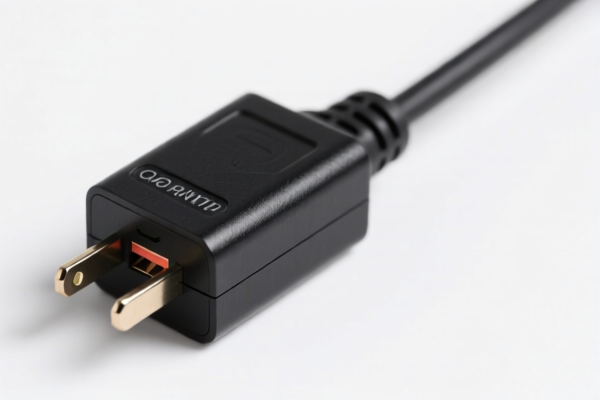
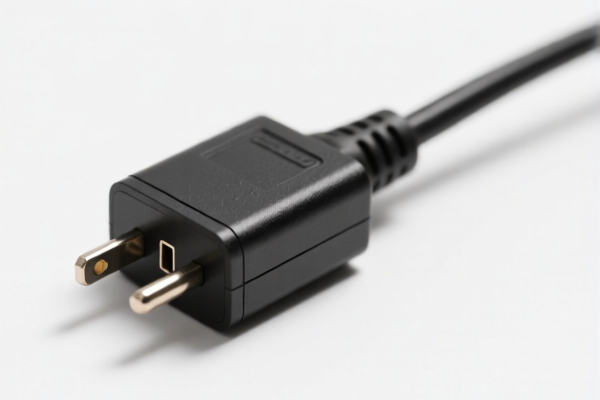
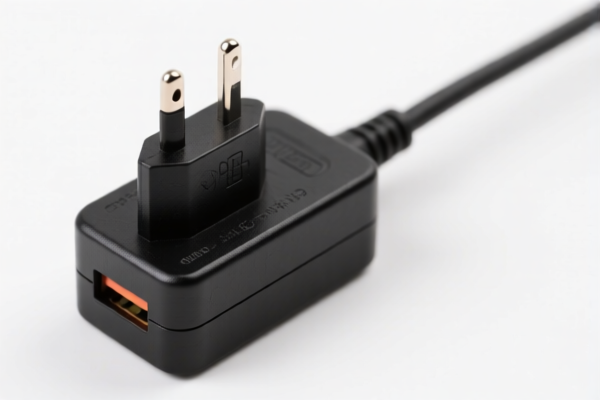
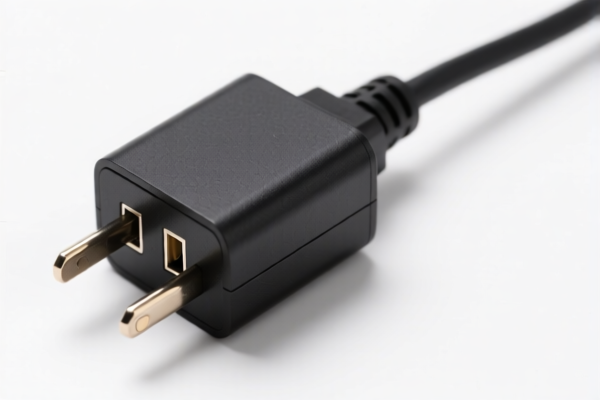
AI Analysis
🔌 USB Adapter (USB 3.0 Adapters/Converters)
🌐 HS Code Reference & Customs Clearance Guide | 2026 Latest Tariff Analysis | Professional-Level Entry Strategy
📌 Part 1: Product Definition and Classification: Do You Really Understand “USB Adapters”?
The USB 3.0 Adapter is a critical interface device in modern digital connectivity, bridging different transmission protocols or physical connectors. In international trade, its classification is highly controversial and depends heavily on the internal circuitry and specific function. It is generally divided into three main categories based on its nature:
1. Electrical Connectors (Passive/Simple Conversion):
If the adapter is primarily a passive converter (e.g., a simple pin reassignment without complex signal processing logic or power management), it may fall under electrical connection devices.
2. Integrated Circuits/Processors (Active Logic Conversion):
If the adapter contains chips that perform active data conversion, protocol translation, or signal processing, it is classified as an electronic component or integrated circuit.
3. Parts of Automatic Data Processing Machines (ADP):
If the adapter is viewed as a peripheral unit, input/output device, or control unit essential for ADP machines, it falls under the ADP accessories/part category.
⚠️ Key Distinction Point:
- If it acts purely as a physical interface or simple electrical extension → 8536 (Connectors)
- If it performs active data conversion via chips → 8542 (ICs/Electronic Goods)
- If it is considered a peripheral/input-output unit for computers → 8471 (ADP Units/Parts)
📦 Part 2: HS Code Classification Details (2026 Latest Tariff Authority Comparison)
| HS Code | Product Description | Application Scenario | Internal Logic |
|---|---|---|---|
8536.69.80.00 |
Other Plug-ins and Sockets; Electrical Connection Devices | Simple USB 3.0 to USB-C/A physical adapters; Passive splitters; Cables with built-in simple connectors | ✅ Passive/Simple Electrical |
8542.39.00.90 |
Other Electronic Integrated Circuits; Non-specific Function "Others" | Active USB 3.0 hubs, protocol converters with signal processing chips, complex bridge controllers | ✅ Active/Complex IC |
8471.80.10.00 |
Other Units for Automatic Data Processing Machines; Control or Adaptation Units | USB controllers that adapt signals for ADP systems; specialized interface cards | ✅ ADP Control/Adaptation |
8471.60.70.00 |
Input/Output Units for ADP | USB adapters viewed as physical I/O units for computers; Data transfer interfaces embedded in ADP | ✅ ADP I/O Unit |
8473.30.51.00 |
Parts and Accessories for Machines of Heading 8471 | USB adapters considered as "accessories" for computers/laptops; Electronic data transmission attachments | ✅ ADP Accessory/Part |
🔍 Key Reminder:
- The same physical product (a USB 3.0 Adapter) can be classified differently based on customs interpretation of its internal complexity.
- Simple adapters (low cost, passive) often face lower base tariffs but still face significant "Section 301" and "Section 122" surcharges.
- Complex adapters (with chips) are often classified as electronics/ICs, triggering higher base tariffs or different surcharge structures.
💰 Part 3: 2026 Latest Tariff Rate Detailed Explanation (Including Surtaxes & Policy Add-ons)
✅ Applicable Country: United States (US)
✅ Origin: China (CN)
✅ Effective Time: Current rates include Base Tariff + Section 301 (Additional) + Section 122 (if applicable)
🎯 1. 8536.69.80.00 —— Electrical Connectors/Plugs (Passive/Simple)
| Item | Content |
|---|---|
| Base Tariff | 2.7% (ad valorem) |
| Section 301 Additional Tariff | +25.0% |
| Section 122 Tariff | +10.0% |
| Total Effective Tax Rate | 37.7% |
| Tax Calculation | CIF Value × 37.7% |
| De Minimis Exemption | ❌ Not Eligible (High tax burden excludes small packages from low-risk entry) |
| Legal Path | USITC:8536.69.80.00 → Section 301 Footnote → Section 122 Order |
📌 Explanation:
- This is often the lowest cost option for simple, passive USB adapters.
- However, the 37.7% total rate is still substantial.
- Note: Customs officers may scrutinize this code if the adapter contains visible chips, potentially reclassifying it to8542or8471.
🎯 2. 8542.39.00.90 —— Other Electronic Integrated Circuits / Active Conversion Devices
| Item | Content |
|---|---|
| Base Tariff | 0.0% |
| Section 301 Additional Tariff | +50.0% |
| Section 122 Tariff | +10.0% |
| Total Effective Tax Rate | 60.0% |
| Tax Calculation | CIF Value × 60.0% |
| De Minimis Exemption | ❌ Not Eligible |
| Legal Path | USITC:8542.39.00.90 → Section 301 Footnote (Higher Tier) → Section 122 Order |
📌 Explanation:
- If customs determines the adapter contains active signal processing chips, it may be classified here.
- Although the base tariff is 0%, the 50% Section 301 surcharge makes the total 60%.
- This is significantly more expensive than the connector classification.
- Risk: High audit risk if misdeclared as a simple connector.
🎯 3. 8471.80.10.00 —— ADP Control/Adaptation Units
| Item | Content |
|---|---|
| Base Tariff | 0.0% |
| Section 301 Additional Tariff | +25.0% |
| Section 122 Tariff | +10.0% |
| Total Effective Tax Rate | 35.0% |
| Tax Calculation | CIF Value × 35.0% |
| De Minimis Exemption | ❌ Not Eligible |
| Legal Path | USITC:8471.80.10.00 → Section 301 Footnote → Section 122 Order |
📌 Explanation:
- This classification views the adapter as a control or adaptation unit for ADP machines.
- The 35.0% rate is lower than the connector classification (37.7%).
- Strategy: If the adapter has clear "control" functions, this may be the most tax-efficient legal classification.
🎯 4. 8471.60.70.00 —— ADP Input/Output Units
| Item | Content |
|---|---|
| Base Tariff | 0.0% |
| Section 301 Additional Tariff | +25.0% |
| Section 122 Tariff | +10.0% |
| Total Effective Tax Rate | 35.0% |
| Tax Calculation | CIF Value × 35.0% |
| De Minimis Exemption | ❌ Not Eligible |
| Legal Path | USITC:8471.60.70.00 → Section 301 Footnote → Section 122 Order |
📌 Explanation:
- Classifies the adapter as an Input/Output Unit physically merged with or attached to ADP.
- Same 35.0% total rate as8471.80.10.00.
- Argument: USB adapters are essentially I/O devices for computers. This is a defensible and cost-effective classification.
🎯 5. 8473.30.51.00 —— Parts and Accessories for ADP Machines
| Item | Content |
|---|---|
| Base Tariff | 0.0% |
| Section 301 Additional Tariff | +25.0% |
| Section 122 Tariff | +10.0% |
| Steel/Aluminum/Copper Add-on | +50% (If significant metal content is deemed primary) |
| Total Effective Tax Rate | 85.0% (if metal surcharge applies) or 35.0% (if standard accessory) |
| Tax Calculation | CIF Value × 85.0% (or 35.0%) |
| De Minimis Exemption | ❌ Not Eligible |
| Legal Path | USITC:8473.30.51.00 → Section 301 Footnote → Section 122 Order → Metal Surtax Clause |
📌 Explanation:
- Classifies the adapter as an accessory for ADP machines.
- Base rate 0%, but the Section 301 (25%) + Section 122 (10%) brings it to 35%.
- ⚠️ CRITICAL RISK: If customs determines the adapter is primarily made of steel, aluminum, or copper, an additional 50% may be applied, totaling 85%.
- Recommendation: Avoid this code unless you can prove it is a minor electronic accessory, not a heavy metal product.
🛠️ Part 4: Customs Clearance Practical Advice (Evading Pitfalls)
✅ 1. Preparation Checklist (Essential Documents)
| Document | Required | Explanation |
|---|---|---|
| ✅ Product Specification Sheet | ✔️ | Must detail: Interface type (USB 3.0/3.1/2.0), Chipset model, Power consumption, Protocol support. |
| ✅ Internal Circuit Diagram/Block Diagram | ✔️ | Critical: To prove if the adapter is "Passive" (8536) or "Active/IC" (8542/8471). |
| ✅ Product Photos (Including Labels) | ✔️ | Show model number, brand, input/output ports, and any FCC/CE marks. |
| ✅ Third-Party Test Report | ✔️ | FCC, CE, RoHS, UL (if applicable). Shows compliance and functional status. |
| ✅ Commercial Invoice | ✔️ | Must clearly state: "USB 3.0 Interface Adapter for Data Transmission" (Avoid vague terms like "Electronic Part"). |
| ✅ Packing List | ✔️ | Ensure no separation of "adapter" from "cable" if they are sold together as one unit. |
✅ 2. Declaration Strategy (Key Mnemonic)
🔥 “Passive is Low, Active is High, ADP is Smart, Metal is Danger!”
| Scenario | Recommended HS Code | Risk Level | Total Tax |
|---|---|---|---|
| Simple Passive Adapter (No chip, just rewired pins) | 8536.69.80.00 |
🟢 Low | 37.7% |
| Active Adapter (With protocol conversion chip) | 8471.60.70.00 or 8471.80.10.00 |
🟡 Medium | 35.0% (Best Rate) |
| Complex IC/Processor Adapter | 8542.39.00.90 |
🔴 High | 60.0% |
| Heavy Metal Housing Adapter | 8473.30.51.00 |
🚀 Extreme | 85.0% |
📌 Strategic Note:
- 35.0% (8471.xx.xx) is often cheaper than 37.7% (8536.xx.xx).
- However, declaring a passive adapter as an ADP unit requires strong justification (e.g., it is an I/O peripheral).
- Do NOT declare a simple connector as an ADP unit without technical support, as this risks fraud allegations.
- Avoid8473.30.51.00unless you are certain there is no significant metal content triggering the 50% surcharge.
✅ 3. Special Case Handling
| Situation | Handling Advice |
|---|---|
| OEM/White Label Adapters | Provide client orders + design specs to prove it’s a standardized product, not a custom "machine part." |
| Adapter with Built-in Hub | If it powers multiple devices, it may be classified as a Hub (ADP accessory) → 8471 category. |
| High-Power Adapter (with external PSU) | The power supply may be declared separately (e.g., 8504), reducing the adapter’s declared value and potential metal surcharge. |
| Mixed Shipment (Adapters + Cables) | Declare together as "USB Adapter Kit." Do not split, as separate declaration may lead to higher combined duties. |
🌍 Part 5: Global Market Customs Comparison (2026 Latest)
| Country/Region | Recommended HS Code | Total Tax (China Origin) | Certification Requirements | Notes |
|---|---|---|---|---|
| 🇺🇸 United States | 8471.60.70.00 |
35.0% | FCC + RoHS | Most cost-effective for active adapters. Avoid 8536 if 35% < 37.7%. |
| 🇨🇳 China | 8536.69.00.00 |
5%~10% | CCC (if applicable) | Low base tariff, no Section 301. |
| 🇪🇺 European Union | 8536.69.00.00 |
0%~4% | CE + RoHS | No Section 301. EU is the cheapest market. |
| 🇬🇧 United Kingdom | 8536.69.00.00 |
0%~4% | UKCA + RoHS | Post-Brexit, generally favorable rates. |
| 🇯🇵 Japan | 8536.69.00.00 |
0% | PSE | Zero tariff. Excellent market. |
📌 Conclusion:
- USA is the most challenging market due to Section 301 and 122 tariffs.
- Optimal Strategy for US: Aim for8471.60.70.00(35.0%) if the adapter has any functional IC, as it is cheaper than8536(37.7%).
- If strictly passive,8536is unavoidable, but 37.7% is the best you can get.
- Avoid8542(60%) and8473(85%) at all costs unless technically mandated.
📌 Part 6: Common Mistakes & Pitfall Guide (Blood & Tears Lessons)
❌ Mistake 1: Declaring a chip-based adapter as a "Simple Connector" (8536) to save tax.
👉 Consequence: Customs inspection reveals internal chips → Reclassified to 8542 or 8471 → Back taxes + Penalties (often 20%~50% extra).
❌ Mistake 2: Declaring a heavy metal adapter as 8471 to avoid the 50% metal surcharge.
👉 Consequence: Customs measures metal content → Applies 85.0% total tax → Massive loss.
❌ Mistake 3: Ignoring the Section 122 (10%) tariff.
👉 Consequence: All 5 codes listed above include 10% Section 122. If you forget to declare it, you will face audit and back payment.
❌ Mistake 4: Using vague descriptions like "Electronic Converter."
👉 Consequence: Customs cannot verify the function → Delay in clearance, additional documentation requests, potential detention.
✅ Correct Practice:
"USB 3.0 to Type-C Adapter, Active Protocol Conversion, with Integrated Chipset, Model XYZ, FCC Certified"
HS Code:8471.60.70.00(Justify as I/O Unit)
Total Tax: 35.0%
🎯 Part 7: Conclusion: Professional Declaration, Time-Saving, Cost-Reducing!
🎯 Remember the Mnemonic:
🔹 “Passive 37.7, Active 35.0, IC 60.0, Metal 85.0!”
🔹 “HS Code Determines Life or Death, 2.7% Difference Saves Thousands!”
📌 Pro Tip:
- If your USB adapters are originally from Vietnam, Mexico, Thailand, or Malaysia, you may exempt from Section 301/122 tariffs, reducing the rate to 0%~5%.
- Recommendation: Apply for an Advance Ruling from US Customs (CBP) before bulk shipping. This provides legal certainty and protects against future audits.
📣 Immediate Action:
📞 Contact professional customs brokers + Provide circuit diagrams + Apply for HS Code Advance Ruling
🚀 Let your USB Adapters clear customs smoothly, maximize profits, and expand globally!
✨ Professional Customs Clearance Starts with Precise Classification!
💼 Every Cent of Cost Deserves Precise Calculation!
Customer Reviews
About HS Code Classification
The Harmonized System (HS) is an internationally standardized nomenclature developed by the World Customs Organization (WCO) to classify traded products. Over 200 countries use the HS system as the basis for customs tariffs, trade statistics, and import/export regulations.
Each HS code follows a hierarchical structure:
- Chapter (2 digits) — Broad category of goods (e.g., Chapter 84: Machinery and Mechanical Appliances)
- Heading (4 digits) — More specific grouping within the chapter
- Subheading (6 digits) — Internationally standardized breakdown, used by all WCO member countries
- National subdivisions (8-10 digits) — Country-specific extensions for further classification, such as US HTSUS 10-digit codes
Correct HS code classification is essential for smooth customs clearance, accurate duty payment, and compliance with trade regulations. Misclassification can lead to customs delays, overpayment of duties, or penalties.
When importing from CN to US, the applicable tariff rates may include:
- Most-Favored-Nation (MFN) rate — The standard duty rate applied to WTO members
- General rate — Applied to countries without trade agreements
- Trade remedy duties — Additional tariffs such as Section 301 (anti-dumping), Section 232 (national security), or countervailing duties
The information provided on this page is for reference purposes only. For official classification, please consult with your local customs authority or a licensed customs broker.