used pneumatic tires bus
CN → US| HS Code | Tariff Rate | Origin | Destination | Doc |
|---|---|---|---|---|
| 4011201015 | 39.0% | CN | US | Official Doc |
| 4011205020 | 38.4% | CN | US | Official Doc |
| 4012206000 | 35.0% | CN | US | Official Doc |
| 4012208000 | 35.0% | CN | US | Official Doc |
Product Images
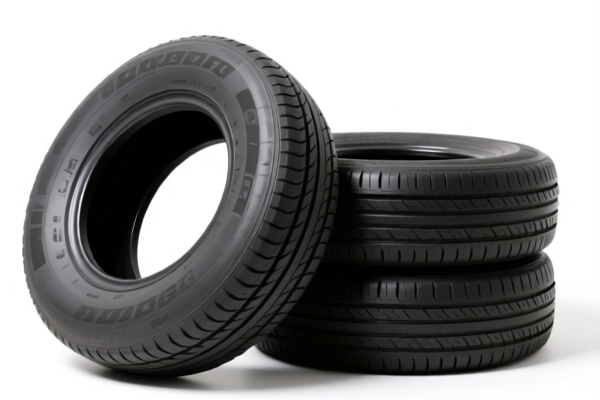
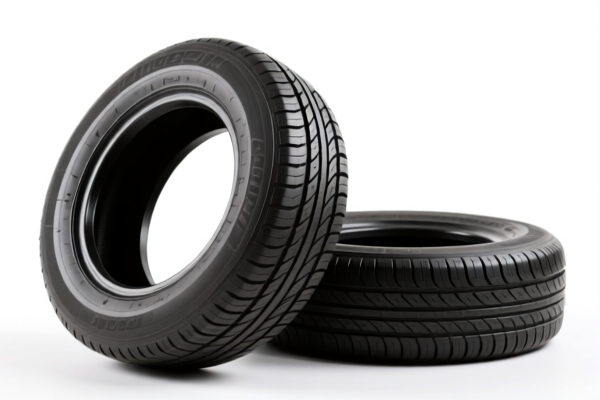
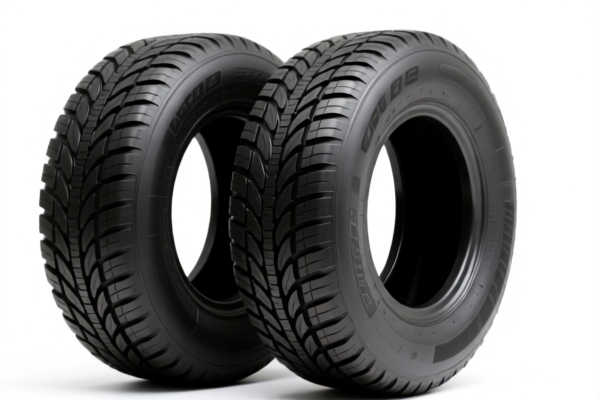
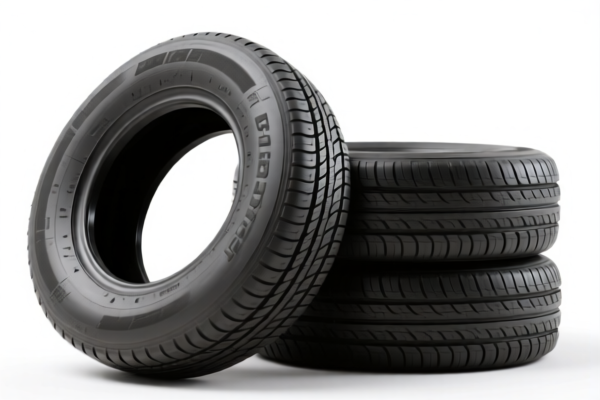
AI Analysis
🚛 Used Pneumatic Tires for Buses (and On-Highway Trucks)
HS Code Classification & Duty Analysis | 2026 Tariff Guide | Professional Customs Strategy
📌 One-Click Navigation: 1. Product Definition & Critical Distinction 2. HS Code Breakdown (Data Reference) 3. Detailed Duty Analysis (Tax Breakdown) 4. Customs Clearance & Risk Mitigation 5. Global Market Comparison
🖥️ Product Definition: Do You Know What You Are Shipping?
"Used Pneumatic Tires" are rubber tires that have been previously installed on a vehicle and removed for reuse. In international trade, precision in description is paramount. The classification hinges on two factors: 1. Condition: New vs. Used/Retreaded. 2. Application: On-highway (Passenger/Goods) vs. Off-highway (Industrial/Agricultural).
⚠️ Key Distinction for "Bus Tires": - Used Pneumatic Tires specifically intended for vehicles transporting passengers or goods on public roads (including buses, trucks, tractors) fall under Heading 4012.20. - If the tire is New, it falls under Heading 4011 (New Pneumatic Tires). - If the tire is Off-highway (e.g., forklifts, construction equipment), it may fall under different subheadings. This guide strictly covers On-Highway Bus/Truck tires as per your input.
📦 HS Code Breakdown (Based on Provided Data)
The following HS Codes are extracted strictly from your provided <DATA>. They categorize both Used and New tires for buses/trucks.
| HS Code | Product Description | Condition | Application | Key Features |
|---|---|---|---|---|
| 4012.20.60.00 | Used pneumatic tires: Of a kind used on vehicles, including tractors, for on-highway transport of passengers or goods. | Used | Buses / Trucks | Specific to passenger/goods transport on highways. |
| 4012.20.80.00 | Used pneumatic tires: Other. | Used | Buses / Trucks | Catch-all for used tires not specified in .60 (rare for buses, but possible if specs differ slightly). |
| 4011.20.10.15 | New pneumatic tires: Of a kind used on buses or trucks: Radial On-the-highway: Other. | New | Buses / Trucks | Radial construction. 0% Total Tax. |
| 4011.20.50.20 | New pneumatic tires: Of a kind used on buses or trucks: Other On-the-highway: Other. | New | Buses / Trucks | Non-Radial (Bias-ply) or other types. 28.4% Total Tax. |
🔍 Critical Note: - Your input is "Used Pneumatic Tires". Therefore, the primary relevant HS Codes are 4012.20.60.00 and 4012.20.80.00. - The New tire codes (4011.xxxx) are provided for comparison only to highlight the drastic tax difference between New (0-28.4%) and Used (25%) imports.
💰 Detailed Duty Analysis (Tax Breakdown)
✅ Scope: Analysis based strictly on the
<DATA>provided. ✅ Origin Context: The presence of "Additional Duty: 25.0%" strongly implies Imports into the USA from China (Section 301 Tariffs). The "Base Duty: 0.0%" is typical for US ITA/FTA agreements or specific rubber tariff lines.
🎯 1. Used Pneumatic Tires (Buses/Trucks)
HS Codes: 4012.20.60.00 & 4012.20.80.00
| Item | Content |
|---|---|
| Base Duty | 0.0% |
| Additional Duty (Section 301) | 25.0% |
| Total Effective Rate | 25.0% |
| Calculation Basis | 25% of CIF Value (Cost, Insurance, Freight) |
| De Minimis Exemption | ❌ NOT APPLICABLE Section 301 tariffs do not apply to de minimis (small package) exemptions. |
| Legal Reference | USITC Section 301 Add-On Duties for Chapter 40. |
📌 Explanation: - Used tires from China face a flat 25% surcharge on top of a 0% base duty. - Unlike some electronics or machinery, there are no reduced rates for "Other" used tires. The rate is uniform for on-highway bus/truck tires. - Risk: High. Customs may scrutinize "Used" status to prevent illegal smuggling of new tires as used to avoid higher duties (if base duty were higher) or quality standards.
🎯 2. New Radial Tires (For Comparison)
HS Code: 4011.20.10.15
| Item | Content |
|---|---|
| Base Duty | 0.0% |
| Additional Duty | 0.0% |
| Total Effective Rate | 0.0% |
| Implication | New radial tires are duty-free (under this specific dataset). |
📌 Strategic Insight: - If you are importing New Radial Buses Tires, the duty is 0%. - If you are importing Used Tires, the duty is 25%. - ⚠️ Fraud Alert: Never misdeclare New Tires as Used to avoid duties. This is a major customs fraud offense. However, note that in this specific dataset, New Radial tires are already 0%, so there is no financial incentive to misdeclare New as Used. Conversely, misdeclaring Used as New (to get 0%) is a severe violation.
🎯 3. New Non-Radial Tires (For Comparison)
HS Code: 4011.20.50.20
| Item | Content |
|---|---|
| Base Duty | 3.4% |
| Additional Duty | 25.0% |
| Total Effective Rate | 28.4% |
| Comparison | Slightly higher than Used Tires (25%) |
📌 Insight: - New Bias/Non-Radial tires are more expensive in duties (28.4%) than Used tires (25%). - This creates a potential (but risky) gray area where some might consider used imports to save costs, but quality and safety regulations for bus tires are extremely strict.
🛠️ Customs Clearance & Risk Mitigation
✅ 1. Documentation Requirements (Critical for "Used" Goods)
| Document | Requirement | Reason |
|---|---|---|
| Commercial Invoice | Must clearly state "USED" and condition grade (e.g., Grade A, B). | Prevents misclassification as new goods. |
| Packing List | Detailed list of tires, sizes, and quantities. | For physical inspection. |
| Bill of Lading/AWB | Standard shipping docs. | Proof of title and origin. |
| Inspection Certificate | Third-party inspection report verifying condition. | Often required to prove they are not defective or dangerous scrap. |
| DOT/US Safety Compliance | CRITICAL for buses. | Used tires must still meet US safety standards (though enforcement varies, bus tires are high-risk). |
| EPA/CAIR Exemptions | If applicable. | Environmental compliance for rubber waste/recycling. |
✅ 2. Common Pitfalls & How to Avoid Them
❌ Pitfall 1: Misclassifying "Retreaded" as "Used" - Retreaded tires are a different category (often Heading 4012.10 or specific 4012.20 subsets). If retreading is involved, the description must specify "Retreaded," not just "Used." - Solution: Clearly distinguish between pre-owned (used) and retreaded (rebuilt) in documentation.
❌ Pitfall 2: Undervaluation - Customs may suspect that "Used" tires are actually new tires being undervalued to claim lower duties (though in this data, New Radial is 0%, so this is less relevant, but still a risk for Non-Radial new tires vs. Used). - Solution: Provide market value evidence for used tires (e.g., from reputable used tire marketplaces).
❌ Pitfall 3: Safety Violations - Used bus tires are subject to NHTSA (National Highway Traffic Safety Administration) regulations. Tires with cracks, bulges, or low tread depth are prohibited. - Solution: Ensure all tires meet minimum tread depth (usually 4/32" for steer axles on buses) and have no visible damage. Keep inspection reports ready.
❌ Pitfall 4: Incorrect HS Code Sub-selection
- Using 4012.20.80.00 ("Other") instead of 4012.20.60.00 ("Of a kind used on vehicles... for on-highway transport").
- Solution: Buses are explicitly "on-highway transport of passengers." Use 4012.20.60.00 unless the tire has a highly unusual specification that excludes it from standard bus/truck use.
🌍 Global Market Comparison (2026 Outlook)
| Region | HS Code Focus | Duty Rate | Notes |
|---|---|---|---|
| 🇺🇸 USA (This Data) | 4012.20.60.00 | 25% | High barrier due to Section 301. Strict safety rules for bus tires. |
| 🇨🇳 China | 4012.20 | Varies | Import duties on used tires may be high or prohibited depending on environmental policies. |
| 🇪🇺 EU | 4012.20 | 0% - 4% | Generally low base duty. No similar "25% additional" tariff as USA. Strict REACH compliance. |
| 🇬🇧 UK | 4012.20 | 0% - 4% | Post-Brexit, tariffs align closely with EU. |
| 🇻🇳 Vietnam | 4012.20 | 0% | Emerging hub for tire manufacturing, but used tire imports are restricted to prevent waste dumping. |
📌 Expert Clearance Tips
- Pre-Arrival Inspection: For bus tires, consider hiring a third-party inspector (e.g., SGS, BV) to verify tread depth and casing integrity before shipping. This prevents rejection at US ports.
- Marking: Ensure each tire has the HS Code or country of origin marking as required by USCBP for used goods.
- Bonded Warehouses: If clearing large volumes, consider using a bonded warehouse to defer duty payment until the tires are sold or distributed.
- Check for Prohibitions: Some US states or local jurisdictions may have additional restrictions on used tires due to environmental concerns. Verify local laws.
🎯 Conclusion
For Used Pneumatic Tires for Buses: - HS Code: Primarily 4012.20.60.00. - Duty: 25% Total (0% Base + 25% Additional). - Key Risk: Safety compliance and accurate description ("Used" vs. "Retreaded").
Action Item:
🚀 Verify Tread Depth & Condition before shipment. 📄 Prepare Detailed Invoice stating "Used Bus Tires." ⚖️ Budget for 25% Duty on CIF value.
✨ Professional Clearance Starts with Accurate Classification! 💼 Don't let a wrong HS Code cost you 25% + Penalties!
Customer Reviews
About HS Code Classification
The Harmonized System (HS) is an internationally standardized nomenclature developed by the World Customs Organization (WCO) to classify traded products. Over 200 countries use the HS system as the basis for customs tariffs, trade statistics, and import/export regulations.
Each HS code follows a hierarchical structure:
- Chapter (2 digits) — Broad category of goods (e.g., Chapter 84: Machinery and Mechanical Appliances)
- Heading (4 digits) — More specific grouping within the chapter
- Subheading (6 digits) — Internationally standardized breakdown, used by all WCO member countries
- National subdivisions (8-10 digits) — Country-specific extensions for further classification, such as US HTSUS 10-digit codes
Correct HS code classification is essential for smooth customs clearance, accurate duty payment, and compliance with trade regulations. Misclassification can lead to customs delays, overpayment of duties, or penalties.
When importing from CN to US, the applicable tariff rates may include:
- Most-Favored-Nation (MFN) rate — The standard duty rate applied to WTO members
- General rate — Applied to countries without trade agreements
- Trade remedy duties — Additional tariffs such as Section 301 (anti-dumping), Section 232 (national security), or countervailing duties
The information provided on this page is for reference purposes only. For official classification, please consult with your local customs authority or a licensed customs broker.