usema machine
CN → US| HS Code | Tariff Rate | Origin | Destination | Doc |
|---|---|---|---|---|
| 8452299000 | 35.0% | CN | US | Official Doc |
| 8452100090 | 17.5% | CN | US | Official Doc |
| 8452219000 | 17.5% | CN | US | Official Doc |
| 8479896500 | 20.3% | CN | US | Official Doc |
| 8452299000 | 35.0% | CN | US | Official Doc |
Product Images
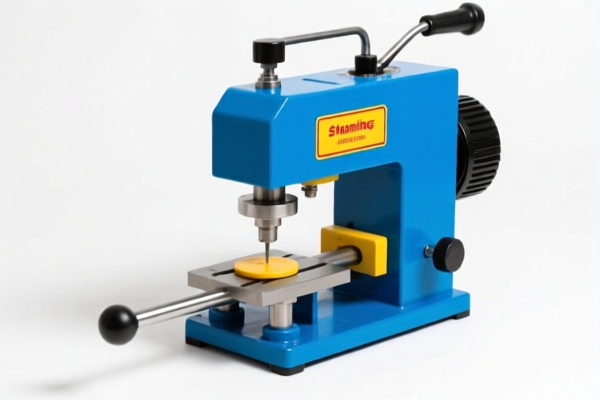
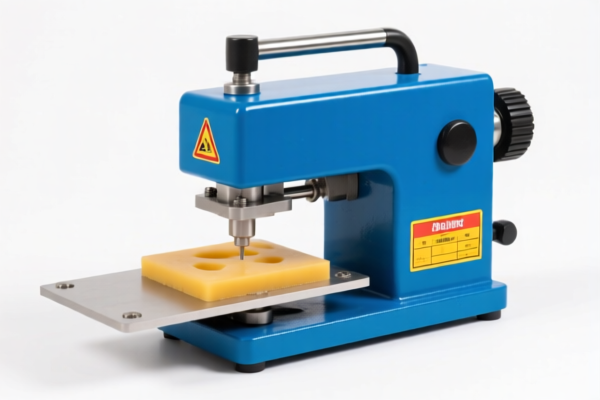
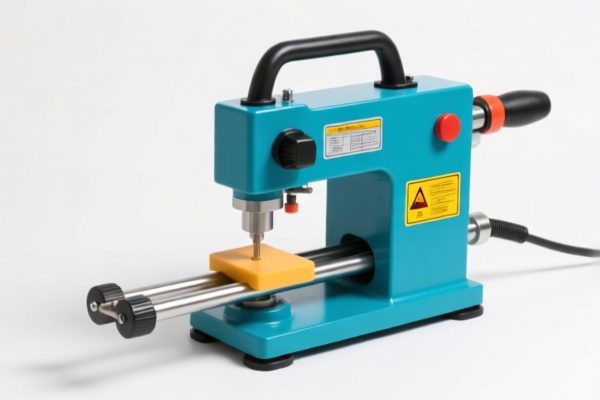
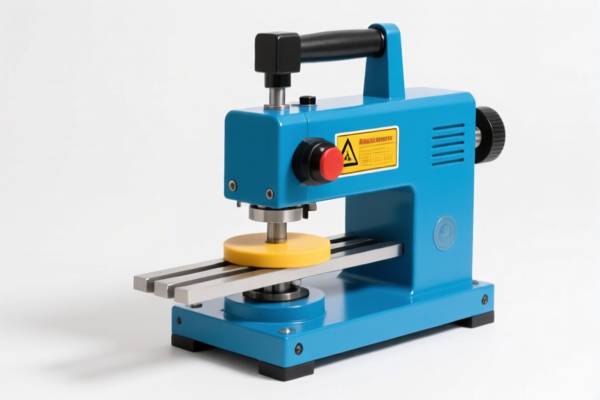
AI Analysis
🧵 Sewing Machines: The Ultimate Classification & Customs Clearance Guide (2026 Update)
🌐 HS Code Reference & Clearance Strategy | 2026 Latest Tariff Analysis | Professional-Level Entry Tactics
📌 I. Product Definition & Classification: Do You Really Understand "Sewing Machines"?
Sewing machines are essential mechanical appliances used for stitching fabrics together. In international trade, they are categorized based on their functionality, power source, and intended use (Household vs. Industrial). Misclassification can lead to massive tax discrepancies due to the complex layering of US tariffs.
Key Distinctions:
- Household Sewing Machines: Designed for home use, typically smaller, lower power. → 8452.10
- Industrial Sewing Machines: Designed for factories/high-volume use. Sub-categories depend on automation level and power source. → 8452.29, 8452.21, 8479.89
⚠️ Critical Note:
- 8479.89.65.00 is a specific sub-category for industrial machines with self-contained motors.
- 8452.29.90.00 covers "Other" industrial machines, but carries a higher punitive tariff than other industrial categories.
- Do not confuse "Industrial" with "Household." The tax difference is significant (17.5% vs. 35.0%).
📦 II. HS Code Classification Details (2026 Latest Tariff Authority Comparison)
| HS Code | Product Description | Applicable Scenario | Material/Form Conflict? | Total Tax Rate |
|---|---|---|---|---|
8452.29.90.00 |
Sewing machines; other than those of heading 8452.10 or 8452.21. Core purpose: sewing. No material conflict. | General industrial sewing, non-automatic units | ✅ None | 35.0% |
8452.10.00.90 |
Household sewing machines. Directly fits household use. No material conflict. | Home use, light commercial use | ✅ None | 17.5% |
8452.21.90.00 |
Industrial sewing machines; other types under automatic units. | Semi-automatic industrial lines | ✅ None | 17.5% |
8479.89.65.00 |
Industrial sewing machines; mechanical appliances with independent functions, with self-contained motor. | Heavy-duty industrial, motor-integrated | ✅ None | 20.3% |
8452.29.90.00 |
Industrial sewing machines; other sewing machines. No material or form conflict. | Other industrial applications | ✅ None | 35.0% |
🔍 Key Reminder:
- 8452.29.90.00 has the highest tax rate (35.0%) among industrial options. Always verify if the machine fits into 8452.10 (Household) or 8452.21 (Automatic) or 8479.89.65 (Self-contained motor) to save costs.
- If the machine is industrial but has a self-contained motor, check 8479.89.65.00 (20.3%) before defaulting to 8452.29.90.00 (35.0%).
💰 III. 2026 Latest Tariff Rate Breakdown (Including Additional Taxes & Policy Surcharges)
✅ Applicable Country: United States (US)
✅ Country of Origin: China (CN)
✅ Effective Date: November 10, 2025 onwards (including subsequent imports)
🎯 1. 8452.29.90.00 —— Other Sewing Machines (High Tariff Industrial)
| Item | Details |
|---|---|
| Base Rate | 0% (ad valorem) |
| Section 301 Surcharge | +25% (USITC Footnote) |
| Section 122 Surcharge | +10% (Targeting China/HK products) |
| Total Tax Rate | 35.0% |
| Tax Calculation | CIF Value × 35% |
| De Minimis Exemption | ❌ Not Available (deny_de_minimis) |
| Legal Basis Path | Section 301: 8452.29.90.00 → Section 122: 8452.29.90.00 |
📌 Explanation:
- This code is classified under "Other" sewing machines, triggering the 25% Section 301 tariff.
- The 10% Section 122 tariff is additionally applied.
- Total 35% is extremely high. Verify if the machine can be reclassified to a lower-tax industrial category.
🎯 2. 8452.10.00.90 —— Household Sewing Machines
| Item | Details |
|---|---|
| Base Rate | 0% (ad valorem) |
| Section 301 Surcharge | +7.5% (USITC Footnote) |
| Section 122 Surcharge | +10% (Targeting China/HK products) |
| Total Tax Rate | 17.5% |
| Tax Calculation | CIF Value × 17.5% |
| De Minimis Exemption | ❌ Not Available (deny_de_minimis) |
| Legal Basis Path | Section 301: 8452.10.00.90 → Section 122: 8452.10.00.90 |
📌 Explanation:
- If the machine is marketed and designed for household use, this is the correct code.
- The Section 301 rate is only 7.5%, making it significantly cheaper than industrial "Other" machines.
- Do not misdeclare an industrial machine as household to avoid customs penalties.
🎯 3. 8452.21.90.00 —— Industrial Sewing Machines (Automatic Units)
| Item | Details |
|---|---|
| Base Rate | 0% (ad valorem) |
| Section 301 Surcharge | +7.5% (USITC Footnote) |
| Section 122 Surcharge | +10% (Targeting China/HK products) |
| Total Tax Rate | 17.5% |
| Tax Calculation | CIF Value × 17.5% |
| De Minimis Exemption | ❌ Not Available (deny_de_minimis) |
| Legal Basis Path | Section 301: 8452.21.90.00 → Section 122: 8452.21.90.00 |
📌 Explanation:
- Applies to automatic industrial sewing units.
- Same low surcharge (7.5%) as household machines.
- Ensure the machine is truly "automatic" to qualify.
🎯 4. 8479.89.65.00 —— Industrial Sewing Machines (Self-Contained Motor)
| Item | Details |
|---|---|
| Base Rate | 2.8% (ad valorem) |
| Section 301 Surcharge | +7.5% (USITC Footnote) |
| Section 122 Surcharge | +10% (Targeting China/HK products) |
| Total Tax Rate | 20.3% |
| Tax Calculation | CIF Value × 20.3% |
| De Minimis Exemption | ❌ Not Available (deny_de_minimis) |
| Legal Basis Path | Section 301: 8479.89.65.00 → Section 122: 8479.89.65.00 |
📌 Explanation:
- This is a special industrial category for machines with self-contained motors.
- Although the base rate is 2.8%, the total is still higher than Household/Automatic Industrial codes.
- Use this ONLY if the machine has a self-contained motor and does not fit other 8452 sub-categories.
🛠️ IV. Customs Clearance Practical Advice (Real-World Pitfall Avoidance Guide)
✅ 1. Document Checklist (Missing Any = Delay)
| Document | Required | Description |
|---|---|---|
| ✅ Product Specification Sheet | ✔️ | Dimensions, power source, stitch types, motor type (self-contained or external) |
| ✅ Circuit/Mechanical Diagram | ✔️ | To prove if motor is self-contained or if machine is automatic |
| ✅ Product Photos (including Nameplate) | ✔️ | Clear model number, brand, input/output parameters |
| ✅ Commercial Invoice | ✔️ | Clearly state "Sewing Machine for [Household/Industrial] Use" |
| ✅ Packing List | ✔️ | Show relationship between main unit and accessories |
| ✅ Third-Party Certification | ✔️ | If applicable (e.g., UL, CE, FCC) |
✅ 2. Declaration Tips (Key Mantra)
🔥 "Identify Use First, Then Check Motor, Avoid 'Other' to Save Tax!"
| Scenario | Correct Declaration | Wrong Practice |
|---|---|---|
| Household Use | 8452.10.00.90 (17.5%) |
Misdeclare as Industrial → 35% |
| Industrial, Automatic | 8452.21.90.00 (17.5%) |
Misdeclare as "Other" → 35% |
| Industrial, Self-Contained Motor | 8479.89.65.00 (20.3%) |
Misdeclare as "Other" → 35% |
| Industrial, No Specific Sub-category | 8452.29.90.00 (35.0%) |
None (This is the default high-tax bucket) |
✅ 3. Special Cases Handling
| Scenario | Handling Advice |
|---|---|
| OEM Custom Machines | Provide customer order + design drawings to prove intended use (Household vs. Industrial) |
| Sewing Machine + Stand + Power Cable | Declare as Complete Machine. Do not split. |
| Industrial Machine with External Motor | Likely 8452.29.90.00 or 8452.21.90.00 depending on automation. |
| Industrial Machine with Self-Contained Motor | Check 8479.89.65.00. If it doesn't fit, fallback to 8452.29.90.00. |
🌍 V. Global Market Comparison (2026 Latest)
| Country/Region | Recommended HS Code | Tariff (China Origin) | Certification Requirements | Notes |
|---|---|---|---|---|
| 🇺🇸 USA | 8452.10.00.90 / 8452.21.90.00 |
17.5% | N/A | High tax for "Other" (35%) |
| 🇨🇳 China | 8452.10.00.90 / 8452.29.90.00 |
5-10% | CCC | No Section 301/122 |
| 🇪🇺 EU | 8452.29.90.00 |
0-4% | CE + RoHS | No punitive tariffs |
| 🇬🇧 UK | 8452.29.90.00 |
0-4% | UKCA | Post-Brexit alignment |
📌 Conclusion:
- USA is the only market with punitive Section 301 and Section 122 tariffs.
- Optimization Strategy: If possible, classify as Household or Automatic Industrial to reduce tax from 35% to 17.5%.
- Self-Contained Motor machines are a niche category with 20.3% tax.
📌 VI. Common Mistakes & Pitfall Guide (Blood & Tears Lessons)
❌ Mistake 1: Declaring an Industrial Machine as Household
👉 Consequence: Customs audit reveals industrial specs → Penalties + Back Taxes + Seizure Risk.
❌ Mistake 2: Declaring a Non-Automatic Industrial Machine as 8452.21.90.00
👉 Consequence: If not automatic, it falls to 8452.29.90.00 → Tax jumps from 17.5% to 35%.
❌ Mistake 3: Ignoring Section 122 Tariff (10%)
👉 Consequence: All codes above include this 10%. Forgetting to factor it in leads to underpayment of 10% on CIF value.
❌ Mistake 4: Misclassifying Self-Contained Motor machines as standard 8452.29.90.00
👉 Consequence: Paying 35% instead of 20.3%. Loss of ~14.7% in tax savings.
✅ Correct Practice:
"Industrial Sewing Machine, Automatic, 3-Thread Overlock, Model XYZ, Voltage 110V/220V, FCC/CE Certified"
"Household Sewing Machine, Portable, Model ABC, 110V, Household Use Only"
🎯 VII. Conclusion: Precise Classification Saves Money!
🎯 Remember the Mantra:
🔹 "Household & Automatic: 17.5% | Self-Contained Motor: 20.3% | Other Industrial: 35%!"
🔹 "Verify Motor Type & Automation Level First!"
🔹 "Don't default to 'Other' unless necessary!"
📌 Pro Tip:
- If your machine is OEM for a brand that specifies "Household Use," ensure marketing materials reflect this.
- Apply for a Pre-Ruling (Advance Ruling) from US Customs if the classification is ambiguous. This provides legal certainty and avoids post-clearance audits.
📣 Immediate Action:
📞 Contact a Professional Customs Broker + Provide Product Photos + Specify Intended Use
🚀 Let your Sewing Machines Clear Customs Smoothly, Save Costs, and Boost Profits!
✨ Professional Clearance Starts with Accurate Classification!
💼 Every Percent of Tax Saved is Pure Profit!
Customer Reviews
About HS Code Classification
The Harmonized System (HS) is an internationally standardized nomenclature developed by the World Customs Organization (WCO) to classify traded products. Over 200 countries use the HS system as the basis for customs tariffs, trade statistics, and import/export regulations.
Each HS code follows a hierarchical structure:
- Chapter (2 digits) — Broad category of goods (e.g., Chapter 84: Machinery and Mechanical Appliances)
- Heading (4 digits) — More specific grouping within the chapter
- Subheading (6 digits) — Internationally standardized breakdown, used by all WCO member countries
- National subdivisions (8-10 digits) — Country-specific extensions for further classification, such as US HTSUS 10-digit codes
Correct HS code classification is essential for smooth customs clearance, accurate duty payment, and compliance with trade regulations. Misclassification can lead to customs delays, overpayment of duties, or penalties.
When importing from CN to US, the applicable tariff rates may include:
- Most-Favored-Nation (MFN) rate — The standard duty rate applied to WTO members
- General rate — Applied to countries without trade agreements
- Trade remedy duties — Additional tariffs such as Section 301 (anti-dumping), Section 232 (national security), or countervailing duties
The information provided on this page is for reference purposes only. For official classification, please consult with your local customs authority or a licensed customs broker.