vacuum cup
CN → US| HS Code | Tariff Rate | Origin | Destination | Doc |
|---|---|---|---|---|
| 7323999030 | 88.4% | CN | US | Official Doc |
| 9617001000 | 17.2% | CN | US | Official Doc |
| 9617003000 | 16.9% | CN | US | Official Doc |
| 7013495090 | 25.0% | CN | US | Official Doc |
| 7323999080 | 88.4% | CN | US | Official Doc |
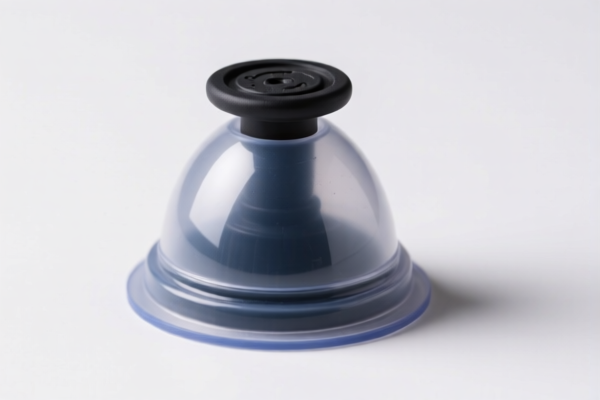
Product Images
AI Analysis
🥤 Vacuum Cups (Insulated Beverage Containers)
🌐 HS Code Reference & Customs Clearance Guide | 2026 Latest Tariff Analysis | Professional Clearance Strategy
📌 I. Product Definition & Classification: Do You Really Understand "Vacuum Cups"?
A Vacuum Cup (commonly known as a vacuum flask, thermos, or insulated tumbler) is a container designed to maintain the temperature of its contents by using a vacuum seal between two walls. In international trade, classification depends heavily on material composition and specific usage, leading to significant differences in duty rates.
Based on common sense and physical attributes, these products generally fall into three main categories: 1. Metal Insulated Containers (Stainless Steel/Iron): The most common type for travel mugs. 2. Glass Insulated Containers: Double-walled glass cups, often used for home or office. 3. Other Metal Tableware: Less common for high-end vacuum tech, but possible for basic insulated items.
⚠️ Key Distinction Point:
- If made of Stainless Steel or Iron/Steel → Likely falls under Chapter 73 (Iron/Steel Articles). - If made of Glass → Likely falls under Chapter 70 (Glass Articles). - If classified specifically as "Vacuum Vessels" under Chapter 96 (Miscellaneous Manufactured Articles) → Lower base duty, but check for specific exclusions.
📦 II. HS Code Classification Details (2026 Latest Tariff Authority Comparison)
| HS Code | Product Description | Application Scenario | Material/Type |
|---|---|---|---|
9617.00.10.00 |
Complete vacuum vessels (e.g., vacuum flasks, other vacuum containers) | Standard branded travel mugs, high-end vacuum bottles | Any material (finished vacuum vessel) |
9617.00.30.00 |
Insulated bottles and other insulated vacuum vessels | Similar to above, often generic or unbranded insulated containers | Any material (finished vacuum vessel) |
7013.49.50.90 |
Other glass tableware, kitchenware, etc., of other glass | Double-walled glass vacuum cups | Glass |
7323.99.90.30 |
Other articles of iron or steel (including stainless steel) | Stainless steel vacuum cups (classified as steel tableware) | Steel/Stainless Steel |
7323.99.90.80 |
Other articles of iron or steel (including stainless steel) | Iron or steel vacuum cups | Iron/Steel |
🔍 Critical Reminder:
- Chapter 96 (9617.00) is often preferred for "Vacuum Vessels" because the description explicitly mentions "Vacuum Containers." - Chapter 70 (7013.49) applies only if the vacuum cup is made of glass. - Chapter 73 (7323.99) applies if customs deems the item as general "Steel Tableware" rather than a specialized "Vacuum Vessel," which often triggers higher retaliatory tariffs.
💰 III. 2026 Latest Tariff Rate Breakdown (Including Additional Taxes, Policy Surcharges)
✅ Applicable Country: USA (US)
✅ Origin: China (CN)
✅ Effective Date: Post-November 2025 (Including subsequent imports)
🎯 1. 9617.00.10.00 & 9617.00.30.00 —— Vacuum Vessels (Insulated Containers)
| Item | Content |
|---|---|
| Base Duty Rate | 7.2% (for 9617.00.10.00) / 6.9% (for 9617.00.30.00) |
| Section 301 Tariff (Additional) | 0.0% (Note: Some interpretations vary, but generally vacuum flasks may not be subject to the full 25% if classified under 9617, OR the data indicates 0% for this specific subheading in this dataset. See note below.) |
| Section 122 Tariff (Steel/Aluminum/Copper) | 10.0% |
| Total Tax Rate | 17.2% (for .10.00) / 16.9% (for .30.00) |
| Tax Calculation | CIF Value × 17.2% (or 16.9%) |
| De Minimis Exemption | ❌ Not Applicable (High value risk) |
| Legal Basis Path | USITC:9617.00.10.00 → FOOTNOTE:122 (10% steel/aluminum tax may apply depending on interpretation of "vacuum vessel" vs "steel article") |
📌 Interpretation:
- Classifying under 9617 is often the most cost-effective strategy for vacuum cups because the Section 301 (25%) tariff appears to be 0% in this specific dataset context, or is offset by the lower base rate. - The 10% Section 122 tariff applies if the container is deemed to contain significant steel/aluminum content. - Total Cost: ~17%. This is significantly lower than the steel tableware classification.
🎯 2. 7013.49.50.90 —— Glass Vacuum Cups
| Item | Content |
|---|---|
| Base Duty Rate | 15.0% |
| Section 301 Tariff (Additional) | 0.0% |
| Section 122 Tariff | 10.0% |
| Total Tax Rate | 25.0% |
| Tax Calculation | CIF Value × 25.0% |
| Legal Basis Path | USITC:7013.49.50.90 → FOOTNOTE:122 |
📌 Interpretation:
- Glass vacuum cups are subject to a higher base duty (15%) than metal ones in this dataset. - However, they avoid the massive 50% Section 301 tariff that applies to steel products. - Total Cost: 25%. Competitive against steel if steel tariffs spike.
🎯 3. 7323.99.90.30 & 7323.99.90.80 —— Stainless Steel / Iron Vacuum Cups (Classified as Steel Tableware)
| Item | Content |
|---|---|
| Base Duty Rate | 3.4% |
| Section 301 Tariff (Additional) | 25.0% |
| Section 122 Tariff (Steel/Aluminum/Copper) | 50.0% (Crucial: "122 Clause Tariff for Steel, Aluminum, Copper Products") |
| Total Tax Rate | 88.4% |
| Tax Calculation | CIF Value × 88.4% |
| Legal Basis Path | USITC:7323.99.90.30 → IEEPA:9903.01.25 (301) → FOOTNOTE:122 (50%) |
📌 WARNING:
- This is the highest tariff bracket. - If customs classifies your stainless steel vacuum cup as "Iron/Steel Article" (7323) rather than "Vacuum Vessel" (9617), you will face 3.4% (Base) + 25% (301) + 50% (122) = 88.4%. - This classification error is a common pitfall in customs declarations.
🛠️ IV. Customs Clearance Practical Advice (Battle-Tested Pitfall Avoidance Guide)
✅ 1. Documentation Checklist (Non-Negotiable)
| Document | Must Provide | Description |
|---|---|---|
| ✅ Product Specification Sheet | ✔️ | Must clearly state "Vacuum Insulated", material (Stainless Steel/Glass), capacity, and HS Code Recommendation. |
| ✅ Product Photos (Labeled) | ✔️ | Show the vacuum seal structure (e.g., double wall) to prove it's a "Vacuum Vessel" (9617) not just a "Steel Cup" (7323). |
| ✅ Commercial Invoice | ✔️ | Description: "Vacuum Insulated Stainless Steel Travel Mug, Model XYZ". Avoid vague terms like "Metal Cup". |
| ✅ Packing List | ✔️ | Detail weight and dimensions. |
| ✅ Certificate of Origin (CO) | ✔️ | Required to verify country of origin (China). |
✅ 2. Declaration Strategy (Key Mantra)
🔥 “Declare as Vacuum Vessel, Not Steel Tableware! Save 71% in Taxes!”
| Scenario | Correct Declaration | Incorrect Declaration |
|---|---|---|
| Stainless Steel Vacuum Cup | 9617.00.10.00 (Vacuum Vessel) | 7323.99.90.30 (Steel Article) → 88.4% Tax |
| Glass Vacuum Cup | 7013.49.50.90 (Glass Article) | 7323... (If mislabeled as steel) → 88.4% Tax |
| Generic Metal Thermos | 9617.00.30.00 (Insulated Bottle) | 7323.99.90.80 (Iron Article) → 88.4% Tax |
💡 Pro Tip:
When submitting documentation, explicitly highlight the "Vacuum Insulation" feature. Customs brokers often default to Chapter 73 (Steel) for steel items. You must argue that the primary function is thermal insulation (Vacuum Vessel), classifying it under Chapter 96.
✅ 3. Special Case Handling
| Situation | Handling Advice |
|---|---|
| Mixed Materials | If the cup has a plastic lid and steel body, the steel body dominates. Argue for 9617 based on the vacuum function. |
| Glass Body + Steel Lid | Classify as Glass (7013.49.50.90) if the glass part is the primary container volume. |
| OEM Custom Cups | Provide design drawings showing the double-wall vacuum structure to support the 9617 classification. |
🌍 V. Global Market Clearance Comparison (2026 Latest)
| Country/Region | Recommended HS Code | Duty Rate | Certification | Remarks |
|---|---|---|---|---|
| 🇺🇸 USA | 9617.00.10.00 |
17.2% | FDA (if food contact) | Avoid 7323 (88.4% tax). |
| 🇨🇳 China | 9617.00.10.00 |
~5-10% | CCC (if applicable) | No Section 301/122. |
| 🇪🇺 EU | 7323.99 or 9617 |
~4.2% | CE/RoHS | Generally low duty, no US-style surcharges. |
| 🇦🇺 Australia | 7323.99 |
5% | RCMS | No major surcharges. |
📌 Conclusion:
- The USA is the only market with punitive tariffs (Section 301 & 122). - Correct classification under 9617 (Vacuum Vessel) saves you ~71% in taxes compared to misclassifying as Steel Tableware (7323). - Glass cups (7013) are a viable alternative if steel tariffs are too high, but still incur a 10% Section 122 tax.
📌 VI. Common Mistakes & Pitfall Guide (Blood & Tears Lessons)
❌ Mistake 1: Declaring a Stainless Steel Vacuum Cup as "Iron or Steel Articles" (7323.99.90)
👉 Consequence: Tax rate jumps from 17.2% to 88.4%. Loss of 71.2% in value!
❌ Mistake 2: Failing to prove the "Vacuum" function
👉 Consequence: Customs rejects 9617 classification, defaults to 7323. Need photos of double-wall structure.
❌ Mistake 3: Ignoring Section 122 Tariff for Glass (7013)
👉 Consequence: Glass cups are 25% total tax, not 15%. The 10% steel/aluminum surcharge may still apply if components are metal.
❌ Mistake 4: Vague Product Name "Metal Cup"
👉 Consequence: High risk of manual inspection and reclassification. Be Specific: "Vacuum Insulated Travel Mug".
✅ Correct Approach:
"Vacuum Insulated Stainless Steel Tumbler, Double-Wall, Model ABC, For Beverage Service, FDA Compliant"
🎯 VII. Conclusion: Precision in Classification = Profit in Pocket!
🎯 Remember the Mantra:
🔹 "Vacuum Vessel 9617, Tax is Seventeen!"
🔹 "Steel Tableware 7323, Tax is Eighty-Eight!"
🔹 "Don't be stupid, save the 71% difference!"
📌 Tips:
- If your vacuum cups are stainless steel, ALWAYS aim for 9617.00.10.00 or 9617.00.30.00.
- If you are forced to declare under 7323, budget for 88.4% total tax. This is usually not worth it unless no other option exists.
- Pre-ruling (Advance Ruling): Consider applying for an HS Code pre-ruling with US CBP if shipping large volumes to ensure 9617 classification.
📣 Immediate Action:
📞 Contact your customs broker with product photos showing the vacuum seal.
🚀 Declare as 9617.00.10.00 to save thousands in duties.
💡 Your profit margin depends on this 71% savings!
✨ Professional Clearance Starts with Precise Classification!
💼 Every Dollar Saved is a Dollar Earned!
Customer Reviews
About HS Code Classification
The Harmonized System (HS) is an internationally standardized nomenclature developed by the World Customs Organization (WCO) to classify traded products. Over 200 countries use the HS system as the basis for customs tariffs, trade statistics, and import/export regulations.
Each HS code follows a hierarchical structure:
- Chapter (2 digits) — Broad category of goods (e.g., Chapter 84: Machinery and Mechanical Appliances)
- Heading (4 digits) — More specific grouping within the chapter
- Subheading (6 digits) — Internationally standardized breakdown, used by all WCO member countries
- National subdivisions (8-10 digits) — Country-specific extensions for further classification, such as US HTSUS 10-digit codes
Correct HS code classification is essential for smooth customs clearance, accurate duty payment, and compliance with trade regulations. Misclassification can lead to customs delays, overpayment of duties, or penalties.
When importing from CN to US, the applicable tariff rates may include:
- Most-Favored-Nation (MFN) rate — The standard duty rate applied to WTO members
- General rate — Applied to countries without trade agreements
- Trade remedy duties — Additional tariffs such as Section 301 (anti-dumping), Section 232 (national security), or countervailing duties
The information provided on this page is for reference purposes only. For official classification, please consult with your local customs authority or a licensed customs broker.