vegetable fiber woven picnic basket
CN → US| HS Code | Tariff Rate | Origin | Destination | Doc |
|---|---|---|---|---|
| 5705002090 | 38.3% | CN | US | Official Doc |
| 4601214000 | 38.3% | CN | US | Official Doc |
| 3926909989 | 22.8% | CN | US | Official Doc |
| 5705001000 | 35.0% | CN | US | Official Doc |
| 4601296000 | 39.8% | CN | US | Official Doc |
Product Images
AI Analysis
🧺 Vegetable Fiber Woven Picnic Basket
🌐 HS Code Reference & Customs Clearance Guide | 2026 Latest Tariff Analysis | Professional Entry Strategy
📌 I. Product Definition & Classification: What is a "Vegetable Fiber Picnic Basket"?
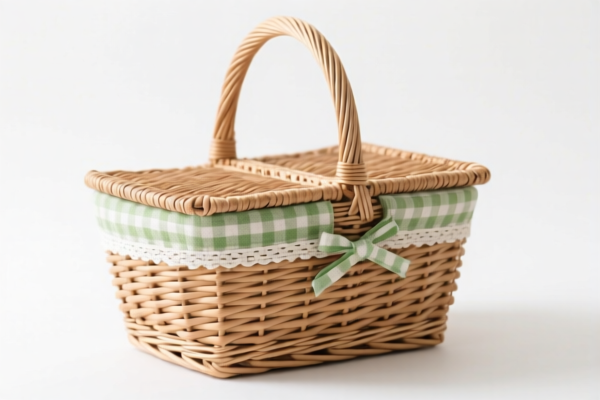
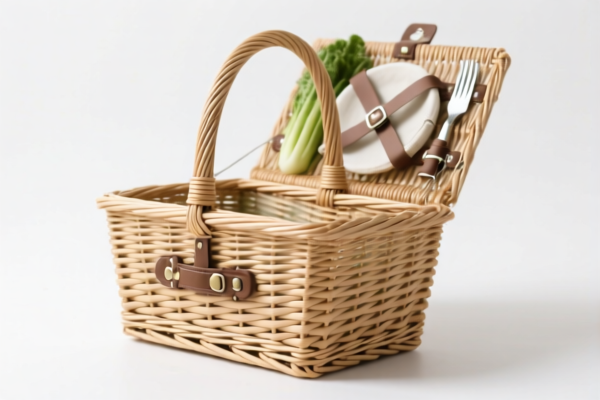
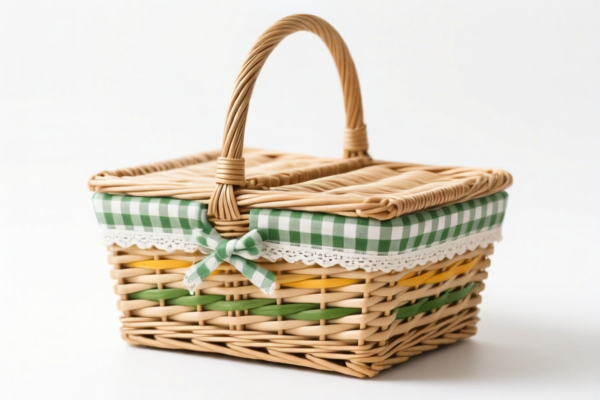
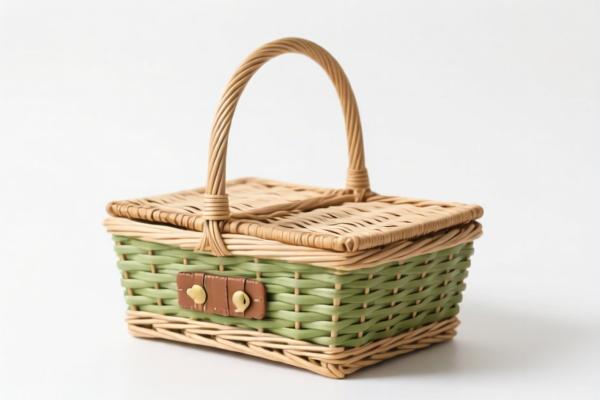
Vegetable Fiber Woven Picnic Baskets are handcrafted or machine-made containers used for outdoor dining, storage, or decoration. They are typically made from natural plant materials such as bamboo, rattan, water hyacinth, seagrass, or coconut coir.
In international trade, the classification depends heavily on the specific fiber material, the weaving method, and the primary function (e.g., storage vs. flooring/matting if misclassified). However, since the input specifies a "Picnic Basket," we must evaluate how US Customs and Border Protection (CBP) might interpret this product based on the provided data points, which largely focus on "Woven Mats" and "Plastic-like" interpretations.
⚠️ Critical Distinction:
- A standard Picnic Basket (with handle, liner, lid) is usually classified under Chapter 46 (Plaited materials).
- However, the provided data suggests potential misclassifications or alternative interpretations involving Floor Coverings (Chapter 57) or Plastics (Chapter 39).
- Risk Alert: If the basket is deemed "woven matting" or if the fiber is coated/impregnated with plastic-like substances, it may be reclassified, leading to significantly different tax rates.
📦 II. HS Code Classification Details (Based on Provided Data)
The following HS Codes are derived strictly from the <DATA> provided. Note that some codes refer to "Floor Coverings" or "Plastics," which may apply if the basket is misinterpreted or if specific material characteristics (like coir mats) dominate.
| HS Code | Product Description | Summary from Data | Total Tax | Tax Breakdown |
|---|---|---|---|---|
| 5705.00.20.90 | Textile Floor Covering | Outdoor vegetable fiber woven mat classified as textile floor covering, matching other carpet characteristics. | 38.3% | Base: 3.3% + Section 301: 25.0% + Section 122: 10% |
| 4601.21.40.00 | Vegetable Plaiting Materials | Outdoor vegetable fiber woven mat classified as plant fiber woven mat, matching bamboo or plant material characteristics. | 38.3% | Base: 3.3% + Section 301: 25.0% + Section 122: 10% |
| 3926.90.99.89 | Plastic Articles | Outdoor vegetable fiber woven mat classified as plastic product, matching other unspecified plastic articles. | 22.8% | Base: 5.3% + Section 301: 7.5% + Section 122: 10% |
| 5705.00.10.00 | Natural Fiber Floor Covering | Outdoor vegetable fiber woven mat classified as natural fiber floor covering, matching coconut fiber (coir) characteristics. | 35.0% | Base: 0.0% + Section 301: 25.0% + Section 122: 10% |
| 4601.29.60.00 | Woven Plaiting Goods | Outdoor vegetable fiber woven mat classified as plant material matting, matching outdoor use characteristics. | 39.8% | Base: 4.8% + Section 301: 25.0% + Section 122: 10% |
🔍 Key Insight:
- The most common classification for genuine vegetable fiber baskets is 4601.xxxx. However, if the CBP determines the item is a "mat" or "floor covering" due to its construction or marketing, it may shift to 5705.xxxx.
- If the vegetable fiber is heavily coated with PVC or other plastics, 3926.xxxx may apply, though this is less common for traditional woven baskets.
💰 III. 2026 Latest Tariff Rate Details (Including Surcharges)
✅ Applicable Country: USA (US)
✅ Country of Origin: China (CN)
✅ Effective Date: Post-2025 Policies (Section 301 & Section 122)
🎯 1. 4601.21.40.00 & 4601.29.60.00 — Plant Fiber Woven Mats/Products
| Item | Content |
|---|---|
| Base Duty Rate | 3.3% (for 4601.21.40) / 4.8% (for 4601.29.60) |
| USITC Surcharge (Section 301) | +25.0% |
| 122 Clause Surcharge | +10.0% |
| Total Effective Rate | 38.3% or 39.8% |
| Tax Calculation | CIF Value × Total Rate |
| De Minimis Exemption | ❌ Not Available (High tariff rates exceed de minimis thresholds) |
| Legal Basis Path | USITC:4601.21.40.00 → FOOTNOTE:301 → IEEPA:122 |
📌 Explanation:
- These codes fall under Chapter 46 (Manufactures of plaiting materials).
- The 25% Section 301 tariff applies to most Chinese-origin goods under Chapter 46.
- The 10% Section 122 tariff is a recent addition targeting specific foreign trade barriers.
- Total Cost Impact: Nearly 40% of the CIF value!
🎯 2. 5705.00.10.00 — Natural Fiber Floor Covering (Coconut/Coir)
| Item | Content |
|---|---|
| Base Duty Rate | 0.0% |
| USITC Surcharge (Section 301) | +25.0% |
| 122 Clause Surcharge | +10.0% |
| Total Effective Rate | 35.0% |
| Tax Calculation | CIF Value × 35.0% |
| De Minimis Exemption | ❌ Not Available |
📌 Note:
- If your basket is made of coconut coir and deemed a "floor mat," the base duty is 0%, but surcharges remain high.
🎯 3. 3926.90.99.89 — Other Plastic Articles
| Item | Content |
|---|---|
| Base Duty Rate | 5.3% |
| USITC Surcharge (Section 301) | +7.5% |
| 122 Clause Surcharge | +10.0% |
| Total Effective Rate | 22.8% |
| Tax Calculation | CIF Value × 22.8% |
| De Minimis Exemption | ❌ Not Available |
📌 Caution:
- This rate is lower than the plant fiber categories. However, misclassifying a natural fiber basket as a "plastic article" is a high-risk violation unless the item is predominantly plastic-coated.
🛠️ IV. Customs Clearance Practical Advice (Pitfall Avoidance Guide)
✅ 1. Preparation Checklist (Essential Documents)
| Document | Required | Notes |
|---|---|---|
| Product Specification Sheet | ✔️ | Detail fiber type (e.g., bamboo, rattan, coir), weave density, dimensions. |
| Photos (Clear) | ✔️ | Show handle, liner, lid, and overall structure. Distinguish from "mat." |
| Commercial Invoice | ✔️ | Use precise description: "Vegetable Fiber Woven Picnic Basket, Model XYZ" |
| Packing List | ✔️ | Include weight, volume, and contents (e.g., "includes internal plastic liner"). |
| Material Declaration | ✔️ | Specify % of natural fiber vs. synthetic coatings. |
| FCC/CE Certificates | ✖️ | Not required for woven baskets unless electronic components are present. |
✅ 2. Classification Strategy (Key Mnemonics)
🔥 “Fiber First, Function Second, Avoid ‘Mat’ Trap!”
| Scenario | Correct Classification | Incorrect Classification | Risk |
|---|---|---|---|
| Traditional Woven Basket | 4601.21.40.00 or 4601.29.60.00 |
5705.00.20.90 (Floor Covering) |
High Tax (38-39%) vs. Low Tax (if base 0%)? No, both high due to surcharges. |
| Coir Mat used as Basket | 5705.00.10.00 |
4601.29.60.00 |
Risk of penalty if deemed basket but classified as mat. |
| Plastic-Coated Basket | 3926.90.99.89 |
4601.21.40.00 |
Risk of penalty if deemed natural fiber. |
| Mislabeling as "Floor Rug" | 5705.00.20.90 |
4601.21.40.00 |
Potential customs seizure if product is clearly a basket. |
✅ 3. Special Case Handling
| Case | Recommendation |
|---|---|
| Basket with Plastic Liner | Declare as Plaited Material (Ch 46) if liner is removable/secondary. If integral, consider Plastics (Ch 39). |
| Decorative Basket (Non-Functional) | Still Classify by Material (4601 or 5705). Do not use "Gift" as a HS Code. |
| Mixed Materials (Wicker + Metal) | Primary material determines classification. If wicker >50%, use 4601. |
🌍 V. Global Market Comparison (2026 Latest)
| Country/Region | Recommended HS Code | Tariff Rate | Notes |
|---|---|---|---|
| 🇺🇸 USA | 4601.21.40.00 |
38.3% | High due to Section 301 & 122. |
| 🇨🇳 China | 4601.21.40.00 |
~5-10% | Low import duty for re-export or domestic use. |
| 🇪🇺 EU | 4601.91.00 |
~5% | No Section 301/122 surcharges. |
| 🇬🇧 UK | 4601.91.00 |
~5% | Post-Brexit tariffs apply. |
| 🇯🇵 Japan | 4601.91.00 |
~5-10% | Check FTA benefits. |
📌 Conclusion:
- USA is the most expensive market for vegetable fiber baskets due to Section 301 and Section 122 surcharges.
- Consider supply chain diversification (e.g., Vietnam, India) to mitigate US tariffs if possible.
📌 VI. Common Mistakes & Pitfalls (Blood Lessons)
❌ Mistake 1: Classifying a Basket as a Floor Mat (5705) to avoid Chapter 46 scrutiny.
👉 Result: Customs may reject if structure clearly shows handles/lids. Penalty + Delay.
❌ Mistake 2: Ignoring Section 122 tariffs.
👉 Result: Underpayment of 10%. Back taxes + Interest.
❌ Mistake 3: Claiming De Minimis for small shipments.
👉 Result: Denied. High tariff rates (>8.5%) invalidate de minimis eligibility.
❌ Mistake 4: Using vague terms like "Woven Bag" or "Rattan Item."
👉 Result: Customs assigns worst-case HS Code. Maximize Risk.
✅ Correct Practice:
"Vegetable Fiber Woven Picnic Basket, Made of Bamboo, with Linen Liner, Model XYZ, Origin China"
🎯 VII. Conclusion: Precise Classification Saves Money
🎯 Remember the Mantra:
🔹 "Woven Fiber = Ch 46 or 57. Plastic Coat = Ch 39. US Tariffs = 25% + 10% Extra!"
🔹 "HS Code is King. Misclassification costs more than the basket itself!"
📌 Pro Tip:
If your basket is made of coconut coir, check if 5705.00.10.00 (35% total) is lower than 4601 (38-39%). The difference is 2-4%, which can add up for large volumes.
Request an Advance Ruling from CBP if the material mix is complex.
📣 Action Item:
📞 Contact a licensed Customs Broker
📸 Provide clear product images
🚀 Optimize your HS Code to minimize duty while staying compliant!
✨ Professional Customs Clearance Starts with Accurate Classification!
💼 Every percent of duty saved is pure profit!
Customer Reviews
About HS Code Classification
The Harmonized System (HS) is an internationally standardized nomenclature developed by the World Customs Organization (WCO) to classify traded products. Over 200 countries use the HS system as the basis for customs tariffs, trade statistics, and import/export regulations.
Each HS code follows a hierarchical structure:
- Chapter (2 digits) — Broad category of goods (e.g., Chapter 84: Machinery and Mechanical Appliances)
- Heading (4 digits) — More specific grouping within the chapter
- Subheading (6 digits) — Internationally standardized breakdown, used by all WCO member countries
- National subdivisions (8-10 digits) — Country-specific extensions for further classification, such as US HTSUS 10-digit codes
Correct HS code classification is essential for smooth customs clearance, accurate duty payment, and compliance with trade regulations. Misclassification can lead to customs delays, overpayment of duties, or penalties.
When importing from CN to US, the applicable tariff rates may include:
- Most-Favored-Nation (MFN) rate — The standard duty rate applied to WTO members
- General rate — Applied to countries without trade agreements
- Trade remedy duties — Additional tariffs such as Section 301 (anti-dumping), Section 232 (national security), or countervailing duties
The information provided on this page is for reference purposes only. For official classification, please consult with your local customs authority or a licensed customs broker.