veggie chopper
CN → US| HS Code | Tariff Rate | Origin | Destination | Doc |
|---|---|---|---|---|
| 8210000000 | 38.7% | CN | US | Official Doc |
| 3924104000 | 13.4% | CN | US | Official Doc |
| 8438600000 | 35.0% | CN | US | Official Doc |
| 8438800000 | 35.0% | CN | US | Official Doc |
| 8210000000 | 38.7% | CN | US | Official Doc |
Product Images
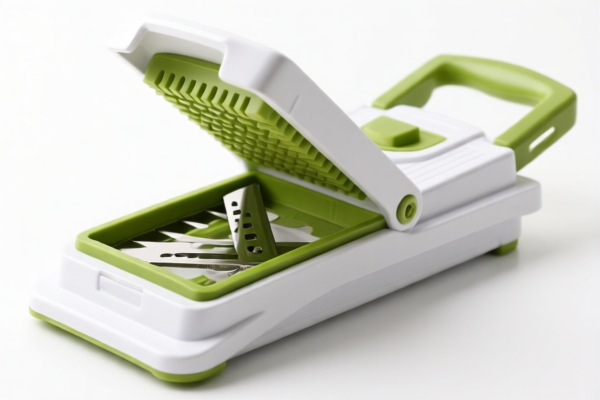
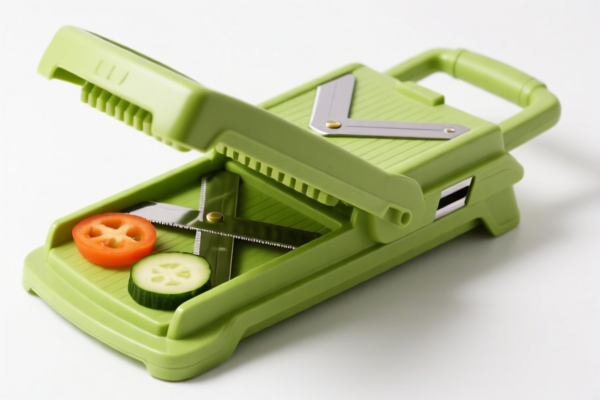
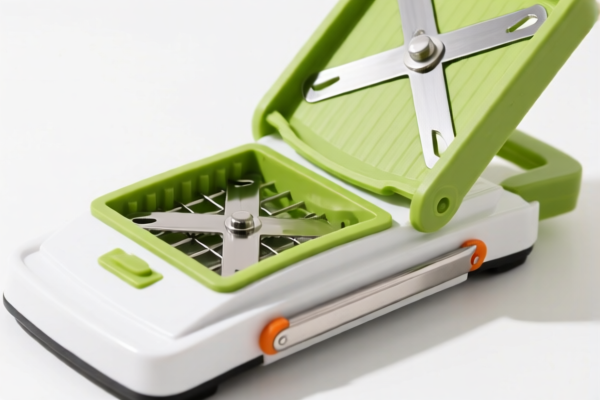
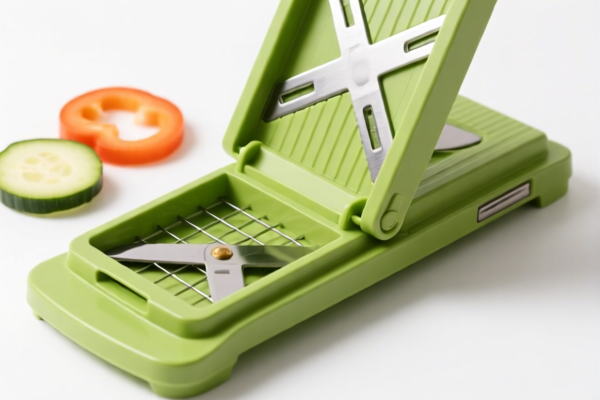
AI Analysis
🥦 Veggie Chopper (Vegetable Dicer)
🌐 HS Code Reference & Customs Clearance Guide | 2024 Tax Regime Full Analysis | Professional Customs Strategy
📌 I. Product Definition & Classification: Do You Really Understand the "Veggie Chopper"?
A veggie chopper, also known as a vegetable dicer, is a manual or mechanical tool used in food preparation. In international trade, its classification depends heavily on whether it is considered a manual hand tool or a mechanical appliance.
Manual Mechanical Instruments: Simple devices operated by hand force, used for food preparation/preparation. Mechanical Appliances: Motorized or complex machinery designed for industrial or heavy-duty food processing.
⚠️ Key Distinction Point:
- If it is a simple handheld gadget with blades for slicing/chopping → Classified as Manual Instrument (8210)
- If it is made of plastic but functions as kitchenware/dishware → Classified as Plastic Kitchenware (3924)
- If it involves motors or complex mechanical structures for food prep → Classified as Food Preparation Machinery (8438)
📦 II. HS Code Classification Details (Current Tariff Schedule Authority Comparison)
| HS Code | Product Description | Application Scenario | Material/Function |
|---|---|---|---|
8210.00.00.00 |
Manual mechanical instruments, hand operated, for slicing, cutting, peeling, etc., of meat, fish, or other foodstuffs; hand operated mechanical kitchen or laboratory graters or slice... | Manual vegetable choppers, handheld dicers, simple cutting tools | ✅ Manual Tool |
3924.10.40.00 |
Tableware and kitchenware and other household articles and hygienic or toilet articles, of plastics, parts thereof... | Plastic vegetable choppers, plastic containers for food prep | ✅ Plastic Kitchenware |
8438.60.00.00 |
Machinery, apparatus and equipment, for the preparation or manufacture of food or drink, other than machinery, apparatus and equipment of heading 8437: Fruit or vegetable pressing or similar machinery... | Mechanical vegetable choppers, electric dicing machines | ✅ Mechanical Machine |
8438.80.00.00 |
Other machinery, apparatus and equipment, for the preparation or manufacture of food or drink, not specified or included elsewhere... | Industrial or semi-industrial food prep machines | ✅ Other Machinery |
🔍 Key Reminder:
- Manual Hand Tools: Must be classified under 8210.00.00.00. Do not confuse with plastic parts.
- Plastic Kitchenware: If the device is primarily a plastic container/tool without significant mechanical metal components for cutting, it may fall under 3924.10.40.00.
- Mechanical Appliances: Only if it has a motor or complex mechanical assembly for food prep should it go to 8438. Simple hand-operated dicers do NOT belong here.
💰 III. 2024 Latest Tariff Rate Details (Including Surtaxes, Policy Add-ons)
✅ Applicable Country: United States (US)
✅ Origin: China (CN)
✅ Effective Date: Current trade policies (Section 301 & Section 122)
🎯 1. 8210.00.00.00 —— Manual Mechanical Instrument (Hand Operated Veggie Chopper)
| Item | Content |
|---|---|
| Base Tariff Rate | 3.7% (ad valorem) |
| Section 301 Surtax | +25.0% |
| Section 122 Surtax | +10.0% |
| Total Tax Rate | 38.7% |
| Tax Calculation | CIF Value × 38.7% |
| De Minimis Exemption | ❌ Not Eligible (Due to Section 301/122 applicability) |
| Legal Basis Path | HTSUS:8210.00.00.00 → USITC Footnote: Section 301 → Section 122 |
📌 Explanation:
- "Base Tariff 3.7%": Standard Most-Favored-Nation (MFN) rate for manual kitchen tools.
- "Section 301 Surtax 25%": Imposed under US Trade Act of 1974, Section 301, targeting Chinese imports.
- "Section 122 Surtax 10%": Additional tariff for certain agricultural and consumer goods from China.
- Total 38.7%: This is a high tariff bracket. Importers must account for this in cost calculations.
🎯 2. 3924.10.40.00 —— Plastic Tableware/Kitchenware (Plastic Veggie Chopper)
| Item | Content |
|---|---|
| Base Tariff Rate | 3.4% (ad valorem) |
| Section 301 Surtax | +0.0% |
| Section 122 Surtax | +10.0% |
| Total Tax Rate | 13.4% |
| Tax Calculation | CIF Value × 13.4% |
| De Minimis Exemption | ❌ Not Eligible (Due to Section 122 applicability) |
| Legal Basis Path | HTSUS:3924.10.40.00 → Section 122 |
📌 Note:
- Base Rate 3.4%: Lower than manual tools because it is classified as plastic household articles.
- Section 301 Exemption: Plastic kitchenware may be exempt from the 25% Section 301 surtax in some cases, but still subject to Section 122.
- Total 13.4%: This is a moderate tariff bracket, significantly cheaper than manual tools.
- Caution: Misclassification here can lead to penalties if the item is clearly a manual metal tool.
🎯 3. 8438.60.00.00 —— Mechanical Food Preparation Machinery (Electric/Manual Mechanical Dicer)
| Item | Content |
|---|---|
| Base Tariff Rate | 0.0% (ad valorem) |
| Section 301 Surtax | +25.0% |
| Section 122 Surtax | +10.0% |
| Total Tax Rate | 35.0% |
| Tax Calculation | CIF Value × 35.0% |
| De Minimis Exemption | ❌ Not Eligible |
| Legal Basis Path | HTSUS:8438.60.00.00 → USITC Footnote: Section 301 → Section 122 |
📌 Explanation:
- Base Rate 0%: Machinery for food prep often has low base rates.
- Section 301 Surtax 25%: Applies to mechanical appliances from China.
- Total 35.0%: High tariff due to surtaxes.
- Clarification: Only applies if the device is truly a "machine" (e.g., electric chopper). Simple manual dicers do NOT qualify.
🎯 4. 8438.80.00.00 —— Other Food Preparation Machinery (Industrial/Complex)
| Item | Content |
|---|---|
| Base Tariff Rate | 0.0% (ad valorem) |
| Section 301 Surtax | +25.0% |
| Section 122 Surtax | +10.0% |
| Total Tax Rate | 35.0% |
| Tax Calculation | CIF Value × 35.0% |
| De Minimis Exemption | ❌ Not Eligible |
| Legal Basis Path | HTSUS:8438.80.00.00 → USITC Footnote: Section 301 → Section 122 |
📌 Note:
- Similar to8438.60.00.00, this covers other mechanical food prep equipment.
- Total 35.0%: High tariff due to surtaxes.
- Use Case: Industrial-grade choppers, not consumer handheld devices.
🛠️ IV. Customs Clearance Practical Advice (Field Pitfall Avoidance Guide)
✅ 1. Preparation Checklist (All Required)
| Material | Mandatory? | Description |
|---|---|---|
| ✅ Product Photos | ✔️ | Clear images showing material (plastic vs. metal), mechanism (manual vs. electric) |
| ✅ Product Description | ✔️ | Specific: "Manual Vegetable Chopper, Plastic, 5 Blades" or "Electric Food Chopper" |
| ✅ Commercial Invoice | ✔️ | Must match HS Code classification exactly |
| ✅ Packing List | ✔️ | Include dimensions, weight, quantity |
| ✅ Material Certification | ✔️ | If plastic, specify type (PP, ABS, etc.); if metal, specify alloy |
✅ 2. Declaration Tips (Key Mantras)
🔥 "Material Matters, Mechanism Defines!"
| Scenario | Correct Declaration | Incorrect Action |
|---|---|---|
| Manual plastic chopper | 3924.10.40.00 (13.4%) |
Misdeclare as 8210.00.00.00 → 38.7% penalty |
| Manual metal chopper | 8210.00.00.00 (38.7%) |
Misdeclare as 3924.10.40.00 → 13.4% underpayment penalty |
| Electric chopper | 8438.60.00.00 (35.0%) |
Misdeclare as manual tool → 38.7% vs 35.0% difference |
| Simple plastic slicer | 3924.10.40.00 (13.4%) |
Misdeclare as 8438 → 35.0% overpayment |
⚠️ Critical Warning:
- Misclassification Risk: Customs may reclassify based on physical inspection. If you declare a plastic manual chopper as3924.10.40.00but it has significant metal blades, it may be reclassified to8210.00.00.00(38.7%), leading to back taxes and fines.
- Section 122 Impact: Even if exempt from Section 301, Section 122 (10%) still applies to most consumer goods from China. Do not assume 0% tariffs.
✅ 3. Special Case Handling
| Scenario | Handling Advice |
|---|---|
| OEM Plastic Chopper | Provide detailed material specs. If >50% plastic by value/weight, argue for 3924.10.40.00. |
| Manual vs. Mechanical | Emphasize "Hand Operated" in description for 8210. Avoid words like "machine" or "motor". |
| Set/Kit | If sold with other kitchen tools, ensure the principal function (chopping) determines the HS Code. |
| De Minimis (Section 321) | ❌ Not Eligible: Due to Section 301/122 surtaxes, items under $800 do NOT qualify for duty-free entry if they fall under these codes. |
🌍 V. Global Market Comparison (2024 Latest)
| Country/Region | Recommended HS Code | Tariff (China Origin) | Certifications | Remarks |
|---|---|---|---|---|
| 🇺🇸 USA | 8210.00.00.00 or 3924.10.40.00 |
13.4% - 38.7% | FDA (food contact) | High surtaxes apply |
| 🇨🇳 China | 8210.00.00.00 or 3924.10.40.00 |
0% - 12% | CCC (if electrical) | No US-style surtaxes |
| 🇪🇺 EU | 8210.00.00.00 or 3924.10.00 |
0% - 6% | CE, LFGB | No Section 301/122 equivalent |
| 🇬🇧 UK | 8210.00.00.00 or 3924.10.00 |
0% - 6% | UKCA | Post-Brexit rules apply |
| 🇦🇺 Australia | 8210.00.00.00 or 3924.10.00 |
0% - 5% | ACS | AEO benefits possible |
📌 Conclusion:
- USA imposes the highest effective tariffs due to Section 301/122.
- Plastic Manual Choppers (3924.10.40.00) offer the lowest US tariff rate (13.4%) compared to metal manual tools (38.7%).
- Strategic Sourcing: Consider sourcing from non-China countries (e.g., Vietnam, India) to mitigate US surtaxes.
📌 VI. Common Mistakes & Pitfalls (Lessons Learned)
❌ Mistake 1: Declaring a manual metal chopper as "Kitchenware" (3924) to avoid 25% surtax
👉 Consequence: Customs rejects, reclassifies to 8210, charges 38.7% + penalties.
❌ Mistake 2: Assuming De Minimis applies to all veggie choppers under $800
👉 Consequence: Entry rejected or taxed at 13.4%-38.7% because Section 301/122 goods are excluded from Section 321.
❌ Mistake 3: Using vague descriptions like "Kitchen Tool"
👉 Consequence: Delay in clearance, possible inspection, uncertainty in duty assessment.
✅ Correct Approach:
"Manual Vegetable Chopper, Plastic Body with Stainless Steel Blades, Model VC-100, FDA Compliant"
🎯 VII. Conclusion: Professional Declaration Saves Money!
🎯 Remember the Mantra:
🔹 "Material Matters: Plastic = 13.4%, Metal = 38.7%"
🔹 "Manual Tools Suffer Section 301/122, Plastic May Escape 301"
🔹 "De Minimis is Dead for These Goods"
📌 Pro Tip:
If your product is plastic-based, argue for 3924.10.40.00 to benefit from the lower 13.4% total tariff.
If it is metal-based, you must accept 8210.00.00.00 at 38.7%.
Always provide clear photos and material specs to support your classification.
📣 Immediate Action:
📞 Consult a customs broker + Provide product photos + Apply for Pre-classification Ruling (if possible)
🚀 Ensure smooth customs clearance, avoid delays, and optimize costs!
✨ Professional customs clearance starts with accurate classification!
💼 Every dollar saved counts in the age of trade tariffs!
Customer Reviews
About HS Code Classification
The Harmonized System (HS) is an internationally standardized nomenclature developed by the World Customs Organization (WCO) to classify traded products. Over 200 countries use the HS system as the basis for customs tariffs, trade statistics, and import/export regulations.
Each HS code follows a hierarchical structure:
- Chapter (2 digits) — Broad category of goods (e.g., Chapter 84: Machinery and Mechanical Appliances)
- Heading (4 digits) — More specific grouping within the chapter
- Subheading (6 digits) — Internationally standardized breakdown, used by all WCO member countries
- National subdivisions (8-10 digits) — Country-specific extensions for further classification, such as US HTSUS 10-digit codes
Correct HS code classification is essential for smooth customs clearance, accurate duty payment, and compliance with trade regulations. Misclassification can lead to customs delays, overpayment of duties, or penalties.
When importing from CN to US, the applicable tariff rates may include:
- Most-Favored-Nation (MFN) rate — The standard duty rate applied to WTO members
- General rate — Applied to countries without trade agreements
- Trade remedy duties — Additional tariffs such as Section 301 (anti-dumping), Section 232 (national security), or countervailing duties
The information provided on this page is for reference purposes only. For official classification, please consult with your local customs authority or a licensed customs broker.