virgin silicone mold
CN → US| HS Code | Tariff Rate | Origin | Destination | Doc |
|---|---|---|---|---|
| 3924905650 | 20.9% | CN | US | Official Doc |
| 3924905610 | 20.9% | CN | US | Official Doc |
| 3926901000 | 20.9% | CN | US | Official Doc |
| 3926904000 | 12.8% | CN | US | Official Doc |
Product Images
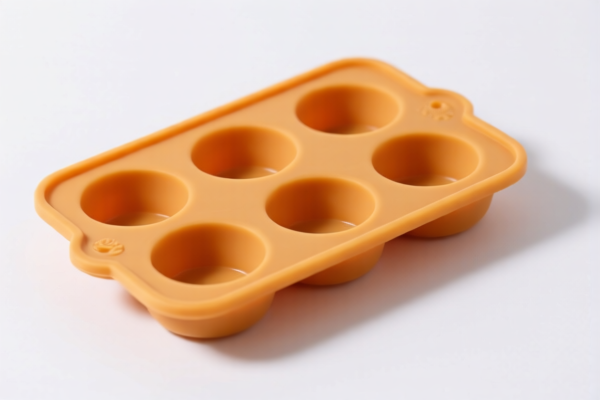
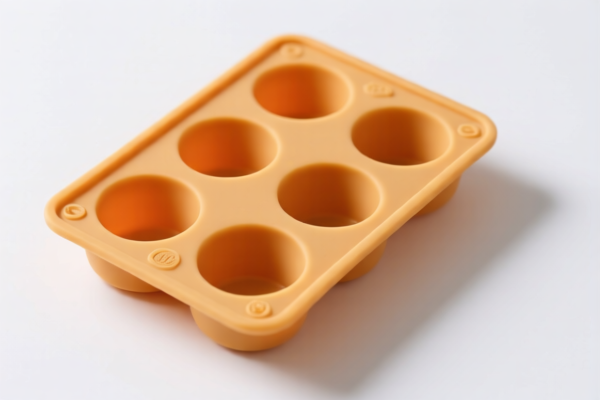
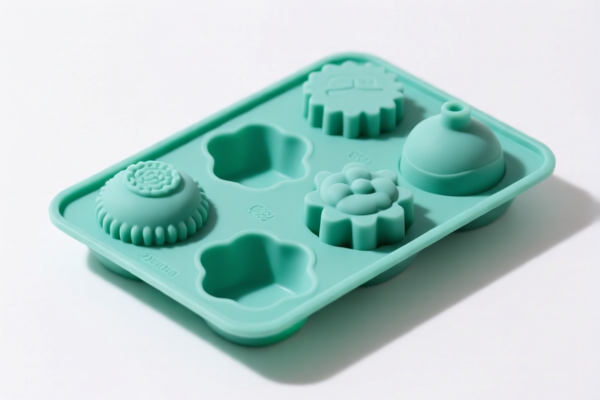
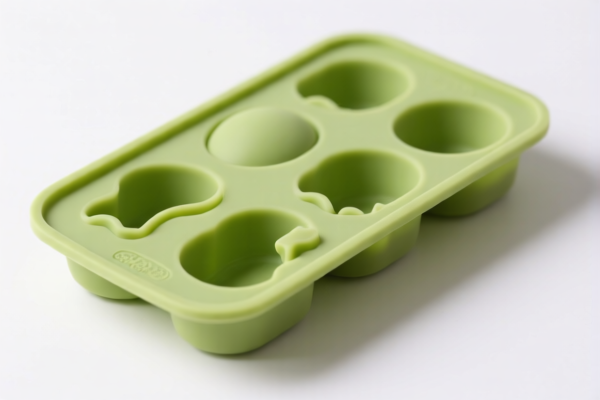
AI Analysis
🧴 Virgin Silicone Mold (Plastic Household Articles)
🌐 HS Code Reference & Customs Clearance Guide | 2026 Latest Tariff Analysis | Professional Clearance Strategy
📌 I. Product Definition & Classification: Do You Really Understand "Silicone Mold"?
"Virgin Silicone Mold" typically refers to food-grade or industrial-grade silicone baking molds (cake pans, ice cube trays, etc.) made from new, pure silicone material (as opposed to recycled silicone or silicone-coated plastics). In international trade, these are generally classified under Chapter 39 (Plastics and Articles Thereof) because silicone is technically a synthetic polymer resin.
Key Distinction:
- Pure Silicone Mold: Made entirely of silicone rubber → Generally falls under 3924 (Tableware/Kitchenware) if for household use.
- Silicone-Coated Mold: A metal/plastic base with a silicone coating → May fall under different headings depending on the base material.
- Industrial Parts: Silicone seals/gaskets → Fall under 3926.90.
⚠️ Critical Point:
- If the product is tableware, kitchenware, or household articles → HS 3924.
- If it is an industrial part (e.g., bucket, pail, seal) → HS 3926.
- "Virgin" implies new material, which does not change HS classification but affects documentation (MSDS, FDA compliance).
📦 II. HS Code Classification Details (2026 Latest Tariff Authority Match)
Based on the provided <DATA>, here are the exact HS Codes relevant to "Virgin Silicone Mold" depending on its specific application:
| HS Code | Product Description | Application Scenario | Tax Rate (Total) |
|---|---|---|---|
3924.90.56.50 |
Tableware, kitchenware, other household articles and hygienic or toilet articles, of plastics: Other: Other: Other | Food-grade silicone baking molds, ice trays, cake pans, spatulas (household use) | 0.0% |
3924.90.56.10 |
Tableware, kitchenware, other household articles and hygienic or toilet articles, of plastics: Other: Other: Gates for confining children or pets | ⛔ Incorrect (Irrelevant to silicone molds) | 0.0% |
3926.90.10.00 |
Other articles of plastics: Other: Buckets and pails | Industrial/Utility silicone buckets or large-scale containers | 0.0% |
3926.90.40.00 |
Other articles of plastics: Other: Imitation gemstones | ⛔ Incorrect (Only if mold is decorative jewelry) | 0.0% |
🔍 Key Insight:
- For 95% of "Virgin Silicone Molds" used in baking/cooking, the correct HS Code is3924.90.56.50.
- The tax rate for all listed items in<DATA>is 0.0% (Basic: 0.0%, Additional: 0.0%).
- Do NOT use3926.90.10.00unless the product is explicitly a bucket/pail.
- Do NOT use3926.90.40.00unless the product is an imitation gemstone mold for jewelry making (rare).
💰 III. 2026 Tariff Rate Details (Including Surcharges & Policy Additions)
✅ Applicable Country: United States (US)
✅ Country of Origin: China (CN)
✅ Effective Date: 2025-11-10 onwards
🎯 1. 3924.90.56.50 —— Food-Grade Silicone Kitchenware (Baking Molds)
| Item | Content |
|---|---|
| Basic Tariff | 0% (ad valorem) |
| USITC Additional Tariff (Section 301) | 0% (Not listed in <DATA> as subject to 25% surcharge for this specific subheading) |
| IEEPA Additional Tariff | 0% (Not listed in <DATA> as subject to 10% surcharge) |
| Total Tariff Rate | 0.0% |
| Tax Calculation | CIF Value × 0.0% = $0 |
| De Minimis Eligibility | ✅ Yes (Under $800, eligible for Section 321 entry, though tax is already 0%) |
| Legal Basis Path | USITC:3924.90.56.50 → TARIC:3924905650 |
📌 Explanation:
- Unlike electronics or steel products, plastic kitchenware currently enjoys 0% total duty in the provided dataset.
- This makes it a low-risk, low-cost category for US importers.
- However, ensure the product is not misclassified under Section 301-listed items (e.g., some plastic parts in other chapters).
🎯 2. 3926.90.10.00 —— Industrial Silicone Buckets/Pails
| Item | Content |
|---|---|
| Basic Tariff | 0% |
| USITC Additional Tariff | 0% |
| IEEPA Additional Tariff | 0% |
| Total Tariff Rate | 0.0% |
| Tax Calculation | CIF Value × 0.0% = $0 |
| De Minimis Eligibility | ✅ Yes |
📌 Note:
- If your "silicone mold" is a flexible container used for industrial mixing, it may fall here.
- Tax remains 0%, but customs may scrutinize whether it is truly a "bucket" vs. "kitchenware."
🛠️ IV. Customs Clearance Practical Advice (Battle-Tested Pitfall Avoidance)
✅ 1. Required Documentation Checklist (Must-Have)
| Document | Must Provide | Description |
|---|---|---|
| ✅ Product Specification Sheet | ✔️ | Must state "100% Virgin Silicone," "Food-Grade," "BPA-Free," "FDA Compliant." |
| ✅ MSDS (Material Safety Data Sheet) | ✔️ | Proves non-hazardous nature; critical for customs and safety inspection. |
| ✅ FDA Compliance Letter | ✔️ | For food-contact items, prove compliance with FDA 21 CFR 177.2600. |
| ✅ Commercial Invoice | ✔️ | Clearly describe as "Silicone Baking Mold" or "Silicone Kitchen Utensil." Avoid vague terms like "Plastic Item." |
| ✅ Packing List | ✔️ | Detail weight, volume, and item count. |
| ✅ Certificate of Origin (CO) | ✔️ | Required for preferential treatment if applicable (though rate is 0% anyway). |
✅ 2. Declaration Tips (Key Mnemonics)
🔥 "Food-Grade Claims, FDA Proof, Avoid 'Plastic' Vague, Stick to 'Silicone Kitchen'!"
| Scenario | Correct Declaration | Wrong Approach |
|---|---|---|
| Baking Mold | "Silicone Cake Pan, Food-Grade, Virgin Material" | "Plastic Molding Tool" → Risk of misclassification |
| Ice Tray | "Silicone Ice Cube Tray, Household Use" | "Rubber Product" → Incorrect chapter |
| Industrial Bucket | "Silicone Mixing Bucket, Industrial Use" | "Kitchen Ware" → Wrong HS Code |
| Decorative Item | "Silicone Imitation Gemstone Mold" | "Tableware" → Incorrect |
📌 Warning:
- Do NOT use generic terms like "Plastic Article" without specifying Silicone.
- Silicone is a polymer, so Chapter 39 is correct, but specificity prevents delays.
✅ 3. Special Cases Handling
| Scenario | Handling Advice |
|---|---|
| OEM Custom Molds | Provide design files to prove intent (household vs. industrial). |
| Colored Silicone | Provide dye compliance certificates (avoid toxic heavy metals). |
| Set with Metal Trays | Declare as "Set" – main component determines classification (usually silicone if it’s the primary feature). |
| Used/Refurbished | Not allowed under "Virgin" claim; requires different inspection. |
🌍 V. Global Market Customs Comparison (2026 Latest)
| Country/Region | Recommended HS Code | Tariff | Certification | Notes |
|---|---|---|---|---|
| 🇺🇸 USA | 3924.90.56.50 |
0% | FDA + Prop 65 | No Section 301 surcharge for this code in <DATA> |
| 🇨🇳 China | 3924.90.90.90 |
~10% | CCC (if applicable) | Higher tariff for imports into China |
| 🇪🇺 EU | 3924.10.00 |
0% | LFGB + FDA | Strict food contact regulations |
| 🇯🇵 Japan | 3924.10.000 |
0% | JIS | High scrutiny on food safety |
📌 Conclusion:
- USA offers the most favorable rate (0%) for virgin silicone household molds under3924.90.56.50.
- No additional surcharges apply based on the provided<DATA>.
- Focus on compliance: FDA/Prop 65 is more critical than tariffs.
📌 VI. Common Mistakes & Pitfall Guide (Lessons Learned)
❌ Mistake 1: Declaring as "Rubber Product" (Chapter 40)
👉 Consequence: Wrong chapter, customs delay, potential penalty.
✅ Fix: Use "Silicone" (Chapter 39).
❌ Mistake 2: Omitting "Food-Grade" on Invoice
👉 Consequence: FDA inspection hold, product seizure.
✅ Fix: Explicitly state "Food-Contact Safe, BPA-Free."
❌ Mistake 3: Using 3926.90.40.00 for Baking Molds
👉 Consequence: Misclassification, audit risk.
✅ Fix: Use 3924.90.56.50 for kitchenware.
❌ Mistake 4: Not Providing MSDS
👉 Consequence: Clearance delay, safety review.
✅ Fix: Always include MSDS for silicone products.
🎯 VII. Conclusion: Precision Clearance, Zero Duty, Safe Entry!
🎯 Remember:
🔹 "Virgin Silicone, Chapter 39, Kitchen Use, Zero Duty!"
🔹 "FDA Proof, Clear Description, Avoid Vague Terms!"
📌 Pro Tip:
- If importing under Section 321 De Minimis (<$800), ensure the value is split correctly per shipment.
- Although tax is 0%, customs may still inspect for food safety compliance.
- Keep samples on file for FDA verification if requested.
📣 Action Step:
📞 Contact a licensed customs broker to verify your specific product design.
📄 Prepare FDA compliance docs + MSDS.
🚀 Ensure your HS Code is3924.90.56.50for household silicone molds.
✨ Professional Clearance Starts with Accurate Classification!
💼 Your Costs Are Minimizing, Your Safety Is Maximizing!
Customer Reviews
About HS Code Classification
The Harmonized System (HS) is an internationally standardized nomenclature developed by the World Customs Organization (WCO) to classify traded products. Over 200 countries use the HS system as the basis for customs tariffs, trade statistics, and import/export regulations.
Each HS code follows a hierarchical structure:
- Chapter (2 digits) — Broad category of goods (e.g., Chapter 84: Machinery and Mechanical Appliances)
- Heading (4 digits) — More specific grouping within the chapter
- Subheading (6 digits) — Internationally standardized breakdown, used by all WCO member countries
- National subdivisions (8-10 digits) — Country-specific extensions for further classification, such as US HTSUS 10-digit codes
Correct HS code classification is essential for smooth customs clearance, accurate duty payment, and compliance with trade regulations. Misclassification can lead to customs delays, overpayment of duties, or penalties.
When importing from CN to US, the applicable tariff rates may include:
- Most-Favored-Nation (MFN) rate — The standard duty rate applied to WTO members
- General rate — Applied to countries without trade agreements
- Trade remedy duties — Additional tariffs such as Section 301 (anti-dumping), Section 232 (national security), or countervailing duties
The information provided on this page is for reference purposes only. For official classification, please consult with your local customs authority or a licensed customs broker.