virginia pine logs
CN → US| HS Code | Tariff Rate | Origin | Destination | Doc |
|---|---|---|---|---|
| 4401110000 | 35.0% | CN | US | Official Doc |
| 4401120000 | 35.0% | CN | US | Official Doc |
| 4403210120 | 35.0% | CN | US | Official Doc |
| 4403210130 | 35.0% | CN | US | Official Doc |
Product Images
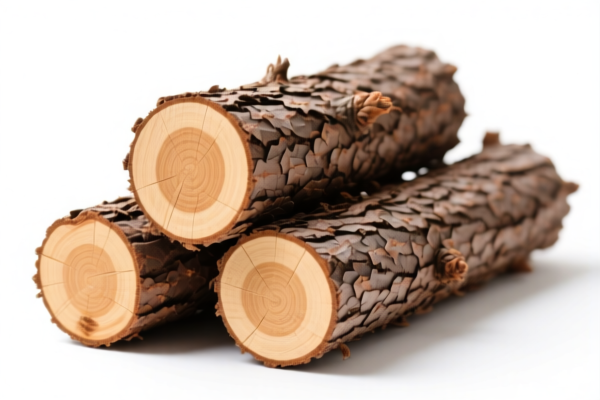
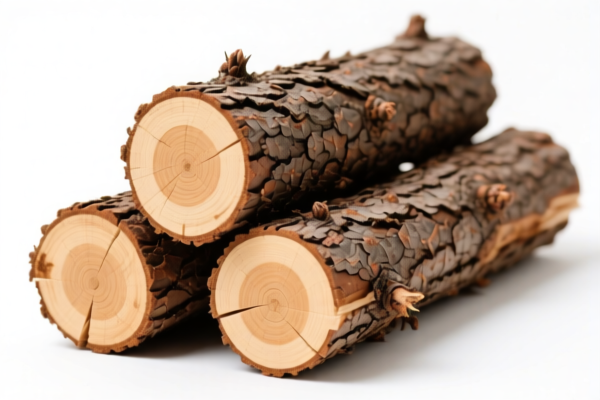
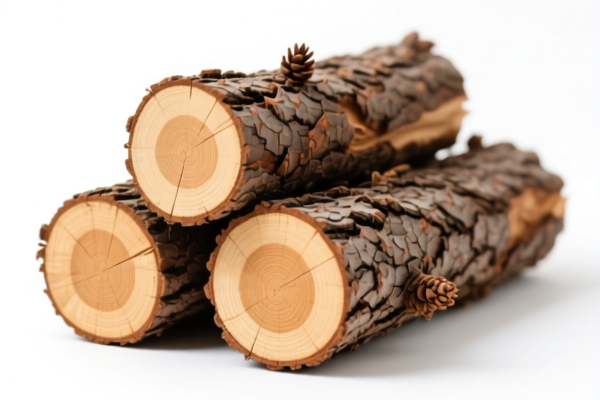
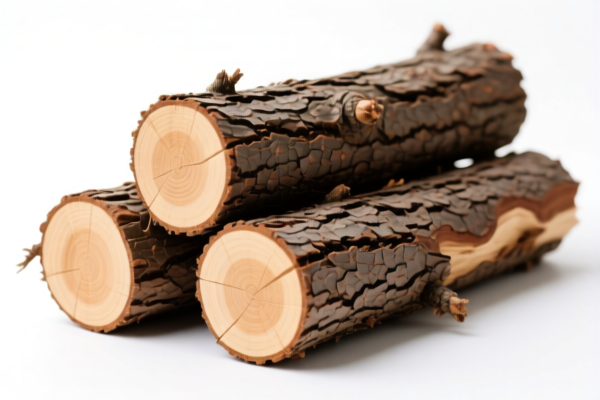
AI Analysis
🌲 Virginia Pine Logs (Coniferous Timber)
🌐 HS Code Reference & Customs Clearance Guide | 2026 Latest Tariff Analysis | Professional Level Clearance Strategy
📌 I. Product Definition and Classification: Do You Really Understand "Virginia Pine Logs"?
Virginia Pine (Pinus virginiana) is a species of pine native to the eastern United States. In international trade, raw timber is classified based on its species, processing state (rough vs. squared), and dimensions.
The key distinction for "Virginia Pine Logs" lies in the cross-sectional dimension. Customs authorities strictly differentiate between: * Southern Yellow Pine (SYP) Logs (Specific Subcategory): If the smallest cross-sectional dimension is 15 cm or more, and the wood is classified under specific SYP varieties (including Virginia Pine), it falls under a preferential duty structure. * Other Coniferous Logs: If the dimensions are smaller or the specific SYP criteria are not met, it falls under the general "Other Coniferous" category.
⚠️ Key Distinction Point: - If the log is Virginia Pine and the smallest cross-sectional dimension is ≥ 15 cm → It is treated as Southern Yellow Pine (SYP) for customs purposes. - If it is Virginia Pine but does not meet the specific SYP definition or dimensions (< 15 cm or not recognized as SYP in this context) → It falls under Other Coniferous Logs.
📦 II. HS Code Classification Details (2026 Latest Tariff Authority Comparison)
Based on the provided <DATA>, here are the two relevant HS codes for Virginia Pine Logs depending on the specific physical characteristics and classification criteria:
| HS Code | Product Description | Applicable Scenario | Cross-Sectional Dimension |
|---|---|---|---|
4403.21.01.20 |
Logs and timber: Southern yellow pine (Loblolly, Long leaf, Pitch, Short leaf, Slash, Virginia pine) | Virginia Pine logs recognized as SYP | Smallest dimension ≥ 15 cm |
4403.21.01.30 |
Logs and timber: Other (Coniferous, Pine spp., ≥ 15 cm) | Other Pine species or Non-SYP classification | Smallest dimension ≥ 15 cm |
🔍 Important Note: - Both codes fall under 4403.21.01 (Pine, smallest cross-sectional dimension ≥ 15 cm). - The critical difference is the specific species recognition:
4403.21.01.20explicitly lists Virginia Pine as part of the "Southern Yellow Pine" group for tariff purposes.4403.21.01.30is the "Other" category for coniferous logs that do not qualify for the specific SYP list or are non-coniferous (though Virginia Pine is coniferous, so it would compete with4403.21.01.20if it qualifies as SYP). - Clarification: According to the data,4403.21.01.20explicitly includes Virginia Pine (Pinus virginiana). Therefore, most Virginia Pine logs with ≥ 15 cm dimension should fall under4403.21.01.20.4403.21.01.30is for "Other" coniferous logs (non-VP or non-SYP).
💰 III. 2026 Latest Tariff Rate Details (Including Additional Duties)
✅ Applicable Country: United States (US)
✅ Origin: China (CN)
✅ Effective Time: 2025+ (Current Regulations)
🎯 1. 4403.21.01.20 —— Southern Yellow Pine (Including Virginia Pine) Logs
| Item | Content |
|---|---|
| Base Tariff | 0.0% |
| Additional Tariff (Section 301) | 0.0% |
| Total Tariff Rate | 0.0% |
| Tax Calculation | CIF Value × 0% = $0 |
| De Minimis Exemption Eligible? | ❓ Check specific value thresholds (usually low-value shipments may be exempt, but high-volume trade pays full duty) |
| Legal Basis Path | USITC:4403.21.01.20 → No Section 301 Footnote for this specific subcategory in the provided data |
📌 Explanation: - This code enjoys a 0% total tariff rate (0% base + 0% additional). - Crucial Advantage: Virginia Pine is explicitly listed under "Southern Yellow Pine" in
4403.21.01.20, which is exempt from the 25% additional tariff applied to other coniferous logs. - Verification Required: Ensure the shipment documentation clearly states "Virginia Pine" and provides proof of origin/species to qualify for this rate.
🎯 2. 4403.21.01.30 —— Other Coniferous Logs (Pine spp., ≥ 15 cm)
| Item | Content |
|---|---|
| Base Tariff | 0.0% |
| Additional Tariff (Section 301) | 25.0% |
| Total Tariff Rate | 25.0% |
| Tax Calculation | CIF Value × 25% |
| De Minimis Exemption Eligible? | ❌ No (High value threshold for de minimis, but this duty applies) |
| Legal Basis Path | USITC:4403.21.01.30 → Footnote 9903.02.01 (Section 301) |
📌 Explanation: - This code incurs a 25% total tariff rate. - This applies if the logs are not classified as Southern Yellow Pine (SYP) or if the specific SYP criteria are not met. - Risk: Misclassifying Virginia Pine as "Other Pine" when it qualifies as SYP results in an unnecessary 25% tax burden.
🎯 3. Other Wood Products (For Context)
| HS Code | Product Description | Total Tax |
|---|---|---|
4401.11.00.00 |
Fuel Wood, Coniferous (Logs, Billets, Twigs) | 25.0% |
4401.12.00.00 |
Fuel Wood, Nonconiferous (Logs, Billets, Twigs) | 25.0% |
📌 Note: If the wood is processed into "fuel wood" (smaller pieces, chips, or waste) rather than "logs/timber," it falls under HS Code 4401, which carries a 25% tariff. Ensure the product is declared as "Logs/Timber" (for construction/lumber) to qualify for the potential 0% rate under
4403.21.01.20.
🛠️ IV. Customs Clearance Practical Advice (Real-World Pitfall Avoidance Guide)
✅ 1. Preparation Checklist (All documents are essential)
| Document | Required | Description |
|---|---|---|
| ✅ Commercial Invoice | ✔️ | Must specify "Virginia Pine (Pinus virginiana)" and "Southern Yellow Pine" if applicable. |
| ✅ Bill of Lading | ✔️ | Consistent with invoice. |
| ✅ Phytosanitary Certificate | ✔️ | Mandatory for wood products to prevent pest/disease entry. |
| ✅ Species Verification Letter | ✔️ | From supplier or third-party lab confirming species as Pinus virginiana. |
| ✅ Measurement Certificate | ✔️ | Proof that smallest cross-sectional dimension is ≥ 15 cm (for HS 4403.21.01). |
| ✅ Lacey Act Declaration | ✔️ | Required for plant-based products entering the US. |
✅ 2. Declaration Tips (Key Mantras)
🔥 "Species Matters: Virginia = SYP = 0%. Others = 25%!"
| Scenario | Correct Declaration | Wrong Action |
|---|---|---|
| Virginia Pine Logs (≥15 cm) | 4403.21.01.20 + "Southern Yellow Pine (Virginia)" |
Declare as "Pine Logs" → Risk of 25% |
| Small Wood Pieces (Fuel) | 4401.11.00.00 |
Declare as "Logs" → Misclassification Penalty |
| Non-Virginia Pine Logs (≥15 cm) | 4403.21.01.30 |
Declare as SYP → False Declaration |
| Plywood/Lumber (Processed) | 4407 or 4408 |
Declare as Raw Logs → Wrong HS Code |
✅ 3. Special Case Handling
| Situation | Handling Advice |
|---|---|
| Mixed Shipment | Separate Virginia Pine logs from other species. Mixed shipments may be audited, leading to delays. |
| Dimension Borderline | If diameter is close to 15 cm, provide precise measurement certificates. Below 15 cm falls under different subcodes (e.g., 4403.21.02). |
| Certification | Obtain FSC/PEFC Certification if required by the buyer for sustainability compliance (not a customs duty issue but a market requirement). |
| Lacey Act | Ensure the declaration includes the Scientific Name (Pinus virginiana) and Country of Harvest. Failure to declare correctly can lead to confiscation. |
🌍 V. Global Market Customs Comparison (2026 Latest)
| Country/Region | Recommended HS Code | Tariff (China Origin) | Certification Requirement | Notes |
|---|---|---|---|---|
| 🇺🇸 USA | 4403.21.01.20 |
0.0% | Phytosanitary + Lacey Act | Best Rate for Virginia Pine |
| 🇨🇳 China | 4403.21.01.20 |
~5-10% (MFN) | N/A | Import duties may apply |
| 🇪🇺 EU | 4403.21 |
~0-5% (if FSC) | FSC/PEFC recommended | No Section 301 equivalent |
| 🇨🇦 Canada | 4403.21 |
~0% (CUSMA if originating) | Phytosanitary | Check CUSMA rules of origin |
📌 Conclusion: - USA offers the most favorable tariff (0%) for Virginia Pine logs if correctly classified as Southern Yellow Pine. - Misclassification risk is high: If declared as "Other Pine," you pay 25%. - Documentation is key: Explicitly state "Virginia Pine" and "Southern Yellow Pine" on all commercial documents.
📌 VI. Common Errors & Pitfall Guide (Lessons Learned)
❌ Error 1: Declaring "Pine Logs" without specifying species
👉 Consequence: Customs may default to the higher duty category (4403.21.01.30) → 25% tax.
❌ Error 2: Failing to meet the 15 cm dimension requirement
👉 Consequence: Falls under different subcodes (e.g., 4403.21.02), which may have different tax rates.
❌ Error 3: Confusing "Fuel Wood" with "Timber"
👉 Consequence: If the wood is small/chipped, it falls under HS 4401 (25% tax), not 4403 (0-25%). Ensure the product is truly "logs" for construction/lumber.
❌ Error 4: Missing Lacey Act Declaration
👉 Consequence: Shipment held at customs, potential fines, or confiscation.
✅ Correct Approach:
"Southern Yellow Pine Logs, Virginia Pine (Pinus virginiana), Diameter >15cm, FSC Certified, Phytosanitary Certificate Attached"
🎯 VII. Conclusion: Precision Classification Saves 25%!
🎯 Remember:
🔹 "Virginia Pine = Southern Yellow Pine = 0% Duty!"
🔹 "Generic 'Pine' = 25% Duty! Be Specific!"
🔹 "Dimension Matters: ≥15cm is the Key!"
📌 Pro Tip:
If your Virginia Pine logs are smaller than 15 cm or you cannot prove the species, you may be subject to the 25% tariff. Consider pre-classification rulings from US CBP if you have large, consistent shipments.
📣 Immediate Action:
📞 Consult with a licensed customs broker to verify species classification.
📄 Ensure all documents explicitly state "Southern Yellow Pine (Virginia Pine)".
🚀 Avoid the 25% tax penalty by being precise!
✨ Professional Classification Starts with Accuracy!
💼 Every 25% Saved is Pure Profit!
Customer Reviews
About HS Code Classification
The Harmonized System (HS) is an internationally standardized nomenclature developed by the World Customs Organization (WCO) to classify traded products. Over 200 countries use the HS system as the basis for customs tariffs, trade statistics, and import/export regulations.
Each HS code follows a hierarchical structure:
- Chapter (2 digits) — Broad category of goods (e.g., Chapter 84: Machinery and Mechanical Appliances)
- Heading (4 digits) — More specific grouping within the chapter
- Subheading (6 digits) — Internationally standardized breakdown, used by all WCO member countries
- National subdivisions (8-10 digits) — Country-specific extensions for further classification, such as US HTSUS 10-digit codes
Correct HS code classification is essential for smooth customs clearance, accurate duty payment, and compliance with trade regulations. Misclassification can lead to customs delays, overpayment of duties, or penalties.
When importing from CN to US, the applicable tariff rates may include:
- Most-Favored-Nation (MFN) rate — The standard duty rate applied to WTO members
- General rate — Applied to countries without trade agreements
- Trade remedy duties — Additional tariffs such as Section 301 (anti-dumping), Section 232 (national security), or countervailing duties
The information provided on this page is for reference purposes only. For official classification, please consult with your local customs authority or a licensed customs broker.