volcanic ash cement additive
CN → US| HS Code | Tariff Rate | Origin | Destination | Doc |
|---|---|---|---|---|
| 2523900000 | 35.0% | CN | US | Official Doc |
| 2523290000 | 35.0% | CN | US | Official Doc |
| 3824401000 | 41.5% | CN | US | Official Doc |
| 3824402000 | 35.0% | CN | US | Official Doc |
| 2530908015 | 10.0% | CN | US | Official Doc |
| 2530908050 | 10.0% | CN | US | Official Doc |
Product Images
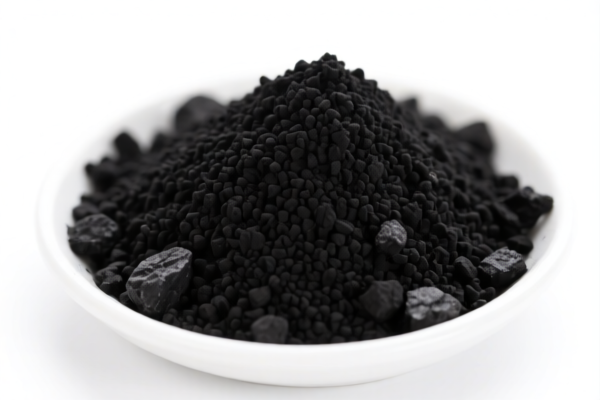
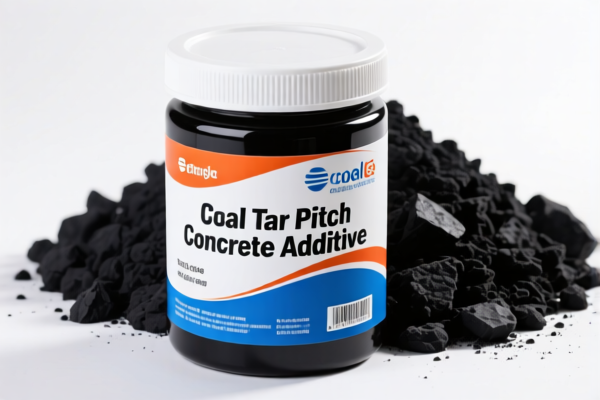

AI Analysis
🌋 Volcanic Ash Cement Additive (Pozzolanic Materials & Prepared Additives)
🌐 HS Code Reference & Customs Clearance Guide | 2026 Latest Tariff Analysis | Professional Strategy for Construction Materials
📌 I. Product Definition & Classification: What is "Volcanic Ash Cement Additive"?
In international trade, "Volcanic Ash" is classified as a pozzolan. When used as an additive for cement, mortar, or concrete, it is generally categorized under two main headings depending on its state:
- Raw Mineral Substances: If the volcanic ash is raw, unprocessed, or minimally processed (e.g., ground natural volcanic ash, fly ash, or siliceous earth), it falls under Chapter 25.
- Prepared Chemical Additives: If the volcanic ash is mixed with other chemicals, treated with binding agents, or formulated specifically as a "prepared additive" for concrete/cement, it falls under Chapter 38.
⚠️ Critical Distinction:
- If the product is purely mineral (even if ground fine) without complex chemical preparation → HS Code 25xx
- If the product is a mixture or specifically formulated "preparation" (e.g., containing >5% aromatic substances or specific inorganic additives) → HS Code 3824
📦 II. HS Code Classification Details (2026 Latest Tariff Concordance)
| HS Code | Product Description | Application Scenario | Tax Implication (China to US) |
|---|---|---|---|
2530.90.80.15 |
Mineral substances not elsewhere specified: Other Earth Colors | Raw volcanic ash used as coloring or minor filler; unprocessed natural earth minerals. | 0.0% (Base 0% + Surtax 0%) |
2530.90.80.50 |
Mineral substances not elsewhere specified: Other: Other | Generic raw volcanic ash, fly ash, or similar mineral powders not specifically named elsewhere. | 0.0% (Base 0% + Surtax 0%) |
2523.90.00.00 |
Other hydraulic cements | If the product is already a type of cement (e.g., slag cement, supersulfate cement) rather than just an additive. | 25.0% (Base 0% + Surtax 25%) |
2523.29.00.00 |
Portland cement: Other | If the product is actually a specific type of Portland cement (non-white/non-colored). | 25.0% (Base 0% + Surtax 25%) |
3824.40.10.00 |
Prepared additives for cements/mortars/concretes: Containing 5%+ aromatic substances | Complex chemical additives where volcanic ash is a base, but modified with organic/aromatic compounds. | 31.5% (Base 6.5% + Surtax 25%) |
3824.40.20.00 |
Prepared additives for cements/mortars/concretes: Consisting wholly of inorganic substances | Formulated inorganic mixes (e.g., volcanic ash + lime + silica fume) specifically prepared for concrete enhancement. | 25.0% (Base 0% + Surtax 25%) |
🔍 Key Insight:
- Raw Volcanic Ash is typically duty-free (0.0%) under2530.90.80.50.
- Prepared Additives incur significant tariffs. Even "inorganic" preparations face a 25% surtax.
- If the additive contains organic binders or aromatic substances, the base tariff rises to 6.5%, leading to a total of 31.5%.
💰 III. 2026 Latest Tariff Rate Breakdown (Including Surtaxes & Policy Add-ons)
✅ Applicable Country: United States (US)
✅ Origin: China (CN)
✅ Effective Time: Current 2026 Tariff Schedule
🎯 1. 2530.90.80.50 —— Raw Volcanic Ash / Mineral Substance (Most Common for Raw Additives)
| Item | Content |
|---|---|
| Base Tariff | 0.0% (ad valorem) |
| Surtax (Section 301) | 0.0% (Note: Some mineral goods may have different footnote treatments, but data shows 0.0% here) |
| Total Tax Rate | 0.0% |
| Tax Calculation | CIF Value × 0.0% = $0 |
| De Minimis Eligibility | N/A (Usually bulk shipments) |
| Legal Basis | HTSUS 2530.90.80.50 |
📌 Explanation:
- Raw mineral substances like volcanic ash are often classified as "Other mineral substances" and enjoy zero duty.
- This is the most cost-effective classification for pure volcanic ash.
- Ensure the product is not described as "prepared chemical mixtures" to avoid Chapter 38.
🎯 2. 3824.40.20.00 —— Prepared Inorganic Additives (Formulated Mixes)
| Item | Content |
|---|---|
| Base Tariff | 0.0% |
| Surtax (Section 301) | 25.0% |
| Total Tax Rate | 25.0% |
| Tax Calculation | CIF Value × 25.0% |
| De Minimis Eligibility | ❌ Not Eligible (Chemical preparations are typically excluded from de minimis benefits for Chinese origin) |
| Legal Basis | HTSUS 3824.40.20.00 + Section 301 Footnote |
📌 Explanation:
- If your volcanic ash is blended with other chemicals to create a "preparation," it moves to Chapter 38.
- The 25% surtax is applied on top of the 0% base rate.
- Risk: Misclassifying a prepared additive as raw material (2530) can lead to customs audits and penalties.
🎯 3. 3824.40.10.00 —— Prepared Additives with Aromatic Substances
| Item | Content |
|---|---|
| Base Tariff | 6.5% |
| Surtax (Section 301) | 25.0% |
| Total Tax Rate | 31.5% |
| Tax Calculation | CIF Value × 31.5% |
| De Minimis Eligibility | ❌ Not Eligible |
| Legal Basis | HTSUS 3824.40.10.00 |
📌 Explanation:
- If the additive contains organic compounds (e.g., polymers, surfactants, or aromatic binders) exceeding 5% by weight, the base tariff jumps to 6.5%.
- This is the most expensive category and should be avoided if possible by simplifying the formulation.
🛠️ IV. Customs Clearance Practical Advice (Pitfall Avoidance Guide)
✅ 1. Documentation Checklist (Essential)
| Document | Required | Description |
|---|---|---|
| ✅ Product Specification Sheet | ✔️ | Detail chemical composition (SiO₂, Al₂O₃ content), particle size, and origin. |
| ✅ MSDS (Material Safety Data Sheet) | ✔️ | Confirm no hazardous chemicals are present. |
| ✅ Bill of Lading / Invoice | ✔️ | Clearly state "Raw Volcanic Ash" or "Prepared Cement Additive" – avoid vague terms like "Dust" or "Powder." |
| ✅ Certificate of Origin | ✔️ | To prove non-US origin and apply correct surtax rules. |
| ✅ Composition Declaration | ✔️ | If classified under 3824, declare if aromatic substances are present (<5% or >5%). |
✅ 2. Classification Strategy (Key Mnemonics)
🔥 “Raw is Free, Prepared is 25, Aromatic is 31.5!”
| Scenario | Correct HS Code | Tax Rate | Common Mistake |
|---|---|---|---|
| Pure, ground volcanic ash | 2530.90.80.50 |
0.0% | Calling it "Chemical Additive" → 25% |
| Volcanic ash + Lime (Inorganic Mix) | 3824.40.20.00 |
25.0% | Claiming it's "Raw Mineral" → 0% (Risk of Audit) |
| Volcanic Ash + Polymer Binder | 3824.40.10.00 |
31.5% | Ignoring aromatic content → Underpayment |
✅ 3. Special Handling Tips
| Situation | Recommendation |
|---|---|
| Bulk Shipping | Ensure packaging is sealed to prevent contamination. Loose bulk ash may be scrutinized for contamination. |
| Color Variance | If the ash is naturally colored (red, grey, black), do not declare as "Earth Colors" (2530.90.80.15) unless it is specifically processed for coloring purposes. Otherwise, use 2530.90.80.50. |
| Customs Inquiry | If asked about "Preparedness," provide a flow chart of the manufacturing process. If it’s just grinding and sieving, it’s raw. If it’s mixing and chemical treatment, it’s prepared. |
🌍 V. Global Market Comparison (2026)
| Country/Region | Recommended HS Code | Tariff Rate | Notes |
|---|---|---|---|
| 🇺🇸 USA | 2530.90.80.50 (Raw) |
0.0% | Most favorable for raw ash. |
| 🇺🇸 USA | 3824.40.20.00 (Prepared) |
25.0% | High cost for formulated mixes. |
| 🇪🇺 EU | 2530.90 | ~2.5% | No Section 301 surtax. |
| 🇨🇳 China | 2530.90 | 0% (Export) | No export tax on raw minerals. |
📌 Conclusion:
- USA is the critical market where classification determines cost.
- Raw volcanic ash is duty-free, but any processing that makes it a "preparation" incurs a 25% penalty.
- Optimize supply chain: Import raw ash to the US and blend locally if possible, to avoid the 25% surtax on pre-mixed additives from China.
📌 VI. Common Errors & Pitfalls (Lessons Learned)
❌ Error 1: Declaring a pre-mixed concrete additive as "Raw Volcanic Ash"
👉 Consequence: Customs audit, seizure, and penalty. The 25% surtax will be back-charged + interest.
❌ Error 2: Using vague terms like "Construction Powder"
👉 Consequence: Customs may assign a higher residual duty rate or misclassify it as a chemical product.
❌ Error 3: Ignoring Aromatic Content in prepared additives
👉 Consequence: If >5% aromatic substances are present but not declared, the base tariff should be 6.5%, not 0%. Underpayment risk.
✅ Correct Practice:
"Ground Natural Volcanic Ash (SiO₂ 85%), Particle Size <75 Microns, For Use as PoZZolanic Cement Additive, Raw Mineral Substance"
HS Code:2530.90.80.50
Tax: 0.0%
🎯 VII. Conclusion: Precision in Classification Saves Money!
🎯 Remember:
🔹 "Raw Ash = 0%, Prepared Mix = 25%, Aromatic Blend = 31.5%!"
🔹 "Don’t let preparation cost you 25%!"
📌 Pro Tip:
If your volcanic ash is already mixed with other inorganic chemicals in China, consider importing the individual components separately (if possible) and blending in the US, or negotiating with suppliers to provide the ash in a non-prepared state to qualify for the 0% duty rate.
📣 Immediate Action:
📞 Consult with a customs broker to verify if your product is considered "Raw" or "Prepared."
🚀 Provide detailed composition data to secure the correct HS Code and minimize tax liability.
✨ Professional Customs Clearance Starts with Accurate Classification!
💼 Every percentage point matters in your profit margin!
Customer Reviews
About HS Code Classification
The Harmonized System (HS) is an internationally standardized nomenclature developed by the World Customs Organization (WCO) to classify traded products. Over 200 countries use the HS system as the basis for customs tariffs, trade statistics, and import/export regulations.
Each HS code follows a hierarchical structure:
- Chapter (2 digits) — Broad category of goods (e.g., Chapter 84: Machinery and Mechanical Appliances)
- Heading (4 digits) — More specific grouping within the chapter
- Subheading (6 digits) — Internationally standardized breakdown, used by all WCO member countries
- National subdivisions (8-10 digits) — Country-specific extensions for further classification, such as US HTSUS 10-digit codes
Correct HS code classification is essential for smooth customs clearance, accurate duty payment, and compliance with trade regulations. Misclassification can lead to customs delays, overpayment of duties, or penalties.
When importing from CN to US, the applicable tariff rates may include:
- Most-Favored-Nation (MFN) rate — The standard duty rate applied to WTO members
- General rate — Applied to countries without trade agreements
- Trade remedy duties — Additional tariffs such as Section 301 (anti-dumping), Section 232 (national security), or countervailing duties
The information provided on this page is for reference purposes only. For official classification, please consult with your local customs authority or a licensed customs broker.