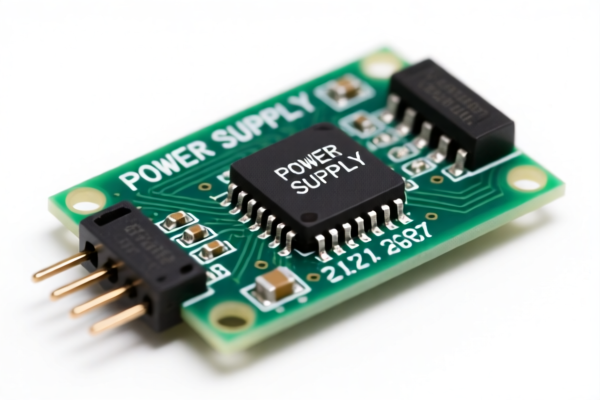
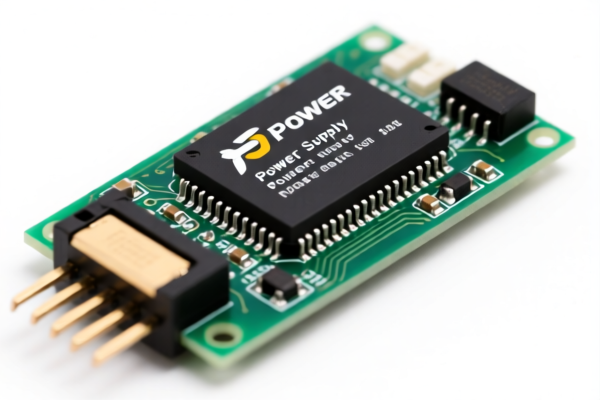
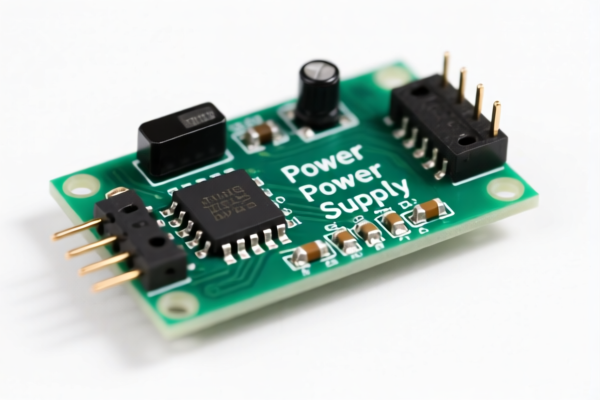
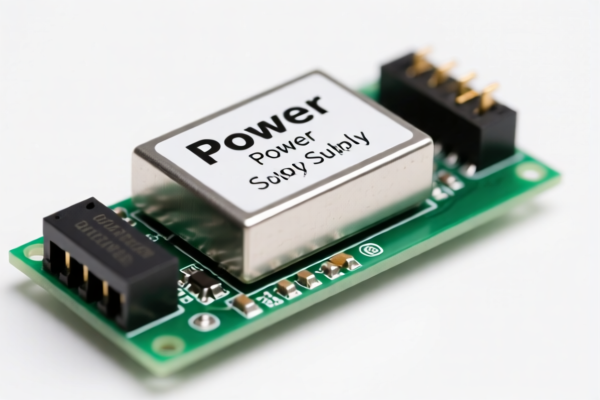
voltage reducing power module
CN → US| HS Code | Tariff Rate | Origin | Destination | Doc |
|---|---|---|---|---|
| 8542900000 | 60.0% | CN | US | Official Doc |
| 8542390090 | 60.0% | CN | US | Official Doc |
| 8543709860 | 37.6% | CN | US | Official Doc |
| 8543906800 | 35.0% | CN | US | Official Doc |
| 8504409540 | 35.0% | CN | US | Official Doc |
| 8504409580 | 35.0% | CN | US | Official Doc |
Product Images
AI Analysis
🔌 Voltage Reducing Power Module (Step-Down Power Supply)
🌐 HS Code Reference & Customs Clearance Guide | 2026 Latest Tariff Analysis | Professional Clearance Strategy
📌 I. Product Definition & Classification: Do You Really Understand "Power Modules"?
A Voltage Reducing Power Module (also known as a Step-Down Power Supply, DC-DC Converter, or AC-DC Adapter) is a critical electronic component that converts electrical energy from one voltage level to another (typically higher to lower). In international trade, classification depends heavily on its functional nature and integration level:
1. Integrated Circuit Components (Parts of ICs):
If the module is an internal component within a larger integrated circuit system or strictly defined as a "part" of an electronic integrated circuit, it falls under Chapter 85 Heading 8542.
2. Static Converters (Standalone Devices):
If the module operates as an independent "static converter" (transforming power without moving parts), it is classified under Chapter 85 Heading 8504. This is the most common classification for standalone power supplies.
3. Other Electrical Machines/Apparatus:
If the module has independent functions but doesn't fit neatly into specific converter categories, it may fall under "Other machines and apparatus" (Heading 8543).
⚠️ Key Distinction Point:
- Is it an internal part of an IC? → HS 8542
- Is it an independent static converter? → HS 8504
- Is it a general electrical apparatus? → HS 8543
📦 II. HS Code Classification Details (2026 Latest Tariff Authority Comparison)
Based on the provided data, here are the potential HS Codes for Voltage Reducing Power Modules, along with their rationale and tax implications.
| HS Code | Product Description | Rationale for Classification | Total Tax Rate |
|---|---|---|---|
8542.90.00.00 |
Parts of Integrated Circuits | Defined as a component of an IC circuit; no material conflict. Fits the "Parts" definition. | 60.0% |
8542.39.00.90 |
Other Electronic Integrated Circuit Assemblies | Falls under "Other" for electronic IC components; not in excluded categories. | 60.0% |
8543.70.98.60 |
Other Machines & Apparatus (Electric) | Considered an independent electrical apparatus; inferred as electronic component/device. | 37.6% |
8543.90.68.00 |
Parts of Other Electric Machines | Fits "Printed Circuit Assembly" morphology; fits "Other" residual category. | 35.0% |
8504.40.95.40 |
Static Converters (Other) | Classified as a "static converter" (power supply); fits "Other" residual category. | 35.0% |
8504.40.95.80 |
Static Converters (Other) | Functionally a static converter; no material/form conflict; fits "Other" residual logic. | 35.0% |
🔍 Critical Reminder:
- HS 8542 Codes (60% Tax): Only apply if the module is strictly defined as a part of an integrated circuit. If it’s a standalone power supply unit, this classification is likely incorrect and high-risk. - HS 8504 Codes (35% Tax): The most standard and defensible classification for standalone static converters (like voltage reducing modules). - HS 8543 Codes (35-37.6% Tax): Alternative classifications if the device has complex independent functions beyond simple conversion.
💰 III. 2026 Latest Tariff Rate Details (Including Surcharges & Policy Add-ons)
✅ Applicable Country: United States (US)
✅ Origin: China (CN)
✅ Effective Date: November 10, 2025 (and onwards)
🎯 1. 8542.90.00.00 & 8542.39.00.90 —— Parts of Integrated Circuits
| Item | Content |
|---|---|
| Base Tariff | 0% (ad valorem) |
| Section 301 Surcharge | +50% (Under USITC Footnote) |
| IEEPA Surcharge | +10% (针对中国/香港产品,自2025年11月10日起) |
| Total Tax Rate | 60.0% |
| Tax Calculation | CIF Value × 60% |
| De Minimis Eligibility | ❌ Not Eligible (deny_de_minimis) |
| Legal Basis Path | Section 301: 50% → IEEPA: 10% → USITC: 8542... |
📌 Explanation:
- These codes carry the highest penalty due to being grouped under high-tariff IC components. - Total 60% makes importing under these codes extremely costly unless the product is genuinely a micro-component inside a chip.
🎯 2. 8504.40.95.40 & 8504.40.95.80 —— Static Converters (Recommended for Standalone Units)
| Item | Content |
|---|---|
| Base Tariff | 0% |
| Section 301 Surcharge | +25% (Standard for Power Supplies under Section 301) |
| IEEPA Surcharge | +10% (针对中国/香港产品,自2025年11月10日起) |
| Total Tax Rate | 35.0% |
| Tax Calculation | CIF Value × 35% |
| De Minimis Eligibility | ❌ Not Eligible |
| Legal Basis Path | Section 301: 25% → IEEPA: 10% → USITC: 8504.40... |
📌 Note:
- 35% is significantly lower than the 60% IC classification. - If your power module is a standalone device (with casing, input/output terminals), HS 8504 is the correct and cost-effective choice.
🎯 3. 8543.70.98.60 & 8543.90.68.00 —— Other Electrical Apparatus
| Item | Content |
|---|---|
| Base Tariff | 0% - 2.6% |
| Section 301 Surcharge | +25% |
| IEEPA Surcharge | +10% |
| Total Tax Rate | 35.0% - 37.6% |
| Tax Calculation | CIF Value × (35%~37.6%) |
| De Minimis Eligibility | ❌ Not Eligible |
| Legal Basis Path | Section 301: 25% → IEEPA: 10% → USITC: 8543... |
📌 Note:
- Use this only if the device has specialized independent functions beyond standard power conversion. -8543.90.68.00(35.0%) is preferable to8543.70.98.60(37.6%) if eligible.
🛠️ IV. Customs Clearance Practical Advice (Pitfall Avoidance Guide)
✅ 1. Documentation Checklist (Mandatory)
| Document | Must Provide | Description |
|---|---|---|
| ✅ Product Specification Sheet | ✔️ | Include Input/Output Voltage, Current, Power, Efficiency, Dimensions |
| ✅ Circuit Diagram / Schematic | ✔️ | Crucial to prove if it’s a "static converter" (HS 8504) vs. "IC part" (HS 8542) |
| ✅ Product Photos (with Nameplate) | ✔️ | Show labels, model number, input/output specs |
| ✅ Test Reports | ✔️ | FCC, CE, RoHS, UL (if applicable) |
| ✅ Commercial Invoice | ✔️ | Clearly state "Voltage Reducing Power Module" or "DC-DC Converter" |
| ✅ Packing List | ✔️ | Detail contents to avoid misclassification claims |
✅ 2. Declaration Tips (Key Rules)
🔥 "Function Determines Code, Converter is King, Parts are Risky!"
| Scenario | Correct Declaration | Incorrect Practice |
|---|---|---|
| Standalone Power Supply | 8504.40.95.40 or .80 (35%) |
Misclassify as 8542 → 60% Tax |
| Internal IC Component | 8542.90.00.00 (60%) |
Misclassify as 8504 → Risk of Re-classification & Penalty |
| Specialized Apparatus | 8543.90.68.00 (35%) |
Use generic "Electronic Part" → Ambiguity & Delay |
| Mixed Shipment | Separate by function | Mix IC parts with Power Supplies → Confusion |
✅ 3. Special Case Handling
| Scenario | Handling Advice |
|---|---|
| OEM Custom Power Module | Provide client order + design specs to justify "Other" category if needed |
| Module with Built-in Control | May still be 8504 if conversion is primary function; provide circuit proof |
| High-Precision Industrial Supply | If complex, consider 8543; but 8504 is safer if basic conversion |
| Origin: Non-China | If from Vietnam/Mexico, check for IEEPA Exemptions (potential 0-5% tax) |
🌍 V. Global Market Comparison (2026 Latest)
| Country/Region | Recommended HS Code | Tariff Rate | Certification Requirements | Notes |
|---|---|---|---|---|
| 🇺🇸 USA | 8504.40.95.40 |
35% | FCC + RoHS | Avoid 8542 (60%) unless strictly IC part |
| 🇨🇳 China | 8504.40.95.40 |
5% | CCC + RoHS | No additional surcharges |
| 🇪🇺 EU | 8504.40.95.40 |
0% (if CE) | CE + ErP | No surcharges |
| 🇦🇺 Australia | 8504.40.95.40 |
5% | RCM | No surcharges |
| 🇯🇵 Japan | 8504.40.95.40 |
0% | PSE | No surcharges |
📌 Conclusion:
- USA is the only market with high surcharges for Chinese-origin electronics. - Correct classification is critical:8504(35%) vs.8542(60%) is a 25% difference in cost. - Always default to HS 8504 for standalone power modules unless proven otherwise.
📌 VI. Common Mistakes & Pitfall Guide (Lessons Learned)
❌ Mistake 1: Classifying standalone power supplies as "IC Parts" (8542)
👉 Consequence: 60% Tax instead of 35% → Extra 25% Cost!
❌ Mistake 2: Not providing circuit diagrams
👉 Consequence: Customs cannot verify if it’s a "converter" → Delays or Re-classification
❌ Mistake 3: Using vague terms like "Electronic Module"
👉 Consequence: High risk of misclassification → Penalties & Interest
✅ Correct Practice:
"DC-DC Voltage Reducing Power Module, Input: 24V, Output: 5V, 10A, Static Converter, Model XYZ, FCC & RoHS Certified"
🎯 VII. Conclusion: Professional Declaration Saves Money!
🎯 Remember the Rule:
🔹 "Standalone = 8504 (35%), IC Part = 8542 (60%)"
🔹 "HS Code decides cost, 25% difference is huge!"
🔹 "Declare Function, Not Just Form!"
📌 Pro Tip:
If your power module is sourced from Vietnam, Mexico, Thailand, or Malaysia, you may qualify for IEEPA Exemptions, reducing the tax to 0%~5%.
Recommendation: Apply for Pre-Ruling (Advance Ruling) from US Customs to secure the 35% rate and avoid disputes.
📣 Immediate Action:
📞 Contact a professional customs broker + Provide Product Specs + Apply for HS Code Pre-Ruling
🚀 Let your power modules clear customs smoothly, efficiently, and profitably!
✨ Professional Clearance Starts with Accurate Classification!
💼 Every dollar saved is a dollar earned!
Customer Reviews
About HS Code Classification
The Harmonized System (HS) is an internationally standardized nomenclature developed by the World Customs Organization (WCO) to classify traded products. Over 200 countries use the HS system as the basis for customs tariffs, trade statistics, and import/export regulations.
Each HS code follows a hierarchical structure:
- Chapter (2 digits) — Broad category of goods (e.g., Chapter 84: Machinery and Mechanical Appliances)
- Heading (4 digits) — More specific grouping within the chapter
- Subheading (6 digits) — Internationally standardized breakdown, used by all WCO member countries
- National subdivisions (8-10 digits) — Country-specific extensions for further classification, such as US HTSUS 10-digit codes
Correct HS code classification is essential for smooth customs clearance, accurate duty payment, and compliance with trade regulations. Misclassification can lead to customs delays, overpayment of duties, or penalties.
When importing from CN to US, the applicable tariff rates may include:
- Most-Favored-Nation (MFN) rate — The standard duty rate applied to WTO members
- General rate — Applied to countries without trade agreements
- Trade remedy duties — Additional tariffs such as Section 301 (anti-dumping), Section 232 (national security), or countervailing duties
The information provided on this page is for reference purposes only. For official classification, please consult with your local customs authority or a licensed customs broker.