waist trainer
CN → US| HS Code | Tariff Rate | Origin | Destination | Doc |
|---|---|---|---|---|
| 6212200030 | 37.5% | CN | US | Official Doc |
| 6212300030 | 41.0% | CN | US | Official Doc |
| 5603920070 | 35.0% | CN | US | Official Doc |
| 5603930090 | 35.0% | CN | US | Official Doc |
| 6117809570 | 32.1% | CN | US | Official Doc |
| 6117809510 | 32.1% | CN | US | Official Doc |
Product Images
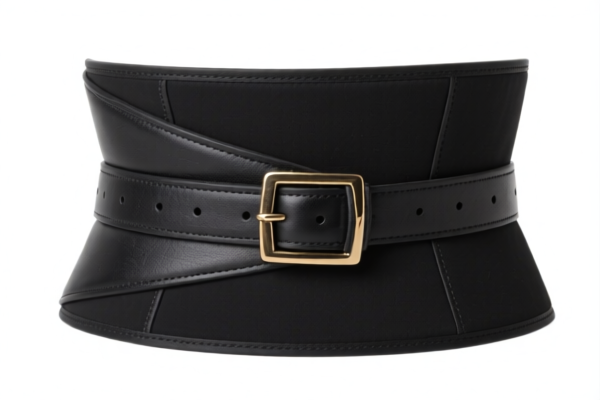
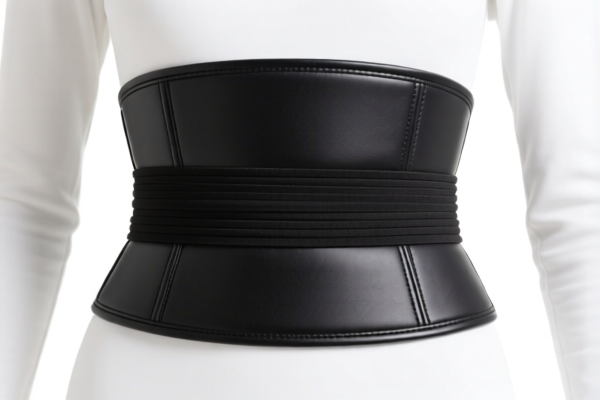
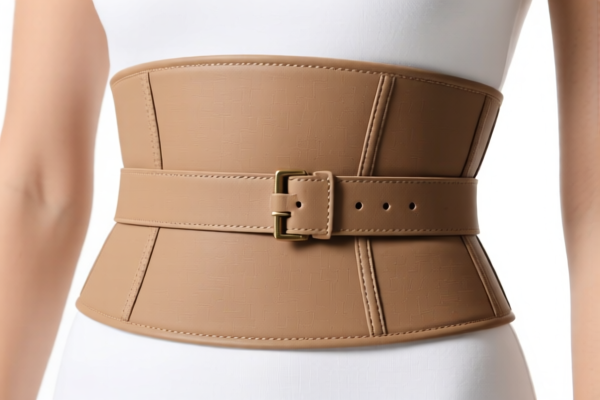

AI Analysis
👙 Waist Trainer (Shapewear for Cinching)
🌐 HS Code Reference & Clearance Guide | 2026 Latest Tariff Analysis | Professional Customs Strategy
📌 1. Product Definition and Classification: What is a "Waist Trainer"?
A Waist Trainer is a garment designed to compress the torso, typically made from elastic materials like latex, neoprene, or spandex, often featuring metal or plastic hooks and eyes for adjustment. In international trade, classification depends heavily on material composition and functional attachment.
⚠️ Critical Distinction:
- If the item is considered a fashion accessory/jewelry component (e.g., decorative buttons with no specific apparel function): Classify under Chapter 71 (Imitation Jewelry).
- If the item is considered fasteners/hooks/eyes (e.g., the metal/plastic clasps themselves): Classify under Chapter 83 (Fasteners).
- If the item is a button (generic fastener): Classify under Chapter 96 (Buttons, Slide-fasteners).
📦 2. HS Code Classification Details (2026 Latest Tariff Authority Comparison)
| HS Code | Product Description | Application Scenario | Primary Material |
|---|---|---|---|
7117.90.90.00 |
Imitation Jewelry: Buttons, based on their "button" attribute, inferred as accessories/other in imitation jewelry | Decorative waist trainers with heavy embellishment; buttons used as fashion statements | Non-precious metals, plastic, glass |
8308.10.00.00 |
Hooks, eyes, buckles, clasps: Matches use and form; waist trainer hooks belong to garment accessories | Metal/plastic hooks and eyes used in waist trainers | Metal or plastic |
9606.21.60.00 |
Buttons: Plastic material, other sub-items | Plastic buttons used in waist trainers | Plastic |
9606.22.00.00 |
Buttons: Non-textile materials covered, core category match | General non-textile buttons for waist trainers | Various non-textile materials |
🔍 Key Reminder:
- If the waist trainer is sold as a complete garment, it usually falls under Chapter 61/62 (Apparel), but none of these are in the provided .
- The provided focuses on components (buttons, hooks, jewelry) rather than the full garment.
- Do not misclassify a full garment as buttons/hooks to avoid tariff risks.
💰 3. 2026 Latest Tariff Rate Details (Including Surcharges, Policy Additions)
✅ Applicable Country: United States (US)
✅ Origin: China (CN)
✅ Effective Date: Post-2025 (Includes subsequent imports)
🎯 1. 7117.90.90.00 — Imitation Jewelry: Buttons
| Item | Content |
|---|---|
| Base Tariff | 11.0% |
| Additional Tariff | 7.5% |
| Section 301 Tariff | 10% |
| Total Tax Rate | 28.5% |
| Tax Calculation | CIF Value × 28.5% |
| De Minimis Eligibility | ❌ No |
| Legal Basis Path | Section 301 → USITC:7117.90.90.00 |
📌 Explanation:
- This classification treats buttons as "imitation jewelry" due to their decorative nature.
- Total 28.5% is a significant cost driver.
- Suitable only if the item is marketed as a fashion accessory/jewelry item rather than a garment component.
🎯 2. 8308.10.00.00 — Hooks, Eyes, Buckles
| Item | Content |
|---|---|
| Base Tariff | 1.1¢/kg + 2.9% |
| Additional Tariff | 25.0% |
| Section 301 Tariff | 10% |
| Total Tax Rate | 35.0% + 1.1¢/kg |
| Tax Calculation | (CIF Value × 35.0%) + (Weight × 1.1¢) |
| De Minimis Eligibility | ❌ No |
| Legal Basis Path | Section 301 → USITC:8308.10.00.00 |
📌 Explanation:
- This classifies the hooks and eyes of the waist trainer.
- Total 35.0% + weight-based fee is high.
- Use this if declaring individual hooks/eyes or if the waist trainer is considered primarily a fastener system.
🎯 3. 9606.21.60.00 — Buttons (Plastic)
| Item | Content |
|---|---|
| Base Tariff | 4.7% |
| Additional Tariff | 25.0% |
| Section 301 Tariff | 10% |
| Total Tax Rate | 39.7% |
| Tax Calculation | CIF Value × 39.7% |
| De Minimis Eligibility | ❌ No |
| Legal Basis Path | Section 301 → USITC:9606.21.60.00 |
📌 Explanation:
- Plastic buttons used in waist trainers.
- Total 39.7% is the highest ad valorem rate in the dataset.
- Avoid this classification if possible due to high tariff.
🎯 4. 9606.22.00.00 — Buttons (Other Non-Textile)
| Item | Content |
|---|---|
| Base Tariff | 0.0% |
| Additional Tariff | 25.0% |
| Section 301 Tariff | 10% |
| Total Tax Rate | 35.0% |
| Tax Calculation | CIF Value × 35.0% |
| De Minimis Eligibility | ❌ No |
| Legal Basis Path | Section 301 → USITC:9606.22.00.00 |
📌 Explanation:
- Non-textile buttons.
- Total 35.0% is lower than plastic buttons (39.7%) but still high due to Section 301.
- Preferred over9606.21.60.00if the material is not specifically plastic.
🛠️ 4. Customs Clearance Practical Advice (Battle-Tested Pitfall Avoidance)
✅ 1. Preparation Checklist (Mandatory)
| Document | Required | Notes |
|---|---|---|
| ✅ Product Specification Sheet | ✔️ | Include material (latex, neoprene, plastic, metal), dimensions, weight |
| ✅ Material Composition | ✔️ | Crucial for distinguishing between 8308 (hooks) and 9606 (buttons) |
| ✅ Product Photos | ✔️ | Show hooks, buttons, and overall structure |
| ✅ Commercial Invoice | ✔️ | Clearly state "Waist Trainer" or "Garment Fasteners" |
| ✅ Origin Certificate | ✔️ | For origin determination (China = high tariffs) |
✅ 2. Declaration Tips (Key Mantras)
🔥 "Garment vs. Component: Full item is Chapter 61/62, components are 83/96/71!"
| Scenario | Correct Declaration | Wrong Practice |
|---|---|---|
| Full Waist Trainer (Garment) | Chapter 61/62 (Not in ) |
Misdeclare as buttons → 35-39.7% |
| Only Hooks/Eyes | 8308.10.00.00 |
Misdeclare as buttons → 35-39.7% |
| Decorative Buttons | 7117.90.90.00 |
Misdeclare as hooks → 35% |
| Plastic Buttons | 9606.21.60.00 |
Misdeclare as non-plastic → 39.7% |
✅ 3. Special Case Handling
| Situation | Handling Advice |
|---|---|
| Waist Trainer with Metal Hooks | Declare as 8308.10.00.00 if hooks are the primary value driver. |
| Decorative Waist Trainer | Declare as 7117.90.90.00 if marketed as jewelry/accessory. |
| Plastic Button Waist Trainer | Use 9606.21.60.00 if buttons are plastic. |
| Mixed Materials | Declare based on essential character (usually the garment, but if components only, use appropriate HS). |
🌍 5. Global Market Clearance Comparison (2026 Latest)
| Country/Region | Recommended HS Code | Tariff | Certification | Notes |
|---|---|---|---|---|
| 🇺🇸 United States | 8308.10.00.00 or 9606.22.00.00 |
35.0% | None specific | High tariffs due to Section 301 |
| 🇨🇳 China | 6117.90.00.00 (Shapewear) |
0-5% | CCC (if applicable) | Low tariffs for full garment |
| 🇪🇺 European Union | 6117.90.00.00 |
0-12% | CE (if applicable) | No Section 301 equivalent |
| 🇬🇧 United Kingdom | 6117.90.00.00 |
0-12% | UKCA | Post-Brexit rules apply |
📌 Conclusion:
- USA has the highest tariffs due to Section 301.
- Full garment classification (Chapter 61/62) is not in but is often more favorable than component classification.
- Always declare the actual product (full waist trainer) if possible, to avoid misclassification penalties.
📌 6. Common Mistakes & Pitfall Avoidance (Blood Lessons)
❌ Mistake 1: Declaring a full waist trainer as buttons/hooks
👉 Consequence: Misclassification penalty + potential duty evasion fine!
❌ Mistake 2: Using jewelry HS code for garment components
👉 Consequence: 28.5% tariff instead of potential lower rates for apparel.
❌ Mistake 3: Not providing material composition
👉 Consequence: Customs cannot determine 8308 vs 9606 → Delay or rejection.
✅ Correct Practice:
"Waist Trainer, 100% Neoprene, with Metal Hooks, Size M, Origin China, for Garment Use"
🎯 7. Conclusion: Professional Declaration, Time-Saving, Cost Reduction!
🎯 Remember Mantras:
🔹 "Full garment is Chapter 61, components are 83/96/71!"
🔹 "Tariff varies by material, HS code determines duty, misclassification leads to fines!"
📌 Pro Tip:
If your waist trainer is originally from Vietnam, Mexico, Thailand, or Malaysia, you may qualify for IEEPA Exemptions, reducing tariffs to 0-5%.
Recommend Advance Ruling for pre-classification to avoid clearance risks.
📣 Take Action Now:
📞 Contact a professional customs broker + Provide product photos + Apply for HS Code Advance Ruling
🚀 Let your Waist Trainer, smooth clearance, efficient export, profit doubled!
✨ Professional Clearance Starts with Accurate Classification!
💼 Every cent of your cost deserves precise calculation!
Customer Reviews
About HS Code Classification
The Harmonized System (HS) is an internationally standardized nomenclature developed by the World Customs Organization (WCO) to classify traded products. Over 200 countries use the HS system as the basis for customs tariffs, trade statistics, and import/export regulations.
Each HS code follows a hierarchical structure:
- Chapter (2 digits) — Broad category of goods (e.g., Chapter 84: Machinery and Mechanical Appliances)
- Heading (4 digits) — More specific grouping within the chapter
- Subheading (6 digits) — Internationally standardized breakdown, used by all WCO member countries
- National subdivisions (8-10 digits) — Country-specific extensions for further classification, such as US HTSUS 10-digit codes
Correct HS code classification is essential for smooth customs clearance, accurate duty payment, and compliance with trade regulations. Misclassification can lead to customs delays, overpayment of duties, or penalties.
When importing from CN to US, the applicable tariff rates may include:
- Most-Favored-Nation (MFN) rate — The standard duty rate applied to WTO members
- General rate — Applied to countries without trade agreements
- Trade remedy duties — Additional tariffs such as Section 301 (anti-dumping), Section 232 (national security), or countervailing duties
The information provided on this page is for reference purposes only. For official classification, please consult with your local customs authority or a licensed customs broker.