walking aid
CN → US| HS Code | Tariff Rate | Origin | Destination | Doc |
|---|---|---|---|---|
| 8713100000 | 10.0% | CN | US | Official Doc |
| 8713900060 | 10.0% | CN | US | Official Doc |
| 9021100090 | 10.0% | CN | US | Official Doc |
| 9021100050 | 10.0% | CN | US | Official Doc |
Product Images
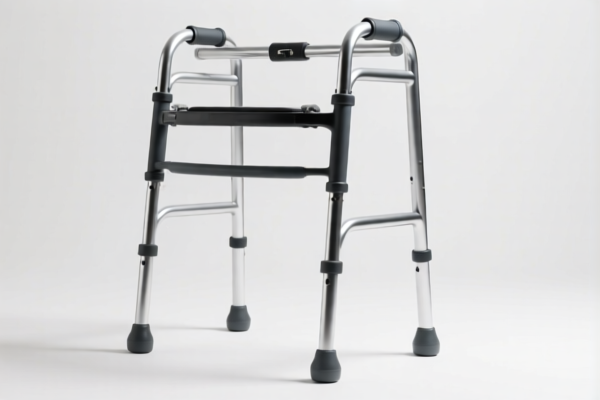
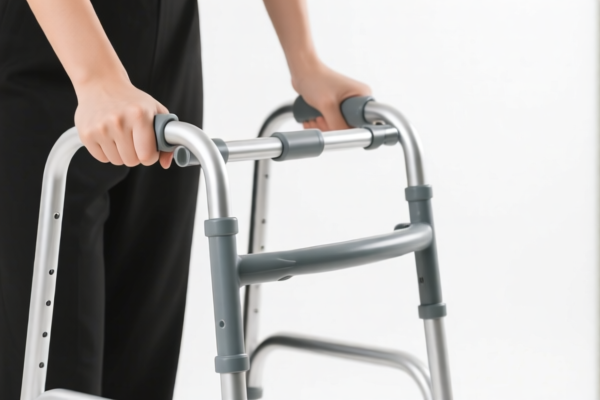
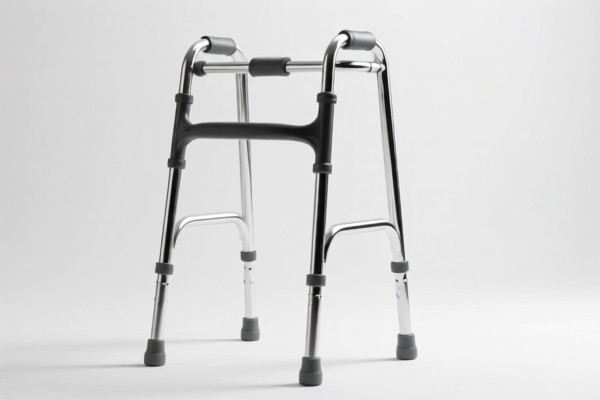

AI Analysis
🦽 Walking Aids: Comprehensive HS Code Classification & US Customs Clearance Guide (2026)
🌐 HS Code Reference & Customs Clearance Strategy | 2026 Latest Tariff Analysis | Professional Compliance Guide
📌 I. Product Definition: What is a "Walking Aid"?
A Walking Aid is a non-mechanical device designed to assist individuals with mobility impairments, balance issues, or recovery needs to walk safely and independently. Unlike motorized mobility scooters or electric wheelchairs, walking aids rely entirely on the user's physical strength for propulsion.
In international trade, walking aids are primarily categorized into two distinct groups based on their regulatory and functional nature:
- Disability Aids (Chapter 87): Devices specifically designed for persons with disabilities, functioning as "vehicles for invalids" or support tools.
- Medical/Orthopedic Aids (Chapter 90): Devices classified as "orthopedic or fracture appliances," focusing on medical support, correction, or post-surgical recovery.
⚠️ Key Distinction:
- If the device is primarily marketed as a disability assistance tool for general mobility → Chapter 87 (8713)
- If the device is primarily marketed as a medical/orthopedic support for fractures or surgeries → Chapter 90 (9021)
- Note: Both categories generally attract the same effective tariff rate in the US due to current trade policies, but the classification logic differs.
📦 II. HS Code Classification Details (2026 Latest Tariff Alignment)
Based on the provided data, the following HS Codes are recommended for Walking Aids (e.g., Canes, Crutches, Walkers, Frame Walkers).
| HS Code | Product Description | Applicable Scenario | Classification Logic |
|---|---|---|---|
8713.10.00.00 |
Vehicles for Invalids, Non-Mechanically Propelled | Canes, Standard Crutches, Basic Walkers | Classified as "non-mechanically propelled vehicles for invalids." No material conflict. |
8713.90.00.60 |
Other Vehicles for Invalids (Non-Mechanical) | Advanced Walkers, Support Frames, Complex Mobility Aids | Fits the "other non-mechanical disability aids" category. Matches auxiliary function for mobility. |
9021.10.00.90 |
Orthopedic or Fracture Appliances (Other) | Post-surgical walkers, Medical-grade support braces | Classified under "Orthopedic/Fracture appliances" for auxiliary movement. Falls under "Other" sub-category. |
9021.10.00.50 |
Orthopedic or Fracture Appliances (Specific Medical) | Hospital-grade walking aids, Rehabilitation frames | Specifically matches medical use cases within the 9021.10 scope. No material conflict. |
🔍 Critical Note:
- Chapter 87 (8713) focuses on the disability/mobility aspect.
- Chapter 90 (9021) focuses on the medical/orthopedic aspect.
- Recommendation: For general consumer walking aids (e.g., foldable walkers, ergonomic canes), 8713 is often the most straightforward classification. For specialized medical equipment sold to hospitals, 9021 may be preferred.
💰 III. 2026 US Tariff Rate Breakdown (Detailed)
✅ Applicable Country: United States (US)
✅ Country of Origin: China (CN)
✅ Effective Date: Current trade policies apply (Section 301 / IEEPA surcharges)
🎯 1. 8713.10.00.00 & 8713.90.00.60 (Chapter 87 - Disability Aids)
| Item | Detail |
|---|---|
| Base Duty Rate | 0.0% (Most Favored Nation rate for these codes) |
| Section 301 / 122 Clause Tariff | +10% |
| Additional Retaliatory/Other Tariffs | 0.0% (No additional 25% Section 301 tariff applies to these specific sub-headings in the provided data) |
| Total Effective Tax Rate | 10.0% |
| Tax Calculation Formula | CIF Value × 10% |
| De Minimis Eligibility | ⚠️ Check Local Policy: Generally, high-value medical devices may not qualify for low-value shipment exemptions if classified strictly. |
| Legal Basis Path | HTSUS:8713 → 122 Clause (Tariff Act) → USITC Schedule |
📌 Explanation:
- The base duty for non-mechanical wheelchairs/walkers is 0%.
- However, due to ongoing US-China trade tensions, a 10% additional tariff (referenced as "122 Clause" in the data) applies to these products originating from China.
- Total Landed Duty: 10%. This is relatively low compared to electronics (which can face 25-45%), but still significant for low-margin goods.
🎯 2. 9021.10.00.90 & 9021.10.00.50 (Chapter 90 - Orthopedic Aids)
| Item | Detail |
|---|---|
| Base Duty Rate | 0.0% |
| Section 301 / 122 Clause Tariff | +10% |
| Additional Retaliatory/Other Tariffs | 0.0% |
| Total Effective Tax Rate | 10.0% |
| Tax Calculation Formula | CIF Value × 10% |
| De Minimis Eligibility | ⚠️ Check Local Policy: Same as above. |
| Legal Basis Path | HTSUS:9021 → 122 Clause → USITC Schedule |
📌 Explanation:
- Similar to Chapter 87, the base duty for orthopedic appliances is 0%.
- The 10% additional tariff applies equally to these medical aids from China.
- Total Landed Duty: 10%.
🛠️ IV. Customs Clearance Practical Advice (Avoiding Pitfalls)
✅ 1. Required Documentation Checklist
| Document | Mandatory? | Purpose |
|---|---|---|
| Commercial Invoice | ✅ Yes | Must clearly state "Walking Aid" or "Crutch" and HS Code. Avoid vague terms like "Medical Device" without specification. |
| Product Photos | ✅ Yes | Show the item in use, including any branding, model numbers, and key features (e.g., adjustable height, wheels). |
| Material Specification | ✅ Yes | Confirm materials (e.g., Aluminum alloy, Plastic). Helps customs verify no prohibited materials. |
| Instruction Manual | ❌ Recommended | Proves intended use (medical/disability aid). |
| FDA Registration (if applicable) | ✅ Conditional | If marketed as a "medical device" for specific therapeutic purposes, FDA clearance may be required. For general mobility aids, often not required, but check status. |
| Certificate of Origin | ✅ Yes | To prove origin as China (triggering the 10% tariff). If shipped from Vietnam/Mexico, tariffs may differ. |
✅ 2. Declaration Tips (Best Practices)
🔥 "Be Specific, Not Generic!"
| Scenario | Correct Declaration | Incorrect Declaration |
|---|---|---|
| Aluminum Walker | "Aluminum Frame Walking Aid, Non-Mechanical, Model XYZ" | "Medical Equipment" |
| Ergonomic Cane | "Ergonomic Wooden Cane for Disability Assistance" | "Wooden Stick" |
| Pediatric Walker | "Plastic Pediatric Walker, Non-Motorized" | "Toy" |
| Post-Op Support | "Orthopedic Post-Surgical Walking Frame" | "Exercise Equipment" |
📌 Why it matters:
- Misdeclaring as "Exercise Equipment" or "Toys" can lead to rejection or higher duties (e.g., toys may have different tariffs).
- Using vague terms like "Medical Equipment" may trigger FDA scrutiny. Specify if it's for "general mobility" (Chapter 87) or "orthopedic support" (Chapter 90).
✅ 3. Special Considerations
| Situation | Advice |
|---|---|
| Kit Assemblies | If the walking aid is shipped in flat-pack boxes, declare as a single unit (the walking aid), not as parts. Splitting may increase duties if parts are taxed differently. |
| Accessories | Items like "replacement wheels" or "tips" may fall under different HS codes. Declare them separately or include them in the main invoice if minor. |
| Origin Shift | If the product is manufactured in China but assembled in Vietnam, ensure the substantial transformation rules are met to avoid the 10% US tariff on Chinese goods. |
| FDA Status | Most simple canes and walkers are Class I exempt devices. However, if the product claims to "treat" or "cure" a condition, it becomes a regulated medical device. |
🌍 V. Global Market Comparison (2026)
| Country/Region | Recommended HS Code | Estimated Duty (China Origin) | Key Requirements |
|---|---|---|---|
| 🇺🇸 United States | 8713.10.00.00 or 9021.10.00.90 |
10% (Base 0% + 10% Surcharge) | FDA (if medical claim), CBP Compliance |
| 🇨🇳 China (Import) | 9021.10.00.90 |
0% - 5% | CCC Certification (if applicable) |
| 🇪🇺 European Union | 9021.10.00.90 or 8713.10.00.90 |
0% | CE Marking (MDR/IVDR compliance) |
| 🇬🇧 United Kingdom | 9021.10.00.90 |
0% | UKCA Marking |
| 🇦🇺 Australia | 9021.10.00.90 |
0% | TGA Registration (if medical) |
📌 Conclusion:
- The US is the most tariff-intensive market for Chinese-made walking aids due to the 10% surcharge.
- EU/UK/Australia generally offer 0% duty, making them more attractive for price-sensitive markets, provided CE/UKCA/TGA certifications are secured.
📌 VI. Common Mistakes & Pitfalls (Lessons Learned)
❌ Mistake 1: Declaring as "Sports Equipment"
👉 Consequence: Incorrect classification. May face higher duties and FDA scrutiny if it looks like medical gear.
❌ Mistake 2: Ignoring the "Non-Mechanical" Distinction
👉 Consequence: If the aid has electric motors (e.g., power-assisted walkers), it falls under 8713.90 or 8712, which may have different tariffs (often 0% base, but check 122 clause). Misclassification leads to penalties.
❌ Mistake 3: Omitting Material Details
👉 Consequence: Customs may hold the shipment for inspection if it's unclear whether it's made of aluminum, steel, or plastic. Always specify.
❌ Mistake 4: Assuming "Medical Device" = Zero Duty Everywhere
👉 Consequence: In the US, even if it's a medical device, the 10% additional tariff still applies. Don't assume FDA clearance waives customs duties.
✅ Best Practice:
"Aluminum Walking Frame, Non-Motorized, For Disability Assistance, Model XYZ, Made in China"
🎯 VII. Conclusion: Optimize Your Supply Chain for Walking Aids
🎯 Key Takeaways:
🔹 HS Code: Use
8713.10.00.00or9021.10.00.90for standard non-mechanical aids.
🔹 Tariff: Expect 10% total duty for China-origin goods entering the US.
🔹 Documentation: Clear descriptions and photos are essential for smooth clearance.
🔹 Strategy: If margins are tight, consider sourcing from Vietnam or Mexico to potentially avoid the 10% US surcharge (subject to rules of origin).
📌 Pro Tip:
Apply for an Advance Ruling from US Customs (CBP) before your first shipment. This provides legal certainty on the HS code and duty rate, protecting you from retroactive penalties.
📣 Take Action Today:
📞 Contact a Licensed Customs Broker to validate your HS code.
📄 Prepare Accurate Commercial Invoices with detailed product descriptions.
🚀 Ensure Compliance with FDA/CE Regulations to avoid shipment holds.
✨ Precision in Classification, Success in Customs!
💼 Every Dollar Saved on Duties is Pure Profit!
Customer Reviews
About HS Code Classification
The Harmonized System (HS) is an internationally standardized nomenclature developed by the World Customs Organization (WCO) to classify traded products. Over 200 countries use the HS system as the basis for customs tariffs, trade statistics, and import/export regulations.
Each HS code follows a hierarchical structure:
- Chapter (2 digits) — Broad category of goods (e.g., Chapter 84: Machinery and Mechanical Appliances)
- Heading (4 digits) — More specific grouping within the chapter
- Subheading (6 digits) — Internationally standardized breakdown, used by all WCO member countries
- National subdivisions (8-10 digits) — Country-specific extensions for further classification, such as US HTSUS 10-digit codes
Correct HS code classification is essential for smooth customs clearance, accurate duty payment, and compliance with trade regulations. Misclassification can lead to customs delays, overpayment of duties, or penalties.
When importing from CN to US, the applicable tariff rates may include:
- Most-Favored-Nation (MFN) rate — The standard duty rate applied to WTO members
- General rate — Applied to countries without trade agreements
- Trade remedy duties — Additional tariffs such as Section 301 (anti-dumping), Section 232 (national security), or countervailing duties
The information provided on this page is for reference purposes only. For official classification, please consult with your local customs authority or a licensed customs broker.