wall ambient light
CN → US| HS Code | Tariff Rate | Origin | Destination | Doc |
|---|---|---|---|---|
| 8531200040 | 35.0% | CN | US | Official Doc |
| 8531809051 | 17.5% | CN | US | Official Doc |
| 8543707100 | 37.0% | CN | US | Official Doc |
| 9405426000 | 41.0% | CN | US | Official Doc |
| 9405428410 | 38.9% | CN | US | Official Doc |
Product Images

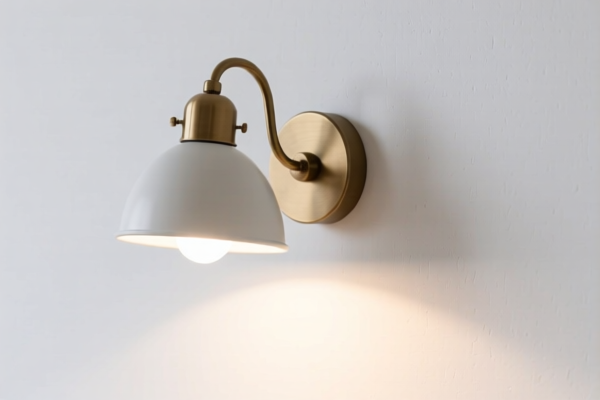
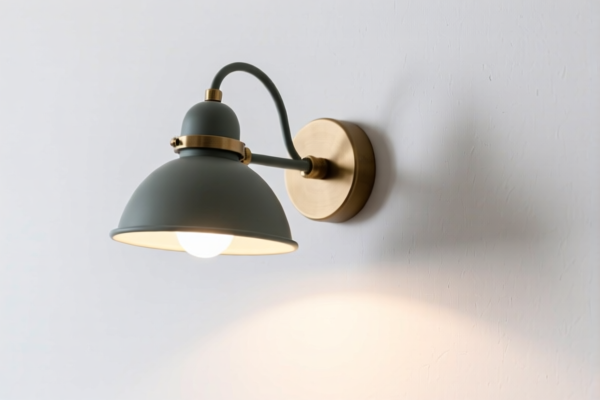
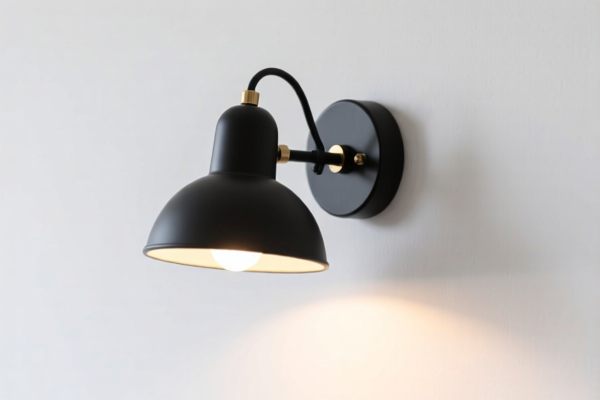
AI Analysis
🏠 Wall Ambient Light (LED Ambience Lighting)
🌐 HS Code Classification & Customs Clearance Guide | 2026 Updated Tax Analysis | Strategic Compliance Strategy
📌 I. Product Definition & Classification: Do You Really Know "Wall Ambient Light"?
Wall Ambient Lights are specialized illumination devices designed to create atmospheric lighting effects, often used in interior design, hospitality, retail displays, and residential settings. Unlike standard functional lighting (e.g., ceiling downlights), these fixtures prioritize aesthetic output, color temperature tunability, and non-task-oriented illumination.
In international trade, they are frequently misclassified due to their hybrid nature: they combine electronic components (LEDs/drivers) with decorative structures (walls/fixtures). This ambiguity leads to significant duty differences depending on whether they are classified as electrical signaling devices, general lighting appliances, or electrical machinery.
⚠️ Key Distinction Point:
- If the primary function is visual signal indication (e.g., status lights, traffic-like signals) → Chapter 85
- If the primary function is general illumination/decoration → Chapter 94
- If it has independent functional electronic circuits not primarily for lighting → Chapter 85 (Other Electrical Machines)
📦 II. HS Code Classification Details (2026 Latest Tariff Reference)
The following table maps the provided data to specific HS Codes, summaries, and total tax rates. Note that these rates assume imports into the United States from China, including Base Tariff, Section 301 (Additional) Tariff, and Section 122 IEEPA Tariff.
| HS Code | Summary from Data | Total Tax Rate | Tax Breakdown (Base + 301 + 122) |
|---|---|---|---|
| 8531.20.00.40 | LED ambient light falls under electrical/acoustic or visual signal equipment, specifically for indication/signaling purposes, matching LED material. | 35.0% | Base: 0.0% + 301: 25.0% + 122: 10% |
| 8531.80.90.51 | LED ambient light is a visual signaling device within electrical/acoustic or visual signal apparatus, made of LEDs/electronic components, used for ambiance signaling. | 17.5% | Base: 0.0% + 301: 7.5% + 122: 10% |
| 8543.70.71.00 | Product belongs to electric lamps/lighting equipment, fitting the "electric lamp tubes/lighting apparatus" usage attribute, functioning as an independent electronic lighting device. | 37.0% | Base: 2.0% + 301: 25.0% + 122: 10% |
| 9405.42.60.00 | Usage is LED lighting device; material reasonably inferred to include non-precious metal in housing/structure, no obvious material conflict. | 41.0% | Base: 6.0% + 301: 25.0% + 122: 10% |
| 9405.42.84.10 | Product name includes "LED" source and "light," fitting the definition of "products specifically designed for LED light sources" and "lighting appliances." | 38.9% | Base: 3.9% + 301: 25.0% + 122: 10% |
🔍 Critical Observation:
- There is a massive disparity in total tax rates, ranging from 17.5% to 41.0%.
- The lowest rate (17.5%) applies to 8531.80.90.51, classified as a "visual signaling device."
- The highest rate (41.0%) applies to 9405.42.60.00, classified under general lighting fixtures with metal components.
- Misclassification Risk: Declaring a decorative wall light as a "signaling device" (8531) to get lower duties is risky if the product lacks any actual signaling function (e.g., no blinking, no status indication). Customs may reclassify it as general lighting (9405) or other electrical machinery (8543), leading to penalties.
💰 III. Detailed 2026 Tariff Rate Explanation
✅ Applicable Country: United States (US)
✅ Origin: China (CN)
✅ Effective Date: November 10, 2025 onwards
🎯 1. 8531.20.00.40 – Electrical Signal Equipment (LED Indication)
- Summary: Classified under electrical/acoustic or visual signal equipment for indication purposes.
- Total Tax: 35.0%
- Breakdown:
- Base Tariff: 0.0%
- Section 301 (Additional): 25.0%
- Section 122 (IEEPA): 10.0%
- Legal Basis: This classification implies the device is primarily for indicating something (e.g., status, direction) rather than general illumination.
- Risk: High. Unless the "ambient light" has a clear signaling function (e.g., "On/Off" status light embedded in a larger machine), this classification may be challenged.
🎯 2. 8531.80.90.51 – Other Electrical Signal Equipment (Visual Signaling)
- Summary: Classified as a visual signaling device within electrical/acoustic apparatus, using LEDs/electronic components.
- Total Tax: 17.5% (Lowest Rate in Dataset)
- Breakdown:
- Base Tariff: 0.0%
- Section 301 (Additional): 7.5%
- Section 122 (IEEPA): 10.0%
- Legal Basis: This is a catch-all for visual signaling devices not specifically covered elsewhere. The reduced 301 rate (7.5% vs 25%) is significant.
- Strategic Note: This is the most favorable rate. However, Customs may argue that a "Wall Ambient Light" is not a signaling device but a lighting appliance. Justification requires proving the product is used for status indication rather than ambiance.
🎯 3. 8543.70.71.00 – Other Electrical Machines (Independent Function)
- Summary: Classified as electric lamps/lighting equipment with independent functional electronic circuits.
- Total Tax: 37.0%
- Breakdown:
- Base Tariff: 2.0%
- Section 301 (Additional): 25.0%
- Section 122 (IEEPA): 10.0%
- Legal Basis: Chapter 85 covers "Other electrical machines." This classification is used when the device has a specific electronic function beyond simple illumination, such as smart control modules, RGB tunability circuits, or app-controlled systems.
- Risk: Moderate. If the product is a "smart" ambient light with complex electronics, this may be accurate.
🎯 4. 9405.42.60.00 – Lighting Fixtures (Metal Structure)
- Summary: LED lighting device with inferred non-precious metal housing/structure.
- Total Tax: 41.0% (Highest Rate in Dataset)
- Breakdown:
- Base Tariff: 6.0%
- Section 301 (Additional): 25.0%
- Section 122 (IEEPA): 10.0%
- Legal Basis: Chapter 94 covers "Furniture; bedding, mattresses... lamps and lighting fittings." This is the standard classification for decorative lighting. The high base tariff (6%) plus full 301/122 duties makes it expensive.
- Risk: Low risk of reclassification, but high cost.
🎯 5. 9405.42.84.10 – Other LED Lighting Appliances
- Summary: Product specifically designed for LED light sources, classified as a lighting appliance.
- Total Tax: 38.9%
- Breakdown:
- Base Tariff: 3.9%
- Section 301 (Additional): 25.0%
- Section 122 (IEEPA): 10.0%
- Legal Basis: Specific subheading for LED lighting appliances within Chapter 94.
- Risk: Low risk, but higher cost than 8531 classifications.
🛠️ IV. Customs Clearance Practical Advice (Pitfall Avoidance)
✅ 1. Preparation Checklist (Mandatory)
| Document | Required | Description |
|---|---|---|
| Product Specifications | ✔️ | Must detail: LED type, voltage, wattage, control method (wireless/app/wire), material composition (metal/plastic/glass). |
| Circuit Diagram/Block Diagram | ✔️ | Crucial for distinguishing between 8531/8543 (electronic function) and 9405 (simple lighting). |
| Product Photos (Labeled) | ✔️ | Show mounting, wiring, and any "status indicators" if claiming 8531 classification. |
| Commercial Invoice | ✔️ | Must accurately describe the product. Avoid vague terms like "Light." Use "LED Visual Signaling Device" only if functionally accurate. |
| Origin Certificate | ✔️ | Required for 122 Tariff application. |
| Packing List | ✔️ | Detail contents to avoid "unpacking" penalties. |
✅ 2. Declaration Strategy (Key Principles)
🔥 "Function Determines Chapter. Don't Lie About Signaling."
| Scenario | Recommended HS Code | Why? |
|---|---|---|
| Standard Decorative Wall Light (Warm/Cool white, no smart features) | 9405.42.84.10 or 9405.42.60.00 |
It is a lighting appliance. Do not try to classify as signaling. |
| "Smart" Ambient Light (App-controlled, RGB, complex driver) | 8543.70.71.00 |
The independent electronic function (smart control) moves it to Chapter 85. |
| Status Indicator Light (Blinks to show "Active/Standby") | 8531.20.00.40 or 8531.80.90.51 |
If it genuinely signals status, use 8531. The 17.5% rate is tempting, but ensure function matches. |
| Mixed Shipment (Lights + Signaling Modules) | Split Declaration | Declare each item according to its primary function. |
✅ 3. Special Considerations
- Section 122 Tariff (10%): Applies to all products from China listed in the 122 Tariff Schedule. LED lighting products are typically included. Ensure your HS code is correctly matched to the 122 list.
- Section 301 Tariff: Most electronic and lighting items from China are subject to 25% additional duties. However, some 8531 items may have reduced rates (e.g., 7.5% for
8531.80.90.51). Verify current USITC schedules. - Material Composition: For
9405classifications, the material (metal vs. plastic) can affect the subheading. If the housing is mostly plastic,9405.42.84.10might be more appropriate than9405.42.60.00(which may imply metal).
🌍 V. Global Market Comparison (2026)
| Market | Recommended HS Code | Est. Duty (China Origin) | Key Certification | Notes |
|---|---|---|---|---|
| 🇺🇸 USA | 8531.80.90.51 (if signaling) or 9405.42.84.10 |
17.5% - 38.9% | FCC, UL | High duties due to 301 & 122 tariffs. Classification is critical. |
| 🇨🇳 China | 9405.42.60.00 |
~5-10% | CCC | No additional tariffs. Simple classification. |
| 🇪🇺 EU | 9405.42.00 |
0-4% | CE, RoHS | No additional tariffs. Low duty rates. |
| 🇬🇧 UK | 9405.42.00 |
0-4% | UKCA, RoHS | Post-Brexit rules apply. Similar to EU. |
| 🇦🇺 Australia | 9405.42.00 |
5% | RCM, C-Tick | Moderate duties. |
📌 Conclusion:
- The US is the most challenging market for LED ambient lights due to high combined tariffs.
- Classification strategy can save up to 20-25% in duties (e.g., 17.5% vs 41.0%).
- However, misclassification carries severe penalties. Only claim 8531 if the product has a clear signaling function.
📌 VI. Common Mistakes & Pitfalls (Lessons Learned)
❌ Mistake 1: Declaring a decorative wall light as "Visual Signaling Device" (8531) to get 17.5% duty.
👉 Consequence: Customs may reject it as false declaration, imposing penalties and forcing reclassification at 38.9-41.0%.
❌ Mistake 2: Ignoring the 122 Tariff (10%).
👉 Consequence: Underpayment of duties. All Chinese-origin LED lights are likely subject to this.
❌ Mistake 3: Using vague descriptions like "Lighting Accessory" or "Decorative Item."
👉 Consequence: Customs may assign a higher-duty HS code or require additional documentation, causing delays.
❌ Mistake 4: Not distinguishing between "Signaling" and "Illumination."
👉 Consequence: If the light is primarily for ambiance, it must be classified under Chapter 94.
✅ Correct Approach:
"Smart LED Wall Light with App Control, RGB Function, 12V DC Input, Model XYZ" → Consider
8543.70.71.00
"Decorative LED Strip Light for Ambient Illumination, White Color" →9405.42.84.10
"LED Status Indicator Light for Machine Panel" →8531.80.90.51
🎯 VII. Conclusion: Professional Classification Saves Money
🎯 Remember the Rules:
🔹 "Function Over Form. Signaling is 8531, Lighting is 9405."
🔹 "17.5% is the Goal, but 41% is the Risk if You Lie."
🔹 "122 Tariff is 10% on All. Don't Forget It."
📌 Pro Tip:
If your product is a hybrid (e.g., a wall light that also acts as a nightlight/status indicator), consult a licensed customs broker to determine the principal purpose. If the principal purpose is illumination, it goes to 9405. If it's signaling, it goes to 8531.
📣 Immediate Action:
📞 Engage a Customs Broker
📄 Provide Detailed Technical Specifications
📝 Apply for an Advance Ruling (Pre-classification) with US Customs if the product is unique.
✨ Professional Clearance Starts with Precise Classification!
💼 Your Every Dollar is Worth Counting!
Customer Reviews
About HS Code Classification
The Harmonized System (HS) is an internationally standardized nomenclature developed by the World Customs Organization (WCO) to classify traded products. Over 200 countries use the HS system as the basis for customs tariffs, trade statistics, and import/export regulations.
Each HS code follows a hierarchical structure:
- Chapter (2 digits) — Broad category of goods (e.g., Chapter 84: Machinery and Mechanical Appliances)
- Heading (4 digits) — More specific grouping within the chapter
- Subheading (6 digits) — Internationally standardized breakdown, used by all WCO member countries
- National subdivisions (8-10 digits) — Country-specific extensions for further classification, such as US HTSUS 10-digit codes
Correct HS code classification is essential for smooth customs clearance, accurate duty payment, and compliance with trade regulations. Misclassification can lead to customs delays, overpayment of duties, or penalties.
When importing from CN to US, the applicable tariff rates may include:
- Most-Favored-Nation (MFN) rate — The standard duty rate applied to WTO members
- General rate — Applied to countries without trade agreements
- Trade remedy duties — Additional tariffs such as Section 301 (anti-dumping), Section 232 (national security), or countervailing duties
The information provided on this page is for reference purposes only. For official classification, please consult with your local customs authority or a licensed customs broker.