wall clock sample
CN → US| HS Code | Tariff Rate | Origin | Destination | Doc |
|---|---|---|---|---|
| 9105294000 | 0.0% | CN | US | Official Doc |
| 9105295000 | 0.0% | CN | US | Official Doc |
| 7020006000 | 40.0% | CN | US | Official Doc |
| 9105295000 | 0.0% | CN | US | Official Doc |
| 9105294000 | 0.0% | CN | US | Official Doc |
| 4421919880 | 38.3% | CN | US | Official Doc |
Product Images
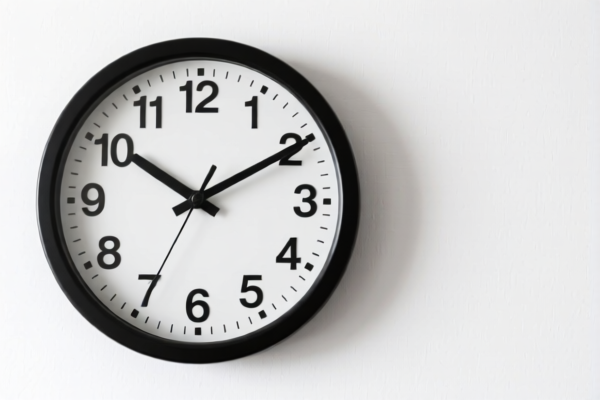
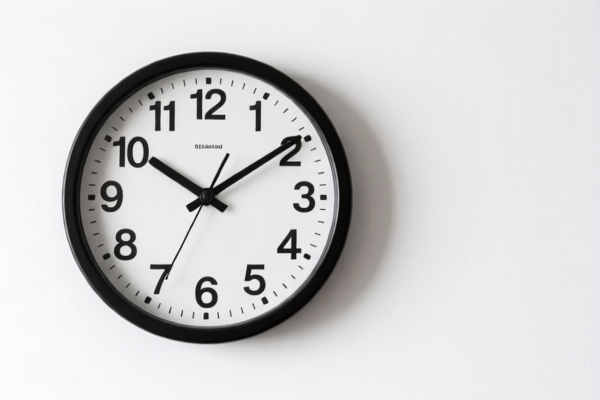
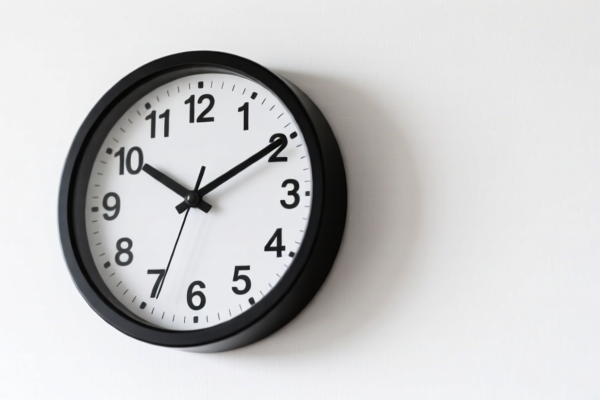
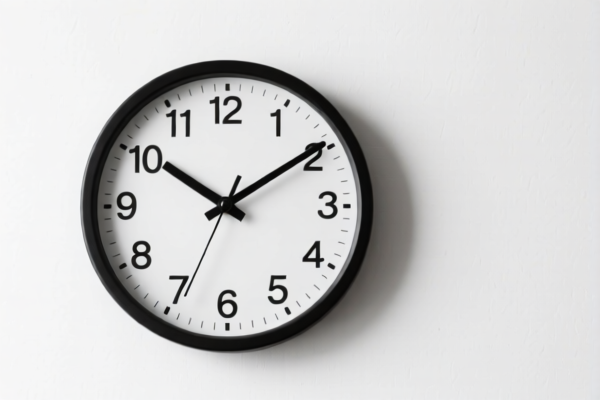
AI Analysis
🕰️ Wall Clock Sample (Wall Clocks - Prototype/Sample Units)
🌐 HS Code Reference & Customs Clearance Guide | 2026 Latest Tariff Analysis | Professional Clearance Strategy
📌 I. Product Definition & Classification: Do You Truly Understand "Wall Clock Samples"?
A Wall Clock Sample (or Prototype) is a non-commercial unit used for exhibition, testing, or pre-production verification. In international trade, its classification depends heavily on material composition and functionality.
Key Distinctions: * Standard Wall Clock (Mechanical/Quartz): Falls under Chapter 91 (Timepieces). * Decorative/Artistic Glass Clock: May fall under Chapter 70 (Glass Articles) if it lacks standard timekeeping functions or is primarily decorative. * DIY/Unassembled Kits: Classification depends on the primary material (Wood, Glass, etc.) and whether it constitutes a "complete set."
⚠️ Critical Distinction Point:
- If the sample is a functional clock (even for testing) → Generally HS 9105.
- If the sample is non-functional/decorative (e.g., glass art piece) → Potentially HS 7020.
- If the sample is DIY/Unassembled → Classification splits by Material (Wood vs. Glass).
📦 II. HS Code Classification Details (Based on Provided Data)
Based on the provided data, there are 4 distinct classification scenarios for "Wall Clock Sample" and "DIY Wall Clock."
| HS Code | Product Description | Application Scenario | Key Characteristic |
|---|---|---|---|
9105.29.40.00 |
Wall Clock (Sample) | Standard functional wall clock sample | Functionality prioritized; generic "other" wall clock |
9105.29.50.00 |
Wall Clock (Sample) | High-end or specific type wall clock sample | Distinct category for specific wall clock types |
7020.00.60.00 |
DIY Wall Clock (Glass) | Decorative/DIY clock with Glass components | Assumed to contain glass; treated as other glass articles |
4421.91.98.80 |
DIY Wall Clock (Wood) | DIY clock kit primarily made of Wood | Assumed to be wooden; treated as other wooden articles |
🔍 Note on "DIY":
The data explicitly splits "DIY Wall Clocks" into Glass (7020) and Wood (4421). This suggests that if the DIY kit lacks a complete mechanical assembly or is primarily decorative, customs may classify it by its primary material rather than as a timepiece.
💰 III. 2026 Latest Tariff Rate Breakdown (Including Surcharge & Policy Additions)
✅ Applicable Country: United States (US)
✅ Origin: China (CN)
✅ Effective Time: 2025/2026 Tariff Regime
🎯 1. 9105.29.40.00 —— Wall Clock (Sample) / DIY Wall Clock (Functional)
| Item | Content |
|---|---|
| Base Duty | 15¢ each + 6.4% (Ad Valorem) |
| Section 301 Surcharge | 0.0% |
| Section 122 Tariff | +10.0% |
| Total Effective Rate | 6.4% + 15¢ each + 10% surcharge on value |
| Tax Calculation | (CIF Value × 16.4%) + (0.15 × Unit Count) |
| De Minimis Eligible? | ❌ No (High risk of audit for samples) |
| Legal Basis Path | USITC:9105.29.40.00 → Section 301: Exempt (0%) → Section 122: 10% |
📌 Explanation:
- This is the most favorable classification for functional wall clocks.
- Section 301 (25% or 7.5%) is EXEMPT (0%), saving significant cost.
- However, a flat fee of 15¢ per unit applies, which can be high for low-value items.
- Section 122 (10%) is added on the value.
🎯 2. 9105.29.50.00 —— Wall Clock (Sample - Specific Type)
| Item | Content |
|---|---|
| Base Duty | 30¢ each + 4.3% (Ad Valorem) |
| Section 301 Surcharge | +7.5% |
| Section 122 Tariff | +10.0% |
| Total Effective Rate | 4.3% + 30¢ each + 7.5% + 10% surcharge |
| Tax Calculation | (CIF Value × 21.8%) + (0.30 × Unit Count) |
| De Minimis Eligible? | ❌ No |
| Legal Basis Path | USITC:9105.29.50.00 → Section 301: 7.5% → Section 122: 10% |
📌 Explanation:
- This classification is more expensive than9105.29.40.00.
- It incurs a 7.5% Section 301 surcharge (unlike the previous one).
- Higher flat fee (30¢/unit) and lower ad valorem rate (4.3%).
- Use this only if the product strictly matches the definition of9105.29.50.00(e.g., specific decorative or non-standard wall clock).
🎯 3. 7020.00.60.00 —— DIY Wall Clock (Glass Material Assumption)
| Item | Content |
|---|---|
| Base Duty | 5.0% |
| Section 301 Surcharge | +25.0% |
| Section 122 Tariff | +10.0% |
| Total Effective Rate | 40.0% (Purely Ad Valorem) |
| Tax Calculation | CIF Value × 40.0% |
| De Minimis Eligible? | ❌ No |
| Legal Basis Path | USITC:7020.00.60.00 → Section 301: 25% → Section 122: 10% |
📌 Explanation:
- HIGH RISK TARIFF.
- If customs deems the DIY clock as primarily Glass Article (due to lack of complete mechanism or decorative nature), it falls here.
- 25% Section 301 is fully applied.
- Avoid this classification if possible; it is nearly 4x more expensive than9105.29.40.00.
🎯 4. 4421.91.98.80 —— DIY Wall Clock (Wood Material Assumption)
| Item | Content |
|---|---|
| Base Duty | 3.3% |
| Section 301 Surcharge | +25.0% |
| Section 122 Tariff | +10.0% |
| Total Effective Rate | 38.3% (Purely Ad Valorem) |
| Tax Calculation | CIF Value × 38.3% |
| De Minimis Eligible? | ❌ No |
| Legal Basis Path | USITC:4421.91.98.80 → Section 301: 25% → Section 122: 10% |
📌 Explanation:
- Also a HIGH RISK TARIFF.
- If the DIY clock is classified as a Wooden Article (e.g., wooden frame with no mechanical parts included), it falls here.
- 25% Section 301 is fully applied.
- Slightly cheaper than the glass version (38.3% vs 40.0%), but still very expensive compared to functional clocks.
🛠️ IV. Customs Clearance Practical Advice (Real-World Pitfall Guide)
✅ 1. Document Checklist (Must-Haves)
| Document | Required | Notes |
|---|---|---|
| ✅ Product Specification Sheet | ✔️ | Must state: "Prototype/Sample," "Non-Commercial Sale," "Functional/Non-Functional" |
| ✅ Bill of Lading / Commercial Invoice | ✔️ | Clearly mark "VALUE FOR CUSTOMS ONLY" or "SAMPLE" |
| ✅ Material Declaration | ✔️ | Explicitly state: "Wall Clock with Quartz Movement" (for 9105) vs "Decorative Wooden/Glass Frame" (for 7020/4421) |
| ✅ Photo of Product | ✔️ | Show the movement/motor if claiming HS 9105. If no motor, expect 7020/4421. |
| ✅ DIY Assembly Instructions | ✔️ | If applicable, show that mechanical parts are included or missing. |
✅ 2. Declaration Strategy (Key Mnemonics)
🔥 "Functional is King, Material is Risky!"
| Scenario | Correct Declaration | Wrong Declaration |
|---|---|---|
| Functional Wall Clock (Sample) | HS 9105.29.40.00Desc: "Wall Clock Sample, Quartz Movement" |
"Glass Art" or "Wooden Decor" → Triggers 40% tax |
| DIY Clock (Complete Kit with Motor) | HS 9105.29.40.00Desc: "DIY Wall Clock Kit, Includes Movement" |
"Wooden Frame" → Triggers 38.3% tax |
| DIY Clock (No Motor, Decorative) | HS 7020.00.60.00 or 4421.91.98.80Desc: "Decorative Wall Clock Frame, No Movement" |
"Wall Clock" → Risk of rejection or reclassification |
| High-End Wall Clock Sample | HS 9105.29.50.00Desc: "Specialty Wall Clock Sample" |
"Generic Wall Clock" → May be downgraded to 40.00.00 |
📌 Pro Tip:
Always emphasize the Timekeeping Function in your description if you want HS 9105.
Example: "Wall Clock Sample, Functional Quartz Movement, For Testing Purposes Only."
Avoid words like "Decor," "Art," "Frame Only" unless you accept the higher tariff.
✅ 3. Special Cases
| Situation | Handling Advice |
|---|---|
| Sample with Low Value (< $800) | Still subject to full tariff. De Minimis ($800) may not apply if marked as "Commercial Sample" or if auditor deems it a "commercial transaction." |
| OEM Custom Design | Provide design files to prove it is a unique prototype, not mass production, to justify "Sample" status. |
| Mixed Materials | If clock is wood + glass + metal, Function (Timekeeping) dictates HS 9105, not material. |
| No Movement Included | If DIY kit lacks the motor, it is not a clock. It becomes a "Wooden/Glass Article" (HS 4421/7020). |
🌍 V. Global Market Comparison (2026 Latest)
| Country/Region | Recommended HS Code | Tariff (China Origin) | Certification | Notes |
|---|---|---|---|---|
| 🇺🇸 USA | 9105.29.40.00 |
16.4% + 15¢/unit | FCC (if electronic) | Best option for functional clocks |
| 🇺🇸 USA | 7020.00.60.00 |
40.0% | None | High risk for DIY/Decorative |
| 🇪🇺 EU | 9105.29.00.00 |
0% | CE | Lower tariffs, no Section 301 |
| 🇨🇳 China | 9105.29.00.00 |
0% | CCC (if electronic) | Export from China |
📌 Conclusion:
- USA is the most complex market due to Section 301 and 122 tariffs.
- Functionality is key to avoiding the 40% penalty.
- EU has 0% tariff for clocks, making it a cheaper alternative for exports.
📌 VI. Common Errors & Pitfalls (Lessons Learned)
❌ Error 1: Declaring a Functional Clock as "Wooden Decor"
👉 Result: Tariff jumps from ~16% to 38.3% → Overpayment!
❌ Error 2: Declaring a Glass Frame (No Motor) as "Wall Clock"
👉 Result: Customs rejects, reclassifies as 7020.00.60.00 → 40% Tariff + Delays!
❌ Error 3: Ignoring the 15¢/unit fee in HS 9105.29.40.00
👉 Result: For small, low-value samples, the flat fee can be higher than the percentage tax. Calculate carefully!
❌ Error 4: Not Marking as "SAMPLE"
👉 Result: Customs may assess full commercial value without sample discounts, leading to higher duty base.
✅ Correct Practice:
"Wall Clock Sample, Quartz Movement, Wooden Case, For Testing Only, No Commercial Sale."
🎯 VII. Conclusion: Professional Declaration, Save Costs, Ensure Compliance!
🎯 Remember the Mantra:
🔹 "Function over Material, Sample over Product, 9105 over 7020!"
🔹 "16% is cheap, 40% is expensive, 15¢ per unit adds up!"
🔹 "Declare Movement, Avoid Decoration, Save Your Budget!"
📌 Pro Tip:
If your DIY kit includes the quartz movement, always declare as HS 9105.29.40.00.
If it does not, accept the 38.3%-40% tariff or restructure the product.
Consider Advance Ruling from US Customs if unsure.
📣 Immediate Action:
📞 Contact your customs broker + Provide photos of the movement + Apply for HS Code Pre-Ruling
🚀 Let your wall clocks pass smoothly, avoid penalties, and maximize profits!
✨ Professional Customs Clearance Starts with Accurate Classification!
💼 Every cent counts in global trade!
Customer Reviews
About HS Code Classification
The Harmonized System (HS) is an internationally standardized nomenclature developed by the World Customs Organization (WCO) to classify traded products. Over 200 countries use the HS system as the basis for customs tariffs, trade statistics, and import/export regulations.
Each HS code follows a hierarchical structure:
- Chapter (2 digits) — Broad category of goods (e.g., Chapter 84: Machinery and Mechanical Appliances)
- Heading (4 digits) — More specific grouping within the chapter
- Subheading (6 digits) — Internationally standardized breakdown, used by all WCO member countries
- National subdivisions (8-10 digits) — Country-specific extensions for further classification, such as US HTSUS 10-digit codes
Correct HS code classification is essential for smooth customs clearance, accurate duty payment, and compliance with trade regulations. Misclassification can lead to customs delays, overpayment of duties, or penalties.
When importing from CN to US, the applicable tariff rates may include:
- Most-Favored-Nation (MFN) rate — The standard duty rate applied to WTO members
- General rate — Applied to countries without trade agreements
- Trade remedy duties — Additional tariffs such as Section 301 (anti-dumping), Section 232 (national security), or countervailing duties
The information provided on this page is for reference purposes only. For official classification, please consult with your local customs authority or a licensed customs broker.