walnut logs
CN → US| HS Code | Tariff Rate | Origin | Destination | Doc |
|---|---|---|---|---|
| 1404909090 | 35.0% | CN | US | Official Doc |
| 1404909040 | 35.0% | CN | US | Official Doc |
| 4403990170 | 35.0% | CN | US | Official Doc |
| 4403490200 | 35.0% | CN | US | Official Doc |
| 4407990261 | 35.0% | CN | US | Official Doc |
Product Images
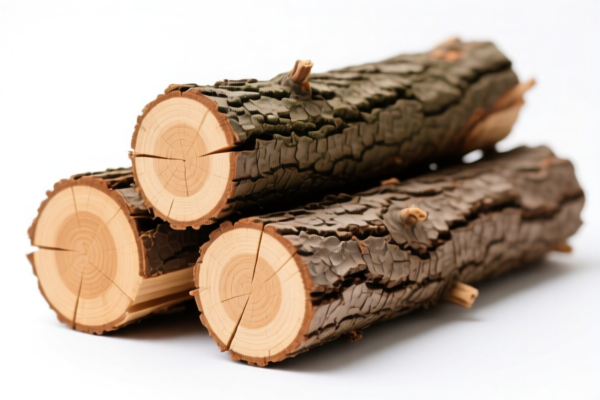
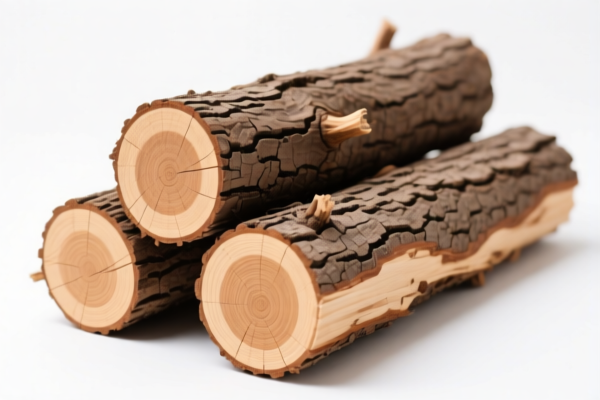
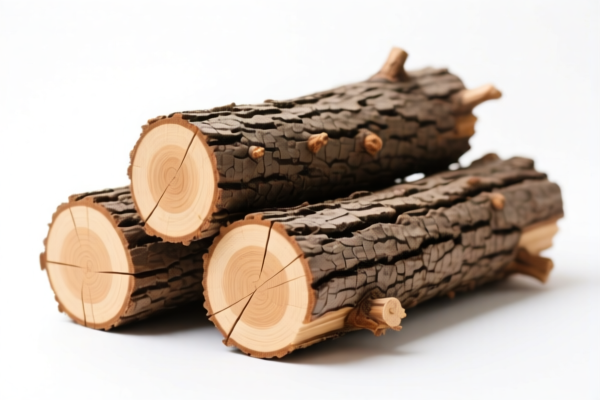
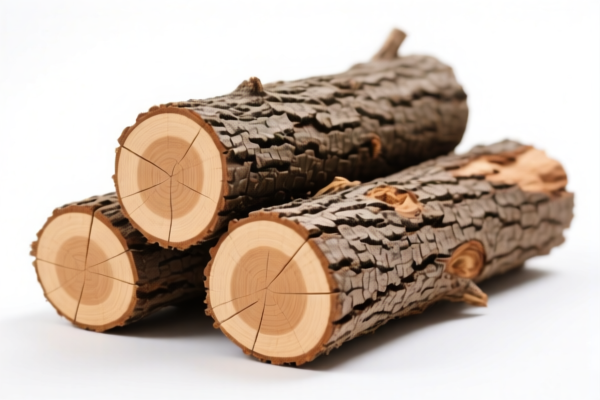
AI Analysis
🌲 Walnut Logs (Unclassified/General)
🌐 HS Code Reference & Customs Clearance Guide | 2026 Latest Tariff Analysis | Professional Clearance Strategy
📌 I. Product Definition & Classification: Understanding "Walnut Logs"
Walnut Logs refer to the raw timber derived from walnut trees (Juglans spp.). In international trade, the classification depends heavily on the form (raw vs. processed) and the intended use (general plant material vs. specific timber species).
For import into the United States, walnut logs are typically classified in two main chapters: 1. Chapter 14: As other vegetable products/plant materials (if treated as raw agricultural material or for tanning/dyeing). 2. Chapter 44: As wood and wood articles (specifically sawn wood or rough timber).
⚠️ Key Distinction:
- If the logs are considered raw vegetable matter for industrial processing (e.g., tanning, dyeing) → Chapter 14 (1404.90.90)
- If the logs are considered raw timber/wood → Chapter 44 (4403.99 / 4407.99)
📦 II. HS Code Classification Details (2026 Latest Tariff Mapping)
The following HS Codes are derived from the provided data, specifically targeting Walnut Logs. All entries reflect a Total Tax Rate of 35.0% due to US-China trade tensions.
| HS Code | Product Description | Application Scenario | Material/Form Match |
|---|---|---|---|
1404.90.90.90 |
Other vegetable products; Walnut logs as primary vegetable matter | Raw plant material, agricultural by-products | ✅ Vegetation |
1404.90.90.40 |
Other vegetable raw materials; For dyeing or tanning purposes | Industrial raw material for chemical processing | ✅ Chemical/Industrial Use |
4403.99.01.70 |
Wood in the rough, whether or not stripped; Walnut (Hickory) wood | Timber processing, lumber production | ✅ Wood Species Match |
4403.49.02.00 |
Other wood, in the rough; Tropical woods | Rough-sawn timber, non-specific tropical wood classification | ✅ Rough Timber Form |
4407.99.02.61 |
Wood sawn lengthwise; >6mm thick | Planed or sawn walnut lumber | ✅ Processed Wood Form |
🔍 Critical Note:
- Chapter 14 Codes (1404...): Treat walnut as a plant product. Suitable if the import is for non-wood uses (e.g., extracts, tanning).
- Chapter 44 Codes (4403...&4407...): Treat walnut as wood. This is the most common classification for timber/log imports.
- Material Consistency: Data confirms that "Walnut" is often equated with "Hickory" or "Tropical Wood" in broad tariff categories when specific sub-headings are not available.
💰 III. 2026 Latest Tariff Rate Breakdown (Including Surcharges & Policy Add-ons)
✅ Applicable Country: United States (US)
✅ Country of Origin: China (CN)
✅ Effective Date: From November 10, 2025 (and subsequent imports)
🎯 1. 1404.90.90.90 & 1404.90.90.40 —— Vegetable Products / Raw Materials
| Item | Content |
|---|---|
| Base Duty | 0.0% |
| USITC Additional Duty | +25.0% (Section 301 Tariff) |
| 122 Clause Duty (IEEPA) | +10.0% (Against Chinese Products) |
| Total Effective Rate | 35.0% |
| Tax Calculation | CIF Value × 35% |
| De Minimis Exemption | ❌ Not Eligible (Deny De Minimis) |
| Legal Basis Path | USITC:1404.90.90.90 → FOOTNOTE:301 → IEEPA:122 |
📌 Explanation:
- Base 0%: Vegetable products often have zero base duty.
- 25% Surcharge: Standard Section 301 tariff on Chinese goods.
- 10% Surcharge: Specific "122 Clause" tariff targeting Chinese imports.
- Total 35%: High cost for importers. Cannot use $800 de minimis exemption.
🎯 2. 4403.99.01.70 & 4403.49.02.00 —— Wood in the Rough (Log/Timber)
| Item | Content |
|---|---|
| Base Duty | 0.0% |
| USITC Additional Duty | +25.0% (Section 301 Tariff) |
| 122 Clause Duty (IEEPA) | +10.0% (Against Chinese Products) |
| Total Effective Rate | 35.0% |
| Tax Calculation | CIF Value × 35% |
| De Minimis Exemption | ❌ Not Eligible (Deny De Minimis) |
| Legal Basis Path | USITC:4403... → FOOTNOTE:301 → IEEPA:122 |
📌 Explanation:
- Base 0%: Raw timber often has low base duty.
- 25% + 10%: Same heavy surcharges apply.
- Risk: High tax burden makes Chinese walnut timber imports uncompetitive unless value-added significantly.
🎯 3. 4407.99.02.61 —— Sawn Wood (>6mm Thick)
| Item | Content |
|---|---|
| Base Duty | 0.0% |
| USITC Additional Duty | +25.0% (Section 301 Tariff) |
| 122 Clause Duty (IEEPA) | +10.0% (Against Chinese Products) |
| Total Effective Rate | 35.0% |
| Tax Calculation | CIF Value × 35% |
| De Minimis Exemption | ❌ Not Eligible (Deny De Minimis) |
| Legal Basis Path | USITC:4407.99.02.61 → FOOTNOTE:301 → IEEPA:122 |
📌 Explanation:
- Even processed wood (sawn) carries the same 35% total tariff.
- Thickness Check: Must be >6mm to qualify for this specific subheading.
🛠️ IV. Customs Clearance Practical Advice (Real-World Pitfall Avoidance Guide)
✅ 1. Required Documentation List (Mandatory)
| Document | Must Provide | Description |
|---|---|---|
| ✅ Commercial Invoice | ✔️ | Clearly state "Walnut Logs" or "Walnut Timber" |
| ✅ Packing List | ✔️ | Detail volume, weight, and packaging method |
| ✅ Phytosanitary Certificate | ✔️ | Critical: Issued by origin country’s plant protection agency to prove no pests |
| ✅ Wood Treatment Certificate | ✔️ | Proof of fumigation or heat treatment (IPPC mark) |
| ✅ Lacey Act Declaration | ✔️ | Mandatory for all wood products in the US (Form 307 or entry-level) |
| ✅ Proof of Origin | ✔️ | To determine if Section 301/122 tariffs apply |
✅ 2. Declaration Strategy (Key Mantras)
🔥 "Be Specific, Declare Form, Show Treatment, Avoid Rejection!"
| Scenario | Correct Declaration | Wrong Practice |
|---|---|---|
| Raw Logs | 4403.49.02.00 (Rough Timber) |
Calling it "Walnut Nuts" → Wrong Chapter |
| Sawn Lumber | 4407.99.02.61 (>6mm) |
Calling it "Planks" without thickness spec |
| Industrial Raw Material | 1404.90.90.90 |
Misclassifying wood as "vegetable matter" to avoid wood inspections |
| Tanning/Dyeing Use | 1404.90.90.40 |
Using wood code for chemical raw materials |
✅ 3. Special Circum Handling
| Situation | Handling Advice |
|---|---|
| Bark Included | Ensure phytosanitary certificate covers bark removal or treatment |
| Mixed Species | If mixed with other woods, declare the predominant species or use "Mixed Wood" codes (may attract higher scrutiny) |
| Lacey Act Compliance | Must declare Scientific Name (e.g., Juglans nigra) and Country of Harvest. Failure = Seizure + Fine |
| Value Declaration | Declare accurate CIF value. Under-declaration triggers audits and penalties |
🌍 V. Global Market Comparison (2026 Latest)
| Country/Region | Recommended HS Code | Tariff | Certification | Notes |
|---|---|---|---|---|
| 🇺🇸 USA | 4403.49.02.00 or 1404.90.90.90 |
35% | Phytosanitary + Lacey Act | High tariffs on Chinese origin |
| 🇨🇳 China | 4403.49.02.00 |
Varies | Fumigation Certificate | Import duties may differ |
| 🇪🇺 EU | 4403.49 |
Varies (FLEGT/EUTR) | FLEGT License / Due Diligence | Strict legality checks |
| 🇯🇵 Japan | 4403.49 |
Varies | ISPM 15 Mark | Wood inspection required |
📌 Conclusion:
- USA imposes a flat 35% total tariff on Chinese walnut logs/wood products.
- Compliance Costs: Phytosanitary and Lacey Act documentation are non-negotiable.
- Cost Impact: 35% tariff significantly reduces profit margins for Chinese walnut wood exporters.
📌 VI. Common Errors & Pitfalls (Lessons Learned)
❌ Error 1: Misclassifying "Walnut Logs" as "Walnut Nuts"
👉 Consequence: Wrong HS Code, potential seizure, failure of phytosanitary inspection.
❌ Error 2: Omitting Lacey Act Declaration
👉 Consequence: Cargo held at US port, fines up to $10,000+, potential criminal charges.
❌ Error 3: Claiming "De Minimis" ($800 exemption)
👉 Consequence: Rejected. Wood products from China under Section 301/122 are explicitly excluded. Full duty applies.
❌ Error 4: Inaccurate Scientific Name
👉 Consequence: Lacey Act violation. Must use Juglans spp.
✅ Correct Practice:
"Walnut Logs (Juglans nigra), Rough Sawn, Fumigated, IPPC Marked, Lacey Act Compliant, Origin: China"
🎯 VII. Conclusion: Professional Declaration, Time-Saving, Cost-Effective!
🎯 Remember the Mantra:
🔹 "Wood from China? Expect 35%!"
🔹 "Lacey Act + Phytosanitary = Must Have!"
🔹 "Code Matters: 1404 vs 4403 – Know Your Product!"
📌 Tips:
- If your walnut logs are originating from Vietnam, Mexico, or Canada, they may be exempt from Section 301/122 tariffs (0%~5%).
- Recommendation: Apply for a Pre-Ruling with US Customs (CBP) if unsure about the specific form (log vs. timber).
- Consider repackaging or processing in a third country to change origin status (carefully verify rules of origin).
📣 Immediate Action:
📞 Contact a licensed US Customs Broker
📄 Prepare Lacey Act Declaration + Phytosanitary Cert
🚀 Ensure Smooth Customs Clearance and Maximize Profit
✨ Professional Customs Clearance Starts with Accurate Classification!
💼 Every Percent of Duty Counts!
Customer Reviews
About HS Code Classification
The Harmonized System (HS) is an internationally standardized nomenclature developed by the World Customs Organization (WCO) to classify traded products. Over 200 countries use the HS system as the basis for customs tariffs, trade statistics, and import/export regulations.
Each HS code follows a hierarchical structure:
- Chapter (2 digits) — Broad category of goods (e.g., Chapter 84: Machinery and Mechanical Appliances)
- Heading (4 digits) — More specific grouping within the chapter
- Subheading (6 digits) — Internationally standardized breakdown, used by all WCO member countries
- National subdivisions (8-10 digits) — Country-specific extensions for further classification, such as US HTSUS 10-digit codes
Correct HS code classification is essential for smooth customs clearance, accurate duty payment, and compliance with trade regulations. Misclassification can lead to customs delays, overpayment of duties, or penalties.
When importing from CN to US, the applicable tariff rates may include:
- Most-Favored-Nation (MFN) rate — The standard duty rate applied to WTO members
- General rate — Applied to countries without trade agreements
- Trade remedy duties — Additional tariffs such as Section 301 (anti-dumping), Section 232 (national security), or countervailing duties
The information provided on this page is for reference purposes only. For official classification, please consult with your local customs authority or a licensed customs broker.